On this page
What is adhesive hook and loop tape?
Adhesive hook and loop tape combines the familiar hook-and-loop fastening principle with a pressure-sensitive adhesive backing. The hook side uses molded or woven hooks that engage the loop side. The loop side uses raised fibers that receive those hooks. When pressed together, the two sides form a secure closure. When peeled apart, the fastener opens and can be reused depending on construction and application stress. Explore solutions by sector when your specification is tied to a particular industry.
The adhesive layer is what changes the production equation. Instead of routing a part through a sewing station, drilling fixture or rivet tool, an operator can peel the release liner, position the tape and bond it directly to a suitable substrate. That single-step attachment model is why adhesive hook and loop is widely used in displays, panels, cable management, packaging, furniture accessories and OEM assemblies where speed matters.
For manufacturing buyers, the important distinction is that adhesive hook and loop is both a fastening material and an assembly method. Its efficiency value depends on substrate compatibility, adhesive type, tape width, part format and how the closure is handled on the line. A well-matched specification can remove secondary operations. A poorly matched one can create rework, complaints and line stoppages.
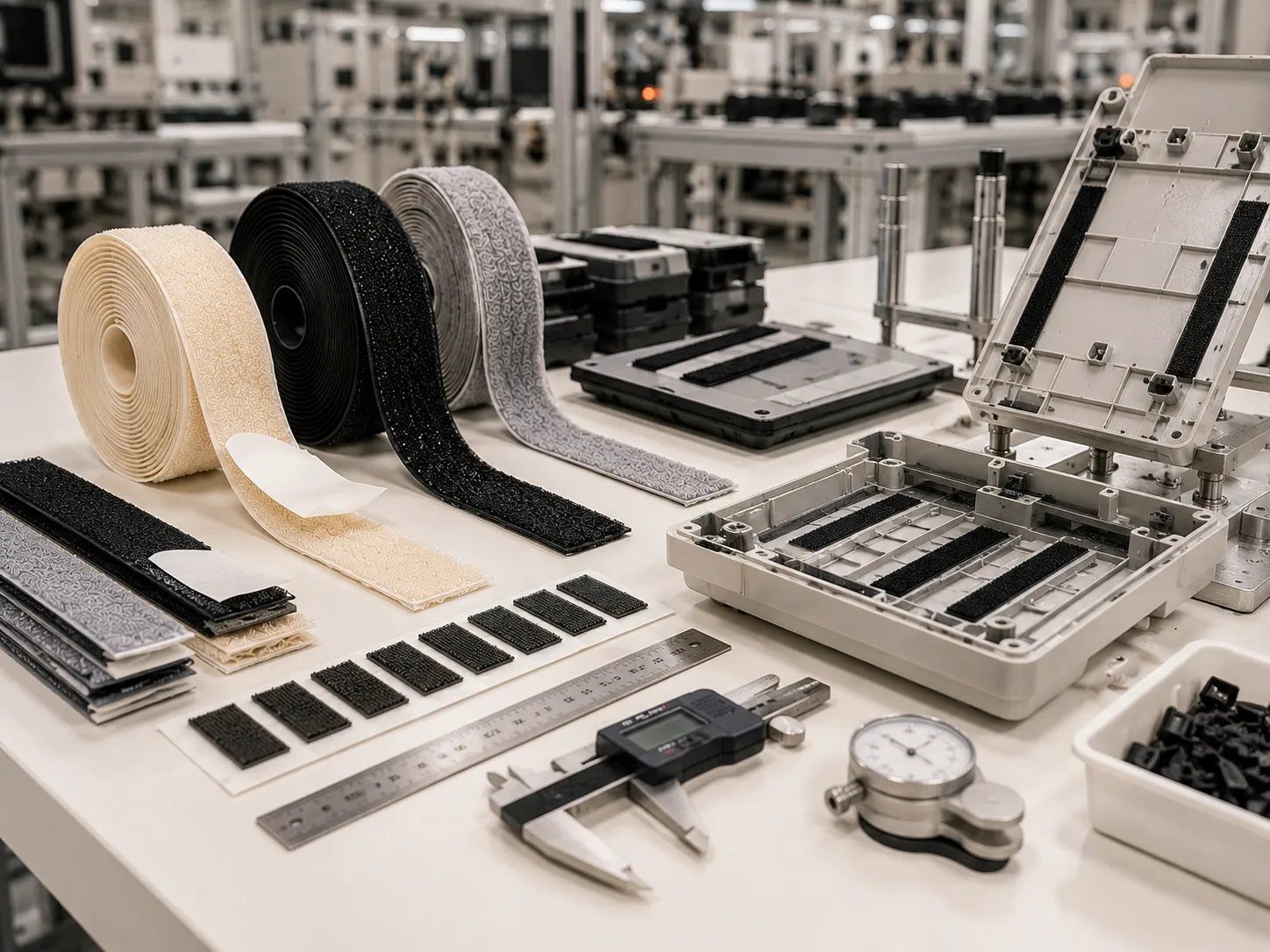
Why production efficiency matters in modern manufacturing
Manufacturing efficiency affects output capacity, per-unit cost, delivery reliability and margin protection. When labor costs rise, product variants multiply and customers expect shorter lead times, small delays in assembly compound quickly across a production run.
Fastening is easy to overlook because it is often a minor component by cost. In practice, fastening can control station time, defect rate and rework volume. A closure that requires drilling creates dust, tooling wear and inspection steps. A closure that requires stitching creates needle setup, thread management and seam alignment checks. A closure that requires heat sealing may add cure or cooling time. Adhesive hook and loop can simplify these paths when the product design supports it.
Efficiency also includes flexibility. Many factories now build multiple SKUs on shared lines. A fastening method that supports quick changeover, removable panels or modular sub-assemblies helps teams adapt without rebuilding the entire process.
How adhesive fastening accelerates assembly
The core efficiency gain is step reduction. Peel, place and bond is a simpler sequence than mark, drill, fasten and inspect. On repetitive tasks such as mounting trim pieces, attaching display elements or securing cable guides, those saved seconds accumulate into meaningful throughput improvement.
Adhesive hook and loop also supports immediate handling in many lightweight applications. Rubber-based adhesive constructions can bond quickly without extended cure windows. That allows the next assembly step to follow sooner, which keeps the line moving.
Another advantage is station simplification. Teams can set up compact assembly benches with cutting tools, jigs and hand application rather than maintaining additional machine centers. This is especially useful for contract manufacturers, export assembly units and product lines with mixed volumes.
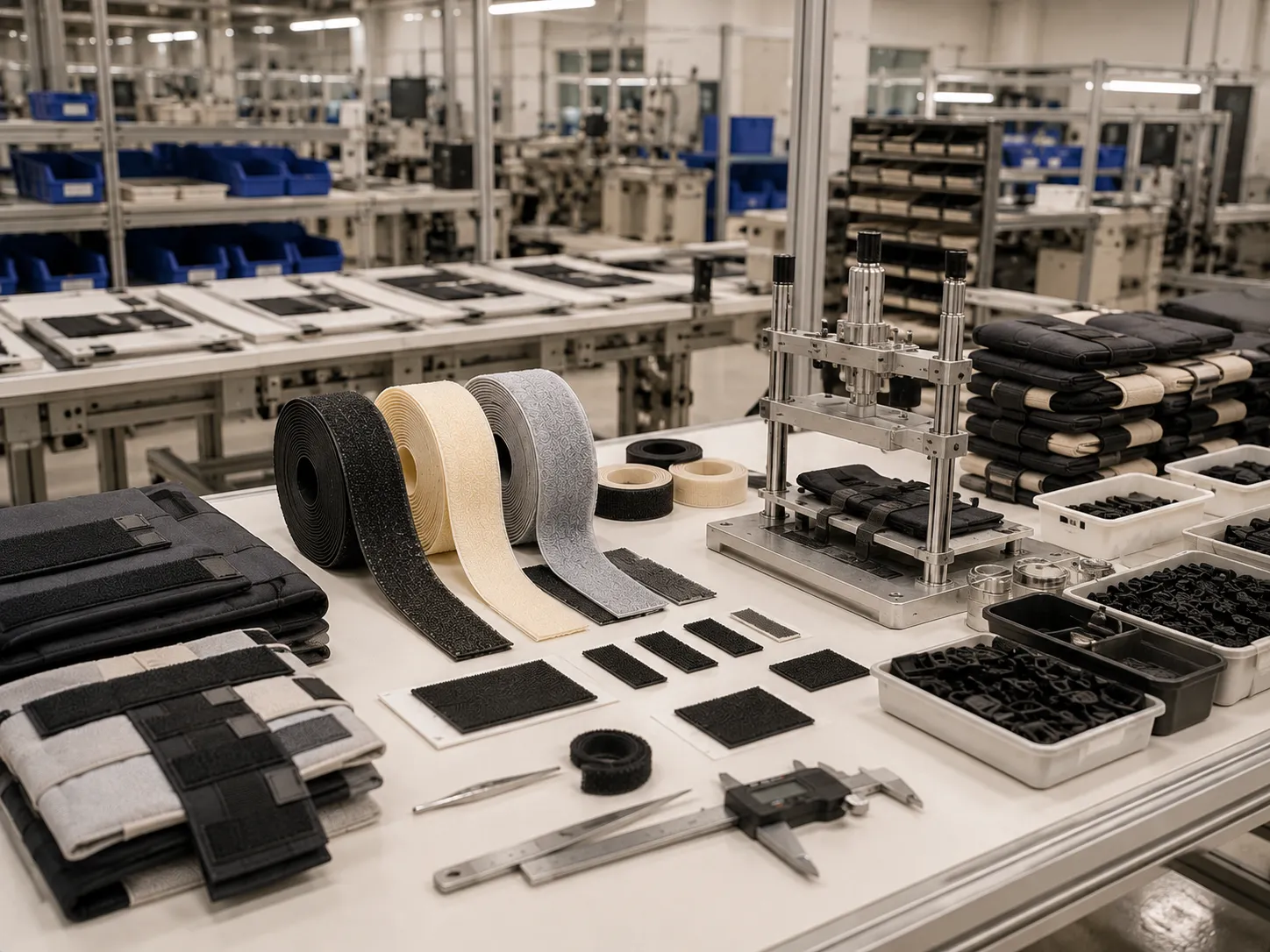
Adhesive hook and loop vs traditional fastening
The comparison below is intended for production engineers and procurement teams evaluating assembly methods. Actual results vary by substrate, load, environment and quality requirements, but the pattern is consistent across many industrial applications.
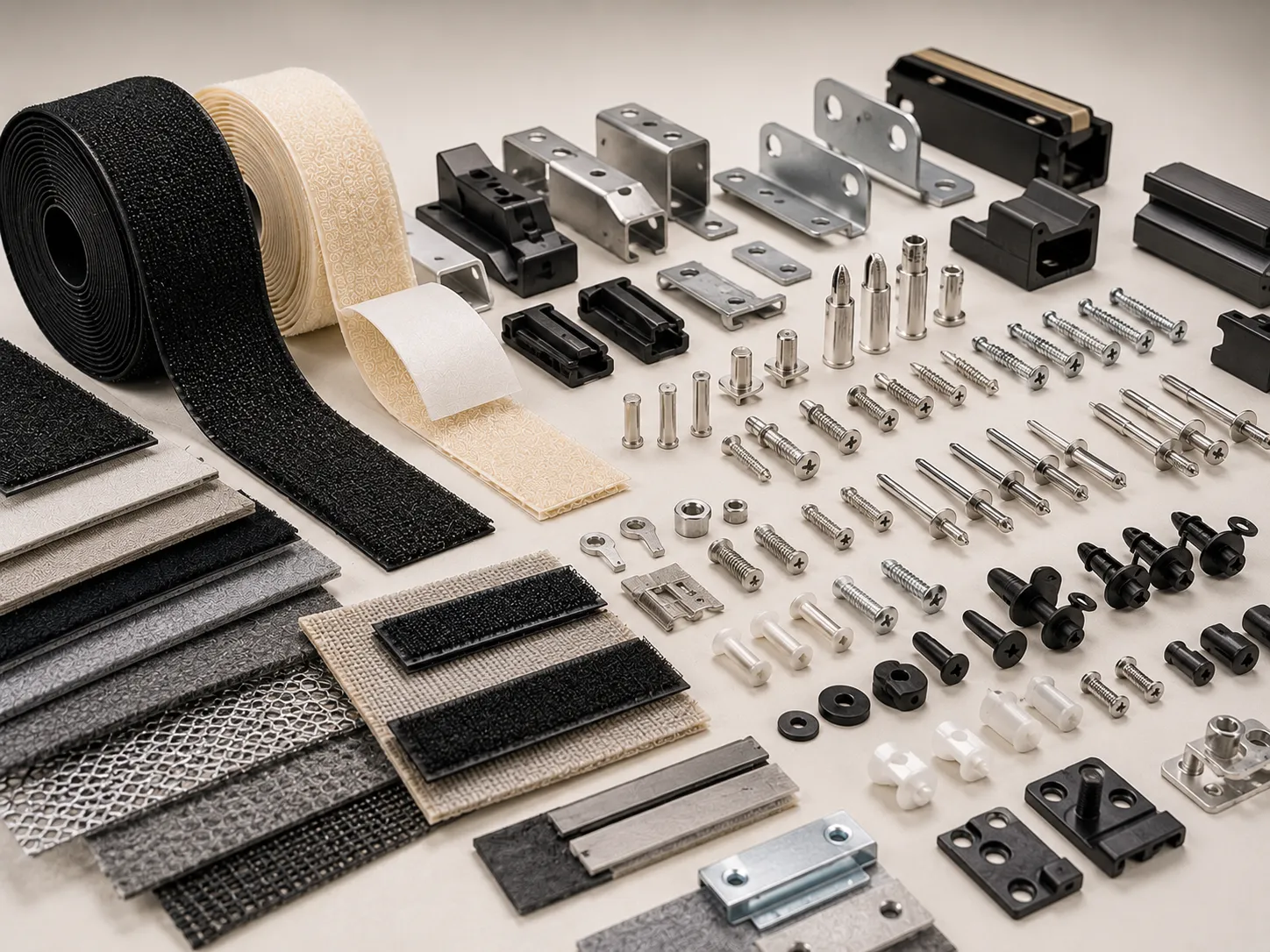
Adhesive Hook & Loop
Traditional Fastening
Peel-and-stick application often completes in seconds with minimal setup.
Sewing, riveting and screwing usually require more handling steps and setup time.
Often eliminates dedicated machines for drilling, riveting or stitching in suitable applications.
Typically requires machine centers, consumables and maintenance schedules.
Operators can learn placement and alignment quickly, which helps during demand spikes.
Often depends on skilled operators or specialized machine setup.
Misaligned parts can often be removed and repositioned before final use.
Errors may damage substrates or require removal of hardware and patch repair.
Supports removable panels, swappable parts and serviceable sub-assemblies.
Permanent methods can limit service access and design iteration.
Displays, panels, cable routing, packaging, furniture accessories and modular OEM parts.
High-load, wash-heavy or permanently fixed joints where mechanical strength is mandatory.
Seven ways adhesive hook and loop improves production efficiency
1. Faster assembly processes. Traditional fastening often includes marking, drilling, hardware insertion, curing or seam finishing. Adhesive hook and loop compresses the task into placement and press-down action. For high-volume repetitive work, that difference is measurable shift after shift.
2. Reduced machinery demand. Many lines can avoid sewing machines, rivet sets, drill fixtures or welding stations for selected fastening tasks. Lower machine dependency reduces capital cost, maintenance downtime and changeover complexity.
3. Lower skill barriers. Because application is straightforward, more workers can perform the task consistently. That helps during seasonal peaks, temporary staffing and multi-shift operations where training time is limited.
4. Better workflow flexibility. Parts can be positioned, checked and adjusted before final commitment. Temporary fastening can support inspection, wiring access or prototype builds without committing to permanent hardware.
5. Stronger modular design. Products with removable covers, interchangeable panels or serviceable modules benefit from closures that open and close without tools. This supports faster prototyping and easier field servicing.
6. Less rework and scrap. Alignment errors are easier to correct when the fastening method allows controlled removal and reapplication. That reduces damaged substrates and wasted labor on correction tasks.
7. Lightweight manufacturing support. Adhesive hook and loop adds minimal weight compared with metal hardware. For automotive interiors, electronics enclosures, packaging and portable equipment, lighter assemblies can improve handling and logistics efficiency.
Features that support faster production lines
Not every adhesive tape improves efficiency equally. Buyers should specify features that match the line and the end product. High-tack adhesives can shorten handling time on suitable substrates. Acrylic adhesive systems may be better when heat, humidity or outdoor exposure is expected. Consistent roll quality and clean release liners reduce jams and operator frustration.
Format matters too. Wide rolls may be efficient for manual cutting, while die-cut pieces can eliminate cutting steps entirely. Pre-matched hook and loop pairs reduce pairing errors on the line. Back-to-back constructions such as Flexwrap can accelerate wrap-and-secure tasks in cable management and reusable strap applications.
Finally, packaging and labeling influence line speed more than many teams expect. Clearly marked widths, adhesive types and part numbers help stores and assembly operators pick the right material quickly, which prevents stoppages caused by specification mix-ups.
OEM product recommendations from Walonium
Walonium offers adhesive and specialty formats designed for different production environments. The right product depends on substrate, bond strength, handling method and expected service conditions.
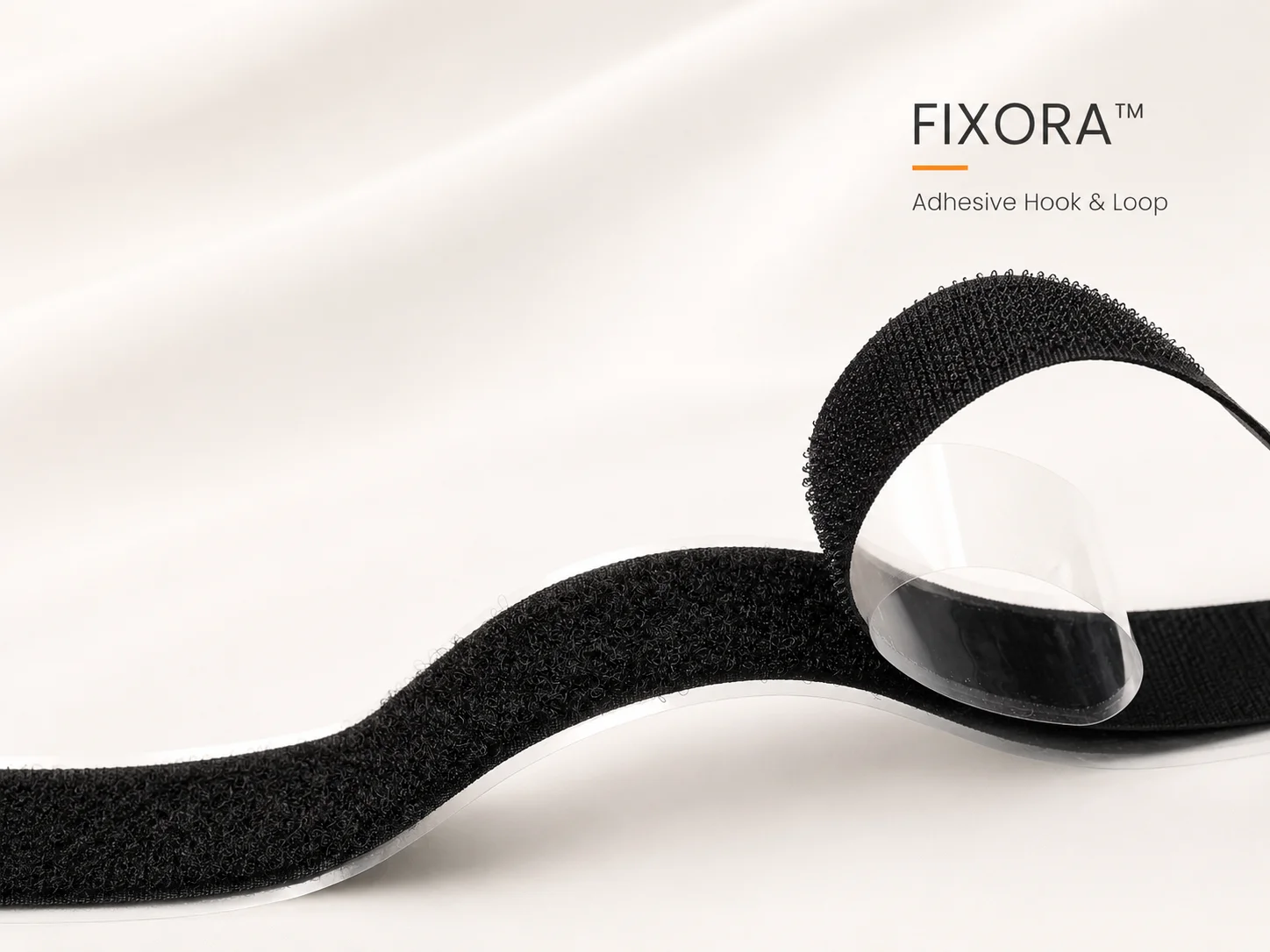
For general commercial assembly, evaluate Fixora, a general adhesive hook and loop tape suited to displays, packaging, furniture, signage and everyday manufacturing support tasks where peel-and-stick speed is the priority.
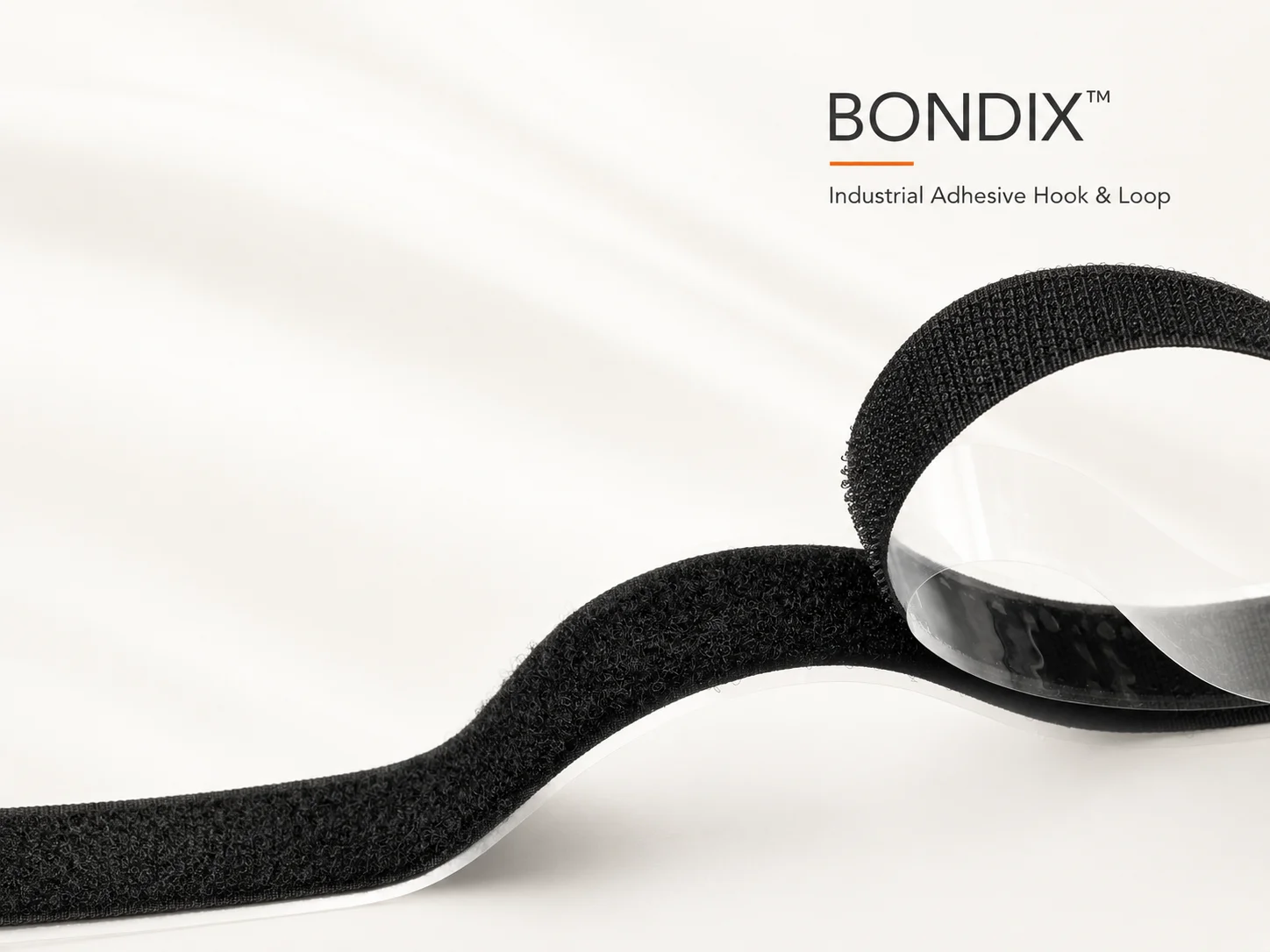
For industrial assembly with stronger performance requirements, evaluate Bondix. It is intended for more demanding adhesive applications such as equipment panels, automotive interior parts, retail fixtures and production environments where higher peel and shear strength matter.
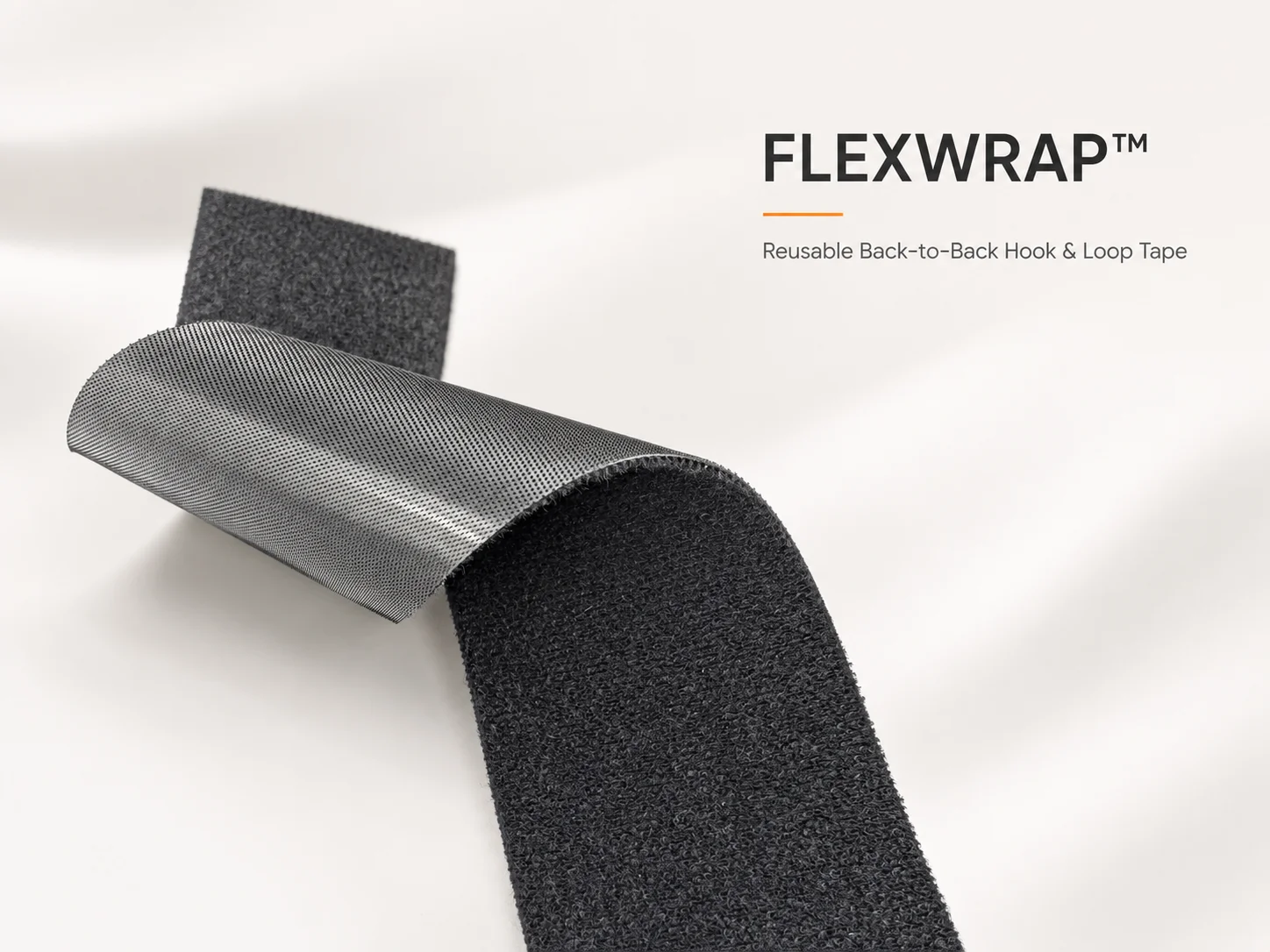
For wrap-and-secure workflows, evaluate Flexwrap back-to-back tape. It supports cable bundling, reusable fastening and rapid strap-style application where both sides are needed in one product.
Industry applications where efficiency gains are strongest
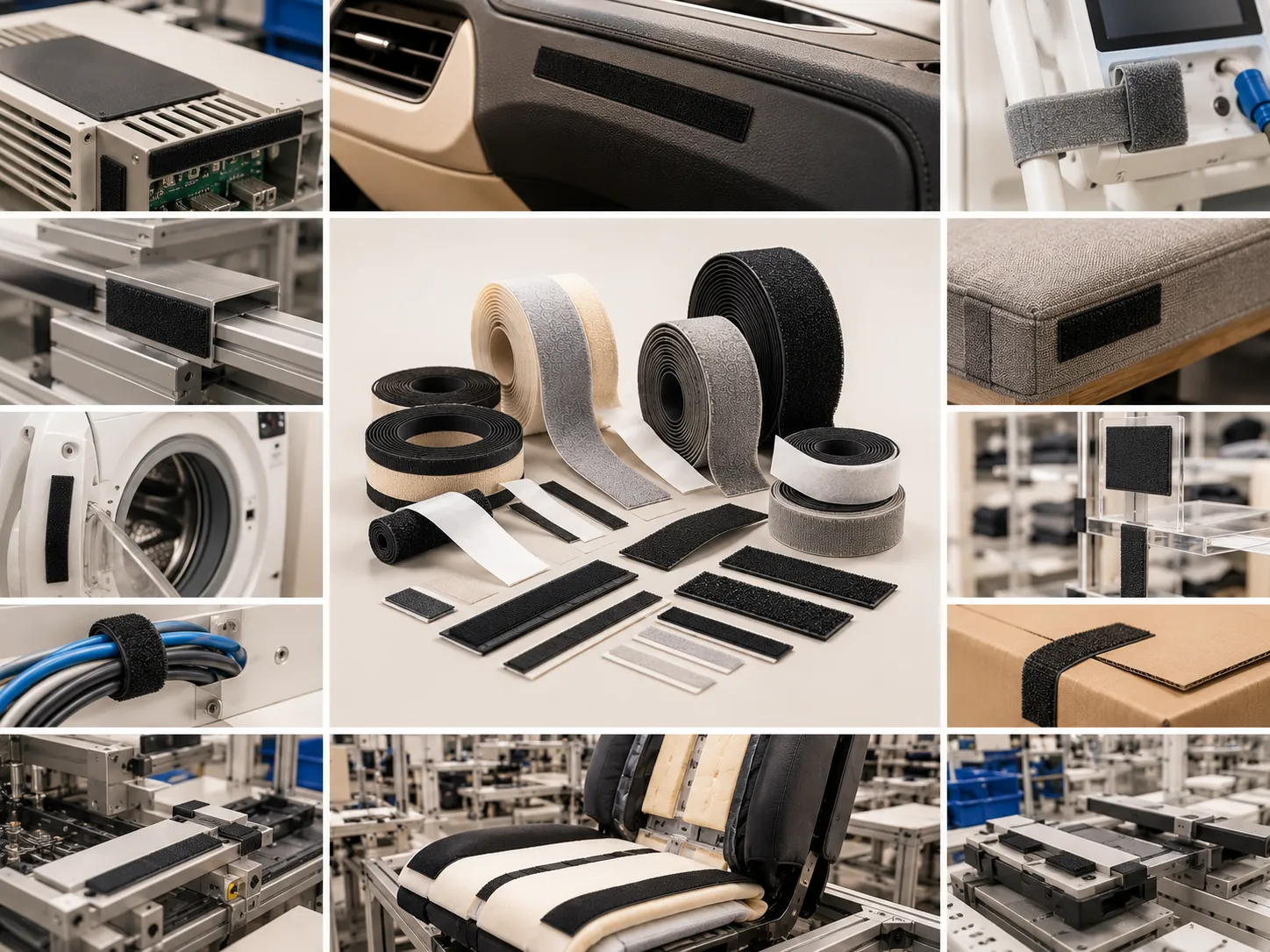
Interior panel attachment
Trim, insulation and interior parts can be mounted quickly without drilling in suitable cabin applications.
Cable routing and covers
Adhesive-backed guides and removable covers simplify assembly and service access.
Panel and cushion fastening
Peel-and-stick attachment supports faster upholstery and component assembly on compatible substrates.
Adjustable strap production
Adhesive formats can speed strap assembly and accessory mounting where validated bonding is acceptable.
Display and fixture builds
Modular display systems benefit from fast repositionable fastening during setup and campaign changes.
Reusable closure systems
Adhesive hook and loop supports repeatable opening and closing without complex hardware.
Bundle and route quickly
Flexwrap and adhesive-backed formats reduce time spent securing harnesses and service loops.
Common mistakes that reduce production efficiency
The first mistake is selecting adhesive hook and loop without validating the substrate. Painted metal, low-surface-energy plastics, dusty panels and oily surfaces can all reduce bond performance. A fast application step is not efficient if the part fails in the next station.
The second mistake is ignoring environment. Heat, humidity, cleaning chemicals and sunlight affect adhesive behavior. A tape that works in a climate-controlled assembly room may underperform in warehouse storage or field use.
The third mistake is using the wrong format for the line. Manual cutting may slow high-volume work, while the wrong die-cut size can increase alignment errors. Format should match station layout and operator motion.
The fourth mistake is treating all adhesive tapes as interchangeable. General-purpose and industrial adhesive constructions serve different load and exposure profiles. Using a lighter product to save cost can create more rework than it removes.
Buying advice for procurement and production teams
When requesting a quotation, share the substrate, application geometry, production volume, preferred roll or die-cut format, adhesive requirement, color needs and expected bond life. A better brief leads to a better recommendation and fewer line trials.
For OEM programs, compare at least two product options in live assembly tests. For example, evaluate Fixora for speed and value, then compare Bondix if the part faces higher stress or harsher service conditions. Document placement time, rework rate and bond result after handling and environmental exposure.
Think in total process cost, not tape price alone. The right adhesive hook and loop specification can reduce labor time, machine utilization, scrap and warranty risk. That is where production efficiency becomes a measurable business outcome.
Key takeaways
Adhesive hook and loop tape improves production efficiency when it replaces slower fastening steps with reliable peel-and-stick assembly. The biggest gains come from faster placement, lower tooling dependency, easier training, modular design support and quicker rework.
For Walonium buyers, the practical mapping is simple: Fixora for general adhesive efficiency, Bondix for industrial adhesive performance, and Flexwrap for back-to-back wrap-and-secure workflows.
Validate the specification on the actual line and in the actual environment before scaling production. Efficiency is proven in the finished assembly, not in the product catalogue.
FAQ
How does adhesive hook and loop tape improve production efficiency?
It improves efficiency by replacing slower fastening methods with peel-and-stick assembly. That reduces setup time, lowers dependence on specialized machinery, simplifies operator training, supports modular design and makes alignment corrections faster when mistakes occur.
What is adhesive hook and loop tape?
It is a hook and loop fastening tape with pressure-sensitive adhesive backing. The adhesive allows direct bonding to suitable substrates without sewing, riveting or drilling, which makes it useful for rapid assembly and repositionable fastening.
When should manufacturers use adhesive hook and loop instead of sewing or screws?
Use it when the substrate accepts pressure-sensitive adhesive, assembly speed matters, the product benefits from removable or modular attachment and mechanical permanence is not required. Sewing or screws remain better for maximum load, wash durability or permanent fixation.
Which Walonium products support efficient adhesive fastening?
Fixora supports general adhesive fastening for commercial assembly. Bondix is designed for industrial adhesive applications with stronger performance requirements. Flexwrap supports back-to-back wrap-and-secure workflows such as cable bundling and reusable fastening.
Does adhesive hook and loop reduce manufacturing labor costs?
Yes, in many applications it reduces labor costs by shortening assembly steps, lowering training needs and eliminating secondary operations. Savings depend on product design, substrate compatibility and whether the adhesive specification matches the operating environment.
What industries benefit most from adhesive hook and loop efficiency gains?
Automotive interiors, electronics, furniture, medical supports, packaging, retail displays and cable management often benefit because they need fast attachment, modular components or frequent adjustment without heavy hardware.
What features should buyers specify for production-line efficiency?
Specify adhesive type, tape width, die-cut format, peel and shear strength, substrate compatibility, release liner handling and packaging format. Pre-cut parts and consistent roll quality reduce handling time and alignment errors on the production floor.
Should OEM teams test adhesive hook and loop before full production?
Yes. Test samples on the actual substrate under real temperature, humidity, cleaning and handling conditions. Adhesive performance and assembly speed can change significantly once the tape is applied in the finished product environment.