On this page
Why consistent quality matters in industrial hook and loop
Industrial hook and loop tape operates under performance expectations that consumer-grade fasteners never face. OEM assembly lines, automotive interiors, medical devices and export programs require batch-to-batch consistency in peel strength, engagement force, color matching and dimensional tolerance. A single out-of-spec batch can trigger incoming inspection holds, line stoppages and customer complaints that cost far more than the tape itself. Explore solutions by sector when your specification is tied to a particular industry.
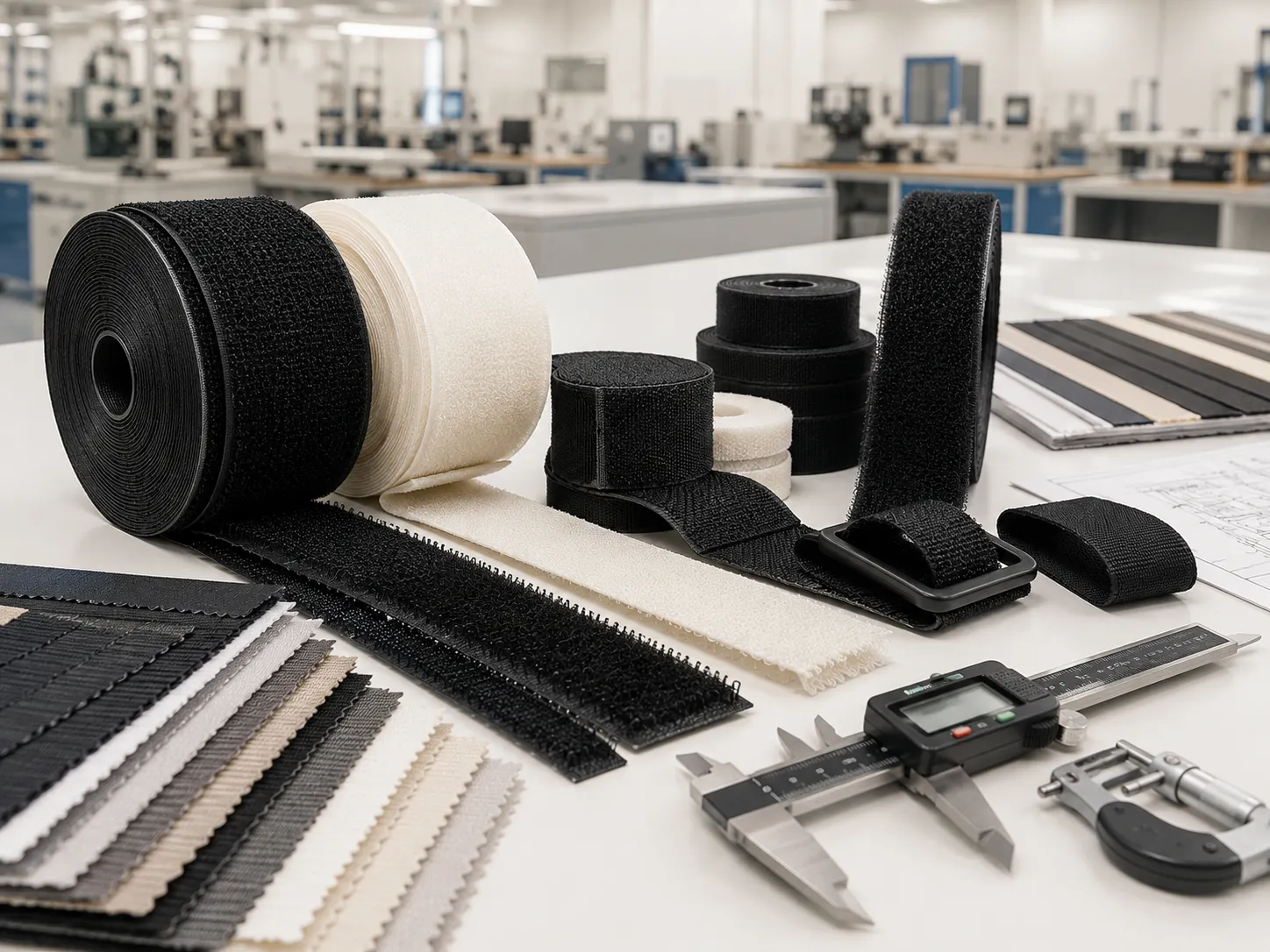
Quality in hook and loop manufacturing is not a final inspection step. It is embedded in yarn selection, loom calibration, hook molding parameters, finishing processes and packaging controls that together determine whether batch 47 performs identically to batch 12. Buyers evaluating suppliers should look beyond product samples to understand the manufacturing systems that produce consistent results at scale.
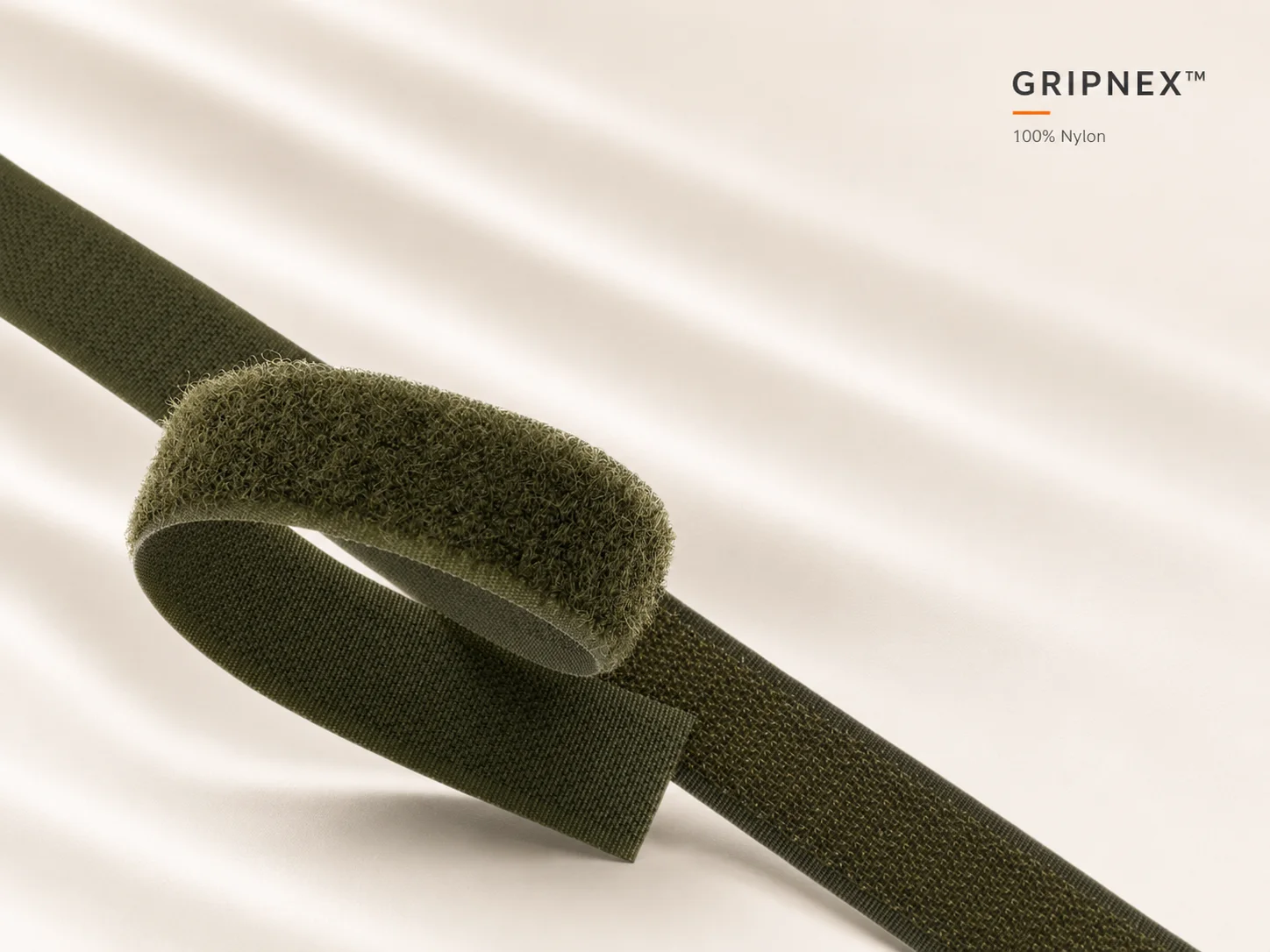
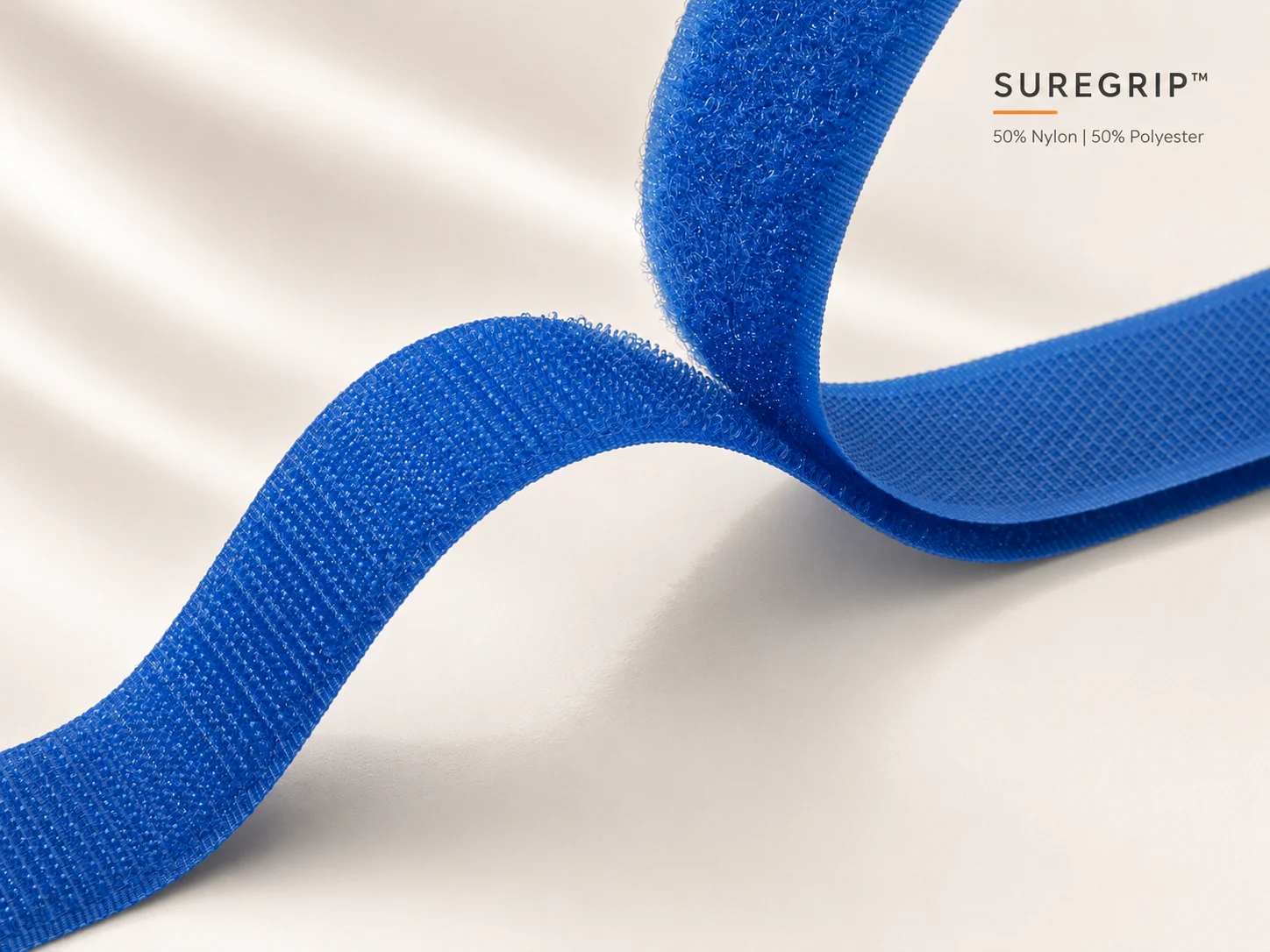
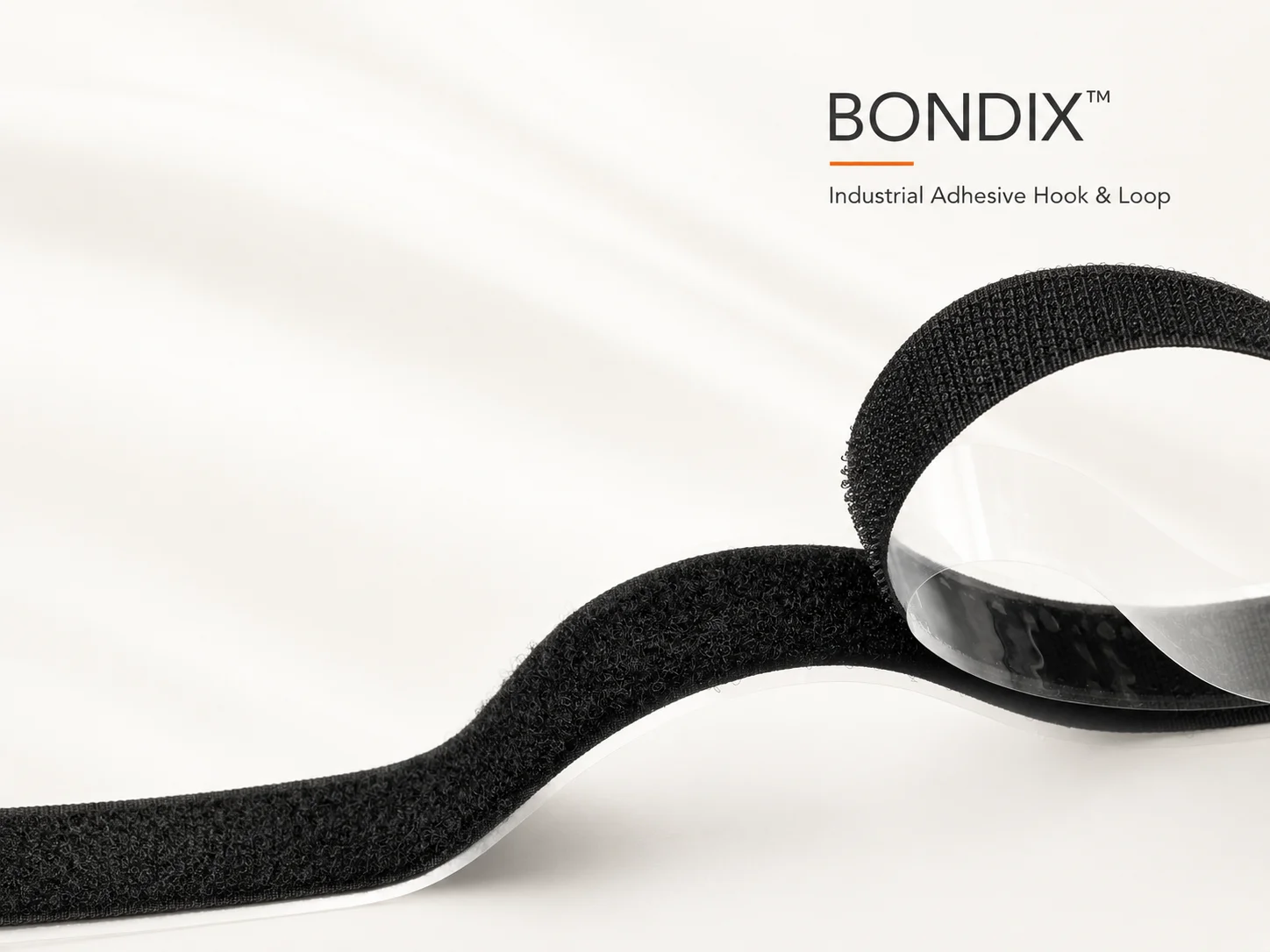
Walonium Textile manufactures hook and loop tape with quality control protocols designed for industrial and export programs. Products including Gripnex, Suregrip and Bondix are produced under documented processes with batch traceability, incoming material inspection and finished-goods testing that supports OEM qualification requirements.
This guide explains how Walonium ensures consistent quality across production batches, what QC metrics matter for industrial buyers, and how to evaluate supplier quality systems before committing to production volumes.
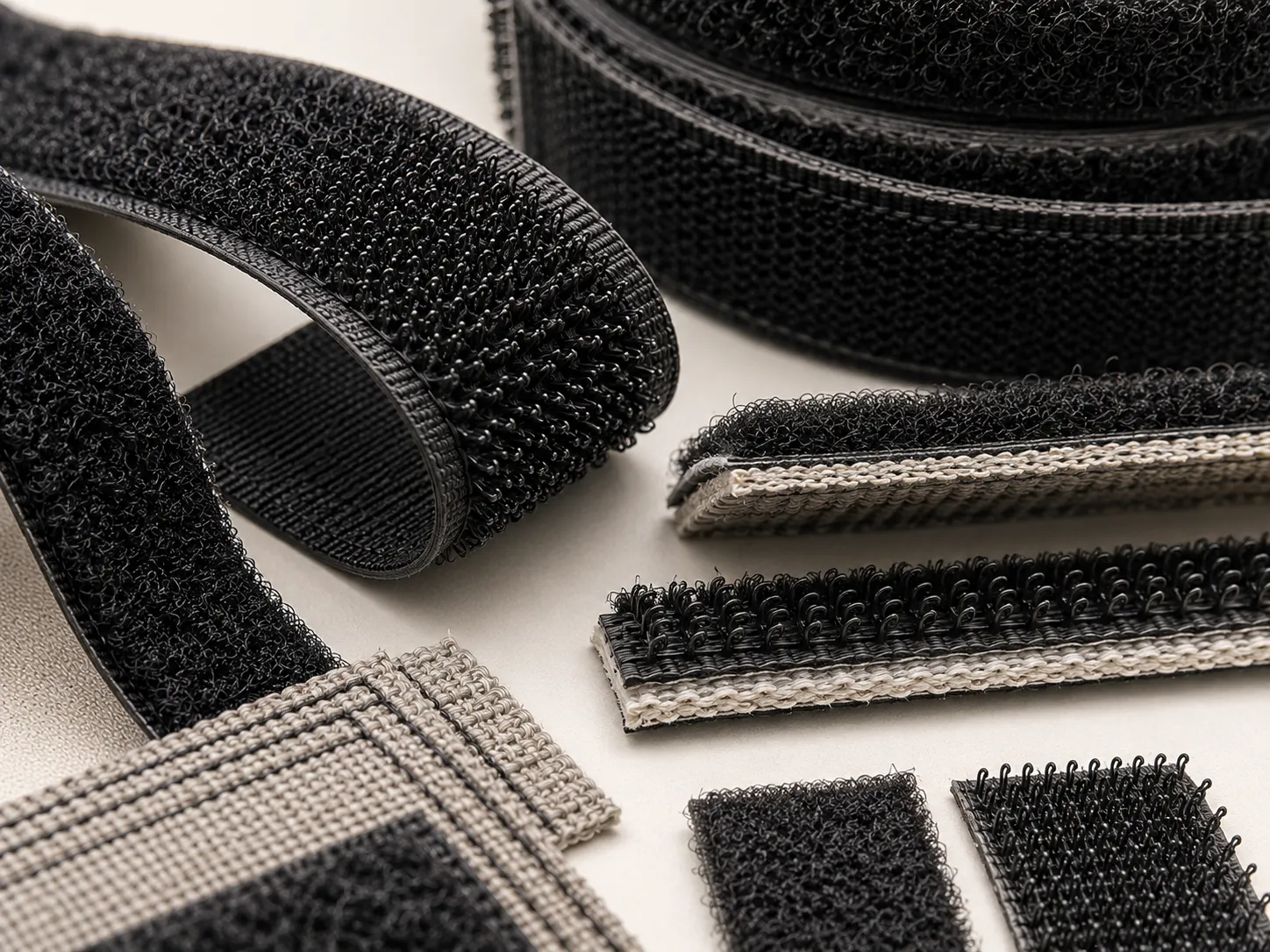
Batch consistency and process control
Batch consistency means that every production run of the same specification delivers hook and loop tape within defined tolerance bands for peel strength, engagement count, dimensional width, color and physical appearance. Achieving this requires controlled inputs, calibrated equipment and standard operating procedures that do not change between runs without formal engineering review.
Raw material consistency is the foundation. Nylon and polyester yarn lots must meet defined denier, tenacity and color specifications before entering production. Walonium inspects incoming yarn against supplier certificates and retains lot traceability so any finished batch can be traced back to raw material sources. When yarn lots change, production engineering evaluates whether requalification testing is required before releasing new batches to customers.
Loom and knitting parameters directly affect loop density, engagement uniformity and width tolerance. Walonium maintains calibration schedules for all production equipment with documented set-up parameters for each product grade. Gripnex runs on dedicated nylon-optimized settings that differ from Walogrip polyester-rich configurations, preventing cross-contamination of process parameters between product lines.
Hook molding for the hook side introduces additional process variables. Hook height, density and tip geometry affect engagement force and cycle life. Process control limits are established during product qualification and monitored through in-process sampling rather than relying solely on finished-goods testing to catch drift.
Quality control processes from raw material to shipment
Walonium quality control operates at four stages: incoming material inspection, in-process monitoring, finished-goods testing and pre-shipment verification. Each stage has defined acceptance criteria, sampling plans and documentation requirements that create an auditable quality record for OEM buyers.
Incoming inspection covers yarn certificates, adhesive backing quality for Bondix and other adhesive grades, packaging material specifications and auxiliary components. Materials failing incoming criteria are quarantined and not released to production until disposition is determined through the non-conformance process.
In-process monitoring includes width checks during weaving or knitting, visual inspection for defects such as broken hooks, missing loops or contamination, and periodic engagement testing during long production runs. Operators record in-process data on batch travelers that follow each production lot through finishing and packaging.
Finished-goods testing evaluates peel strength, shear strength where applicable, engagement and disengagement force, color against approved reference standards, width and length against order specifications, and visual appearance against defined acceptance criteria. Test results are recorded on batch certificates available to buyers upon request.
Pre-shipment verification confirms that packaged rolls match order specifications for width, color, length and labeling before dispatch. Export orders receive additional documentation review to ensure compliance certificates, commercial invoices and packing lists align with order requirements.

Peel strength testing and performance standards
Peel strength is the most commonly specified performance metric for hook and loop tape in industrial applications. It measures the force required to separate hook and loop sides when pulled at a defined angle, typically 180 degrees. Industrial buyers specify minimum peel strength values that the tape must meet or exceed across all production batches.
Peel strength depends on hook density, loop pile height, textile construction and engagement area. Gripnex 100% nylon construction typically delivers higher peel strength than polyester-rich alternatives because nylon hooks maintain sharper engagement geometry over repeated cycles. Suregrip balanced construction provides moderate peel strength suitable for general industrial and apparel applications. Bondix adds adhesive peel strength as a separate parameter from textile engagement strength.
Testing methodology matters for comparability. Walonium tests peel strength using standardized methods with defined engagement time, pull speed and sample preparation. Buyers comparing suppliers should confirm that test methods are equivalent before comparing numerical values across different datasheets.
Establish acceptance ranges rather than single-point targets. A minimum peel strength of 1.0 N/cm with upper tolerance at 1.8 N/cm gives production more flexibility than requiring exactly 1.4 N/cm. Ranges should be validated against actual application requirements through sample testing on the finished product assembly.
Color matching and visual consistency
Color consistency across batches is critical for visible applications in apparel, automotive interiors, medical devices and branded products. A visible color shift between production batches on the same SKU creates customer complaints even when mechanical performance is within specification.
Walonium controls color through approved master standards, spectrophotometer measurement against defined Delta E tolerance limits, and yarn lot color verification before production start. Standard colors such as black, white, navy and grey maintain reference standards in controlled storage. Custom colors require buyer-approved lab dips before production authorization.
Environmental factors affect perceived color. Lighting conditions in inspection areas should match the environment where the finished product will be evaluated. Walonium inspects under standardized D65 daylight conditions to reduce subjective variation in visual assessment.
For export programs, confirm color approval process before first production order. Digital color approval via spectrophotometer data exchange reduces lead time compared to physical lab dip shipping, but buyers should validate digital approval against physical samples on their actual substrate before full production release.
Gripnex 100% Nylon
Suregrip 50/50 Blend
100% nylon hooks maintain engagement geometry for stronger, more consistent peel values.
Moderate peel strength suitable for general industrial and apparel applications.
Nylon construction supports higher open-close cycle counts before engagement degradation.
Adequate for moderate-cycle applications with lower per-cycle performance demand.
Requires tighter process control on nylon yarn lots and hook molding parameters.
Blended construction tolerates wider yarn lot variation with less performance impact.
Nylon dyeing requires precise lot control; custom colors need longer approval cycles.
Blended dyeing often achieves acceptable color match with shorter lab dip cycles.
Automotive, medical, footwear and high-cycle industrial applications requiring documented performance.
Apparel, bags, general industrial and export programs needing balanced quality at moderate cost.
Manufacturing systems that support quality
Consistent quality at production scale requires manufacturing infrastructure beyond individual QC checkpoints. Walonium production systems include dedicated product lines segregated by grade to prevent cross-contamination of process parameters, equipment maintenance programs with calibration traceability, operator training and certification for set-up and inspection tasks, and non-conformance management with root cause analysis and corrective action tracking.
Production scheduling also affects quality. Rushing orders through compressed timelines increases set-up errors, reduces in-process sampling frequency and elevates defect escape risk. Walonium schedules production based on confirmed orders with adequate lead time rather than overloading capacity during peak periods at the expense of process control.
Capacity planning ensures that each product grade runs on equipment optimized for its textile construction. Running Gripnex on equipment configured for Walogrip without proper changeover validation introduces process drift that manifests as batch inconsistency two or three runs later.
OEM documentation and qualification support
Industrial and export buyers require documentation beyond product samples. OEM qualification typically demands a supplier quality survey or audit, product specification sheets with test methods and acceptance criteria, batch test certificates for production orders, material safety and compliance declarations, and change notification procedures for any process or material modification.
Walonium provides specification sheets for Gripnex, Suregrip and Bondix with defined test methods, typical performance ranges and product construction details. Batch certificates include production date, batch number, test results for peel strength and dimensional checks, and inspector sign-off for release authorization.
Change control is critical for qualified suppliers. When Walonium modifies yarn sources, process parameters, equipment or packaging, affected customers receive advance notification with requalification guidance. Buyers should define change notification requirements in supplier agreements, specifying which changes require buyer approval before implementation.
For regulated industries such as medical and automotive, additional documentation may include IATF or ISO certification evidence, REACH and RoHS compliance declarations, and biocompatibility statements where applicable. Confirm documentation requirements during supplier qualification rather than discovering gaps during customer audit.
Bondix adhesive quality considerations
Bondix industrial adhesive hook and loop adds adhesive performance as a quality dimension beyond textile engagement. Adhesive quality depends on coating weight uniformity, adhesive chemistry consistency, release liner compatibility and bond performance on defined substrates after ageing.
Walonium controls adhesive quality through incoming adhesive batch verification, coating weight monitoring during application, bond testing on reference substrates after defined ageing periods, and visual inspection for coating defects such as skips, bubbles or edge voids. Adhesive peel strength is tested separately from textile engagement strength because they measure different failure modes.
Buyers specifying Bondix should define substrate reference panels for bond testing, ageing conditions that simulate finished product environment, and acceptance criteria for both initial bond and aged bond performance. Adhesive quality that passes at room temperature may fail after heat ageing if not validated under realistic conditions.
Industry quality requirements
IATF-aligned documentation
Automotive programs require PPAP elements, batch traceability and change notification. Gripnex with documented peel strength certificates supports interior trim qualification.
Biocompatibility and traceability
Medical device programs need batch-level traceability, material safety declarations and controlled change management. Validate cycle life under clinical use conditions.
Color and hand feel
Apparel buyers prioritize color consistency and soft hand feel across seasonal production runs. Suregrip balanced construction delivers predictable visual and tactile quality.
Cycle life validation
Footwear closures face thousands of open-close cycles. Gripnex nylon construction with documented cycle testing supports long-life performance claims.
Adhesive bond stability
Signage applications using Bondix need aged bond data on panel substrates. Validate under UV and temperature cycling before approving production specification.
Dimensional tolerance
Industrial assembly requires width tolerance within defined limits for automated cutting and placement. Confirm dimensional Cpk values during supplier qualification.
Compliance documentation
Export programs need REACH, OEKO-TEX or CPSIA declarations depending on destination. Confirm compliance scope covers your specific product grade and color.
Common quality evaluation mistakes
The most common mistake is qualifying a supplier based on initial samples without verifying batch consistency during production ramp-up. Sample room products often represent best-case performance that production averages may not sustain without robust process control.
The second mistake is comparing peel strength values across suppliers without confirming identical test methods, engagement times and sample preparation. A 1.5 N/cm result from one supplier is not equivalent to 1.5 N/cm from another if test protocols differ.
The third mistake is ignoring color approval process for custom colors. Approving a lab dip once without defining Delta E tolerance for production batches leads to visible color drift that triggers customer complaints despite mechanical performance remaining in spec.
The fourth mistake is failing to define change notification requirements in supplier agreements. Process changes implemented without buyer notification can invalidate qualified specifications silently until a field failure reveals the drift.
Quality checklist for OEM buyers
When evaluating hook and loop suppliers for industrial programs, request quality manual or ISO certification evidence, product specification sheets with test methods and acceptance ranges, batch test certificate samples from recent production, change notification procedure documentation, and compliance declarations relevant to your destination market.
During qualification testing, evaluate peel strength on three separate batches not just initial samples, test color against approved standard under standardized lighting, validate dimensional tolerance across the width range you will order, and confirm adhesive bond performance after ageing for Bondix applications.
For related guidance on supply planning that supports quality programs, see the supply chain guide and the sustainability standards guide for compliance documentation requirements.
Key takeaways
Consistent quality in industrial hook and loop tape comes from controlled manufacturing systems, not luck. Evaluate suppliers on process control, batch traceability, test documentation and change management capability alongside product samples.
Gripnex delivers premium nylon performance with documented peel strength for demanding applications. Suregrip provides balanced quality for general industrial and export programs. Bondix adds industrial adhesive performance with separate bond testing requirements.
Define acceptance ranges, require batch certificates for production orders, and establish change notification protocols before scaling to full production volumes. Quality assurance is a partnership between buyer specification and supplier process discipline.
FAQ
How does Walonium ensure batch-to-batch consistency in hook and loop tape?
Walonium maintains consistency through incoming yarn inspection, calibrated production equipment with documented set-up parameters, in-process sampling during weaving and hook molding, finished-goods peel strength and dimensional testing, and batch travelers that trace each lot from raw material to shipment.
What peel strength values should industrial buyers specify?
Specify minimum peel strength with an acceptable upper range rather than a single target value. Typical industrial sew-on tape ranges from 0.8 to 2.0 N/cm depending on construction. Validate required values through sample testing on your actual assembly before defining specification limits.
Does Walonium provide batch test certificates for production orders?
Yes. Batch certificates include production date, batch number, peel strength test results, dimensional checks and inspector release authorization. Request certificates during supplier qualification and specify certificate requirements in purchase orders for production shipments.
How is color consistency controlled across production batches?
Color is controlled through approved master standards, spectrophotometer measurement against defined Delta E tolerance limits, and yarn lot verification before production start. Custom colors require buyer-approved lab dips before production authorization.
What OEM documentation does Walonium provide for supplier qualification?
Walonium provides product specification sheets, batch test certificates, REACH and compliance declarations, change notification procedures, and responses to supplier quality questionnaires. Additional documentation such as ISO certification evidence is available upon request.
How do Gripnex and Suregrip differ in quality performance?
Gripnex 100% nylon delivers higher peel strength and extended cycle life with tighter process control requirements. Suregrip 50/50 blend provides moderate peel strength with stable processing and shorter color approval cycles, suited for general industrial and apparel programs.
What quality testing is required for Bondix adhesive products?
Bondix requires textile engagement testing plus adhesive bond testing on defined reference substrates at zero, seven and thirty day ageing intervals. Adhesive peel strength and coating uniformity are tested separately from hook and loop engagement performance.
What should buyers include in a hook and loop quality agreement?
Include specification limits for peel strength, dimensional tolerance and color Delta E, sampling and testing methods, batch certificate requirements, non-conformance reporting procedures, change notification requirements and corrective action timelines for quality escapes.