On this page
What is heavy-duty hook and loop?
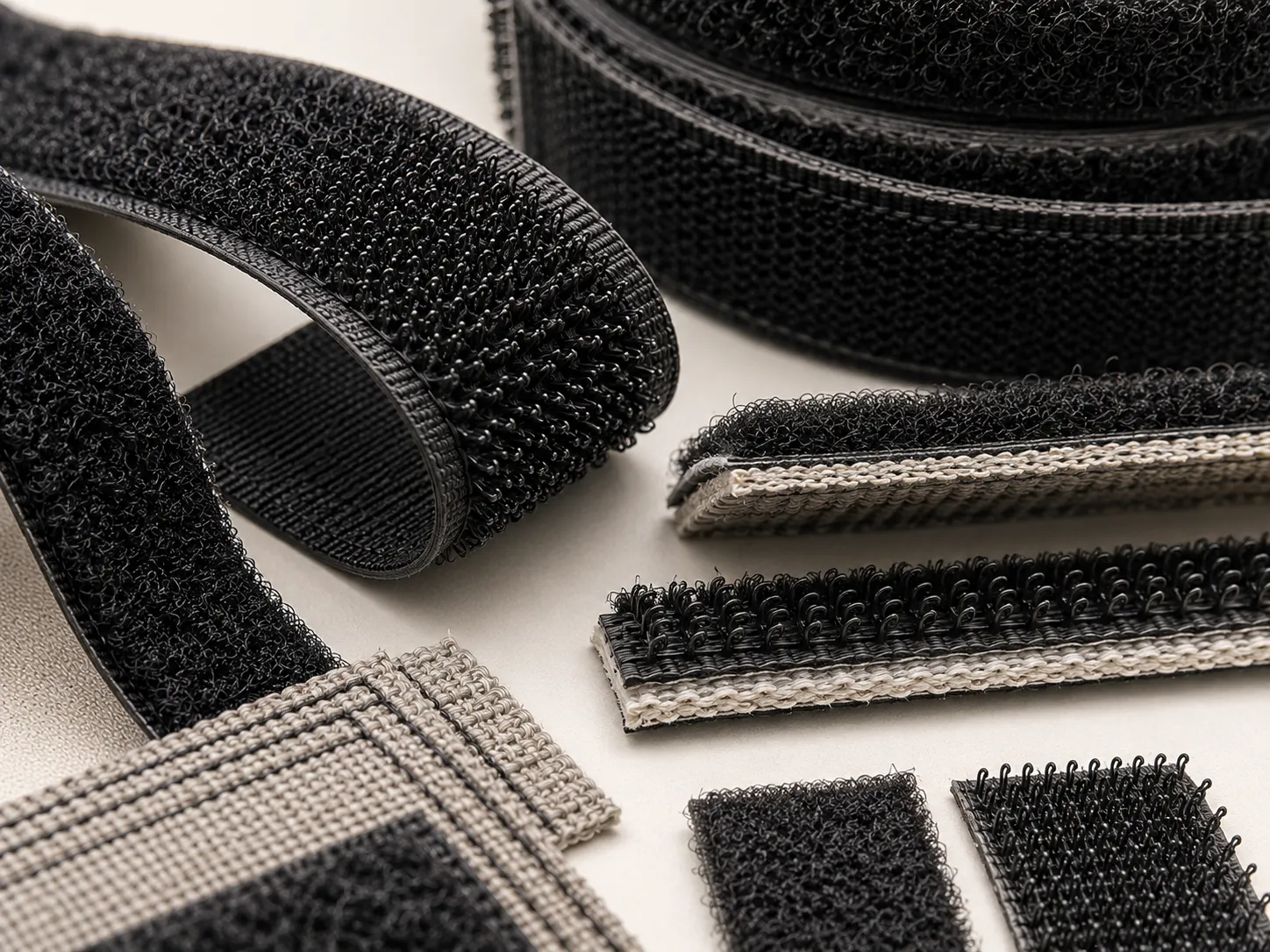
Heavy-duty hook and loop is a textile fastening system engineered for sustained mechanical loads, high open-close cycle counts and demanding industrial service conditions. Like all hook and loop, it uses molded or woven hooks on one side and receptive loop fibers on the other. When pressed together under firm engagement pressure, the two sides interlock. When peeled apart, the closure releases and can be reused depending on construction grade and accumulated wear. For sector-level buying paths, start with our industry-specific fastening solutions hub before specifying load ratings.
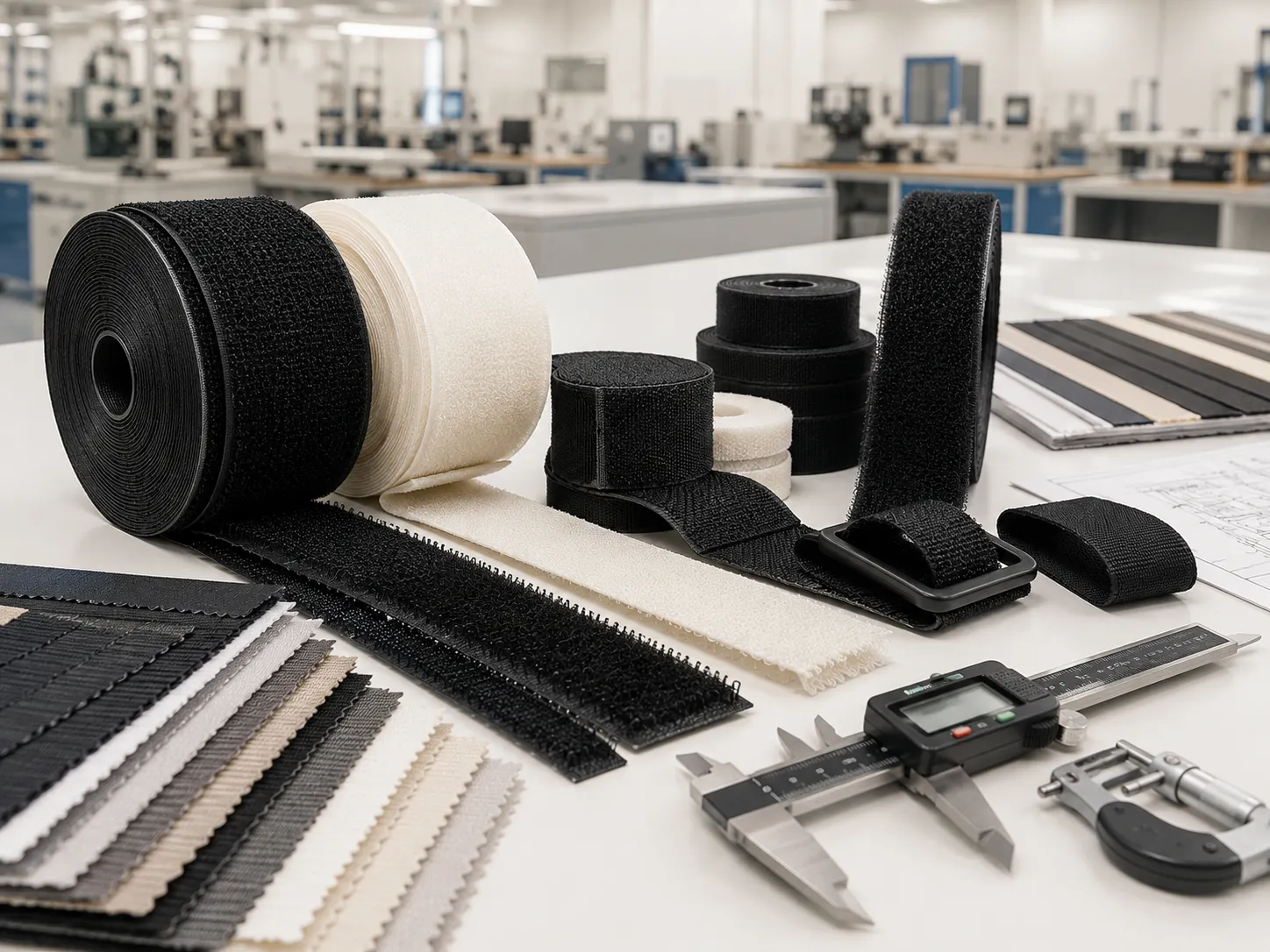
The difference between standard and heavy-duty grades lies in hook density, base fabric strength, material composition and manufacturing tolerance. Consumer-grade tapes use lighter polyester blends and lower hook profiles suited to apparel and light packaging. Industrial grades use stronger yarns, tighter weave structures and higher-profile hooks that resist disengagement under vibration, tension and repeated handling.
For engineers and OEM procurement teams, heavy-duty hook and loop is not a single product category. It is a performance tier defined by measurable peel strength, shear strength, tensile resistance and cycle life validated against the intended application. Cable management straps, tool board mounts and load restraints each place different stress on the closure, which is why specification must begin with load direction and engagement geometry rather than tape colour or nominal width alone.
Understanding tensile strength, peel and shear
Three mechanical properties govern heavy-duty hook and loop performance in industrial fastening: tensile strength, peel strength and shear strength. Confusing these leads to field failures that appear as premature disengagement, strap creep or adhesive delamination on mounted tools.
Tensile strength measures the force required to pull the base fabric apart along its length. High tensile strength matters in load strapping where the tape itself must resist stretching and tearing under sustained tension. Nylon base fabrics generally offer higher tensile values than standard polyester blends, which is why premium grades such as Gripnex are specified for harnesses, safety restraints and heavy textile straps.
Peel strength measures resistance when force is applied perpendicular to the engaged surface, effectively pulling the hook side away from the loop side. Peel values are typically lower than shear values for hook and loop because the closure disengages hook by hook along the peel front. Applications that require frequent opening, such as reusable cable straps and removable tool holders, need adequate peel resistance to stay closed under incidental force yet release cleanly when intentionally opened.
Shear strength measures resistance when force is applied parallel to the engaged surface, trying to slide the two sides apart. Cable bundles under gravity load, vertically mounted tools and strapped equipment in transit primarily stress shear performance. Specifying for shear is critical in tool mounting and load strapping because a closure with high peel but inadequate shear may hold during a pull test yet fail under sliding load.
Test standards such as ASTM D5170 and similar industry protocols provide comparable peel and shear data when measured under controlled conditions. OEM teams should request supplier test data but always validate with application-specific prototypes because substrate, temperature, contamination and engagement pressure shift real-world results.
Heavy-duty hook and loop for cable management
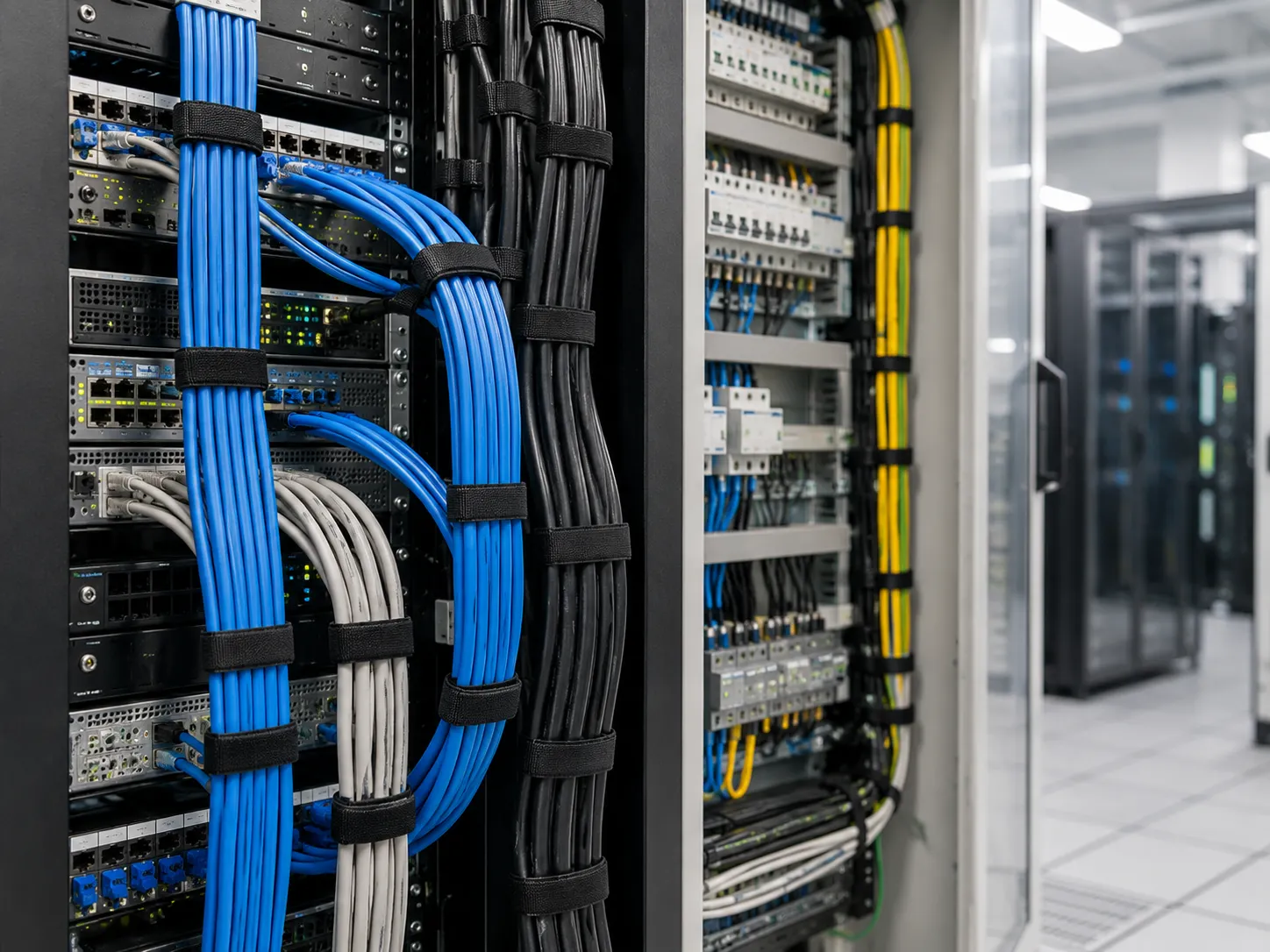
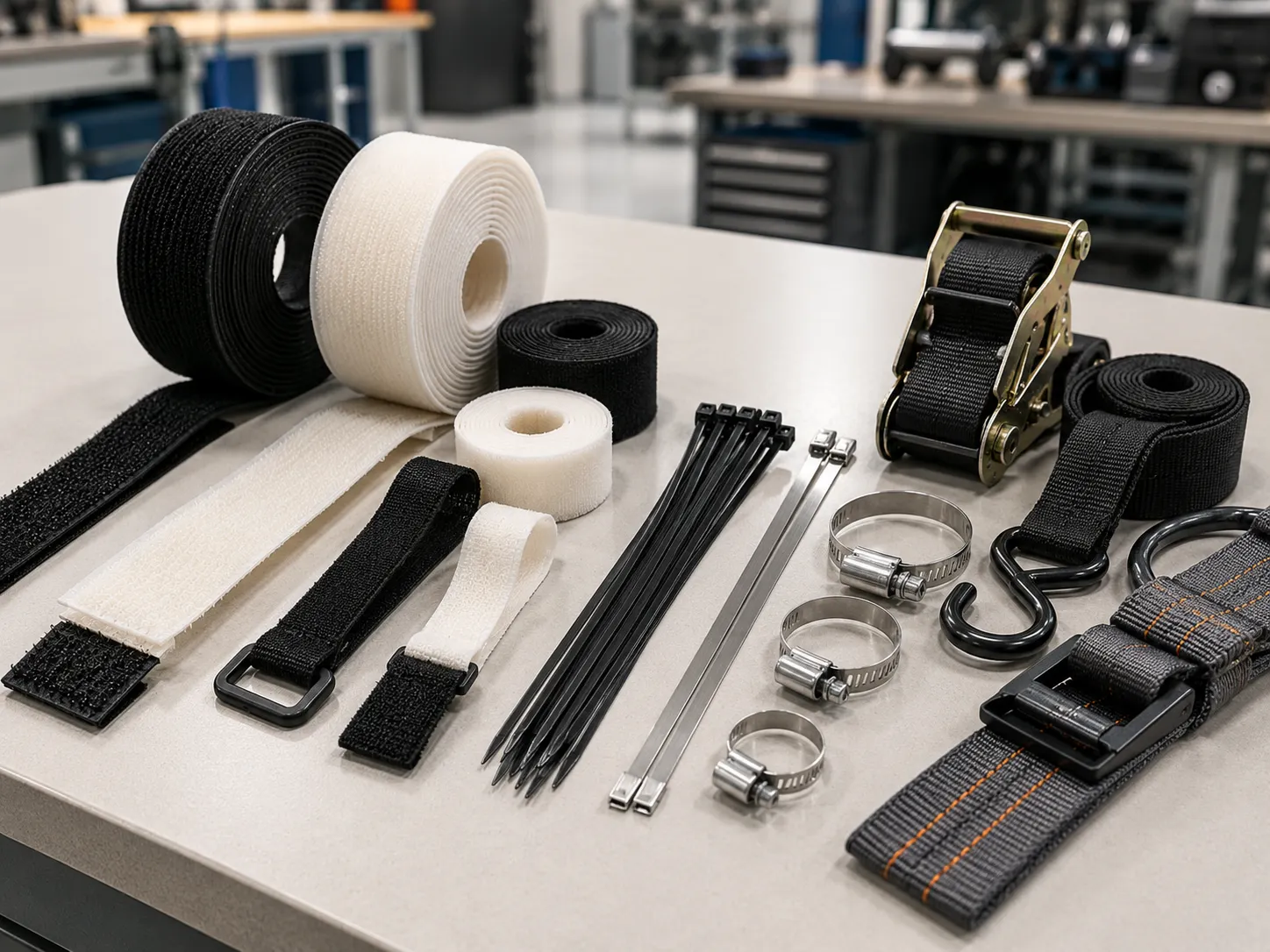
Cable management is one of the most common industrial applications for heavy-duty hook and loop. Data centers, electrical panels, network installations, industrial automation lines and wire harness assembly all require bundling that is secure yet serviceable. Single-use nylon cable ties solve permanence at low cost but must be cut for every adjustment, generating waste and slowing maintenance.
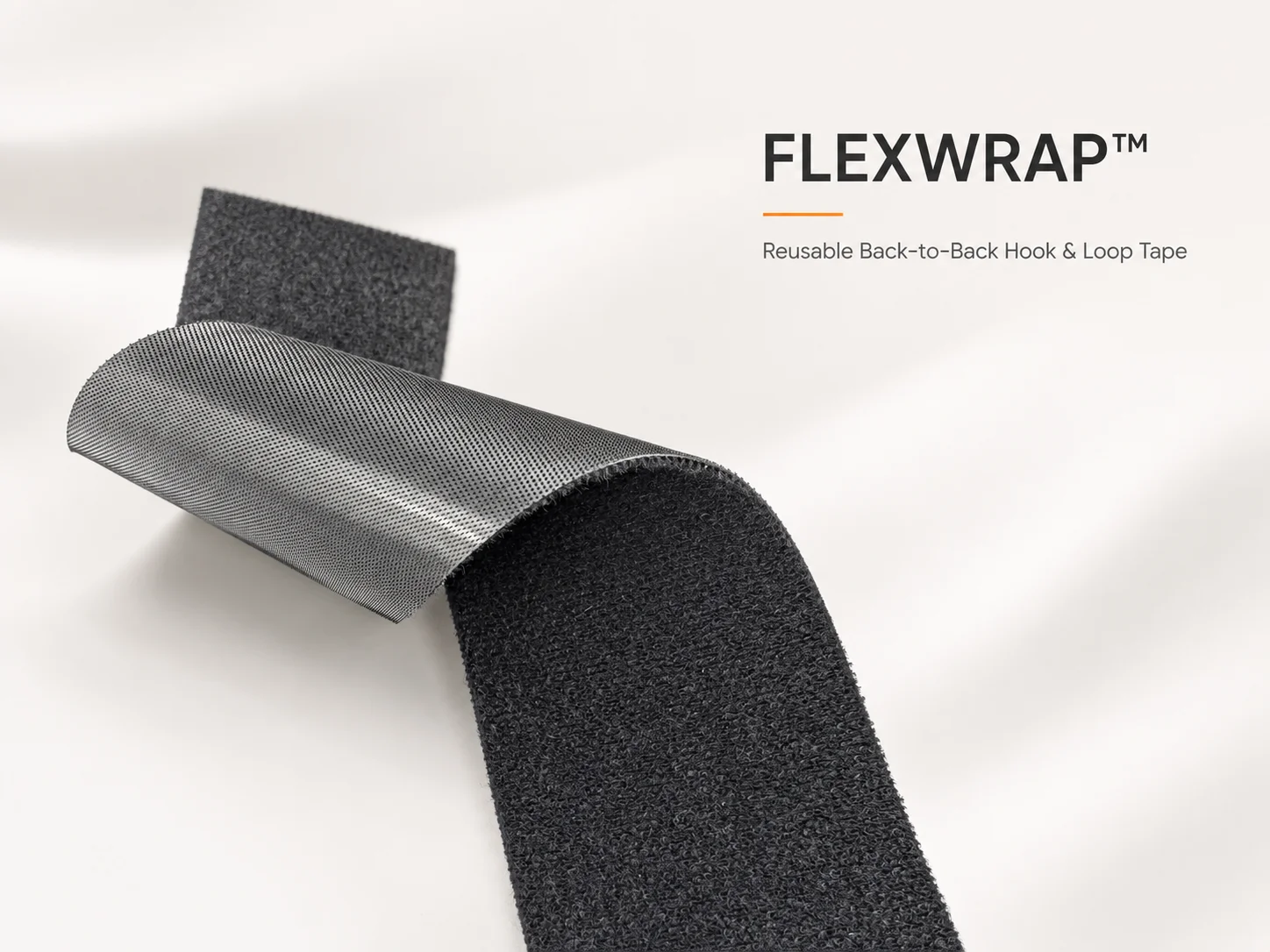
Reusable hook and loop straps solve the access problem. Technicians wrap the strap around a cable group, engage hook to loop and achieve a firm bundle that reopens without tools. Back-to-back constructions, where hook faces loop on the same tape, eliminate the need to manage two separate pieces in the field. Walonium Flexwrap is designed for this wrap-and-secure workflow.
Effective cable management specification considers bundle diameter, cable jacket material, heat exposure and required strap tension. Soft cable jackets can be damaged by over-tightened ties; hook and loop allows controlled compression. In high-density racks, colour-coded straps aid identification. Width selection matters: narrow straps suit small sensor leads, while 25 mm and 50 mm widths handle power and data trunk runs.
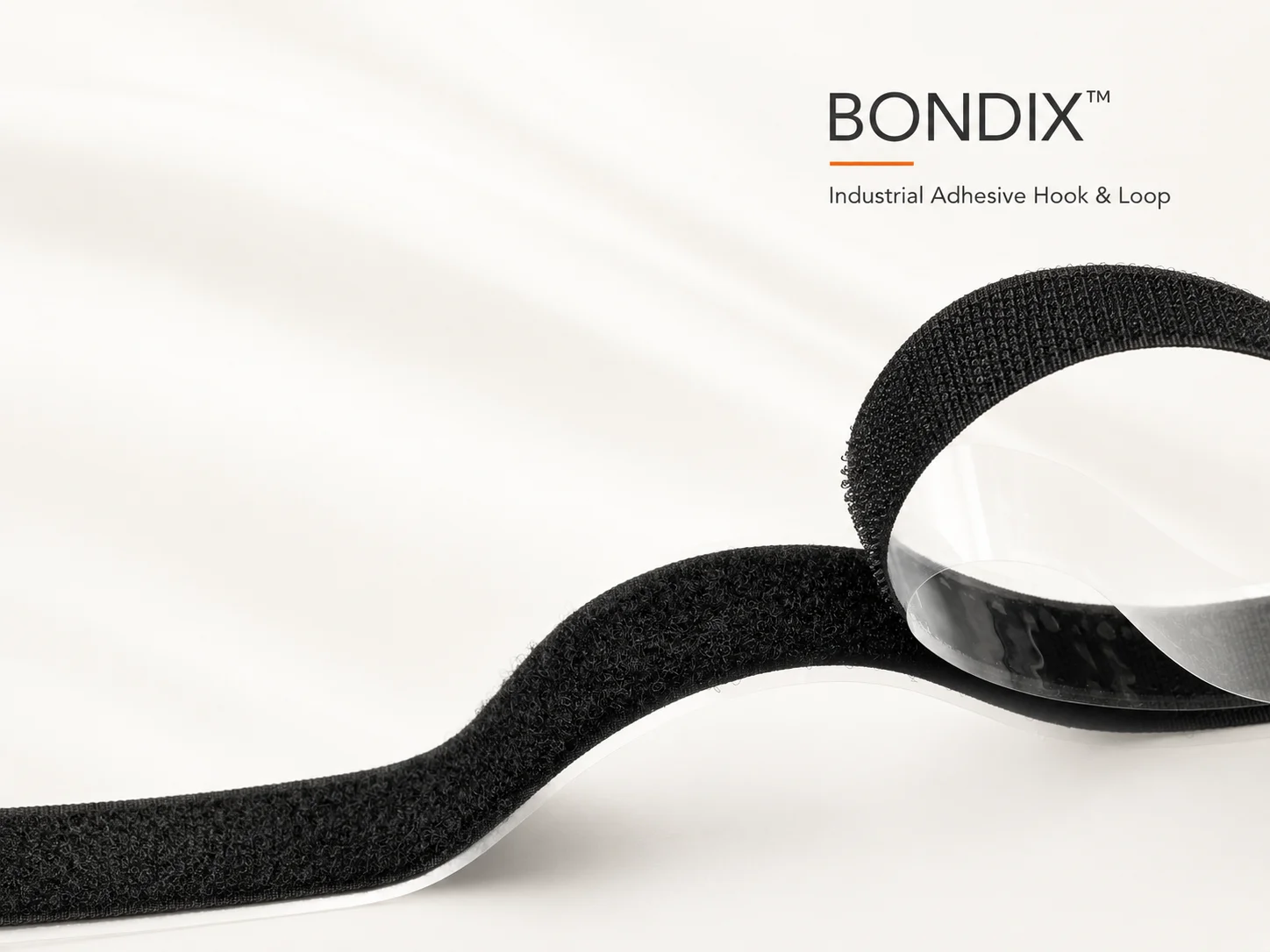
For adhesive-backed cable routing points, where a strap anchor must bond to a panel or enclosure surface, industrial adhesive hook and loop such as Bondix provides peel-and-stick placement on validated substrates. This hybrid approach combines routed anchor points with reusable strap segments for full harness organization.
Tool mounting with industrial hook and loop
Workshop tool boards, service vehicle interiors, production line fixtures and field equipment kits use hook and loop to mount tools where drilling, magnets or mechanical clips are impractical. Tool mounting stresses shear and peel simultaneously because tools hang under gravity while vibration and handling apply lateral force.
Non-adhesive heavy-duty tape sewn or riveted to a backing board provides the loop field; tool holsters or patches carry the mating hook side. Premium nylon constructions maintain engagement through high cycle counts as tools are removed and replaced throughout a shift. Gripnex is suited to sew-on tool board applications where mechanical strength and durability are priorities.
Adhesive-backed mounting suits lighter tools, diagnostic instruments and removable panels on smooth substrates. Bondix industrial adhesive hook and loop bonds to suitable metals, plastics and painted surfaces without drilling. Buyers must validate adhesive performance against workshop temperature, solvent exposure and surface cleanliness because adhesive failure presents as tool drop even when the hook and loop mechanical engagement remains intact.
Mounting specification should define tool mass, center of gravity, vibration profile and required retention safety factor. A common engineering approach is to test at 150 percent of nominal tool weight with simulated vibration before approving a tape width and engagement area for production.
Heavy load strapping applications
Load strapping with hook and loop extends beyond cables to equipment restraints, transit securing, modular frame assembly and temporary tie-down in manufacturing and logistics. Straps must resist tensile stretch, maintain engagement under dynamic load and survive repeated use without hook flattening or loop fibre matting.
Strap failure modes include gradual creep under sustained tension, sudden disengagement from shock load and mechanical degradation from dirt and abrasion. Heavy-duty nylon hook and loop resists these modes better than lightweight consumer grades because denser hooks maintain engagement depth and stronger base fabric limits elongation.
Strap design should include adequate tail length, edge finishing to prevent fray and, where loads are significant, supplementary sleeve or bar-tack stitching at stress points. For the highest mechanical demands, sew-on Gripnex paired with structural webbing creates industrial straps rated for demanding tactical, safety and equipment applications.
Flexwrap back-to-back tape also serves medium-duty strapping where quick wrap-and-release is valued over maximum tensile rating. Evaluate the load case honestly: hook and loop excels in reusable, serviceable strapping but is not a replacement for rated safety harness hardware or certified lifting slings unless explicitly tested and approved for that duty.
Material selection for industrial environments
Material composition directly affects heavy-duty performance. Nylon hook and loop offers higher strength, better cycle life and improved performance in humidity compared with standard polyester-dominated blends. Polyester blends reduce cost and perform adequately in dry, low-cycle applications but degrade faster under industrial stress.
Environmental factors include temperature cycling, UV exposure, moisture, chemical contact and abrasion from dust or metal shavings. Nylon maintains flexibility across a broader temperature range than many polyester constructions. Adhesive-backed products require additional validation because the adhesive layer, not only the textile, must survive the environment.
Industrial buyers should map environment class to product tier. Controlled indoor panel wiring favours Flexwrap or Bondix on validated substrates. High-cycle sew-on straps in safety and equipment applications favour Gripnex. Mixed humidity and temperature workshops may require nylon mechanical fastening with periodic inspection rather than adhesive-only mounting for heavier tools.
Hook and loop vs alternative fastening methods
The comparison below helps engineers evaluate heavy-duty hook and loop against common alternatives for cable management, tool mounting and strapping. Results vary by specification and environment, but the trade-off pattern is consistent across industrial use cases.
Heavy-Duty Hook & Loop
Alternative Fastening
Opens and recloses without cutting or replacing hardware on each service event.
Cable ties and many mechanical clips are single-use or limited-cycle.
Technicians adjust bundles and remove tools without destructive removal steps.
Screws, rivets and ties require tools and add time per maintenance cycle.
Strong in peel and shear when engagement area and orientation are correct.
Bolts, buckles and rated slings handle higher sustained loads when certified.
Adhesive and wrap formats reduce substrate damage and assembly steps.
Mechanical fasteners often need holes, anchors or welding fixtures.
Premium nylon grades resist disengagement when engagement area is sufficient.
Threaded and locking hardware resists vibration without cycle wear concerns.
Reusable cable straps, modular tool boards, serviceable panel attachment and medium-duty load strapping.
Permanent structural joints, certified lifting and maximum single-point load retention.
Walonium product recommendations
Walonium manufactures hook and loop tapes across performance tiers for industrial buyers. For heavy-duty cable management, tool mounting and load strapping, three products cover the majority of OEM requirements.
Flexwrap back-to-back tape combines hook and loop on a single roll for wrap-and-secure cable bundling. It is widely used in data centers, electrical panels, network rooms and industrial automation for reusable straps that reopen cleanly during upgrades and maintenance.
Bondix industrial adhesive hook and loop provides peel-and-stick fastening for tool mounting pads, cable routing anchors, removable panels and equipment covers on validated substrates. It suits applications where mechanical attachment is undesirable but industrial adhesive performance is required.
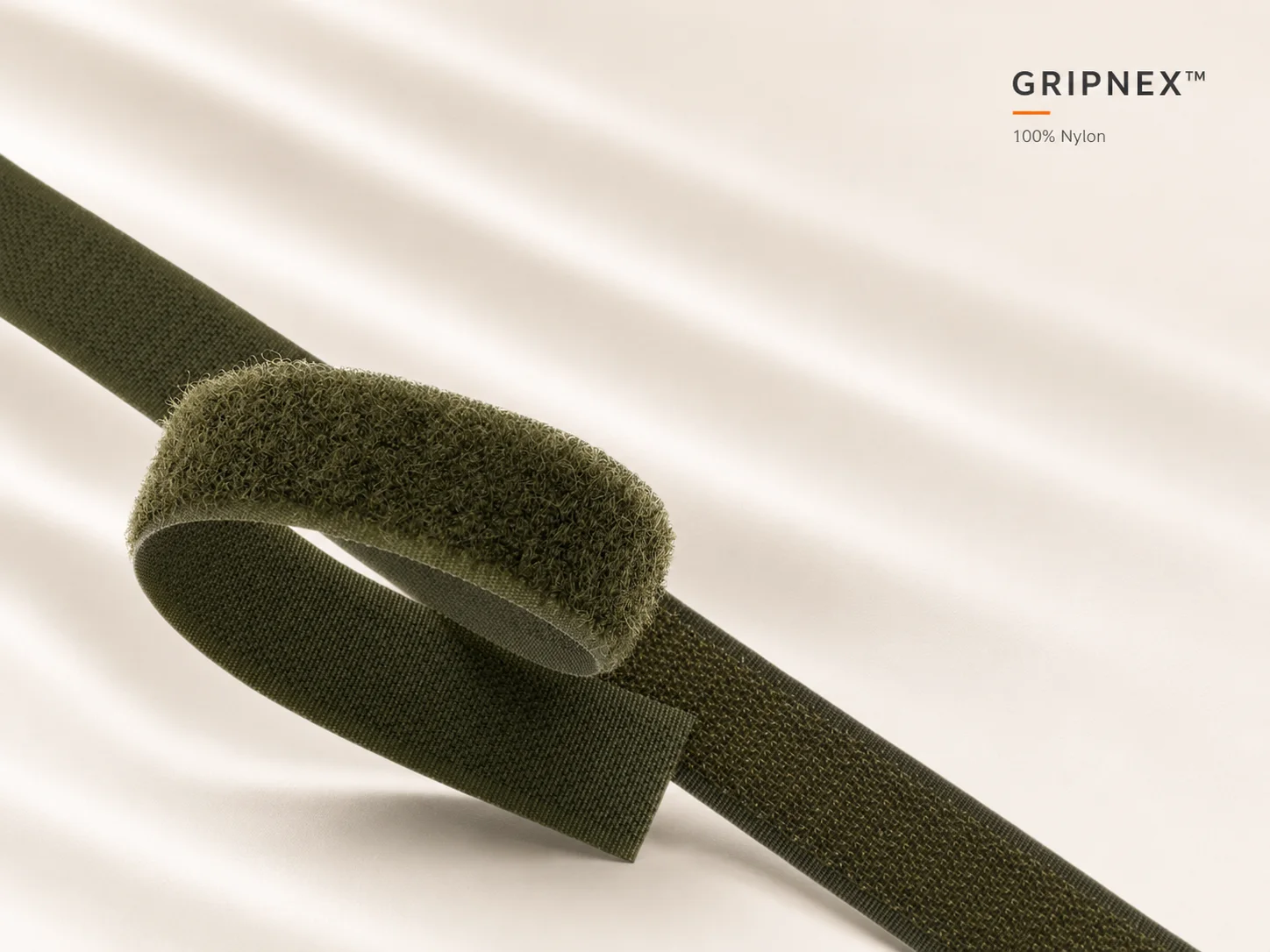
Gripnex is Walonium's premium 100% nylon non-adhesive tape, engineered for maximum mechanical strength and high cycle life. Specify Gripnex for sew-on straps, harness components, safety equipment and heavy-load textile fastening where tensile and shear demands exceed standard blend grades.
Industry application examples
Rack cable bundling
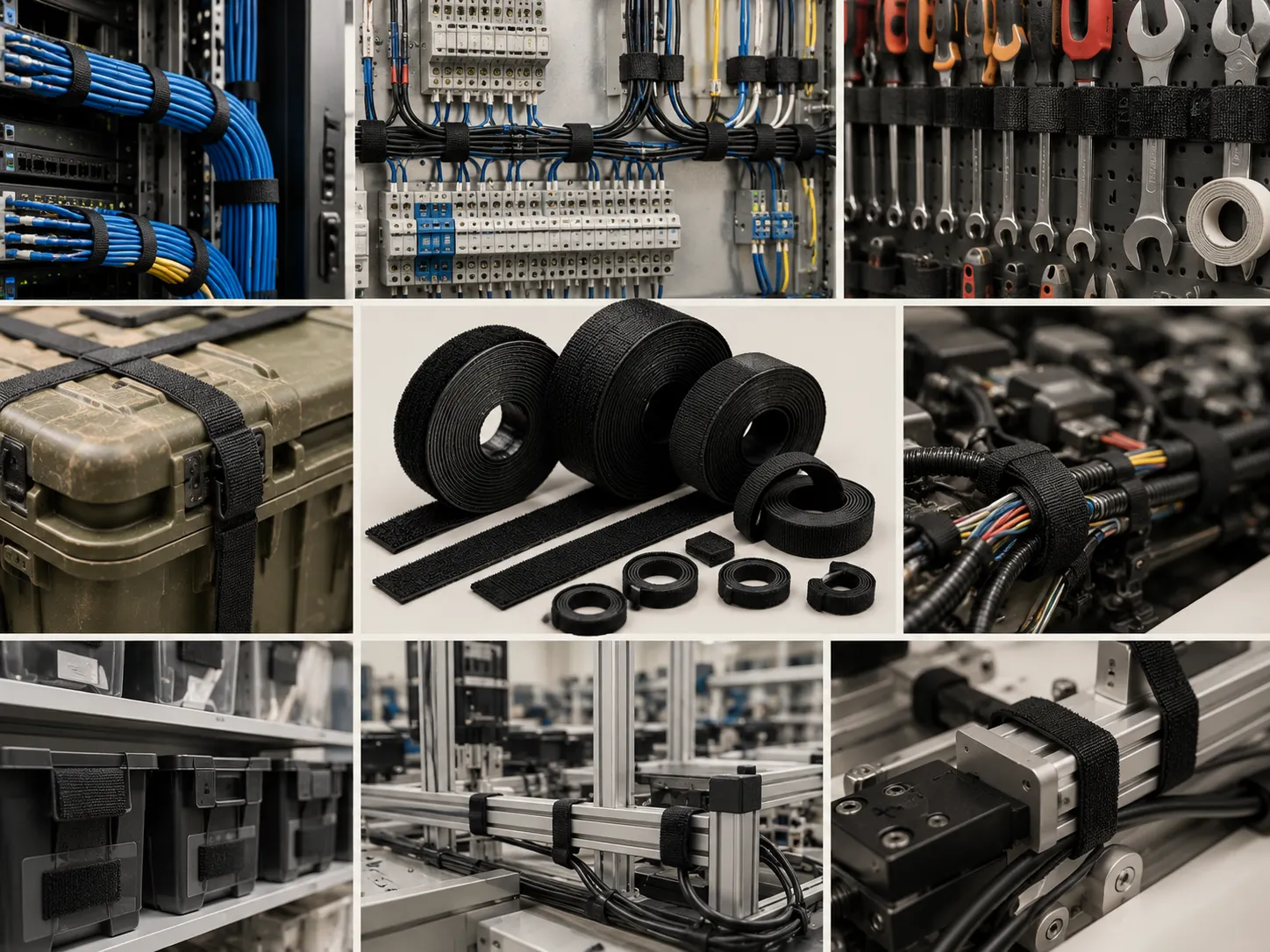
Flexwrap straps secure trunk cables and patch leads while allowing clean reopening during capacity upgrades.
Panel wire organization
Reusable bundling keeps conductors grouped for inspection without single-use tie waste.
Harness and clip routing
Heavy-duty nylon straps manage wire groups in assemblies subject to vibration and temperature cycling.
Tool board systems
Gripnex sew-on loop fields and hook patches mount hand tools for lean workstation organization.
Field service kits
Adhesive-backed Bondix anchors and Flexwrap straps organize cables in outdoor cabinets and mobile units.
Equipment strapping
Premium nylon constructions support tactical gear, pouch attachment and high-cycle field adjustment.
Transit securing
Reusable straps restrain modular equipment and returnable containers during handling and transport.
Common specification mistakes
The first mistake is undersizing engagement area. Narrow straps with short overlap disengage under shear load even when the material grade is premium. Always calculate overlap length relative to bundle diameter or tool footprint.
The second mistake is ignoring load direction. A strap rated for horizontal cable routing may fail when used to hang a tool vertically. Test in the mounted orientation, not only on a flat bench.
The third mistake is selecting polyester blends for high-cycle industrial use to save cost. Initial savings disappear when hooks flatten, cycle life drops and maintenance teams replace straps prematurely.
The fourth mistake is skipping environmental validation for adhesive mounting. Bondix and similar products perform well on suitable substrates but require testing against workshop solvents, temperature extremes and surface preparation standards before production approval.
Buying advice for OEM and procurement teams
When requesting a quotation, provide application type, load estimate, cycle life target, substrate details, environment class, preferred width, colour requirements and whether sew-on, adhesive or back-to-back format is needed. A complete brief reduces trial iterations.
Compare Flexwrap for cable and reusable strap workflows, Bondix for adhesive mounting on validated surfaces and Gripnex for maximum mechanical strength in textile straps and harnesses. Document test results including engagement pressure, cycle count at first noticeable degradation and failure mode.
Think in total cost of ownership. Reusable heavy-duty hook and loop reduces consumable tie spend, shortens maintenance time and lowers damage risk from cutting tools near live cables. The right specification pays back through service efficiency, not only per-metre tape price.
Key takeaways
Heavy-duty hook and loop delivers reusable, serviceable fastening for cable management, tool mounting and industrial strapping when peel, shear and tensile requirements are matched to material grade and engagement geometry.
For Walonium buyers, the practical mapping is: Flexwrap for back-to-back cable bundling, Bondix for industrial adhesive mounting and Gripnex for premium 100% nylon mechanical strength.
Validate every specification with application prototypes under real load, vibration and environmental conditions before scaling production. Industrial fastening performance is proven in service, not in catalogue descriptions alone.
FAQ
What makes hook and loop heavy duty for industrial use?
Heavy-duty hook and loop uses higher-density hooks, stronger base fabrics such as 100% nylon, wider tape widths and construction grades rated for higher peel and shear loads. It is designed for repeated open-close cycles and demanding industrial environments where consumer-grade fasteners would fail.
How much weight can heavy-duty hook and loop hold?
Load capacity depends on tape width, material grade, engagement area and load direction. Premium nylon constructions such as Gripnex support significantly higher peel and shear values than lightweight polyester grades. Always test on your actual substrate and specify width and overlap for your load case.
Is hook and loop better than cable ties for cable management?
Hook and loop is better when cables need repeated access and repositioning without cutting ties. Cable ties suit permanent one-time bundling at lowest cost. Back-to-back formats such as Flexwrap are widely used in data centers and panel wiring because they bundle securely yet reopen cleanly.
What is the difference between peel strength and shear strength?
Peel strength measures resistance when force is applied perpendicular to the bonded surface. Shear strength measures resistance when force is applied parallel to the engaged surface. Cable bundling and tool mounting often need strong shear performance; removable panel closures need balanced peel and shear.
Which Walonium products are best for heavy-duty industrial fastening?
Gripnex is the premium 100% nylon tape for maximum mechanical strength in straps and high-cycle applications. Flexwrap back-to-back tape is ideal for reusable cable bundling. Bondix provides industrial adhesive-backed fastening for tool mounting and peel-and-stick cable routing on suitable substrates.
Can heavy-duty hook and loop be used outdoors or in harsh environments?
Yes, when the material grade matches the environment. Nylon constructions generally perform better in humidity and temperature variation than standard polyester blends. Adhesive-backed applications require validation against UV, chemical contact, moisture and temperature cycling in the actual service environment.
How do I specify hook and loop for tool mounting applications?
Define tool weight, mounting orientation, vibration exposure, required cycle life and substrate type. Specify tape width, hook density, material composition and attachment method. Test shear load in the mounted orientation because vertical hanging places different stress on the closure than horizontal mounting.
How many open-close cycles can reusable hook and loop straps handle?
Cycle life varies by material grade, engagement pressure and contamination exposure. Premium nylon hook and loop such as Gripnex is engineered for high cycle counts in industrial straps. Flexwrap straps in controlled cable management environments can sustain thousands of cycles when kept clean and firmly engaged.