On this page
What defines the strength of hook and loop tape?
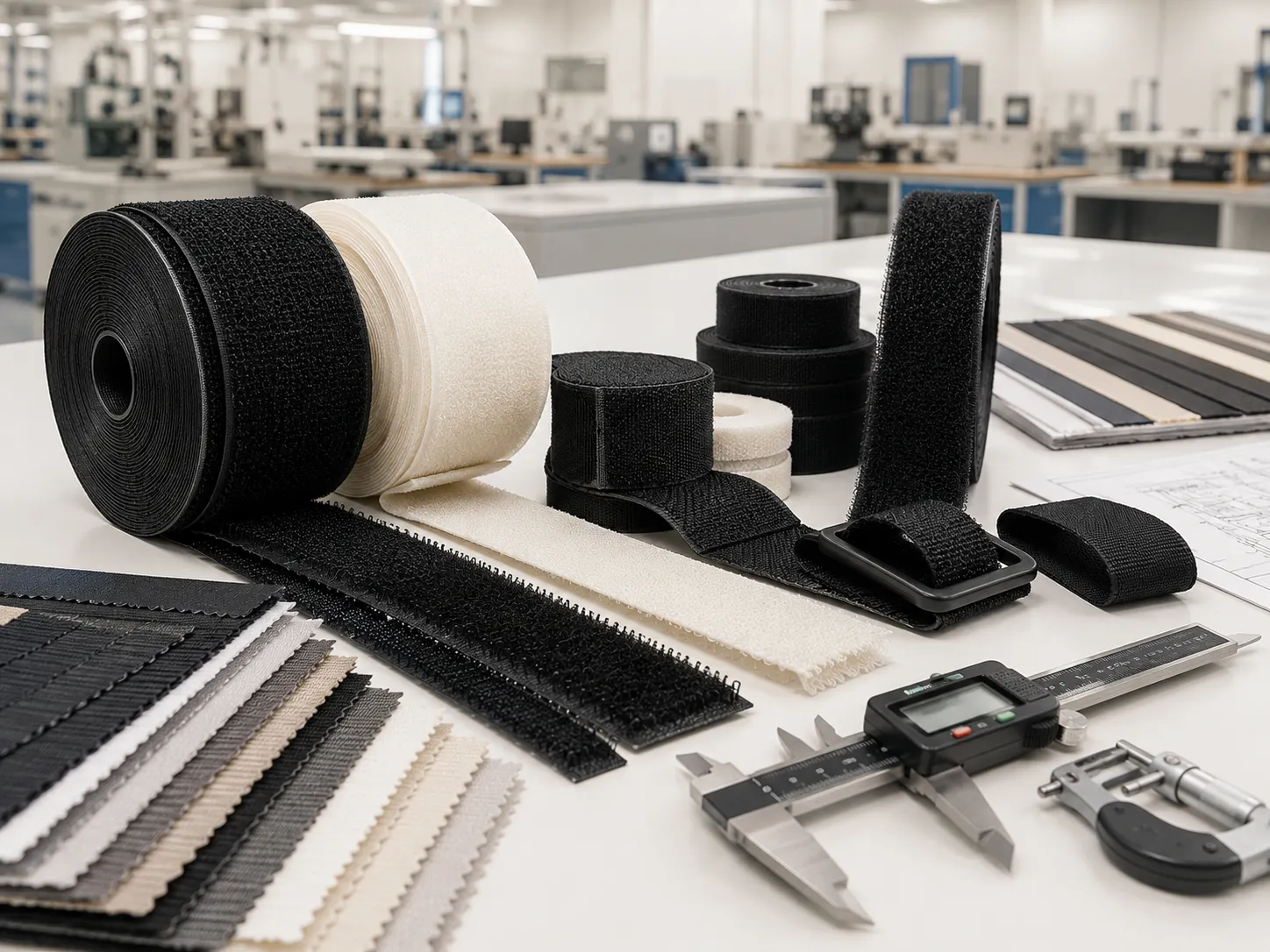
Hook and loop strength is not a single number on a datasheet. It is the combined result of hook geometry, loop pile density, yarn material, weaving method, backing stability, attachment method and the environment in which the fastener is used. Two tapes labeled as heavy duty can perform very differently once sewn into a garment, bonded to a painted panel or exposed to heat and humidity. Explore vertical fastening solutions when your specification is tied to a particular industry.
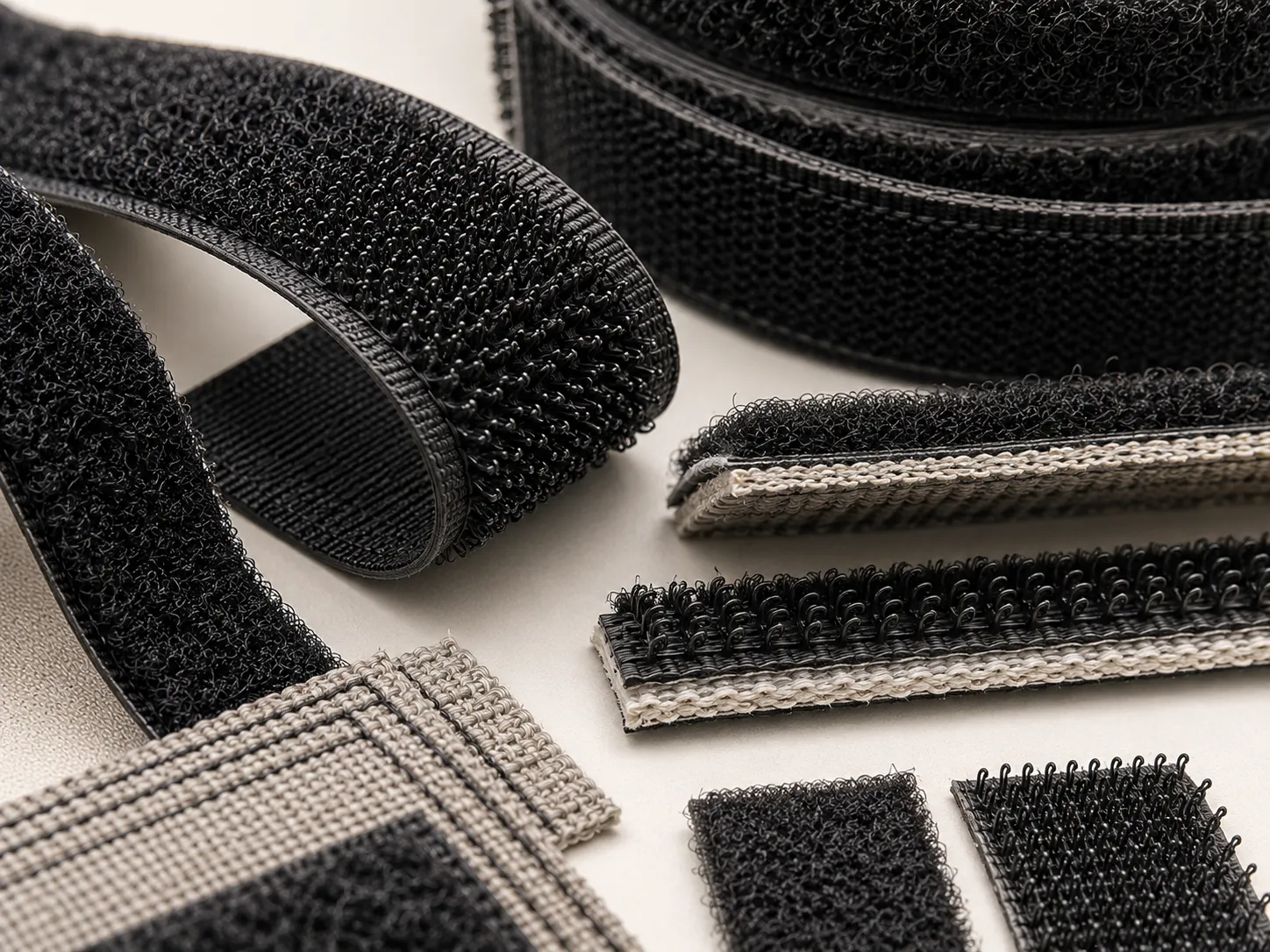
The hook side uses molded or woven hooks that engage the raised fibers on the loop side. When pressed together, mechanical interlocking creates holding force. When peeled apart, the closure opens and can be re-engaged. The strength buyers feel in daily use comes from how many hooks engage, how deeply they catch, how well the fibers recover after opening, and how stable the backing remains under stress.
For industrial buyers, strength usually means one or more of these requirements: high peel resistance, high shear resistance, long cycle life, resistance to washing or cleaning, stable performance under vibration, and dependable holding on the intended substrate. For home users, strength often means a closure that stays put on walls, furniture, organizers or DIY projects without failing after a few weeks of use.
Understanding these layers helps avoid a common mistake: choosing a tape because it feels aggressively sticky in a sample pack, then discovering it fails once applied to the real surface or used in the finished product environment.
Why strength matters for industrial and home applications
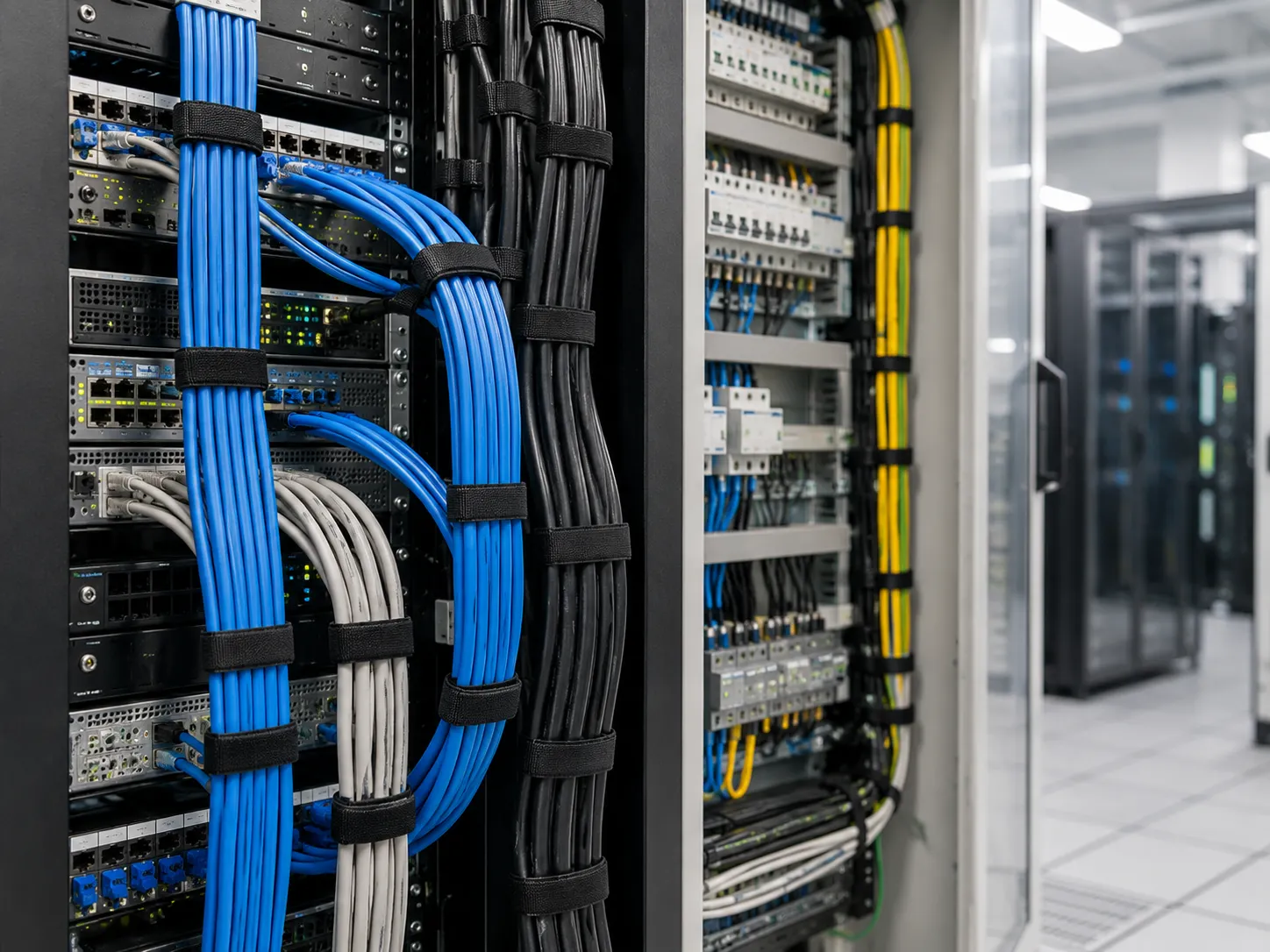
In industrial environments, weak fastening creates rework, warranty claims, field failures and production delays. A closure that delaminates on a safety garment, slips on tactical equipment, or loses engagement on an automotive trim panel can create serious operational and reputational risk. Industrial buyers therefore specify hook and loop not only for convenience, but for dependable performance under load, movement and environmental stress.
At home, the consequences are less formal but still frustrating. A wall-mounted organizer that falls, a cable strap that loosens, or a cushion attachment that stops holding can make a product feel cheap even when the rest of the build quality is good. Home users often want the convenience of adhesive fastening or easy sew-on installation, but they still expect the closure to remain reliable over months of use.
Strength also affects total cost. A lower-priced tape that fails early may require replacement labor, customer support, product returns or repeated purchase of consumable fasteners. For OEM programs, the cost of choosing the wrong tape is rarely the roll price. It is the cost of fixing the product after release.
Whether the application is a military-style backpack, a medical support strap, an automotive interior panel, a garage tool organizer or a child-safe fabric closure, the buyer should define what kind of strength matters most before comparing product families.
Sew-on vs adhesive-backed strength comparison
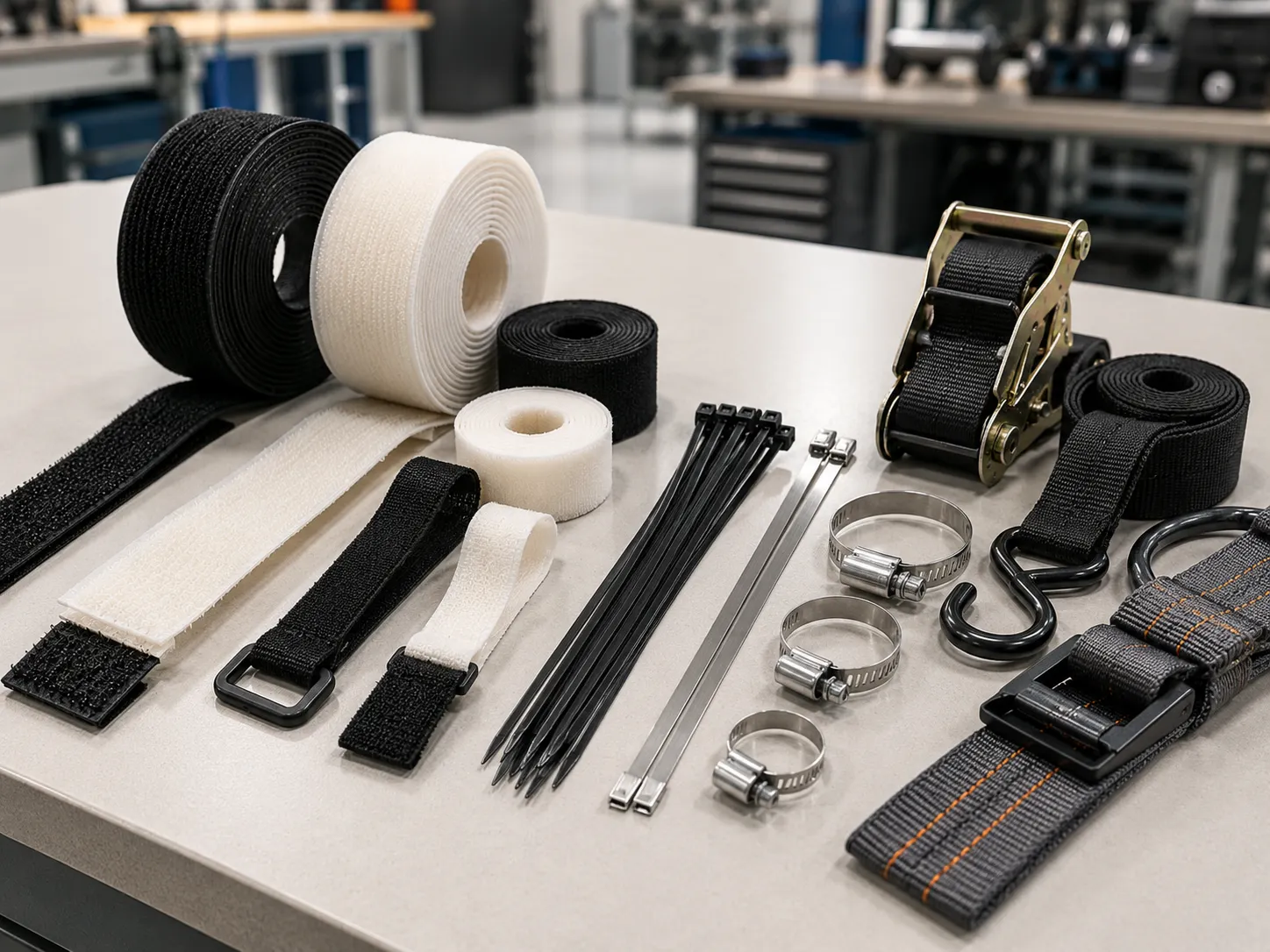
One of the most important forks in the decision is attachment method. Sew-on and adhesive-backed hook and loop can both be strong, but they are strong in different ways and on different substrates.
Sew-On Hook & Loop
Adhesive-Backed Hook & Loop
Stitching distributes load into the textile and usually delivers the strongest long-term fastening on apparel, bags, tents and industrial workwear.
Strong on rigid substrates, but textile strength is only part of the system; bond performance on the panel is equally critical.
Sew-on tape survives washing and flexing better than most adhesive solutions on fabric-based products.
Generally weaker on washable textiles; better suited to panels and semi-permanent mounting.
Requires sewing or RF welding; slower than peel-and-stick but more dependable on textiles.
Peel-and-stick installation is ideal for signage, panels, cable routing and quick-mount applications.
Fabric, webbing, foam composites, textile assemblies and products that flex during use.
Metal, glass, painted panels, rigid plastics, wood and powder-coated surfaces.
Uniforms, PPE, tactical gear, medical supports, luggage and industrial textiles.
Automotive trim, signage, fixtures, electronics housings and equipment panels.
Curtain ties, cushion covers, reusable fabric organizers and garment adjustments.
Wall organizers, remote holders, cable management, DIY mounting and furniture accessories.
For buyers who need deeper adhesive selection guidance, review the adhesive hook and loop manufacturing guide. For heavy load and strapping applications, see the heavy-duty hook and loop industrial guide.
Material choice: nylon, polyester and blended constructions
Material composition has a major influence on strength, flexibility, moisture behavior and cycle life. Nylon-rich hook and loop usually delivers stronger repeated engagement, softer hand feel and better performance in closures that are opened frequently. Polyester-rich constructions often provide better dimensional stability, lower moisture absorption and practical value for static or outdoor-facing applications.
For the strongest textile performance in industrial and home fabric applications, nylon is usually the leading choice. It flexes well, engages strongly and holds up under repeated use in footwear, medical supports, tactical equipment, sportswear and premium baggage. That is why 100% nylon sew-on tape is often treated as the premium strength option in product families.
Polyester and polyester-rich blends still matter in strength decisions because environmental stability is part of real-world performance. A tape that engages strongly but swells in humidity or loses dimensional stability outdoors may not be the strongest choice for a marine, warehouse or outdoor panel application. In those cases, a balanced or polyester-rich construction can outperform a high-nylon tape over time.
Buyers who need a deeper material comparison should review the nylon vs polyester hook and loop guide. The short version for strength-led decisions: choose nylon for cycle-intensive textile closures; choose polyester-rich blends when moisture, UV or cost stability matter more than maximum engagement.
Woven and high-tensile hook and loop constructions
Woven hook and loop tapes are among the most dependable high-strength formats because the hooks and loops are integrated into the textile structure rather than relying only on surface molding. This can improve durability, flex recovery and consistency across long production runs. Woven constructions are widely used in apparel, upholstery, outdoor gear, military-style equipment and industrial textiles where both strength and flexibility are required.
High-tensile strength in woven tape comes from yarn selection, weave density, hook profile and finishing quality. A dense hook pattern with well-formed loops can increase initial engagement, while a stable woven base helps the tape survive repeated peeling without distorting. For upholstery, sportswear and outdoor jackets, this balance of flexibility and strength is often more useful than a stiff, overly aggressive closure.
Not every woven tape is automatically stronger than every molded tape. Construction quality matters. Two woven tapes with different nylon content, hook density or backing treatment can feel similar in a sample but perform very differently after 500 or 5,000 open-close cycles. That is why OEM buyers should request cycle testing on the actual product, not only a one-time pull test.
For home applications, woven sew-on tape is a strong choice when users want dependable fabric fastening on slipcovers, craft projects, curtain systems, bags and reusable household textiles. It is especially useful where the project will be washed, adjusted or handled frequently.
Strongest hook and loop tape types for industrial use
Industrial applications usually demand one of four high-strength categories: sew-on nylon tape for textile assemblies, industrial adhesive tape for rigid panels, heavy-duty tape for cable and tool mounting, and specialty high-cycle tape for safety or tactical gear. The strongest option depends on which failure mode would be most costly in production or field use.
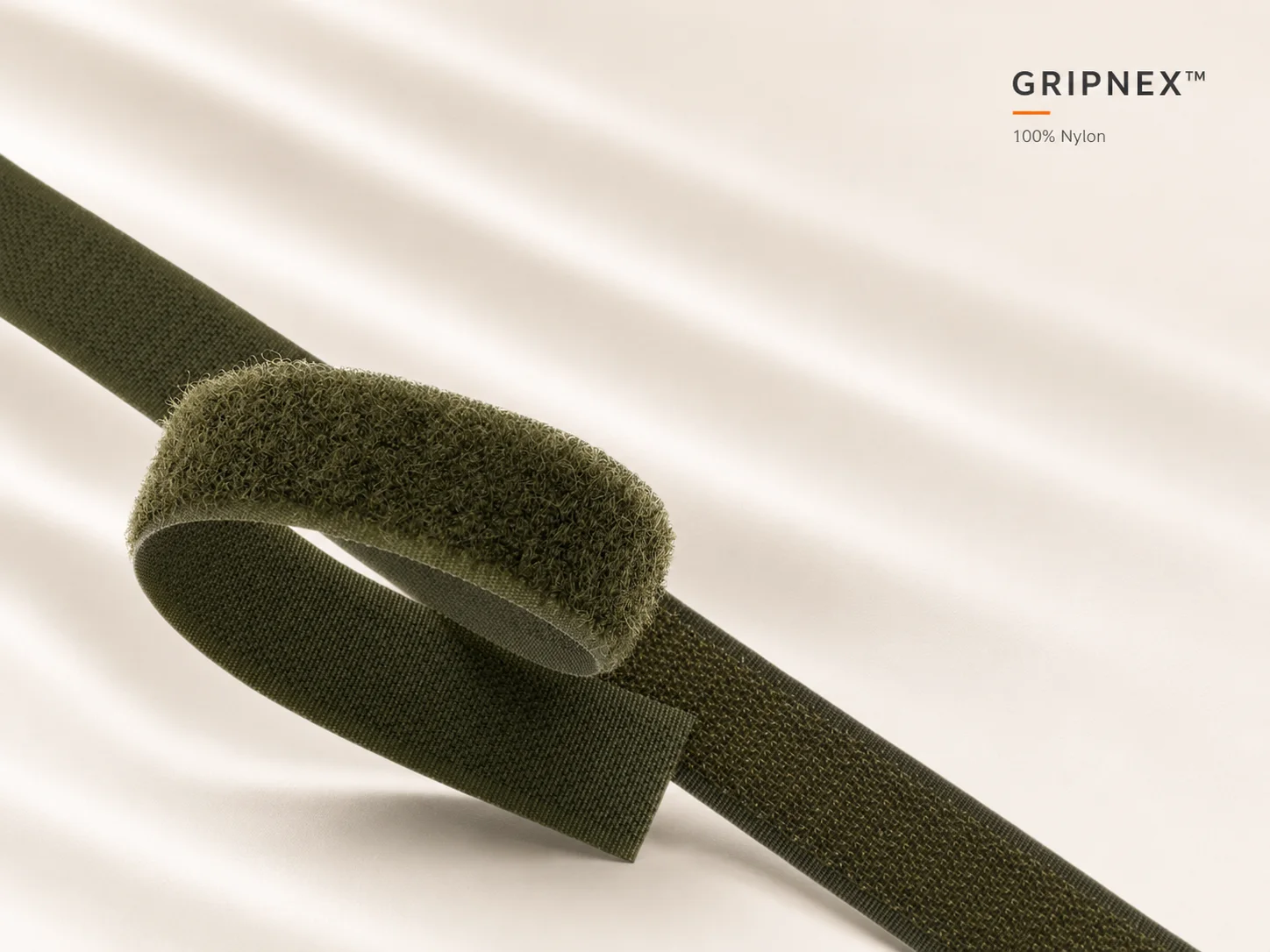
Sew-on industrial-grade nylon tape is the top choice for uniforms, bags, tents, safety gear, medical supports and industrial workwear. When stitched into the substrate, it offers the most dependable textile fastening and the best washing durability. Gripnex, Walonium's 100% nylon sew-on tape, is the premium option when maximum engagement and cycle life are required.
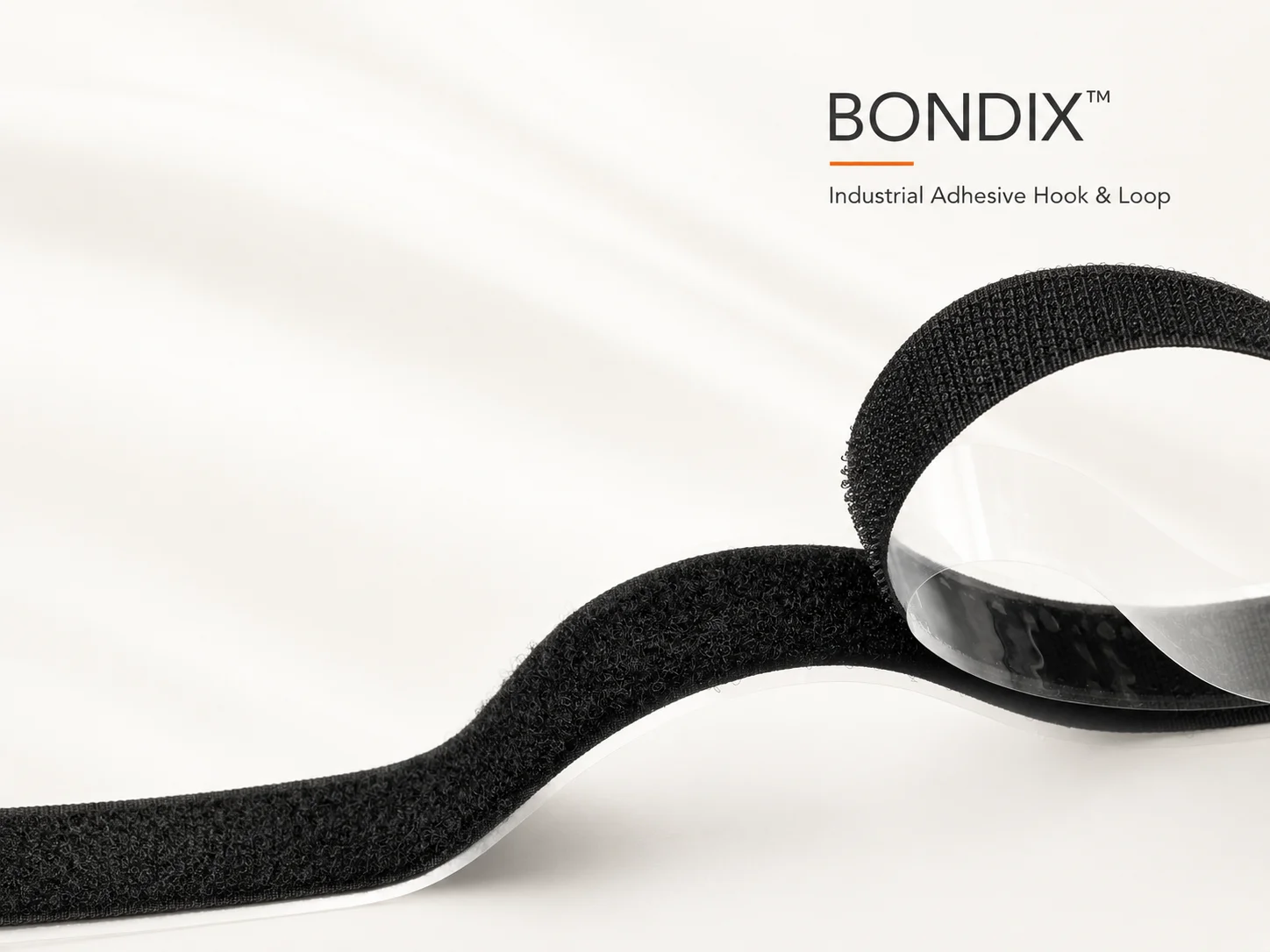
Industrial adhesive-backed tape is the strongest peel-and-stick format for metals, plastics, painted panels, signage, automotive interiors and equipment housings. Here, strength depends on both the textile and the adhesive chemistry. Bondix is designed for industrial adhesive fastening where higher peel strength, production reliability and long-term bond stability matter.
Heavy-duty strapping and mounting tape is used for cable management, tool mounting, equipment organization and load strapping. These applications need strong peel and shear performance, stable backing and a width suited to the load. Buyers should review the dedicated heavy-duty hook and loop guide before specifying tape for industrial mounting or bundle control.
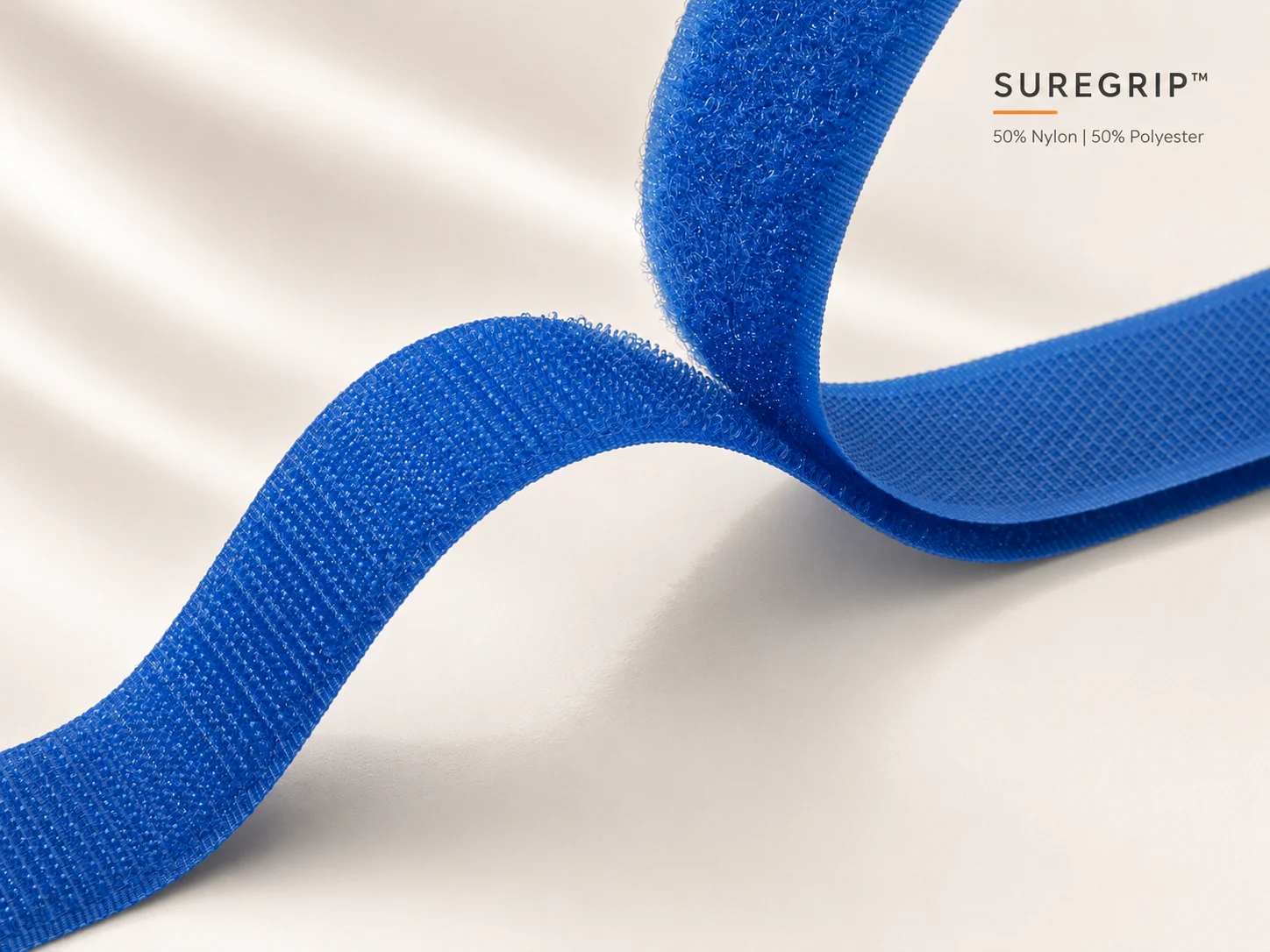
Balanced industrial textile tape fits applications that need strong performance with softer hand feel or more controlled cost, such as commercial baggage, upholstery, protective wear and adjustable industrial textiles. Suregrip, with its 50% nylon / 50% polyester construction, is a practical middle ground between premium nylon strength and stable blended performance.
Strongest hook and loop tape types for home use
Home users often want strength without complexity. The best choice depends on whether the project is fabric-based or panel-based. For fabric projects such as garment adjustments, cushion covers, reusable bags, curtain fasteners and nursery textiles, sew-on tape is usually the strongest long-term option. A nylon-rich sew-on tape remains dependable after washing and repeated handling, while adhesive tape on fabric may weaken over time.
For home organization and DIY mounting, adhesive-backed tape is often the more practical strongest option. It attaches quickly to walls, wood, plastic, metal and painted surfaces for tool holders, cable guides, remote caddies, picture mounting and furniture accessories. The key is choosing an industrial-grade adhesive product when the item is heavier or exposed to temperature change, not a lightweight consumer strip designed for paper or temporary crafts.
Home buyers should also consider surface preparation. Even the strongest adhesive hook and loop can fail on dusty, oily or uneven walls. Cleaning and testing the bond on the actual surface is especially important in kitchens, garages and bathrooms where humidity and temperature swings are common.
For clothing and delicate fabric work, the hook and loop for clothes and fabric guide is a useful companion to this article because it explains when soft loop, sew-on nylon or blended tape is the better home-friendly specification.
Peel, shear, cycle life and tensile strength
Industrial and home buyers often see strength terms used interchangeably, but they measure different things. Peel strength is resistance to pulling the hook and loop apart at an angle. Shear strength is resistance to sliding force along the bonded surface. Cycle life is how many open-close cycles the fastener can survive before engagement drops unacceptably. Tensile strength relates to the tape backing and yarn strength under direct pull.
Peel strength is especially important in closures that are opened by lifting one edge, such as flaps, panels, straps and adjustable cuffs. Shear strength matters more when the fastener must resist sideways force, vibration or weight trying to slide the bonded surfaces apart. Tensile strength becomes critical in strapping, bundling and load-support applications where the tape itself must not tear or deform.
Cycle life is often the most overlooked metric. A tape that grips aggressively on day one may lose performance after hundreds of openings if the hooks flatten or the loops mat down. For apparel, medical supports, tactical gear and reusable home organizers, cycle life can be more important than a high initial peel number from a lab test.
Buyers should evaluate all relevant parameters together. A tape with excellent peel but weak shear may fail on a wall-mounted organizer. A tape with strong initial engagement but poor cycle life may disappoint on a school bag or work uniform. The strongest specification is the one that keeps acceptable performance across the full use profile, not the one that wins a single benchmark.
Industry recommendations by application
Use sew-on nylon
Industrial clothing, harness gear and protective wear need dependable textile strength and washing durability. Gripnex is the stronger starting point for high-cycle closures.
Use industrial adhesive
Interior panels and trim often need peel-and-stick fastening on rigid substrates with heat and vibration exposure. Bondix is usually the better fit than general-purpose adhesive tape.
Balance strength and comfort
Orthopedic supports and wearable products need repeated engagement with a softer hand feel. Suregrip or Gripnex should be tested based on cycle demand and comfort requirements.
Prioritize cycle life
Pockets, flaps and adjustable straps are opened constantly. Nylon-rich sew-on tape delivers stronger long-term engagement than most adhesive alternatives on fabric shells.
Specify adhesive bond strength
Changeable panels and display systems need stable bonding on rigid substrates. Industrial adhesive tape should be tested for heat, humidity and edge lift.
Match tape to the surface
Light craft projects may tolerate general-purpose adhesive tape, but garage organizers, kitchen hooks and tool mounts benefit from stronger industrial adhesive specifications.
Choose heavy-duty formats
Bundling, mounting and strapping need strong peel and shear performance with the right width. Review the heavy-duty industrial guide before approving production.
Common mistakes when choosing high-strength tape
The first common mistake is assuming all heavy-duty labels mean the same thing. One supplier's heavy-duty tape may be designed for office cable management, while another may be engineered for tactical gear or automotive panels. Buyers should ask what test conditions and substrates the strength claim is based on.
The second mistake is using adhesive tape on textiles that will be washed or flexed repeatedly. Adhesive hook and loop can be convenient, but sew-on tape is usually the stronger and more dependable solution on fabric-based products. For garment and textile applications, adhesive fastening should be treated as a special case, not the default strongest option.
The third mistake is ignoring environment. Heat, humidity, dust, UV exposure and cleaning chemicals can reduce real-world strength dramatically. A tape that performs well indoors may fail in a warehouse, vehicle interior, bathroom or outdoor storage area.
The fourth mistake is selecting by width or price alone. Wider tape can improve holding area, but material, hook density and attachment method still matter more. The cheapest strong-looking tape can become the most expensive choice if it causes product returns, rework or field replacement.
Walonium product recommendations for maximum strength
Walonium buyers should begin with the finished product requirement, not the catalogue headline. Define the substrate, load, cycle count, washing or cleaning exposure, attachment method and acceptable failure risk. Then map those requirements to the right product family.
For the strongest sew-on textile performance, evaluate Gripnex. This 100% nylon tape is Walonium's premium non-adhesive option for applications that need maximum engagement, high cycle life and industrial-grade textile strength in footwear, medical supports, tactical gear, baggage and demanding apparel closures.
For strong performance with a softer hand feel and balanced cost, evaluate Suregrip. The 50% nylon / 50% polyester construction is well suited to upholstery, commercial baggage, protective wear, baby products and adjustable closures where comfort and dependable strength must coexist.
For the strongest adhesive-backed industrial fastening, evaluate Bondix. It is the better choice when peel-and-stick performance must survive demanding OEM environments such as automotive interiors, signage, fixtures, equipment panels, electronics housings and industrial assembly aids.
If the application also requires a broader view of hook and loop formats and terminology, the complete hook and loop types guide is a useful next step for buyers building a full specification framework.
Buying advice for procurement teams and home project planners
When requesting a quotation, share more than width and color. Include the substrate material, application, expected open-close cycles, environmental exposure, attachment method, required width and roll length, production volume and whether the order is for domestic or export use. A complete brief helps the supplier recommend the right strength level and construction.
For industrial buyers, sample testing should mimic the finished product environment as closely as possible. Test after sewing or bonding, not only on loose swatches. Include washing, heat, humidity, flexing and vibration where relevant. For home buyers, test on the actual wall, panel or fabric because household surfaces vary far more than many people expect.
Evaluate total product cost, not roll price alone. Stronger tape can reduce replacement frequency, improve user satisfaction, simplify assembly and lower warranty exposure. In both industrial and home contexts, the strongest tape is the one that keeps working after real use begins.
Key takeaways
The strongest hook and loop tape for industrial and home use depends on attachment method, material, construction and environment. Sew-on nylon-rich tape is usually the top textile solution for fabric products that must be washed and opened repeatedly. Industrial adhesive-backed tape is the strongest practical option for rigid panels where peel-and-stick installation is required.
For Walonium buyers, the practical mapping is straightforward: Gripnex for premium sew-on strength, Suregrip for balanced textile performance, and Bondix for industrial adhesive fastening. Heavy-duty mounting and strapping applications should also be reviewed against the heavy-duty hook and loop guide.
Do not choose strength by marketing language alone. Confirm the specification with real samples on the actual substrate in the finished product environment. The strongest tape is the one that still performs after production, installation and everyday use.
FAQ
What is the strongest type of hook and loop tape overall?
There is no single strongest tape for every application. Sew-on 100% nylon tape is usually the strongest choice for textile products that need high cycle life and washing durability. Industrial adhesive-backed tape is strongest for peel-and-stick fastening on rigid panels such as metal, plastic, glass and painted surfaces.
Is sew-on or adhesive hook and loop stronger?
Sew-on hook and loop is generally stronger on fabrics and textile assemblies because stitching creates a more dependable attachment than adhesive on flexible or washable substrates. Adhesive-backed tape is stronger where rigid-panel bonding is required and sewing is not practical.
Which material makes the strongest hook and loop tape?
Nylon-rich constructions usually deliver the strongest repeated engagement and best cycle life. Polyester-rich constructions can be stronger in humid, outdoor or cost-sensitive applications where dimensional stability matters more than maximum closure force.
What is the best Walonium product for heavy-duty industrial strength?
Gripnex is the premium sew-on choice for maximum textile strength and cycle life. Bondix is the industrial adhesive choice for demanding peel-and-stick applications. Suregrip is a strong balanced option when comfort and blended performance are also important.
Can adhesive hook and loop be used for heavy home mounting projects?
Yes, but surface preparation and product grade matter. Industrial adhesive hook and loop such as Bondix is better suited to heavier home mounting on clean rigid surfaces than lightweight consumer strips. Test the bond on the actual wall or panel before relying on it for valuable items.
How many open-close cycles should strong hook and loop survive?
Cycle requirement depends on the product. A bag flap may need thousands of cycles, while a signage panel may need strong initial bond and fewer reopenings. Buyers should define expected cycle life during specification and test samples accordingly rather than assuming all heavy-duty tapes perform equally.
Does wider tape always mean stronger fastening?
Wider tape increases the bonding or sewing area and can improve overall holding performance, but material, hook density and attachment method still matter more. A narrow premium nylon tape can outperform a wider low-grade tape if the construction is better suited to the load and cycle requirement.
Should I test samples before choosing the strongest hook and loop tape?
Yes. Test samples on the actual substrate under real use conditions, including washing, heat, humidity, flexing, vibration and repeated opening and closing. Strength claims from a loose swatch rarely tell the full story once the tape is installed in the finished product.