On this page
What are hook and loop fasteners?
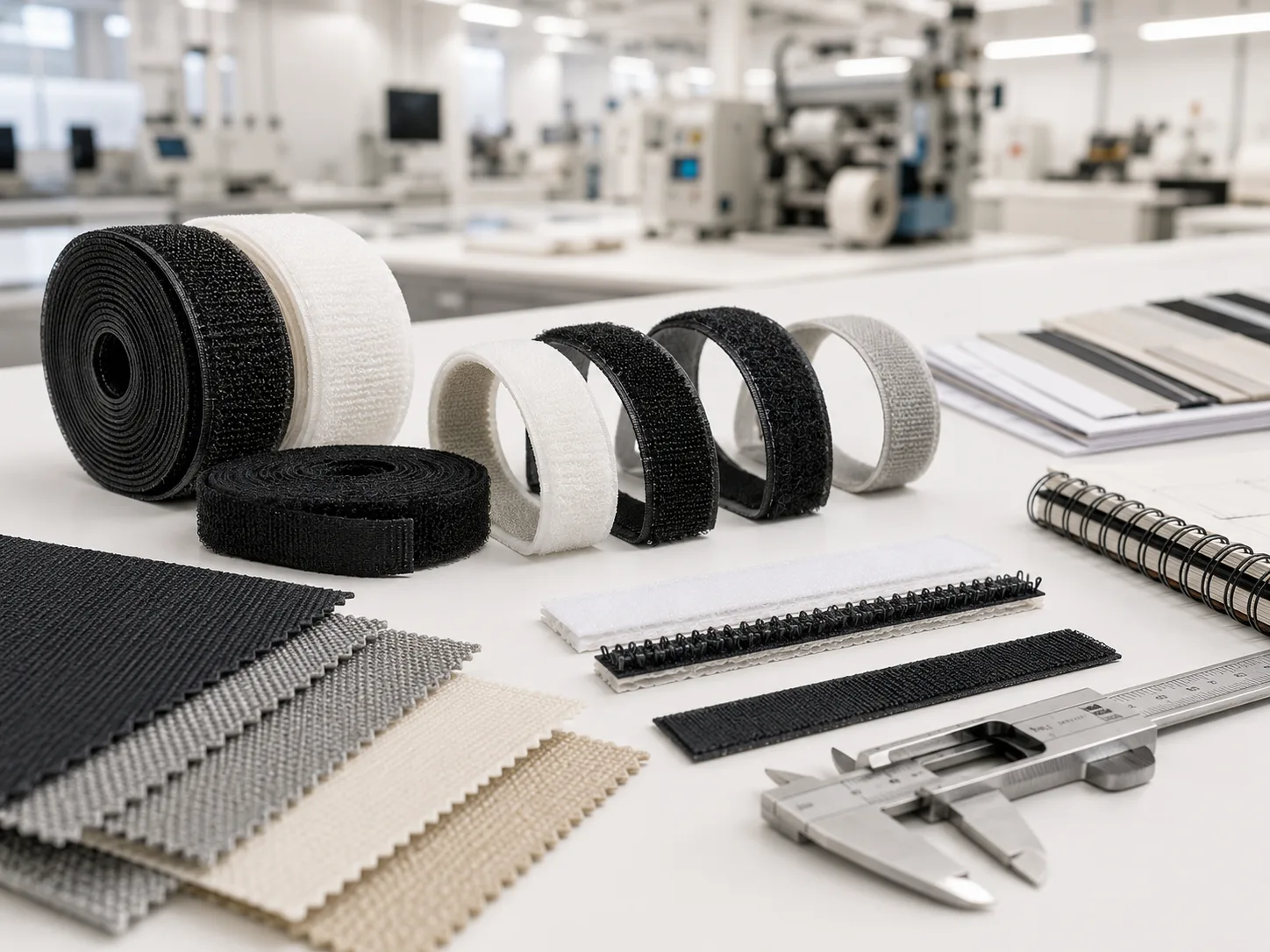
Hook and loop fasteners are two-part textile fastening systems. One side carries small hooks; the other carries raised loop fibers. When pressed together, the hooks catch the loops and create a secure bond. When peeled apart, the fastener opens cleanly and can be re-engaged hundreds or thousands of times depending on construction quality. Explore industry-specific solutions when your specification is tied to a particular industry.
Although many people say "Velcro" as a generic term, Velcro is a registered brand name. In technical procurement, engineering drawings and OEM specifications, the correct product category is hook and loop fasteners. Understanding the different types within that category is the first step toward specifying the right tape for apparel, medical, automotive, packaging, cable management and industrial applications.
At Walonium Textile LLP, hook and loop tapes are manufactured across multiple attachment formats, hook constructions, strength grades and material compositions. This guide organizes those options into four practical classification layers so buyers can move from a general fastening need to a production-ready specification.
Types by attachment method
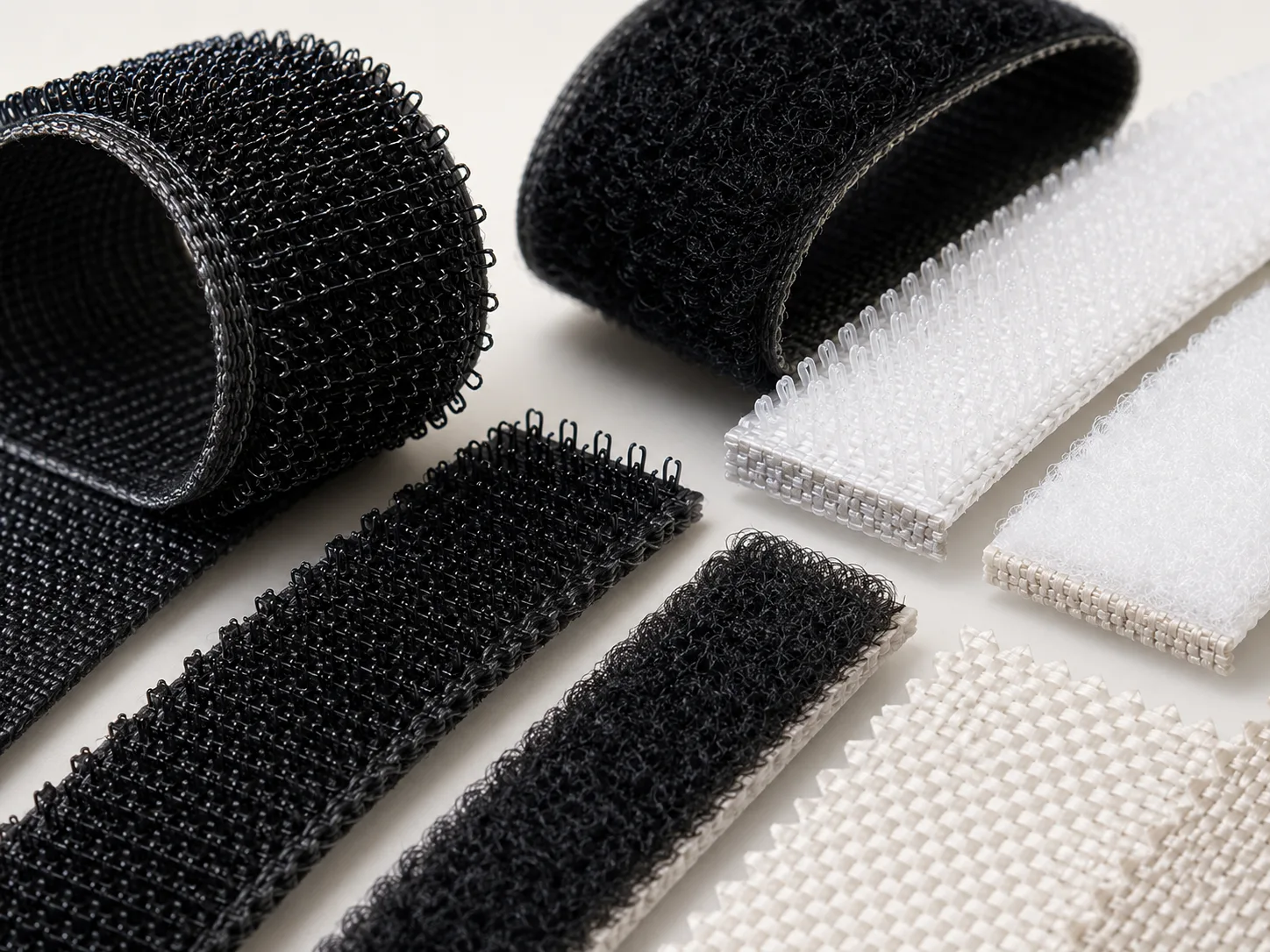
The first and most important classification is how the fastener attaches to the product. Attachment method determines installation speed, permanence, washability and which substrates the tape can bond to.
Sew-on hook and loop
Sew-on hook and loop is the traditional textile format designed to be stitched directly into fabric, webbing or soft goods. The tape has no adhesive layer; it relies on needle penetration and seam tension for permanent attachment. This is the preferred type for apparel, uniforms, bags, footwear, upholstery, medical supports and any product that will be laundered or flexed repeatedly.
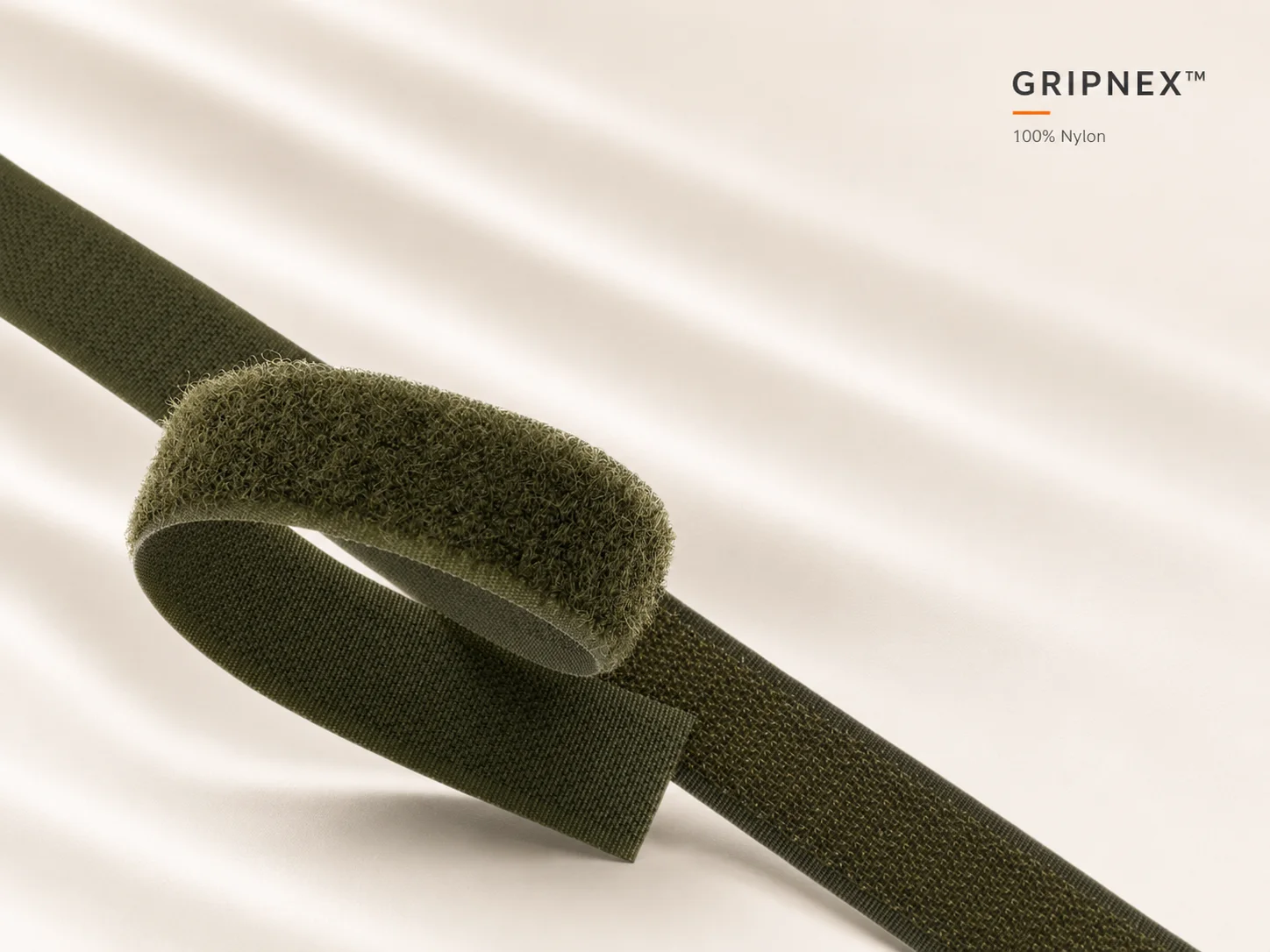
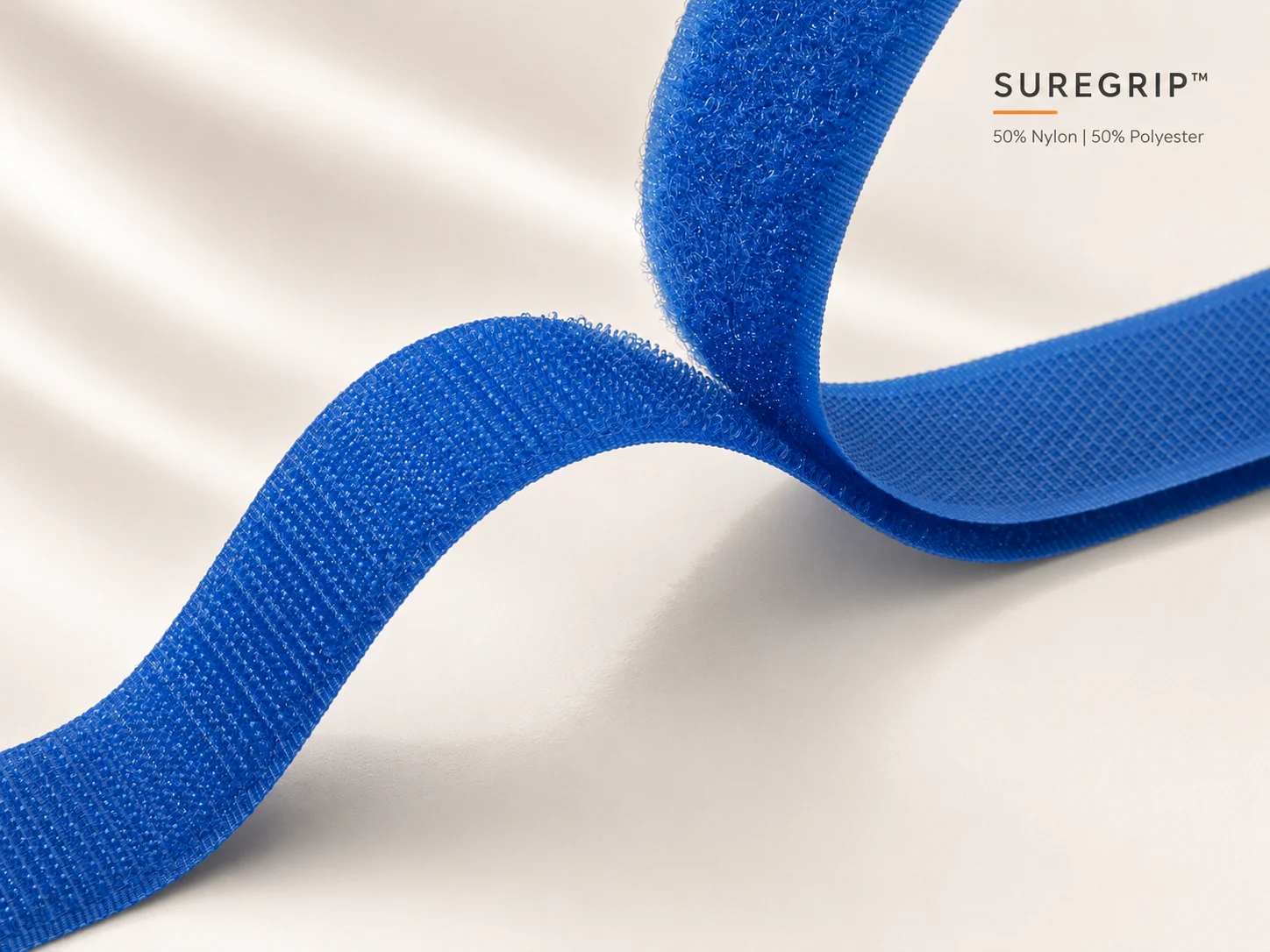
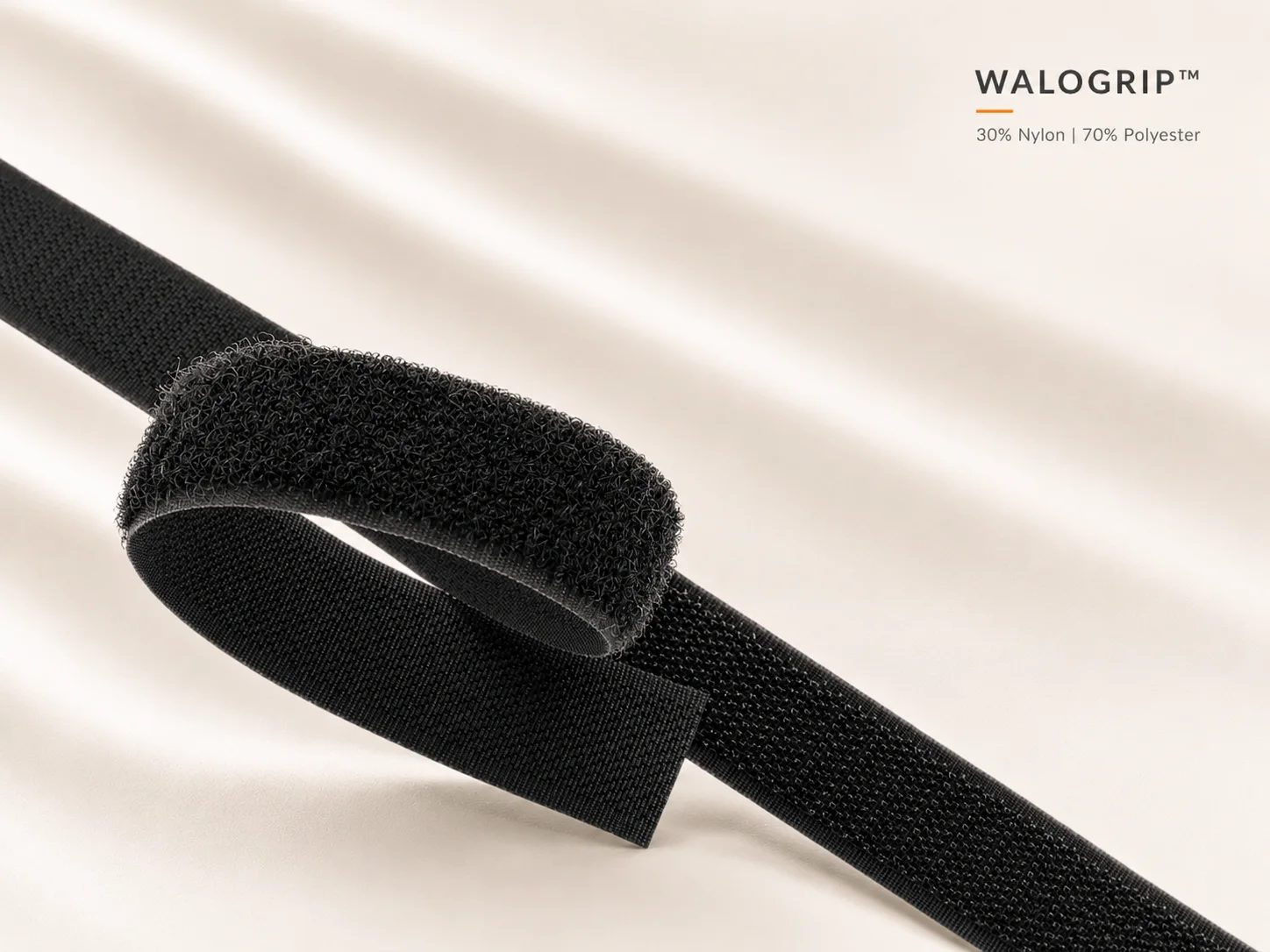
Walonium sew-on textile tapes such as Gripnex, Suregrip and Walogrip are supplied as separate hook and loop rolls for pairing in production. Sew-on attachment delivers the most reliable long-term bond on textile substrates because the fastener becomes part of the seam structure rather than relying on surface adhesion alone.
Adhesive-back hook and loop
Adhesive-back hook and loop carries a pressure-sensitive adhesive on the reverse side, allowing it to bond to smooth or lightly textured surfaces without sewing. This type is widely used for panel mounting, signage, display boards, crafts, home organization and light industrial applications where fast installation matters.
Adhesive performance depends on the substrate, surface preparation, temperature at application and the adhesive chemistry itself. General-purpose adhesives work well on clean indoor surfaces. High-moisture or outdoor formulations are available for kitchens, bathrooms and exterior-facing mounting. Walonium adhesive ranges include Fixora for general adhesive fastening and Bondix for more demanding industrial adhesive applications.
Iron-on hook and loop
Iron-on hook and loop uses a heat-activated adhesive layer that bonds to fabric when pressed with a household iron or heat press. It offers a clean finish without visible stitching, which makes it useful for costumes, school projects, craft applications and fabric items where sewing is impractical.
Iron-on types are less common in heavy-duty OEM production than sew-on or adhesive-back formats, but they remain relevant for consumer products and quick-fabrication workflows. Heat bonding requires compatible fabric content and controlled temperature to avoid scorching or weak adhesion.
One-wrap and back-to-back hook and loop
One-wrap fasteners — also called back-to-back hook and loop — feature hooks on one face and loops on the opposite face of the same strip. The tape wraps around an object and fastens to itself, creating a reusable adjustable closure without needing a separate mating piece.
This format is ideal for cable bundling, wire management, hose organization, gardening supports and industrial storage systems. Walonium supplies back-to-back formats such as Flexwrap for applications that need quick-release, reusable bundling rather than a fixed two-piece closure.
Types by hook and loop construction
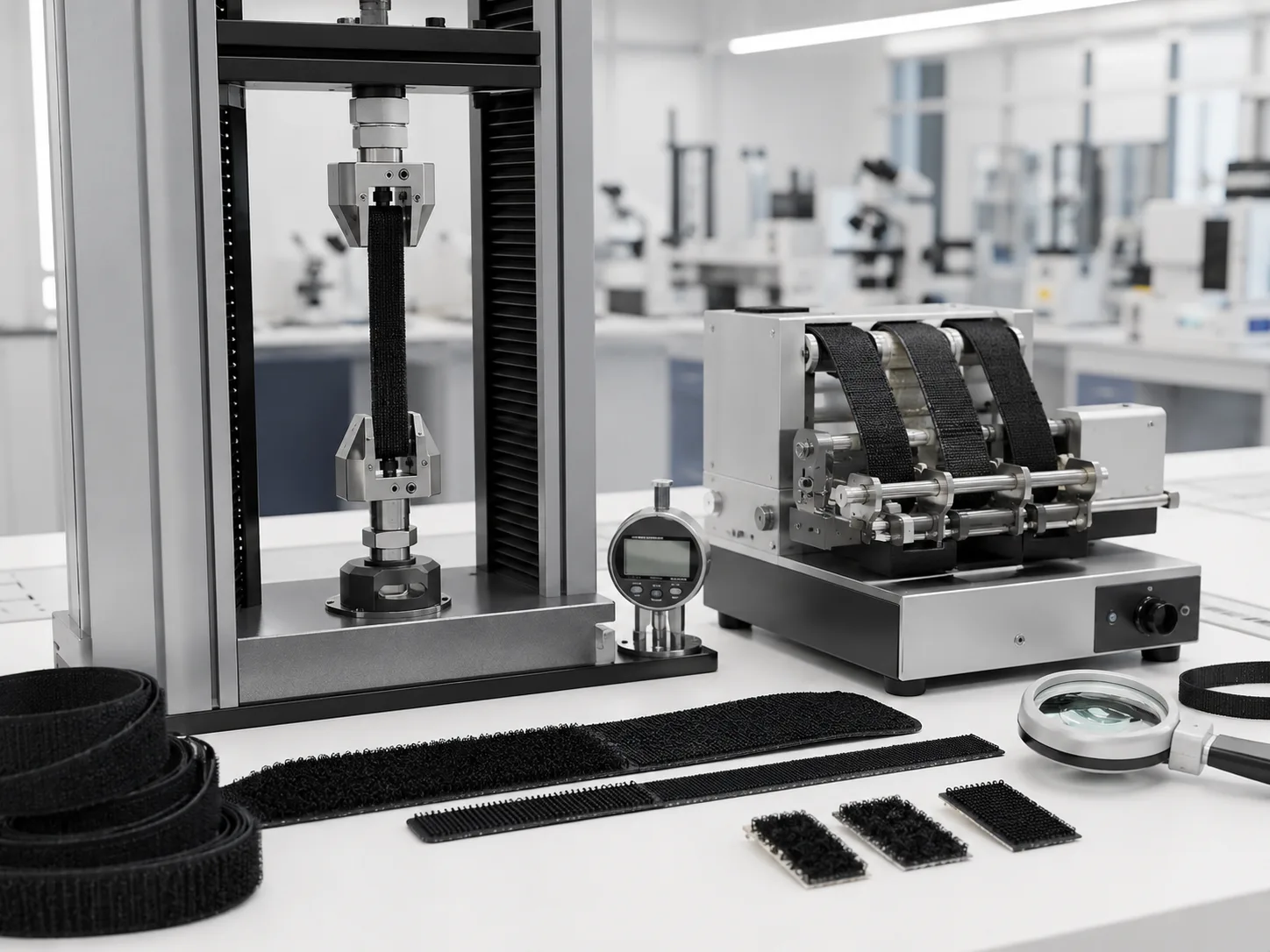
Beyond attachment, the way hooks are formed defines how the fastener feels, how much load it carries and how many open-close cycles it survives. The three main construction categories are textile woven, molded and high-technology mushroom hooks.
Textile hook and loop
Textile hook and loop is the classic woven design made from nylon or polyester fibers. Hooks and loops are created through weaving and finishing processes that produce a flexible, sewable tape with a soft hand feel. This is the most common type in apparel, footwear, medical supports, bags and general soft-goods manufacturing.
Textile constructions are easy to sew, comfortable against skin and well suited to products opened and closed daily. Walonium textile sew-on tapes span premium 100% nylon Gripnex, balanced Suregrip and value-oriented Walogrip depending on the performance and cost profile required.
Molded hooks
Molded hooks are formed from stiff plastic resins rather than woven textile fibers. The resulting hook profile is more rigid and can deliver higher closure strength for heavy-duty or high-repetition industrial applications. Molded hook tapes are common in automotive interiors, transportation, packaging systems and tool mounting where a stronger mechanical bite is needed.
Because molded hooks are less flexible than textile hooks, they are typically chosen for structural or industrial fastening rather than wearable comfort applications. Pairing molded hooks with a compatible loop construction is critical for achieving the rated peel and shear performance.
Mushroom and high-technology hooks
Mushroom hooks represent a newer generation of hook technology. Instead of traditional J-shaped hooks, they use low-profile stem-shaped protrusions that engage with matching loop or mating surfaces. The design delivers high grip strength with less bulk, making it attractive for aerospace, medical device, defense and advanced industrial assemblies where space, weight and repeatability matter.
High-technology hook systems often require specific mating components and precise alignment. They are not interchangeable with standard textile hook and loop, so OEM buyers should treat them as engineered fastening systems rather than commodity tape.
Types by strength and application grade
Not all hook and loop tapes are built for the same load, cycle count or environmental exposure. Strength grade is the third classification layer and it helps buyers match performance to the product's real-world demands.
Standard grade
Standard-grade hook and loop serves everyday fastening needs: clothing closures, light packaging, craft projects, office organization and consumer goods. These tapes use woven textile hooks and loops in nylon or polyester constructions and are designed for moderate cycle life at accessible cost.
Industrial strength
Industrial-strength hook and loop is engineered for heavier loads, more demanding handling and longer service life. Reinforced hook geometry, denser weaving and stronger adhesive or sew-on backings support applications such as tool mounting, panel retention, transportation interiors and manufacturing fixtures where failure has operational consequences.
Extreme outdoor grade
Outdoor-grade fasteners are built to tolerate UV exposure, temperature swings, moisture and rough handling. They typically combine polyester-rich or engineered plastic materials with weather-resistant adhesives or robust sew-on constructions. Common uses include outdoor signage, camping equipment, marine accessories, construction site organization and exterior panel mounting.
Kitchen and bath grade
Kitchen and bath grade hook and loop uses moisture-resistant adhesive formulations designed for humid, wet or frequently cleaned environments. These tapes support organizing kitchen accessories, bathroom fixtures, storage systems and utility areas where standard indoor adhesives may lose bond strength over time.
Sew-on vs adhesive-back comparison
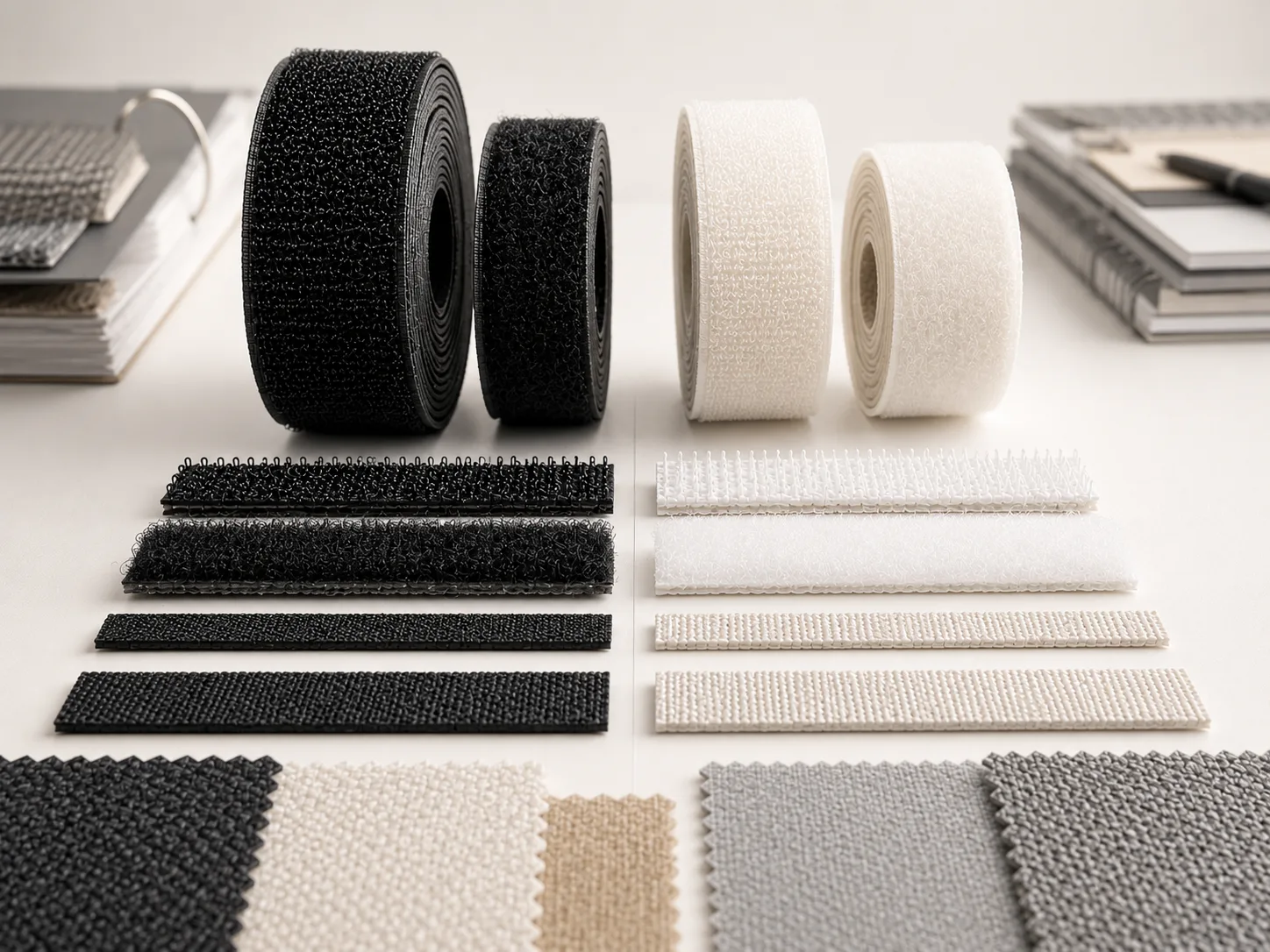
The table below compares the two most common attachment types for procurement teams deciding between permanent textile integration and surface-bonded installation.
Sew-On Hook & Loop
Adhesive-Back Hook & Loop
Stitched into fabric or webbing using standard sewing equipment.
Peel-and-stick application on prepared substrates without sewing.
Ideal for apparel, medical textiles and bags that are washed repeatedly.
Not typically recommended for machine washing unless specifically engineered.
Fabric, webbing, textile composites and soft goods.
Metal, plastic, wood, glass, painted panels and smooth boards.
Requires sewing line setup and seam planning.
Quick application for mounting, signage and field assembly.
Apparel, footwear, upholstery, medical supports, bags and tactical gear.
Panels, displays, crafts, cable routing guides and light industrial mounting.
Gripnex, Suregrip, Walogrip non-adhesive textile tapes.
Fixora general adhesive and Bondix industrial adhesive ranges.
Types by material composition
Base material is the fourth classification layer. It influences flexibility, moisture behavior, temperature tolerance, UV resistance and cost. The three primary material families in hook and loop manufacturing are nylon, polyester and engineered plastic resins.
Nylon hook and loop
Nylon, also called polyamide, is valued for flexibility, abrasion resistance and strong repeated-use performance. It bends comfortably around curved surfaces, engages reliably across many open-close cycles and is widely used in apparel, footwear, medical supports, upholstery and tactical gear. Nylon handles moderate heat well but can absorb more moisture than polyester and may need extra validation for constant outdoor UV exposure.
For premium sew-on textile applications, Walonium Gripnex delivers 100% nylon construction designed for high-cycle closures where holding strength and hand feel matter most.
Polyester hook and loop
Polyester offers lower moisture absorption, better dimensional stability in humid conditions and practical resistance to UV exposure. It is a strong choice for outdoor-facing products, marine environments, furniture panels, cable management and general-purpose industrial fastening where environmental stability and cost efficiency are priorities. Polyester may feel less soft than nylon depending on construction, and its high-temperature tolerance is typically lower than premium nylon grades.
Polyester-rich constructions such as Walonium Walogrip (30% nylon / 70% polyester) and balanced Suregrip (50% nylon / 50% polyester) give buyers practical options across value and mixed-use applications.
Engineered plastic resins
Engineered plastic resins are used primarily in molded hook and specialty industrial constructions. They deliver exceptional rigidity, UV stability, water resistance and heat-seal compatibility in applications where textile fibers alone cannot meet the mechanical or environmental requirement. Plastic-resin hook systems are common in heavy-duty packaging, transportation, permanent industrial mounting and outdoor equipment where long-term durability outweighs the need for a soft textile feel.
Specialty hook and loop formats
Beyond standard roll tape, hook and loop is supplied in converted formats that solve specific production and assembly needs. Understanding these formats prevents over-specifying full-width tape where a die-cut or pre-paired format would reduce waste and labor.
Hook and loop coins are pre-cut circular pieces used for spot fastening, display mounting and small-area closures. Walonium Velodot coins pair hook and loop discs for quick application without manual cutting.
Back-to-back tape combines hook and loop on opposite faces of one strip for wrap-around bundling. Flexwrap serves cable management, hose organization and reusable industrial strapping.
Pre-cut lengths and custom widths support OEM lines that need consistent piece lengths for assembly efficiency. Specifying width, cut length, color and packaging at quotation stage reduces converting cost and lead time.
How OEM buyers should select hook and loop types
OEM selection should follow a structured sequence. First, define the attachment method based on substrate and production process. Second, choose hook construction based on load, cycle life and comfort requirements. Third, select the strength grade for the operating environment. Fourth, confirm material composition for moisture, temperature and cost targets.
For premium repeated-use textile closures, evaluate Gripnex as the 100% nylon starting point. For balanced comfort and stability across medical, apparel and mixed-use products, evaluate Suregrip. For general-purpose sew-on fastening where cost control matters, evaluate Walogrip. For adhesive applications, route the requirement to Fixora or Bondix depending on whether the bond is general-purpose or industrial-grade.
When the application is still unclear, use the related guides in the Walonium Knowledge Center to go deeper on material selection, adhesive specification and end-use applications before approving production.
Application examples by hook and loop type
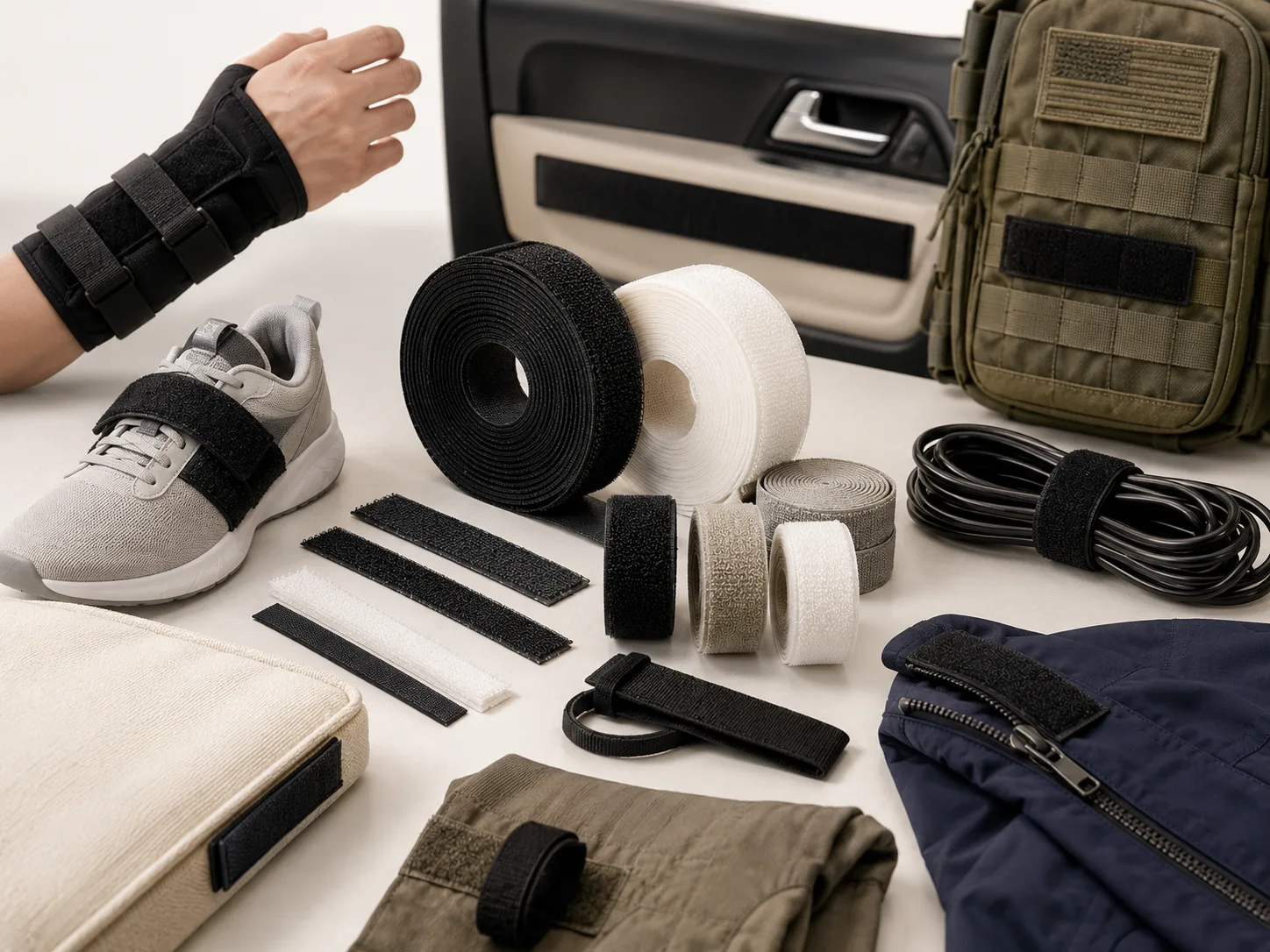
Sew-on textile tape
Jackets, uniforms and bags use sew-on nylon or blended textile hook and loop for washable, flexible closures. Gripnex or Suregrip are common starting points.
Textile with high cycles
Braces, supports and wearable medical products need soft, repeatedly adjustable closures. Premium nylon or balanced blends suit most specifications.
Sew-on nylon textile
Shoe straps and sandal closures benefit from flexible nylon textile tape that maintains engagement through daily use and flexing.
One-wrap back-to-back
Reusable bundling favors back-to-back hook and loop that wraps and fastens to itself. Flexwrap-style formats reduce installation time.
Adhesive-back outdoor grade
Display panels and outdoor boards need adhesive-back tape with UV and moisture resistance on prepared rigid substrates.
Molded or industrial grade
Interior panels and trim assemblies may use molded-hook or industrial-strength tapes depending on vibration, heat and load.
Standard textile or plastic
Reclosable packaging uses standard textile or plastic-resin hook systems where repeatable sealing and cost control both matter.
Common mistakes when specifying hook and loop types
The most common mistake is treating "Velcro" as a single product. Buyers who do not separate attachment, construction, strength and material often receive tape that looks correct in a catalogue but fails in production or field use.
The second mistake is choosing adhesive-back tape for textile applications that will be washed. Adhesive bonds can weaken under laundering unless the product is specifically engineered for that environment. Sew-on textile tape is almost always the safer choice on fabric.
The third mistake is over-specifying premium nylon where a standard polyester-rich tape would meet the actual cycle and environment requirement. This raises cost without improving product performance.
The fourth mistake is under-specifying industrial applications with standard-grade tape. Closures that face heavy load, vibration or outdoor exposure need the correct strength grade and material, not just the narrowest or cheapest roll available.
Buying advice for procurement teams
When requesting a quotation, describe the full fastener requirement: attachment method, hook construction, substrate, expected cycles, environment, width, color, roll length, converting format and order volume. Suppliers can only recommend the right type when the application context is clear.
For new OEM programs, request samples across two or three relevant types. Compare sew-on textile options such as Gripnex, Suregrip and Walogrip in the actual assembly, or test Fixora and Bondix if the requirement is adhesive. Side-by-side evaluation in the real product shortens approval time.
Evaluate total product cost, not unit tape price. The right hook and loop type reduces returns, improves user experience, speeds assembly and supports the intended product life. A cheaper tape that fails in the field is the more expensive choice.
Key takeaways
Hook and loop fasteners are classified by attachment method, hook construction, strength grade and material composition — not by brand name alone. Sew-on textile tape dominates apparel and soft goods; adhesive-back tape serves panels and mounting; one-wrap formats handle bundling; molded and mushroom hooks address industrial and advanced engineering needs.
For Walonium textile sew-on applications, the practical mapping is Gripnex for 100% nylon premium performance, Suregrip for balanced mixed-use durability, and Walogrip for cost-effective general-purpose fastening. Adhesive and specialty needs route to Fixora, Bondix, Flexwrap and Velodot.
Always confirm the final hook and loop type with tested samples in the finished product. Classification guides narrow the options; real-world assembly testing proves the specification.
FAQ
What are the different types of hook and loop fasteners?
Hook and loop fasteners are commonly classified by attachment method (sew-on, adhesive-back, iron-on, one-wrap), hook construction (textile woven, molded, mushroom), strength grade (standard, industrial, outdoor) and base material (nylon, polyester, engineered plastics).
What is the difference between sew-on and adhesive hook and loop?
Sew-on hook and loop is stitched into fabric for permanent, washable fastening in apparel, bags and upholstery. Adhesive-back hook and loop bonds to smooth or textured substrates without sewing, making it faster to install for panels, signage, crafts and light industrial mounting.
Is Velcro the same as hook and loop?
Velcro is a brand name that became widely used for hook and loop fasteners. Technically, hook and loop refers to the fastening system itself — a hook side and a loop side that engage when pressed together and separate when peeled apart.
What are molded hooks and mushroom hooks?
Molded hooks are stiff plastic hooks formed by molding rather than weaving, offering higher rigidity for industrial and automotive use. Mushroom hooks are a low-profile high-technology design with stem-shaped hooks that deliver strong grip with less bulk, often used in aerospace, medical and defense applications.
Which hook and loop type is best for outdoor use?
Outdoor applications typically need polyester-rich or engineered plastic constructions with moisture-resistant adhesives or sew-on attachment. Extreme outdoor grades are built to handle UV exposure, temperature swings and rough surfaces better than standard indoor tapes.
What is one-wrap hook and loop?
One-wrap, also called back-to-back hook and loop, has hooks on one face and loops on the opposite face of the same strip. It wraps around an object and fastens to itself, making it ideal for cable bundling, wire management and reusable industrial organization.
How do Walonium Gripnex, Suregrip and Walogrip fit into hook and loop types?
Gripnex is 100% nylon textile hook and loop for premium repeated-use performance. Suregrip is a balanced 50% nylon and 50% polyester sew-on option. Walogrip is a 30% nylon and 70% polyester general-purpose textile tape for cost-effective standard fastening.
How should OEM buyers choose between hook and loop types?
Start with how the fastener attaches, then define cycle life, environment and load. Match attachment method to the substrate, hook construction to the strength requirement, and material to the operating conditions. Always test samples in the finished product assembly before production approval.