On this page
What is hook and loop — and why is it called Velcro?
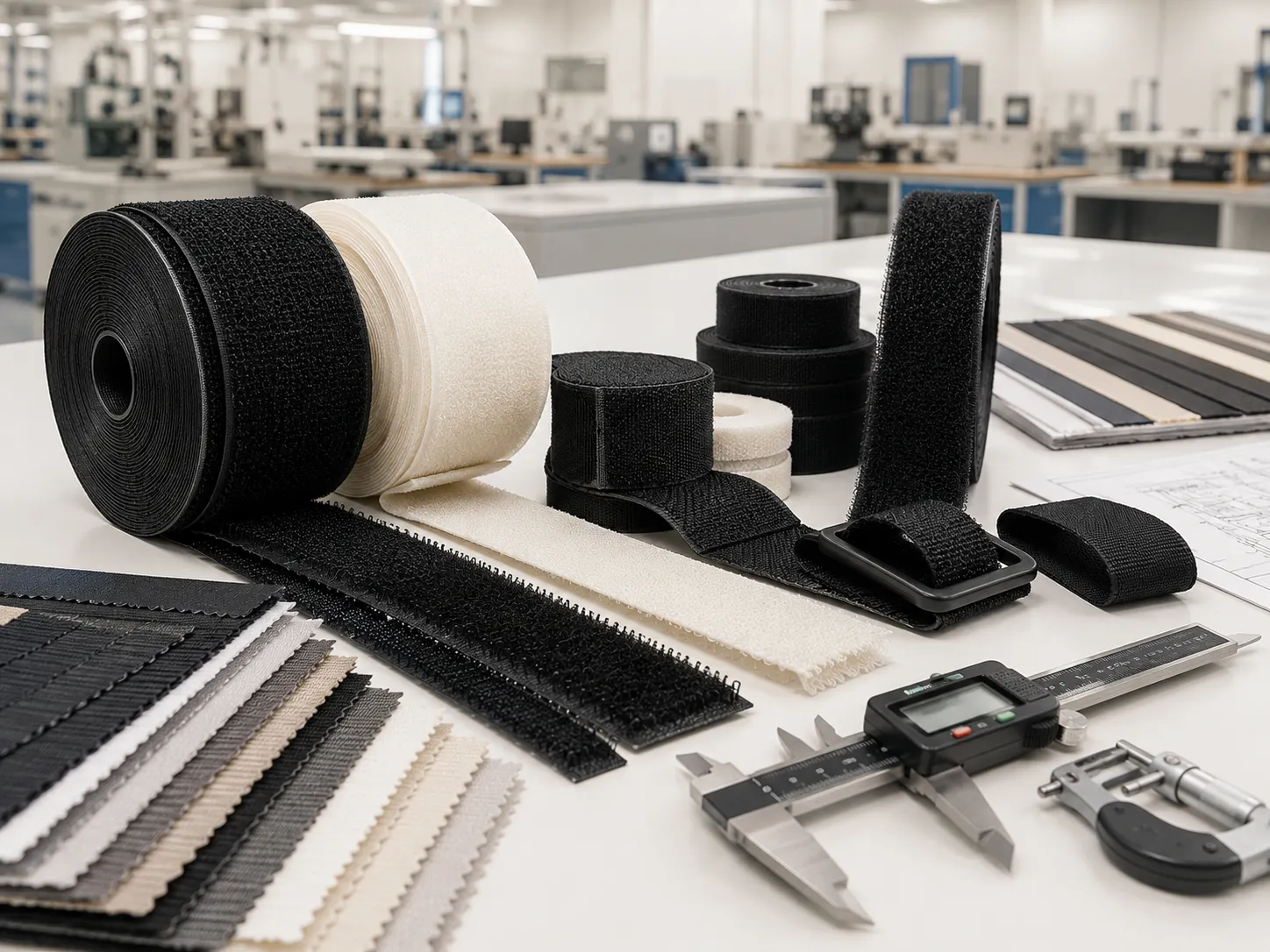
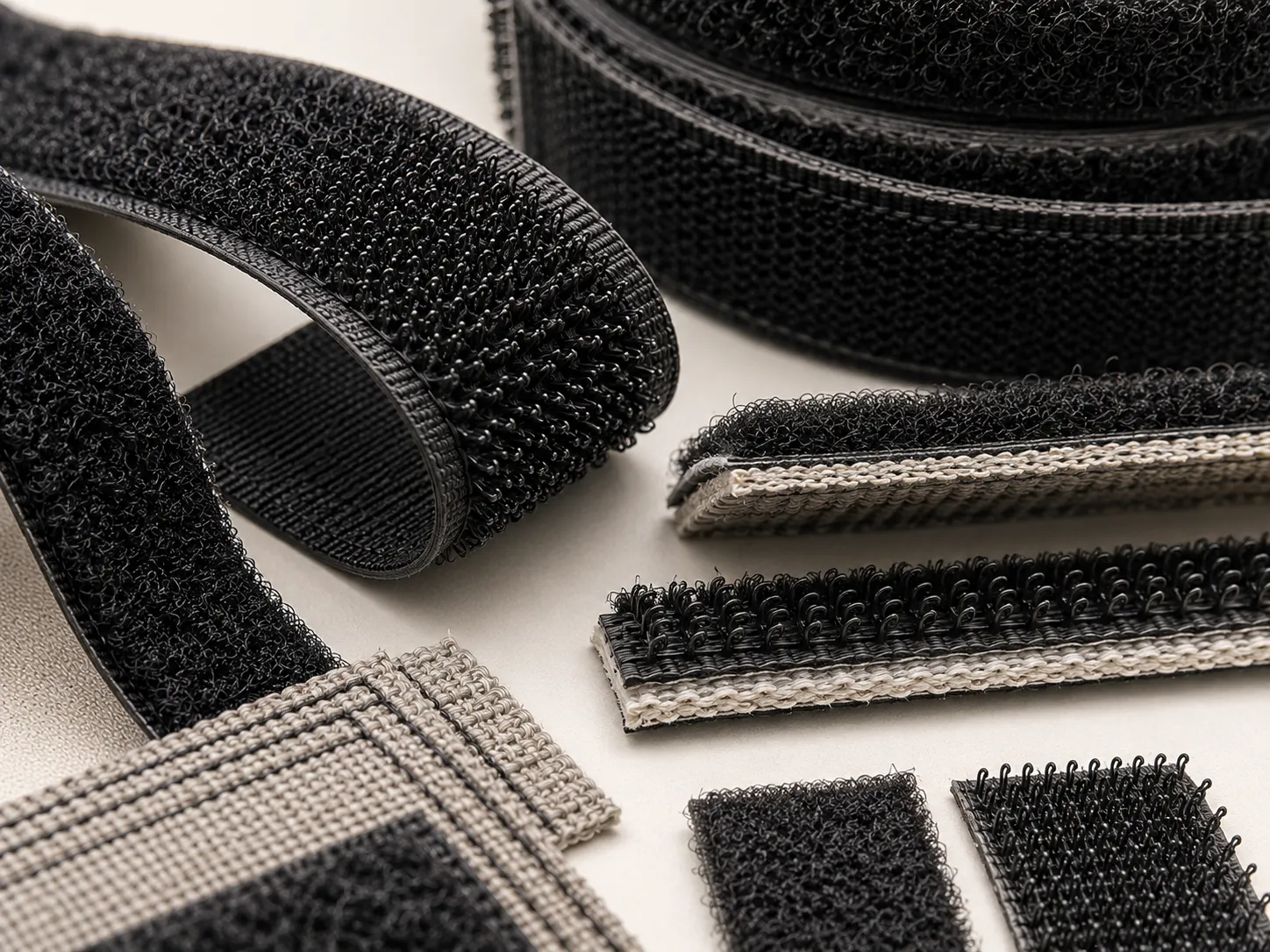
Hook and loop is a reusable textile fastening system made from two mating sides. One side carries small hooks; the other carries soft loop fibers. When the two sides are pressed together, the hooks engage the loops and create a secure bond. The fastener opens when the sides are peeled apart and can be closed again many times. Explore solutions by sector when your specification is tied to a particular industry.
Velcro is a registered brand name that has become widely used as a generic term for hook and loop fasteners. In technical and procurement conversations, "hook and loop" is the correct generic description. For OEM buyers, the important specification is not the brand name but the performance requirement: material, width, backing type, cycle life, environment and attachment method.
At Walonium Textile, hook and loop tapes are manufactured for industrial, medical, apparel, automotive and commercial applications worldwide. The same basic fastening principle supports everything from a shoe strap to an aircraft interior panel — but the construction behind each tape can differ significantly.
How hook and loop fasteners work
The fastening action depends on mechanical engagement between hooks and loops. Hook sides can be woven or molded, with hook height and density controlling peel strength and engagement feel. Loop sides use raised pile fibers that receive the hooks. A stronger closure generally means more hook engagement, but it can also mean harder opening and less comfort near the body.
Hook and loop offers three practical advantages over many traditional fasteners. First, it allows repeated opening and closing without the wear pattern of buttons or snaps. Second, it supports adjustable fit, which is valuable in medical supports, footwear and tactical gear. Third, it enables tool-free assembly and repositioning, which helps in cable management, display panels and modular products.
Attachment methods include sew-on tape, adhesive-backed tape, back-to-back formats and die-cut coins or shapes. The right format depends on the substrate, production process and whether the fastener must be removable or permanent within the product life.
Hook and loop vs other fastening methods
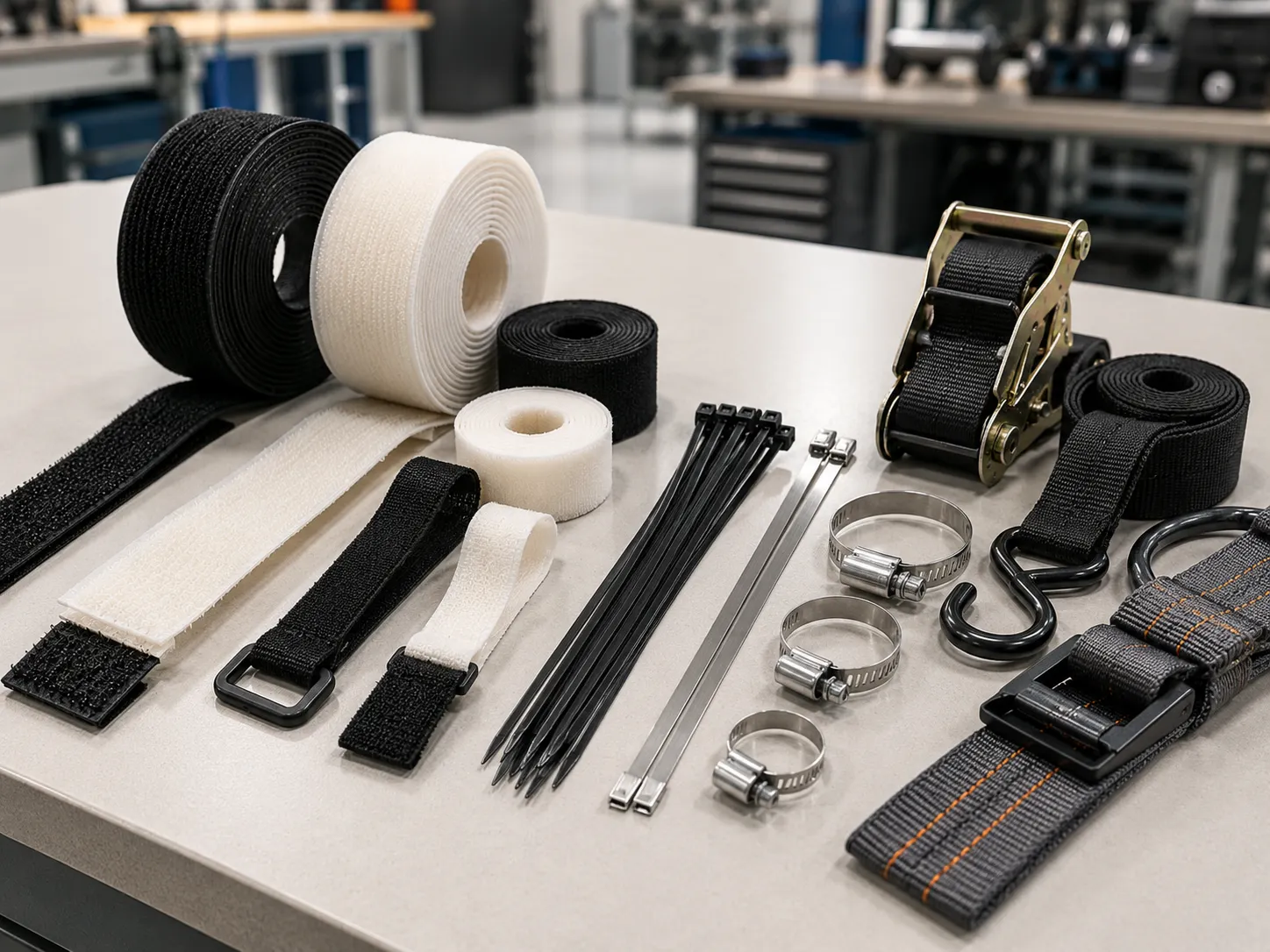
The comparison below helps buyers decide when hook and loop is the right solution versus buttons, zippers, snaps or permanent adhesives. It is a practical guide, not a universal rule, because product design and user experience also matter.
Hook & Loop
Buttons / Snaps / Zippers
Opens and closes repeatedly without redesigning the closure each time.
Reusable, but wear and alignment issues can appear over time on some formats.
Ideal for straps, braces and products needing incremental fit changes.
Fixed positions unless designed with multiple closure points.
Adhesive-backed and sew-on formats simplify assembly and field adjustment.
May require specialized tooling, stitching or hardware installation.
Strong for peel-resistant closures, but not ideal for all high-shear loads.
Buttons, snaps and welded joints often suit higher permanent load requirements.
Can be visible on the product surface; color matching helps.
Hidden zippers and sewn buttons can offer a more traditional appearance.
Medical supports, footwear, tactical gear, cable wraps, panels and modular assemblies.
Formal apparel, heavy structural joints and permanent high-load connections.
Apparel, footwear and textile applications
Hook and loop is widely used in clothing and footwear as a replacement or supplement to buttons, snaps and zippers. Shoes, sandals, jackets, gloves, uniforms, sportswear and children's wear all benefit from quick fastening and adjustable fit. For garment manufacturers and exporters, soft woven hook and loop supports comfort while maintaining enough engagement for daily use.
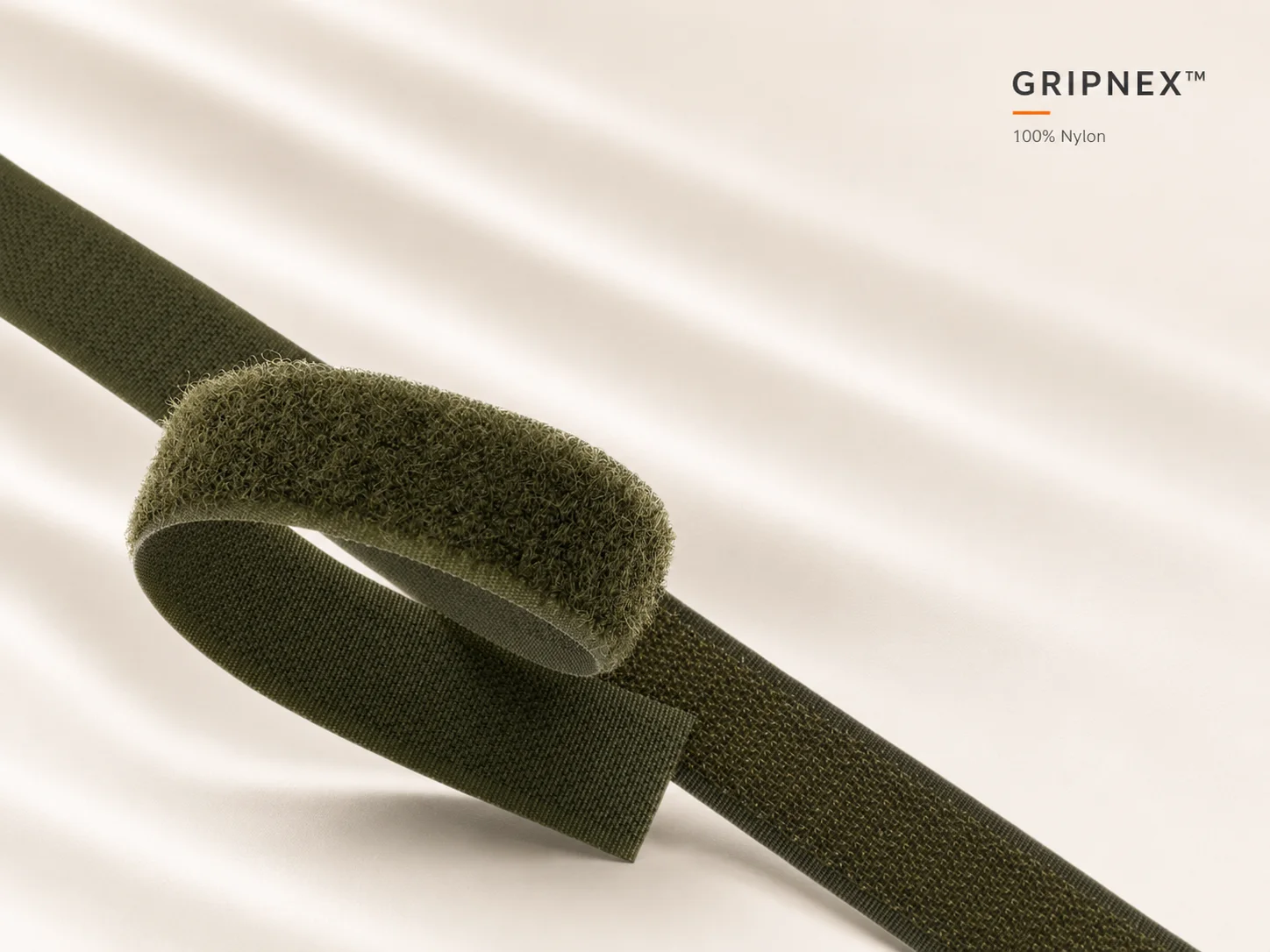
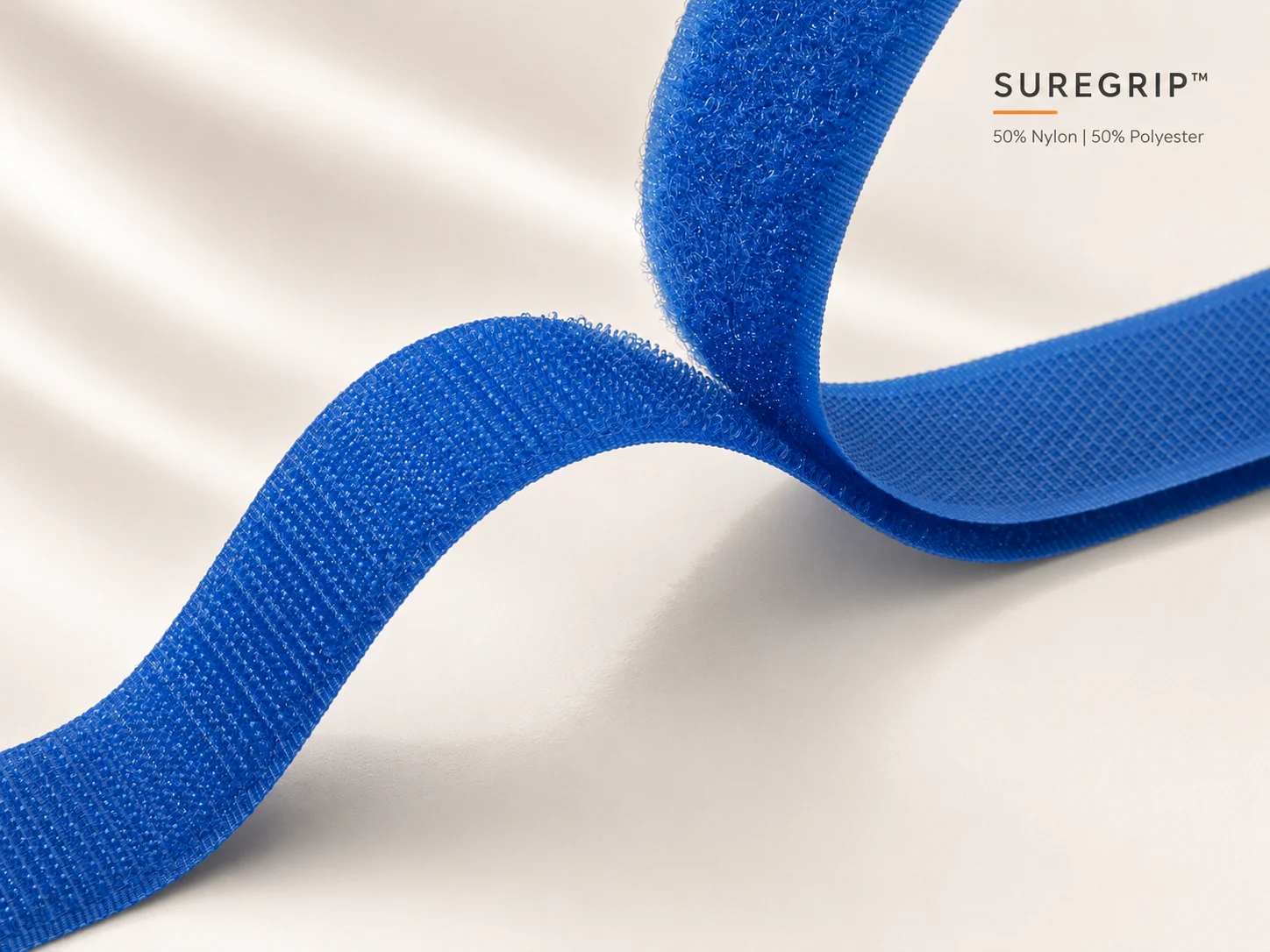
Footwear is one of the most demanding apparel applications because the closure is flexed, stressed and opened repeatedly. Nylon-rich tapes such as Gripnex are often preferred for shoe straps where cycle life and flexibility matter. Apparel applications with moderate cycle requirements may use balanced constructions such as Suregrip.
Buyers should test hook and loop after washing and finishing processes. Laundering, dyeing and seam construction can affect peel strength and edge stability. A tape that performs well as a loose sample may behave differently once sewn into a garment panel or shoe upper.
Medical, healthcare and wearable applications
In healthcare, hook and loop is valued for adjustability, quick application and patient comfort. Common uses include bandages, wound dressings, orthopaedic braces, compression supports and wearable health devices. The fastener must allow caregivers or patients to adjust fit without tools, and it must remain comfortable during extended wear.
Medical applications often combine repeated adjustment with skin proximity. Soft loop surfaces, appropriate width and reliable engagement are all important. For braces and supports opened multiple times per day, premium nylon-rich tapes deliver stronger long-term performance. For lighter medical or consumer health products, balanced options can provide a practical middle path.
Regulatory and quality expectations vary by market. OEM buyers should confirm material consistency, color availability, batch traceability and any specific biocompatibility or skin-contact requirements with their supplier before production approval.
Industrial and commercial manufacturing uses
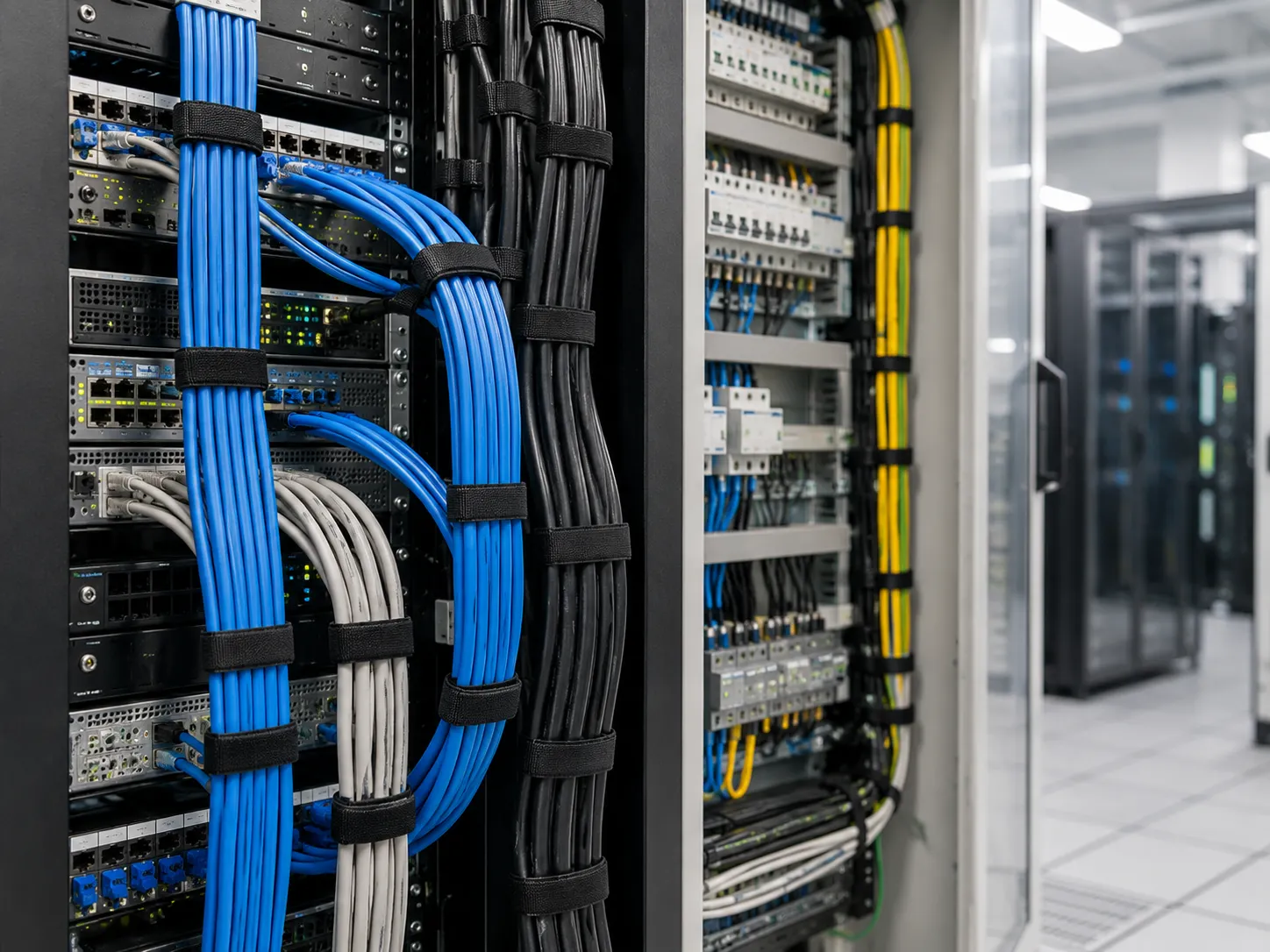
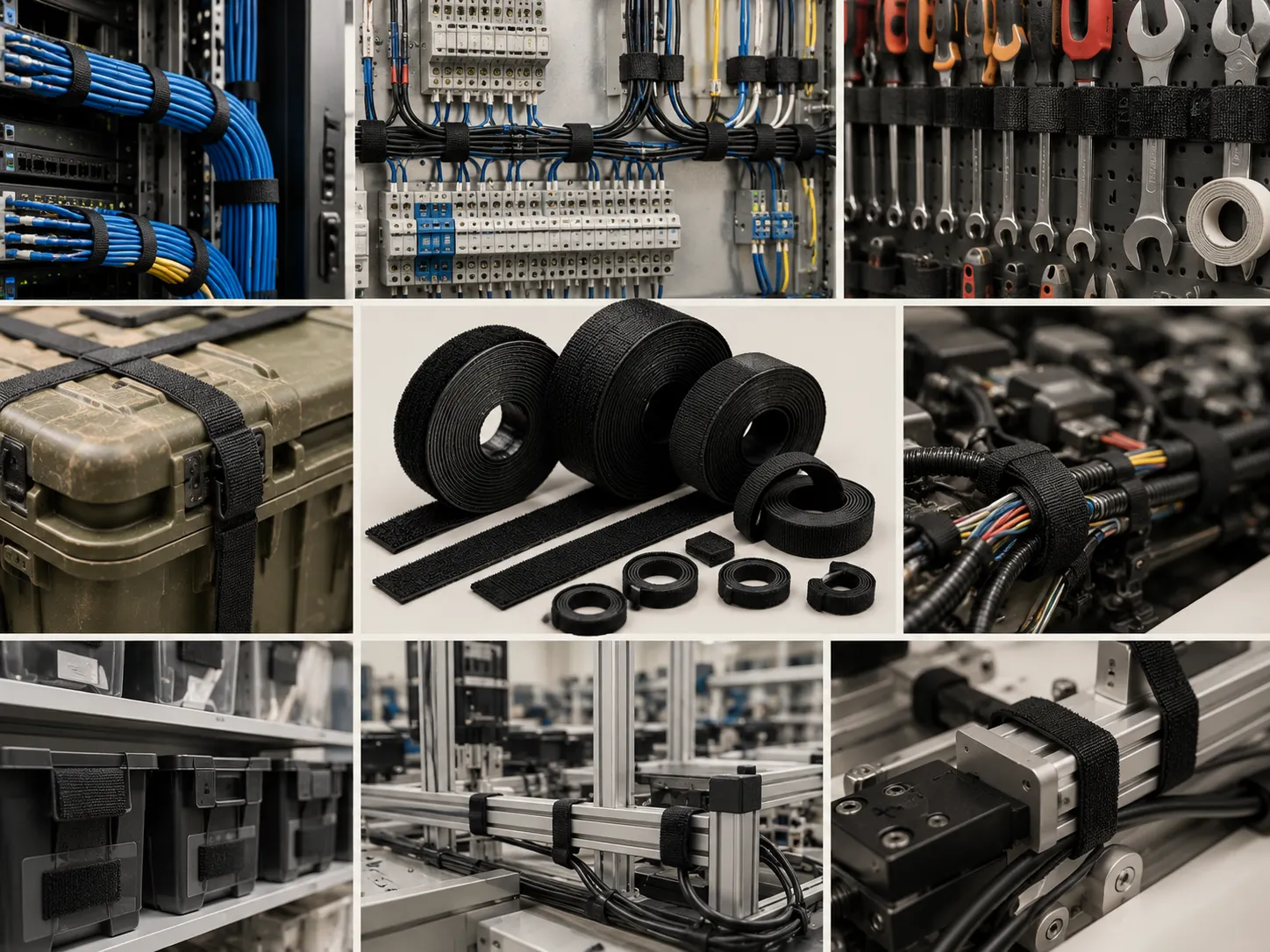
Industrial hook and loop applications extend well beyond consumer products. Factories and commercial operations use it to secure tools, bundle cables, attach panels, organize components and assemble reusable display systems. The ability to reposition or replace a fastener without drilling, welding or permanent adhesive makes hook and loop valuable in maintenance-heavy environments.
Trade show booths, retail displays, signage systems and modular furniture often rely on hook and loop for quick setup and breakdown. Packaging lines use it for reusable closures on protective covers or transport wraps. Warehouses use it for cable management and tool organization where flexibility matters more than maximum load capacity.
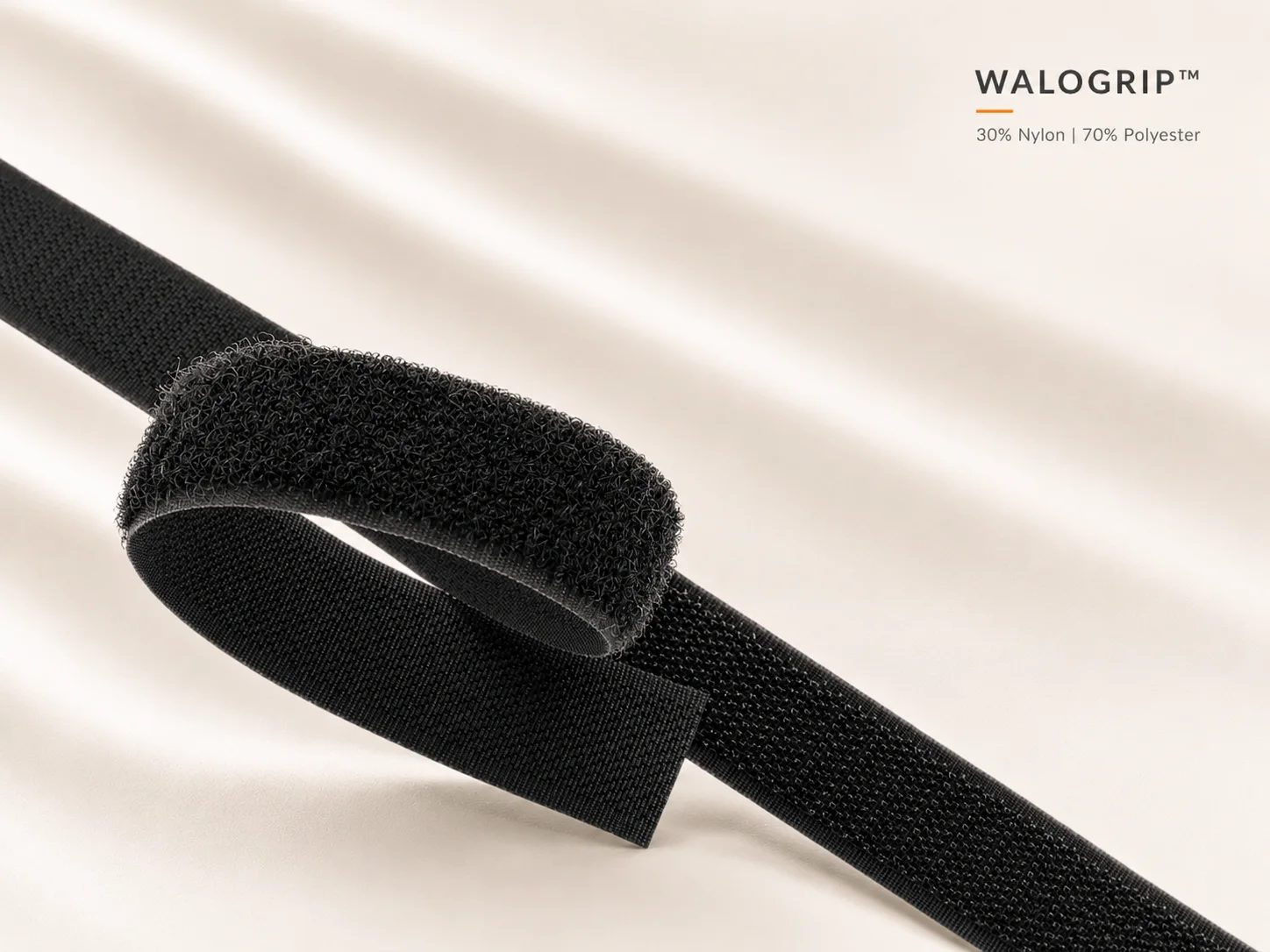
For cost-sensitive industrial use, polyester-rich tapes such as Walogrip often provide dependable general-purpose fastening. For closures opened frequently by workers or field technicians, a higher-performance nylon-rich option may reduce replacement and complaint rates over the product life.
Automotive, aerospace and transportation applications
Automotive interiors use hook and loop for seat covers, headliner attachment, wire routing, trim panels and temporary or serviceable component mounting. The fastener must tolerate vibration, temperature changes and assembly-line handling. Material and backing selection depend on whether the part is a high-cycle user-facing closure or a stable interior mount.
Aerospace and aviation applications include interior panel attachment, wire management, equipment organization and lightweight modular assemblies. NASA's early use of hook and loop for zero-gravity tool organization helped establish the technology in precision industries. Today, aerospace buyers prioritize weight, repeatability and controlled engagement rather than maximum peel strength alone.
Transportation applications often require flame-retardant, low-profile or high-temperature considerations depending on the component location. Always validate the complete specification against the supplier's available constructions rather than assuming a standard apparel-grade tape will suffice.
Military, tactical, outdoor and marine applications
Military and tactical gear rely on hook and loop for uniform patches, pouches, holsters, plate carrier attachments and quick-access equipment. The fastener must support rapid opening and closing, often while wearing gloves or under field conditions. Noise, durability and engagement consistency are all part of the specification.
Outdoor and marine environments add moisture, UV exposure and temperature variation. Tarps, nets, gear bags, boating accessories and camping equipment use hook and loop where reusability and field adjustment matter. Polyester-rich constructions often perform better in damp or sun-exposed conditions, while nylon-rich options may be preferred for high-cycle tactical closures protected from constant weather exposure.
Emergency and safety equipment also uses hook and loop for tourniquets, quick-release straps and rapid-access kits where dependable fastening under stress is essential. These applications demand rigorous sample testing before field deployment.
Home, furniture and commercial display applications
Home improvement and interior applications include hanging signage, securing rugs, managing curtains, organizing drawers and mounting lightweight décor. Adhesive-backed hook and loop supports tool-free installation on smooth or textured surfaces, which appeals to DIY brands and commercial fit-out contractors.
Furniture and upholstery manufacturers use hook and loop to attach removable panels, cushion covers and serviceable components. Because these closures may not be opened daily, a cost-effective polyester-rich tape is often sufficient. The priority is stable mounting, clean appearance and predictable handling during assembly.
Commercial display and retail brands value hook and loop for campaign changeovers. A store can swap signage, panels or promotional elements without damaging walls or fixtures. This reduces downtime and supports reusable display hardware across seasons.
OEM product recommendations by application
OEM buyers should begin with the finished product requirement, not the tape catalogue. Define how the closure will be used, how often it opens and closes, what environment it faces, how it attaches and what the end user expects. Then map the application to the right Walonium product.
For premium repeated-use products, evaluate Gripnex, Walonium's 100% nylon hook and loop tape. It suits footwear straps, orthopaedic braces, tactical gear, industrial closures and any application where high engagement and long cycle life are critical.
For balanced performance across mixed-use applications, evaluate Suregrip, a 50% nylon / 50% polyester construction. It is a practical choice for medical supports, apparel, baby care products and commercial applications needing comfort plus dependable durability.
For value-oriented general-purpose fastening, evaluate Walogrip, a 30% nylon / 70% polyester construction. It works well for packaging, cable management, furniture panels, display systems and standard industrial use where cost control and stable performance matter most.
Industry recommendations at a glance
Adjustable closures and straps
Shoes, jackets, gloves and uniforms benefit from quick fastening. Gripnex for high-cycle footwear; Suregrip for general apparel.
Braces and wearable supports
Repeated adjustment and skin comfort are priorities. Gripnex or Suregrip are strong starting points for most medical OEM applications.
Cable wraps and panel fastening
Tool-free repositioning and reusable bundling. Walogrip for general use; Gripnex where workers open closures frequently.
Interior panels and wire routing
Match tape to vibration, heat and attachment method. Evaluate both sew-on and adhesive-backed formats for the specific component.
Tactical pouches and patch systems
High-cycle closures and quick release under field conditions. Nylon-rich constructions such as Gripnex are commonly specified.
Lightweight interior organization
Low-profile, repeatable fastening for panels and equipment. Validate engagement, weight and environmental exposure with samples.
Displays, signage and furniture
Repositionable mounting and modular assembly. Walogrip and Suregrip cover most commercial display and panel applications.
Common mistakes when specifying hook and loop
The most common mistake is treating all hook and loop as interchangeable. A tape that works for a cable wrap may fail on a shoe strap or medical brace because cycle life, flexibility and skin contact requirements are different. Application-first specification prevents costly rework.
The second mistake is ignoring attachment method. Sew-on, adhesive-backed and specialty formats behave differently on the same substrate. Buyers who approve a loose tape sample without testing the production attachment method often discover peel or edge issues too late.
The third mistake is under-specifying cycle life. A static furniture panel and a daily-use footwear strap both use hook and loop, but only one needs premium repeated-use performance. Under-specifying leads to premature complaints; over-specifying wastes margin.
The fourth mistake is skipping environmental validation. Humidity, UV exposure, washing, dust and temperature swings all affect real-world performance. Indoor sample approval does not replace testing in the actual operating environment.
Buying advice for procurement teams
When requesting a quotation, share the application, substrate, expected open-close cycles, exposure conditions, attachment method, width, color, roll length and packaging requirements. A clearer brief helps the supplier recommend the right construction the first time.
For OEM programs, compare at least two product options in the same assembly. For example, test Gripnex against Suregrip for a medical strap, or Suregrip against Walogrip for a commercial panel. This gives engineering and procurement teams a practical cost-performance basis for final approval.
Evaluate total product cost, not tape cost alone. The right hook and loop specification can reduce field failures, improve user experience, simplify assembly and extend product life. The cheapest tape is rarely the best purchase if it creates warranty or rework costs later.
Key takeaways
Hook and loop — often referred to as Velcro — is a versatile reusable fastening system used across apparel, medical, industrial, automotive, military, aerospace and commercial applications. Its value comes from adjustability, repeated use and tool-free assembly, not from being a one-size-fits-all product.
For Walonium buyers, the practical mapping is straightforward: Gripnex for premium repeated-use performance, Suregrip for balanced mixed-use applications, and Walogrip for cost-effective general-purpose fastening.
The best specification is always confirmed with real samples in the finished product. Application, environment and attachment method determine the right tape — not habit, brand name or price alone.
FAQ
What industries commonly use Velcro?
Hook and loop fasteners are used across apparel, medical, automotive, aerospace, military, furniture, packaging, cable management, home improvement and general industrial manufacturing. The right tape depends on cycle life, environment and attachment method.
How does hook and loop work?
Hook and loop consists of two mating sides: a hook side with raised hooks and a loop side with soft fibers. When pressed together, the hooks engage the loops to form a secure bond. The fastener opens by peeling the two sides apart and can be re-closed many times.
Why is Velcro used in medical and healthcare products?
Medical products use hook and loop because it allows adjustable fit, quick application and removal, and comfortable repeated handling. It is common in braces, bandages, orthopaedic supports and wearable health devices where skin contact and frequent adjustment matter.
What are common industrial applications of hook and loop?
Industrial uses include cable bundling, tool organization, panel fastening, display assembly, trade show booths, equipment covers and reusable packaging. Hook and loop is valued for repositioning, tool-free assembly and cost-effective repeated fastening.
Is Velcro the same as hook and loop?
Velcro is a brand name that has become widely associated with hook and loop fasteners. Technically, hook and loop is the generic fastening system. OEM buyers should specify performance requirements such as material, width, backing and cycle life rather than relying on brand name alone.
What hook and loop products does Walonium recommend for different applications?
Gripnex (100% nylon) suits premium repeated-use closures in footwear, medical and tactical gear. Suregrip (50% nylon / 50% polyester) suits balanced comfort and durability. Walogrip (30% nylon / 70% polyester) suits cost-effective general-purpose industrial and commercial fastening.
Can hook and loop be used outdoors or in marine environments?
Yes, when specified correctly. Polyester-rich hook and loop constructions handle humidity, moisture and UV exposure better than nylon-rich options. Outdoor tarps, marine gear, camping equipment and exterior panels often use polyester-rich tapes with appropriate backing and attachment method.
Should OEM buyers test hook and loop samples before production?
Yes. Application performance depends on the finished assembly, not the tape alone. Test samples in the actual product with the planned width, color, backing, stitching or adhesive, plus expected cycles, washing, humidity and load conditions before approving production.