On this page
What are nylon and polyester hook and loop fasteners?
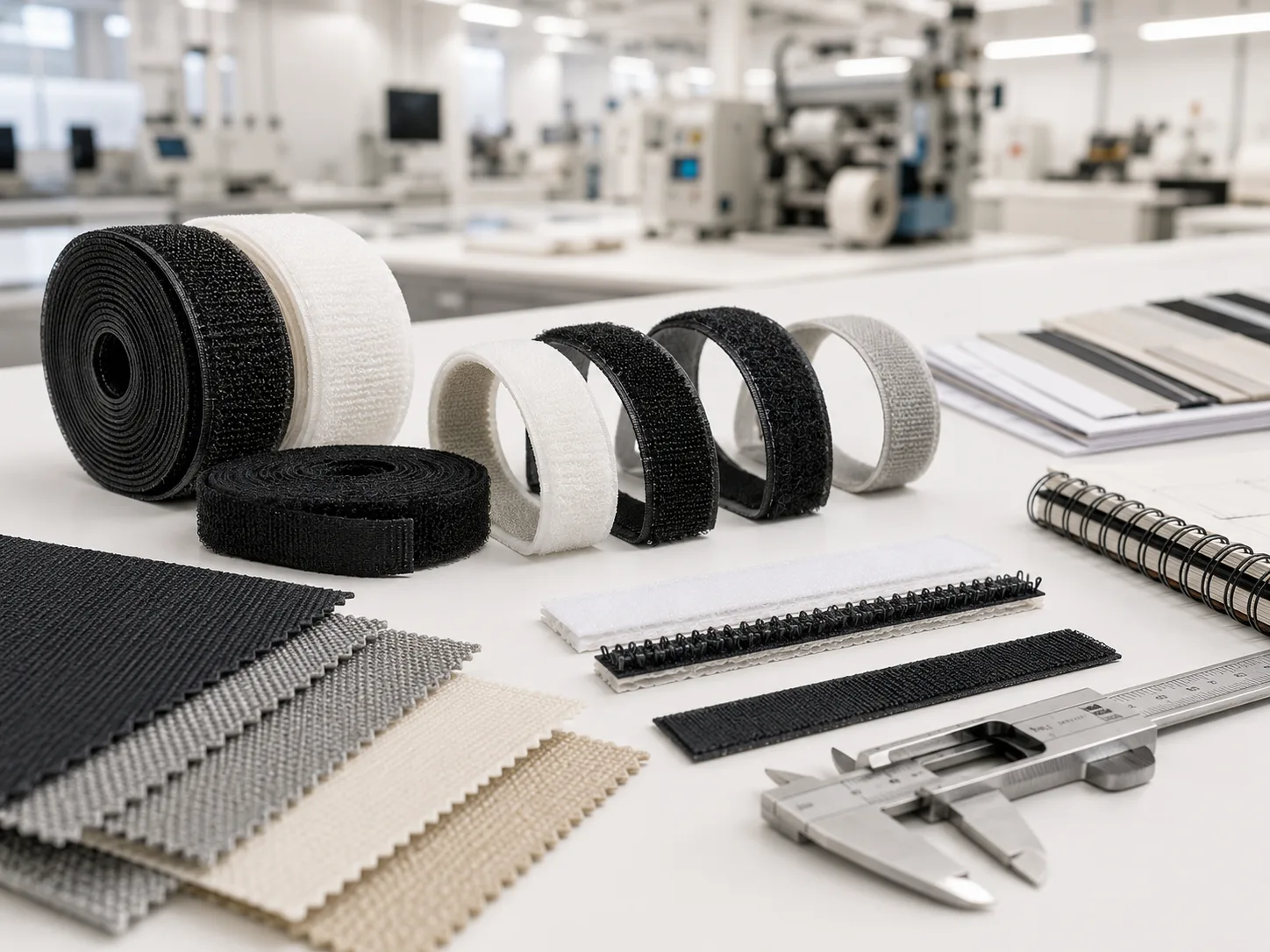
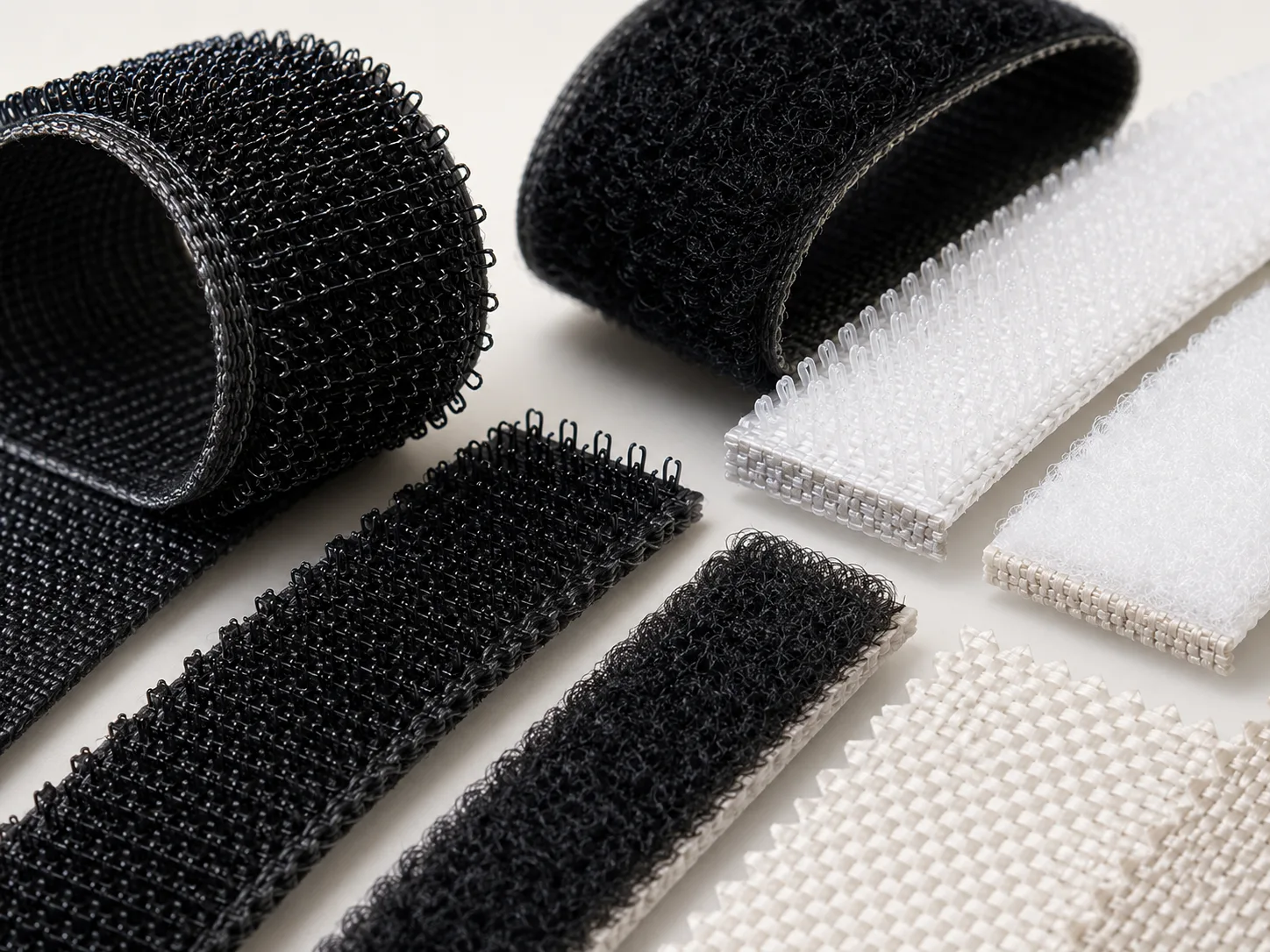
Hook and loop fasteners are textile fastening systems made from two mating sides: a hook side and a loop side. The hook side uses small molded or woven hooks that catch into the loop side. The loop side uses raised fibers that receive the hooks. The fastener opens when the two sides are peeled apart and closes again when they are pressed together. Explore industry hook & loop guide when your specification is tied to a particular industry. For nylon-specific depth, continue with everything you need to know about nylon tape.
The base material matters because it controls how the tape bends, how it behaves under repeated cycles, how much moisture it absorbs, how it ages in sunlight, and how it handles sewing, bonding, washing and daily handling. Nylon and polyester are both widely used industrial fibers, but they behave differently once converted into hook and loop tape.
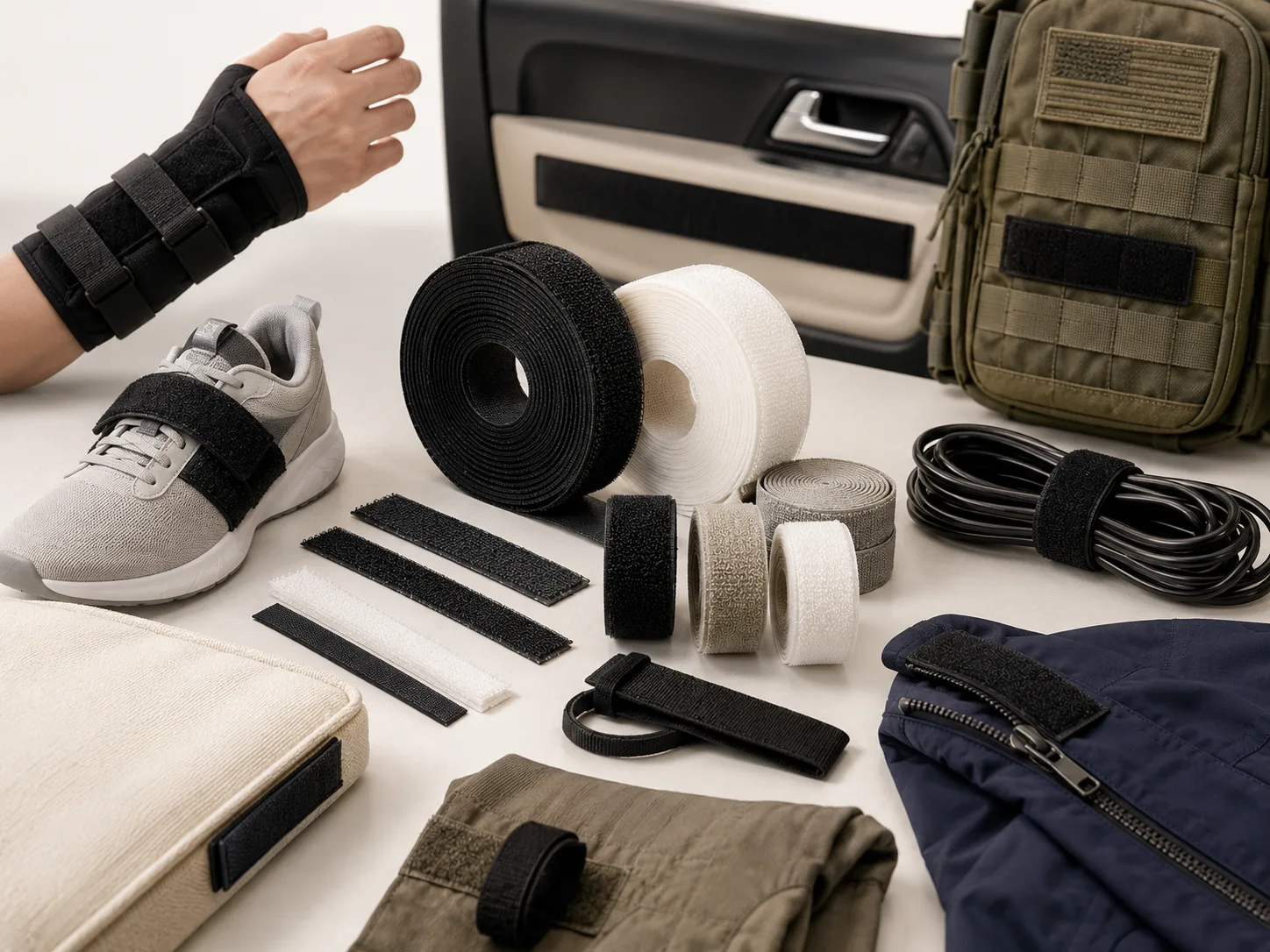
Nylon, also called polyamide, is known for flexibility, abrasion resistance and strong repeated-use performance. It is often chosen where the fastener is part of a moving product: shoes, braces, wearable equipment, tactical pouches, orthopedic supports, apparel and industrial closures that are opened frequently.
Polyester is valued for lower moisture absorption, dimensional stability and practical resistance to outdoor conditions. Polyester or polyester-rich blends are often selected for general-purpose fastening, cable organization, furniture panels, packaging, light industrial use and applications where the fastener may face humidity or sunlight.
How manufacturing differences affect performance
Nylon and polyester are not simply raw material choices. They influence the full manufacturing behavior of the tape. The yarn, weaving density, hook geometry, loop pile, finishing process and backing stability all interact with the polymer. Two hook and loop tapes can look similar in a catalogue but perform differently in the final product because the construction behind the material is different.
Nylon can be woven into a flexible tape with a responsive hand feel. This is useful when the fastener must bend around a curved surface or remain comfortable near the body. It can also deliver strong hook engagement, which helps when the closure is repeatedly stressed. For high-cycle products, this combination of flexibility and engagement is why nylon-rich tapes are often considered premium.
Polyester tends to hold its dimensions more predictably in wet or humid conditions. Because it absorbs less moisture, it can be more stable in washing, outdoor storage or applications where the tape may be exposed to damp air. This matters for OEM buyers because dimensional change can affect alignment, stitching tension, adhesive bonding and the way the fastener lays on the product.
The backing process also matters. Sew-on tapes need to remain stable under needle penetration and seam tension. Adhesive-backed tapes need to cooperate with the adhesive layer and the substrate. Outdoor or industrial applications may need additional testing for UV exposure, heat, cleaning chemicals or abrasion. Material selection should always be paired with the correct construction and converting method.
Nylon vs polyester performance comparison
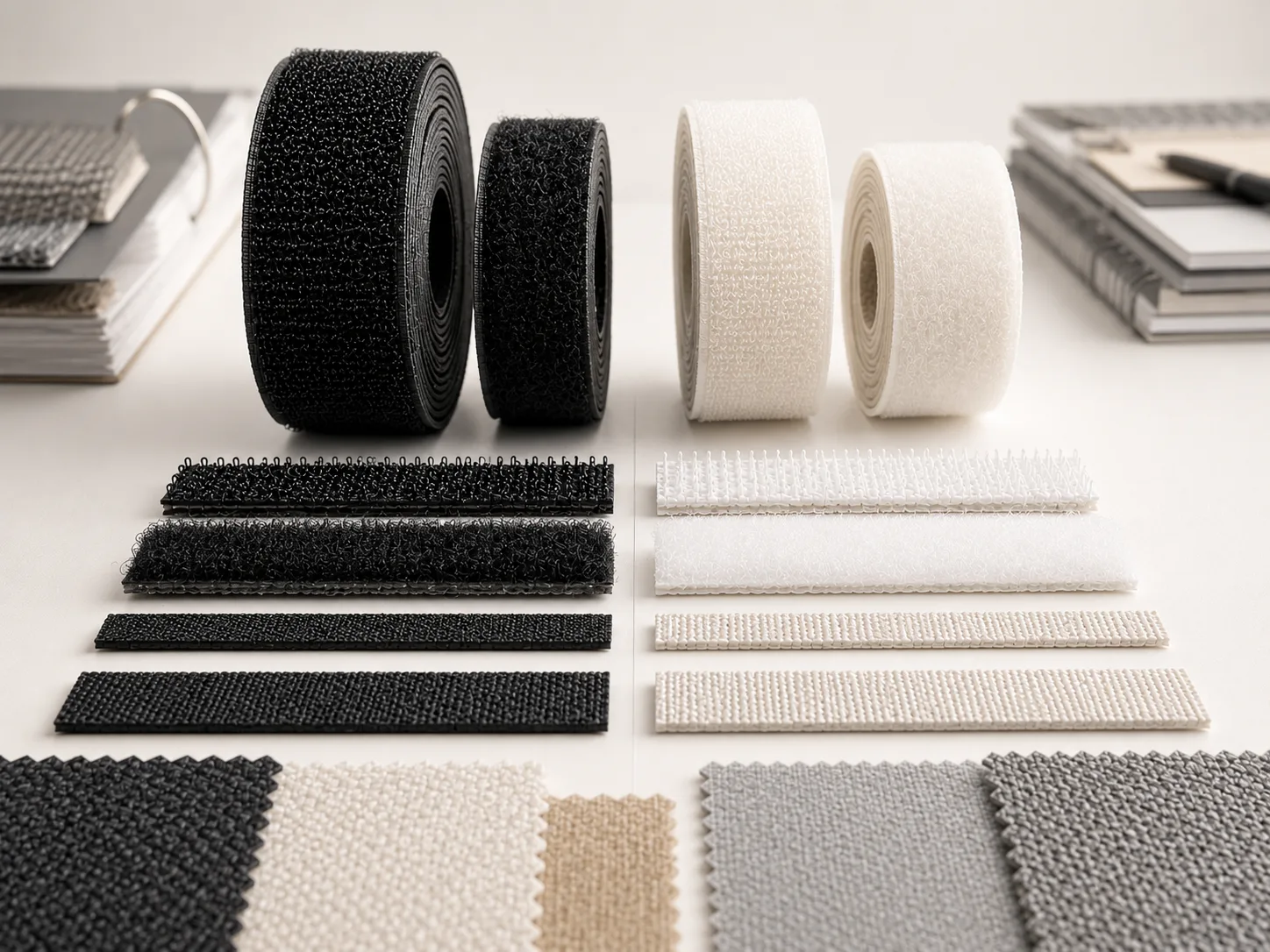
The comparison below is designed for procurement teams and engineers who need a quick specification view. It is not a universal rule for every tape, because construction quality matters, but it reflects the practical material behavior most buyers should consider before requesting samples or approving production.
Nylon Hook & Loop
Polyester Hook & Loop
Usually stronger for repeated opening and closing, abrasion and demanding daily use.
Good for many standard applications, but typically not the first choice for maximum cycle life.
More pliable and comfortable where the fastener bends around the body or soft goods.
Stable and practical, but may feel less soft depending on construction and finishing.
Absorbs more moisture and may be less stable in long humid or wet exposure.
Better for humidity, washing exposure and damp storage conditions.
Can perform well when protected, but is usually less preferred for constant sunlight.
Generally preferred for sunlight and outdoor-facing applications.
Often higher cost, justified when performance risk or product value is high.
Often more cost-efficient for general-purpose and static applications.
Medical supports, footwear straps, apparel, tactical gear, industrial closures and high-use products.
Cable management, packaging, furniture, outdoor-facing use, panels and cost-sensitive closures.
What are the advantages of nylon hook and loop?
Nylon's biggest advantage is reliable repeated use. In products where the closure is opened and closed every day, small changes in engagement strength become noticeable. Nylon-rich hook and loop tends to keep a stronger, more responsive fastening feel across repeated cycles, especially when the construction is engineered for high performance.
Nylon is also useful when comfort and flexibility matter. It can conform better to curved or moving surfaces, which is why it is often preferred in footwear, orthopedic products, medical supports, apparel and wearable equipment. A stiff fastener can make an otherwise good product uncomfortable; nylon helps reduce that risk.
For industrial buyers, nylon is often the safer premium choice when failure would create warranty issues, field complaints or assembly downtime. If a closure must hold securely, be handled by workers repeatedly, or maintain engagement through heavy use, the additional material cost may be small compared with the cost of failure.
What are the disadvantages of nylon hook and loop?
Nylon is not always the best material. It absorbs more moisture than polyester, which can matter in humid, wet or washing-heavy applications. Moisture can affect dimensional behavior, hand feel and long-term consistency. In outdoor use, nylon may also require more careful testing for sunlight exposure and ageing.
Nylon-rich fasteners can also cost more. For products with low cycle requirements, static fastening or disposable packaging, premium nylon may be over-specified. That does not make nylon wrong; it means the product may be paying for performance it does not need.
Another common mistake is using nylon because it is perceived as stronger without checking the complete application. A 100% nylon tape on the wrong backing, wrong width, wrong sew pattern or wrong adhesive can underperform a better-matched polyester blend. Material is one decision inside a broader specification.
What are the advantages of polyester hook and loop?
Polyester's strongest advantage is environmental practicality. It absorbs less moisture and generally offers better stability in humidity, washing exposure and outdoor-facing conditions. For buyers specifying fasteners on products that may be stored outside, washed frequently, used near water or exposed to sunlight, polyester deserves serious consideration.
Polyester-rich hook and loop is also valuable for cost control. Many OEM products need dependable fastening without the highest possible cycle performance. In those cases, a polyester-rich construction can offer a better balance of cost, stability and expected service life. This is especially relevant for packaging, cable management, panels, furniture components and general industrial use.
For exporters and large-volume buyers, polyester can help standardize a fastener across multiple product lines where the closure is not the critical premium feature. It is often easier to justify in applications where the customer values stability, moisture tolerance and price consistency.
What are the disadvantages of polyester hook and loop?
Polyester is not automatically the best outdoor answer for every situation. It may not deliver the same soft feel or repeated-use performance as nylon-rich constructions. If the product relies on frequent adjustment, a very comfortable hand feel or a strong closure that must keep its bite after thousands of cycles, polyester may feel less premium.
The other disadvantage is perception. Some buyers choose polyester only to reduce cost and then use it in an application that really needs high-cycle nylon. That can lead to weaker user experience, premature complaints or rework in the next production run. Polyester performs best when the application genuinely matches its strengths: stability, moisture handling, outdoor suitability and value.
Environmental considerations for material selection
Environmental performance is broader than sustainability claims. For a hook and loop fastener, the immediate environment includes humidity, sunlight, washing, temperature swings, abrasion, chemicals, dust and storage conditions. A material that performs well in a clean indoor sample test may behave differently after shipping, warehousing, stitching or field use.
Polyester's lower moisture absorption is a practical advantage for damp conditions. This can support better dimensional stability and more predictable handling after washing or humid storage. For outdoor-facing products, polyester-rich constructions are often preferred because UV exposure and moisture are part of the expected operating condition.
Nylon can still be the right choice in demanding environments when the need for holding strength and repeated use is higher than the exposure risk. For example, tactical or industrial products may use nylon because the closure performance is critical, while the design protects the fastener from constant UV exposure. The decision should be based on the actual stress profile, not a single label like "outdoor" or "industrial."
From a responsible specification perspective, the most sustainable fastener is often the one that prevents premature product failure. Over-specifying can waste budget; under-specifying can shorten product life. The best environmental choice is a durable, correctly matched material that supports the expected service life of the final product.
OEM recommendations for nylon vs polyester
OEM buyers should begin with the finished product requirement, not the tape catalogue. Define how the closure will be used, what load it must hold, how many cycles it should survive, whether it touches skin, how it will be attached, and what environmental exposure it will face. Then choose the material and construction together.
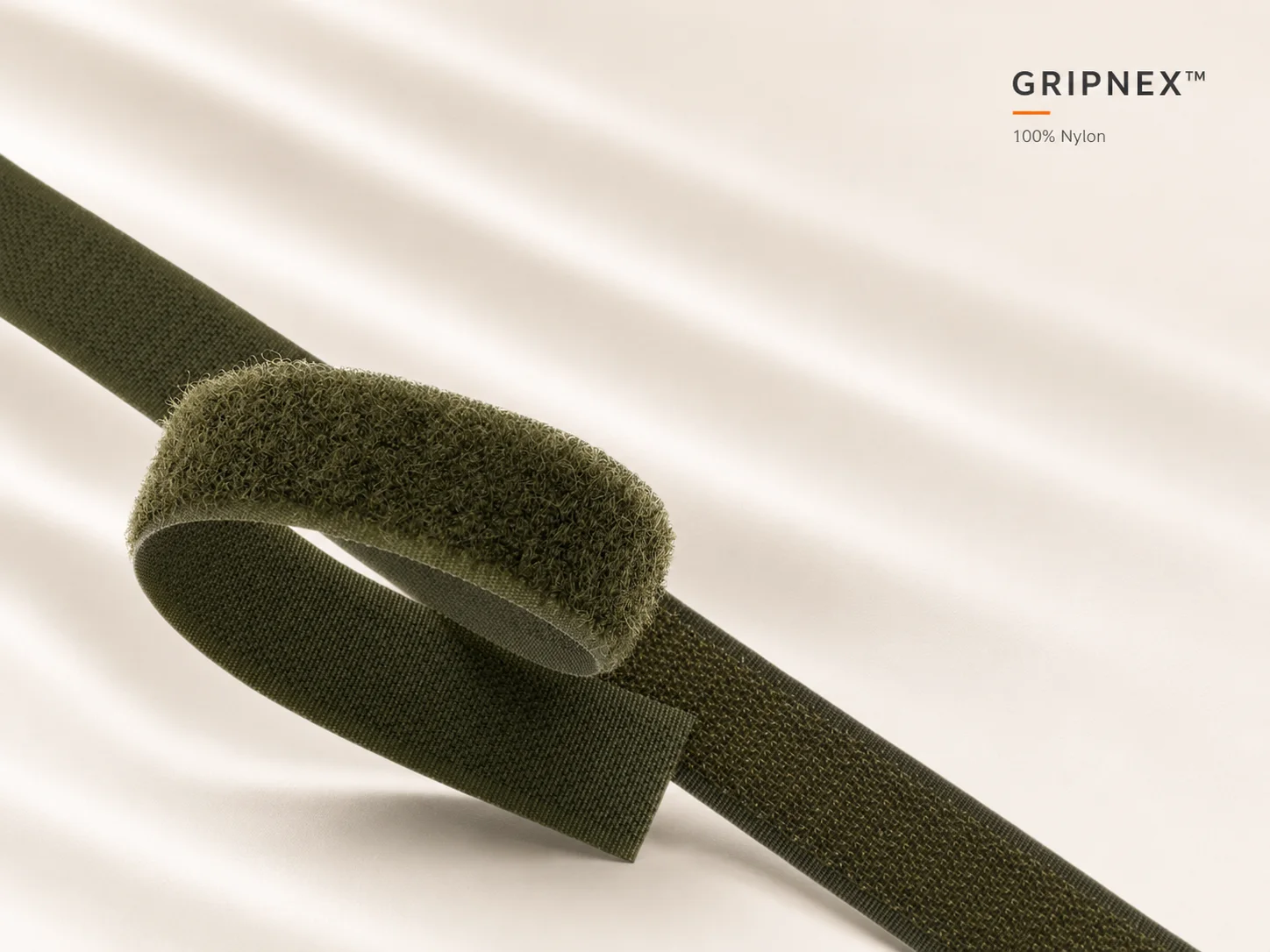
For premium repeated-use products, start by evaluating Gripnex, Walonium's 100% nylon hook and loop tape. It is the strongest fit when the product needs high engagement, long cycle life and a premium fastening feel. Typical examples include orthopedic braces, tactical gear, footwear, industrial closures and demanding wearable products.
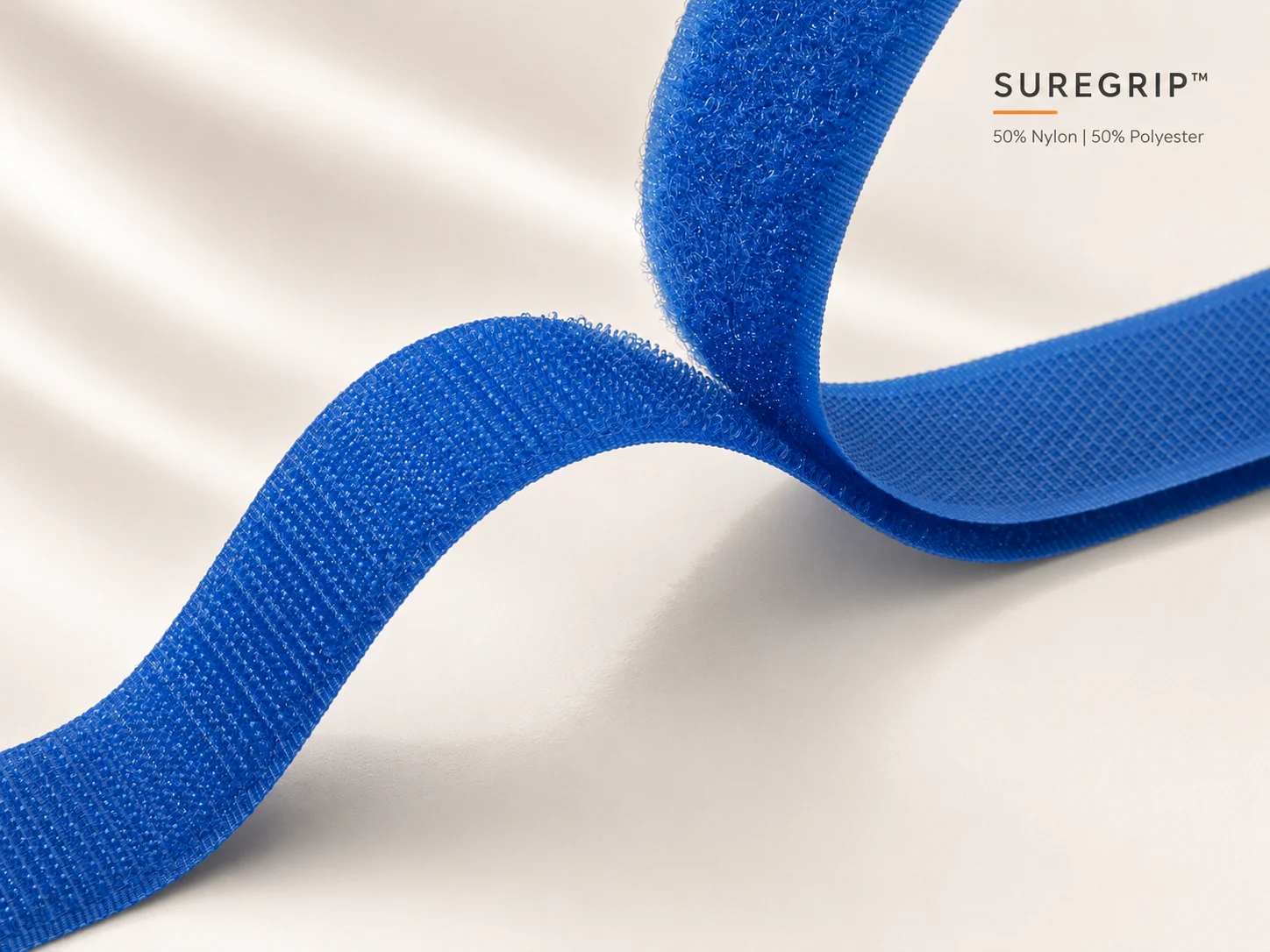
For balanced performance, evaluate Suregrip, a 50% nylon / 50% polyester option. This is a practical middle path when the application needs comfort and useful durability but also benefits from polyester stability. It can be a good starting point for medical, baby care, apparel and mixed-use OEM applications.
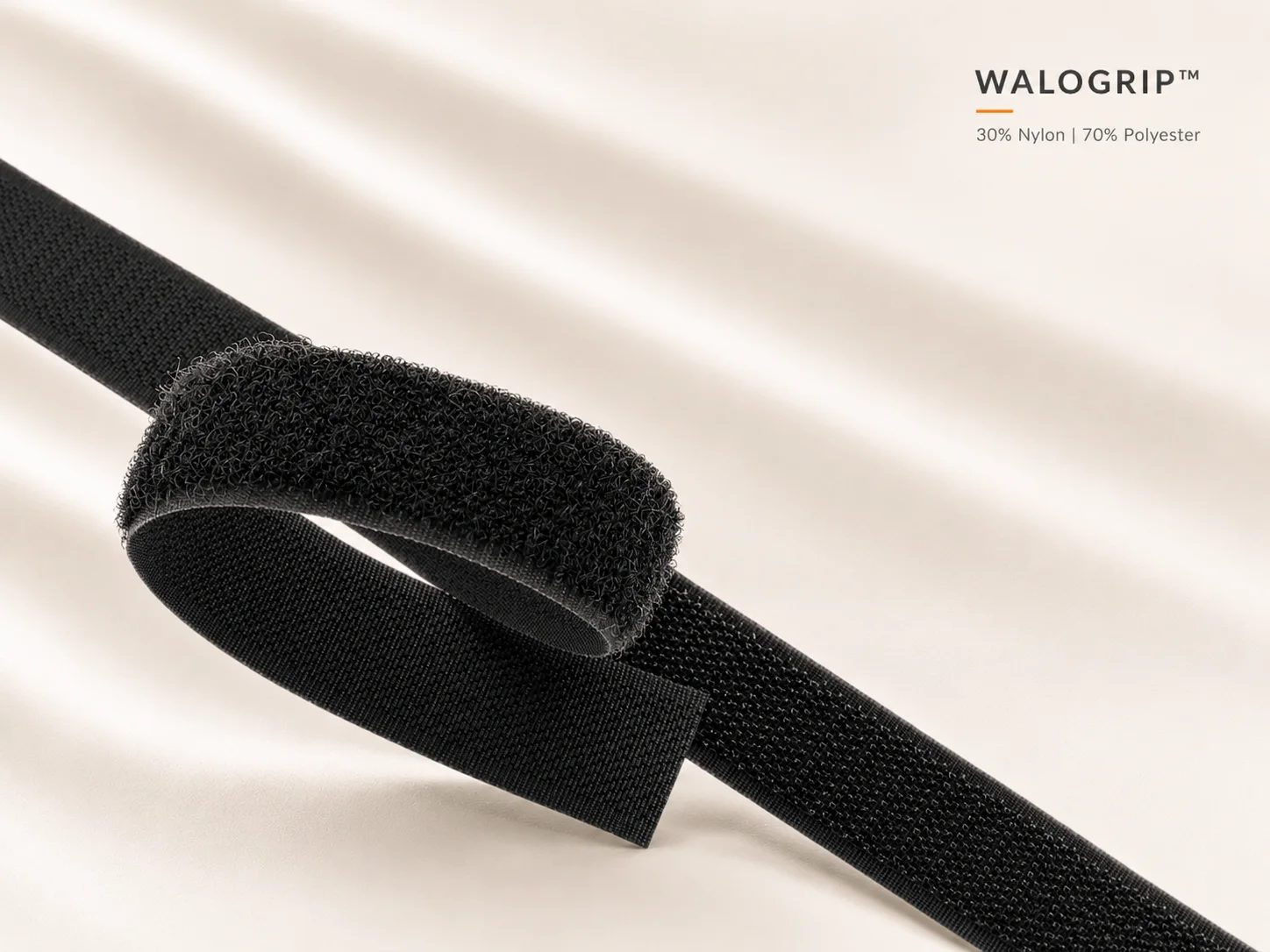
For value-oriented general-purpose use, evaluate Walogrip, a 30% nylon / 70% polyester construction. It is useful for light industrial fastening, packaging, cable organization, furniture, panels and applications where cost control and dependable standard performance are more important than maximum cycle life.
Industry recommendations by application
Use nylon-rich or balanced blends
Braces, supports and wearable medical products need comfort, repeated adjustment and reliable closure. Gripnex or Suregrip are usually stronger starting points.
Use nylon for repeated fastening
Shoes and sandals require flexibility, comfort and daily open-close cycles. Nylon-rich constructions usually provide the better user experience.
Match comfort with washing exposure
Nylon improves softness and fastening feel, while polyester-rich blends can help where washing stability and cost matter. Test after laundering.
Choose by load and environment
Use nylon for repeated closures and higher holding needs. Use polyester-rich options for static, humid or cost-sensitive industrial fastening.
Evaluate heat, vibration and assembly
Material choice depends on cabin exposure, attachment method and cycle use. Nylon helps high-use closures; polyester-rich options help stable mounted parts.
Polyester-rich is often practical
Cable wraps and bundling often need value, dimensional stability and enough fastening strength rather than premium cycle performance.
Use polyester-rich for panels
Furniture and interior panels often benefit from stable, cost-efficient fasteners, especially when the closure is not opened many times per day.
Common mistakes when choosing hook and loop material
The most common mistake is choosing solely on price. A lower-cost fastener can be the right choice, but only when the product's risk profile supports it. Saving a small amount on tape is not worthwhile if the fastener becomes the reason for warranty complaints, weak closures or production rework.
The second mistake is ignoring the environment. Indoor sample testing does not reveal how the material will behave in humidity, washing, sunlight or outdoor storage. If the product will face moisture or UV exposure, polyester-rich options should be tested early.
The third mistake is ignoring the application. A tape that works well for a flat fabric panel may not work as well around a curved orthopedic brace or shoe strap. Flexing, edge pressure, skin contact and repeated adjustment change the requirement.
The fourth mistake is using an indoor material outdoors without validation. Outdoor suitability is not only about the fiber. It also involves color, construction, backing, attachment method and expected exposure time. Test the complete assembly before committing to production.
Buying advice for procurement teams
When requesting a quotation, give the supplier more than a width and color. Share the application, fabric or substrate, expected number of open-close cycles, exposure conditions, attachment method, roll length, packaging requirement, color tolerance and whether the order is for domestic use or export. A better brief leads to a better material recommendation.
For high-volume OEM orders, request at least two sample options: a performance-led option and a value-led option. For example, compare Gripnex against Suregrip or Walogrip in the same assembly. This gives your engineering and procurement teams a practical basis for deciding whether premium nylon performance is worth the cost in your product.
Finally, evaluate total cost, not tape cost. The right hook and loop material can reduce field failures, improve product feel, simplify assembly and support a longer service life. The cheapest tape is rarely the best purchase if it creates problems after production.
Key takeaways
Choose nylon when repeated use, flexibility, strong engagement and premium fastening feel are the highest priorities. Choose polyester or polyester-rich constructions when humidity, sunlight, dimensional stability and cost efficiency are more important. Choose a balanced blend when the product needs both comfort and practical stability.
For Walonium buyers, the practical mapping is simple: Gripnex for 100% nylon premium performance, Suregrip for balanced nylon-polyester performance, and Walogrip for cost-effective polyester-rich general use.
The final decision should always be confirmed with real samples in the final product environment. Material selection is a technical decision, but the best answer is proven in the finished assembly.
FAQ
Is nylon or polyester hook and loop better?
Nylon is usually better for repeated opening and closing, flexibility and high holding performance. Polyester is usually better for outdoor, humid or UV-exposed applications where dimensional stability and moisture resistance matter more than maximum cycle life.
Which material should I choose for outdoor hook and loop fasteners?
Polyester or polyester-rich blends are usually the safer choice outdoors because they absorb less moisture and generally handle UV exposure better than nylon. Nylon can still work outdoors if the application is protected or specified for short-term field use.
Why is nylon hook and loop often used in medical and footwear products?
Nylon is flexible, strong and comfortable under repeated use, which makes it suitable for footwear straps, orthopedic supports, braces and wearable products. It performs well where the fastener is opened and closed frequently and must keep reliable engagement.
Is polyester hook and loop cheaper than nylon?
Polyester and polyester-rich hook and loop constructions are often more cost-efficient than high-nylon constructions. The right choice should still consider environment, cycle life, holding requirement and product warranty risk rather than purchase price alone.
Can I use nylon hook and loop in humid conditions?
Nylon can be used in humid conditions, but it absorbs more moisture than polyester. For continuous humidity, wet environments, outdoor storage or washing exposure, a polyester-rich option is often more stable unless other performance requirements point to nylon.
What is the best material for industrial hook and loop applications?
For repeated industrial fastening, nylon-rich hook and loop is often preferred for strength and cycle durability. For static fastening, outdoor panels, cable organization or moisture-prone areas, polyester-rich constructions can be more practical.
How do Walonium Gripnex, Suregrip and Walogrip compare?
Gripnex is 100% nylon for premium repeated-use performance. Suregrip is a balanced 50% nylon and 50% polyester option for comfort and mixed-use applications. Walogrip uses 30% nylon and 70% polyester for cost-effective general-purpose fastening.
Should OEM buyers test samples before choosing a material?
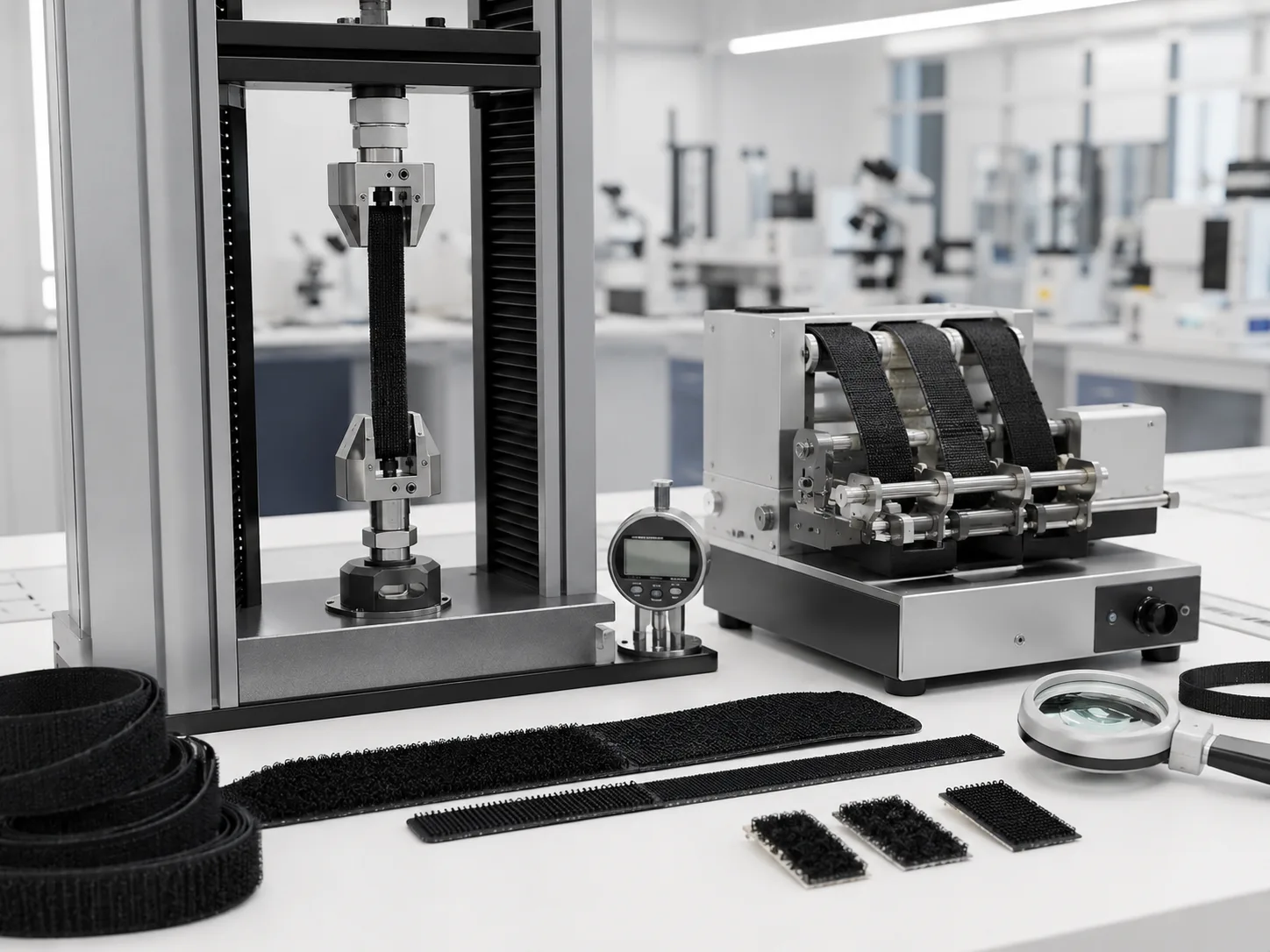
Yes. OEM buyers should test hook and loop samples in the final product environment, including repeated cycles, washing, humidity, UV exposure, stitching, adhesive bonding and load conditions. Material behavior can change significantly once assembled into the finished product.