On this page
What is nylon hook and loop tape?
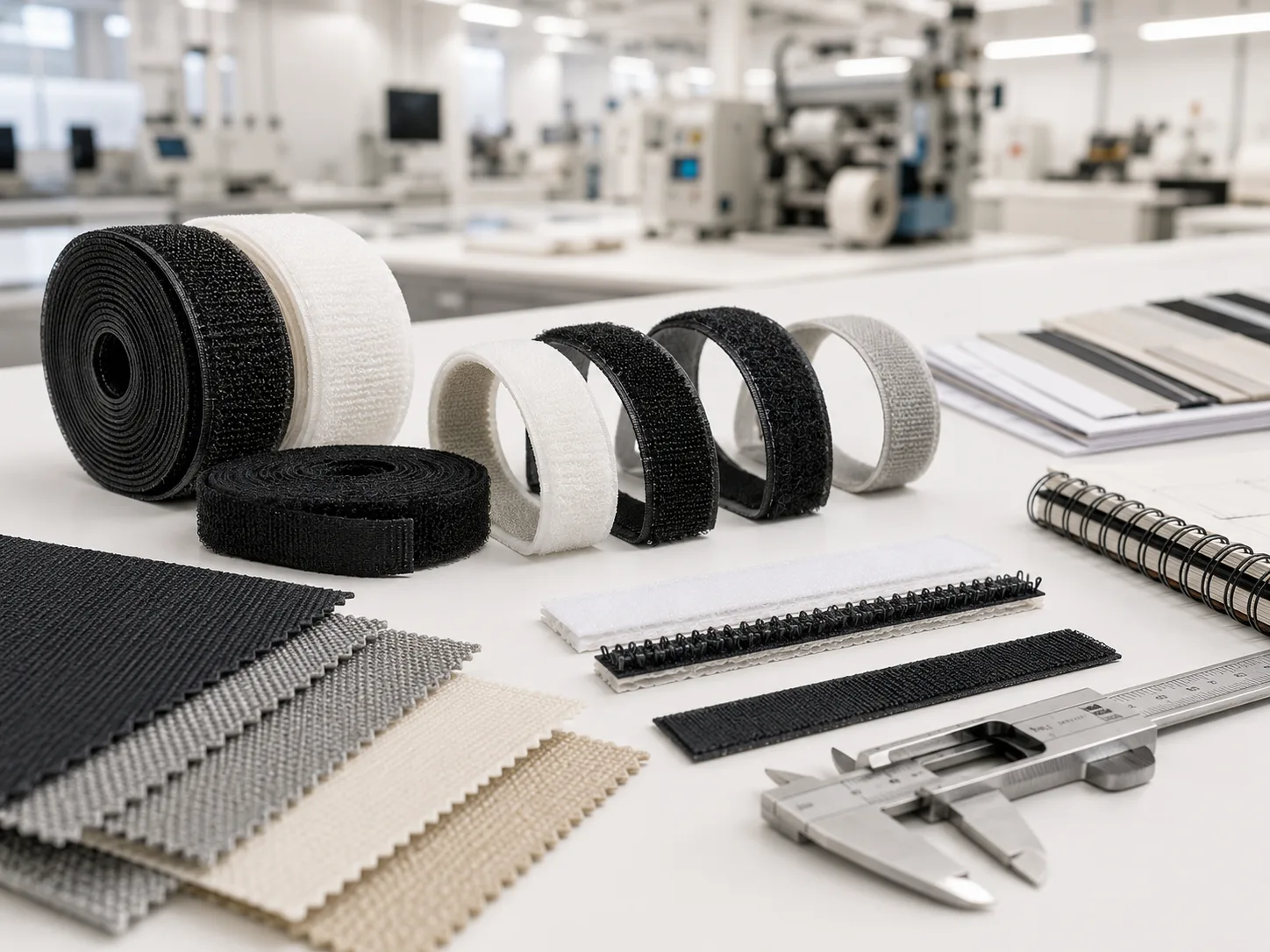
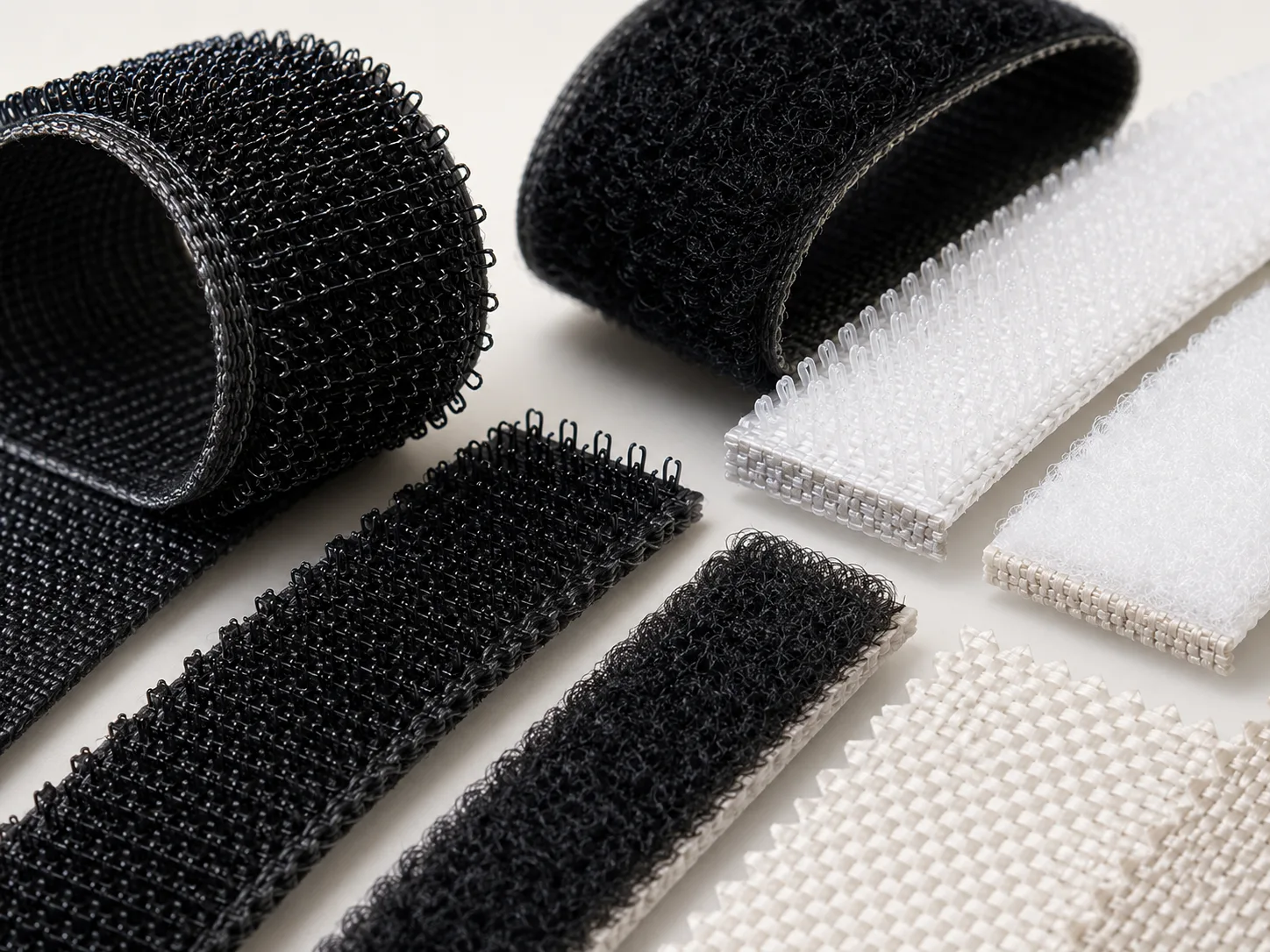
Nylon hook and loop tape is a textile fastening system made from polyamide fibers woven or molded into hook and loop sides. The hook side uses small raised hooks that engage the loop side's raised fibers. When pressed together, the two sides create a reusable closure. When peeled apart, the fastener opens and can be re-engaged without tools, stitching removal or mechanical hardware changes. Explore industry hook & loop guide when your specification is tied to a particular industry.
In procurement and OEM contexts, "nylon tape" most often refers to nylon-based hook and loop fasteners rather than generic nylon webbing or binding tape. The nylon construction gives the tape its characteristic combination of tensile strength, flexibility, abrasion resistance and repeated-use performance. These properties make nylon the preferred textile base for products that are opened and closed frequently.
Nylon tape is available in several formats: sew-on tape for garments and textile assemblies, adhesive-backed tape for peel-and-stick installation, soft-loop constructions for skin-contact applications, and industrial-grade weaves for heavy-duty fastening. The material choice interacts with hook density, loop pile height, backing stability and finishing process to determine the final performance profile.
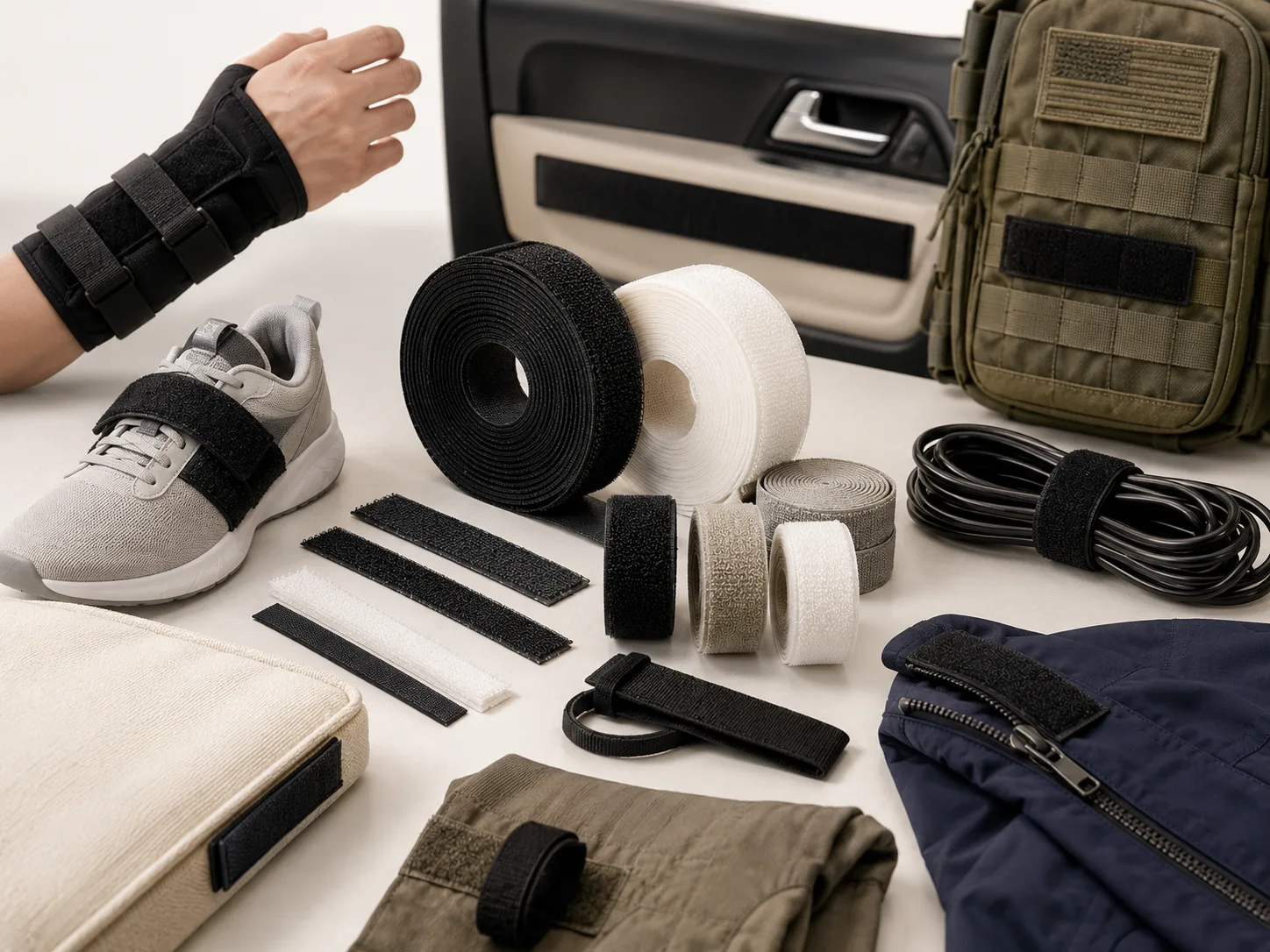
Manufacturing teams specify nylon hook and loop across footwear, apparel, medical supports, automotive interiors, tactical equipment, cable management, furniture upholstery, packaging and general industrial assembly. For a broader overview of hook and loop categories and terminology, see the complete guide to hook and loop fastener types.
Why nylon tape matters for OEM and procurement teams
Fastener material selection affects warranty exposure, end-user experience, assembly efficiency and total product cost. Nylon hook and loop is often chosen because it supports products that must be adjusted, serviced or re-fastened without tools. A closure that weakens after a few hundred cycles can trigger field complaints, returns and costly redesigns before the next production run.
For OEM buyers, nylon tape is not simply a stronger option. It is a specification decision tied to cycle life, comfort and product value. Footwear manufacturers need straps that stay responsive after thousands of steps. Medical device makers need supports that patients can adjust repeatedly without the fastener losing grip. Tactical and industrial product teams need closures that survive abrasion, load and daily handling.
The wrong material can cause weak engagement, premature hook wear, edge fraying, dimensional change after moisture exposure or inconsistent peel behavior across production batches. Using a polyester-rich tape in a high-cycle application, or a premium nylon tape where a balanced blend would suffice, both create unnecessary cost or risk.
Good specification starts with the finished product requirement. Define expected open-close cycles, load, environmental exposure, attachment method, width, color and production volume before comparing nylon grades and product options.
Types of nylon tape and constructions
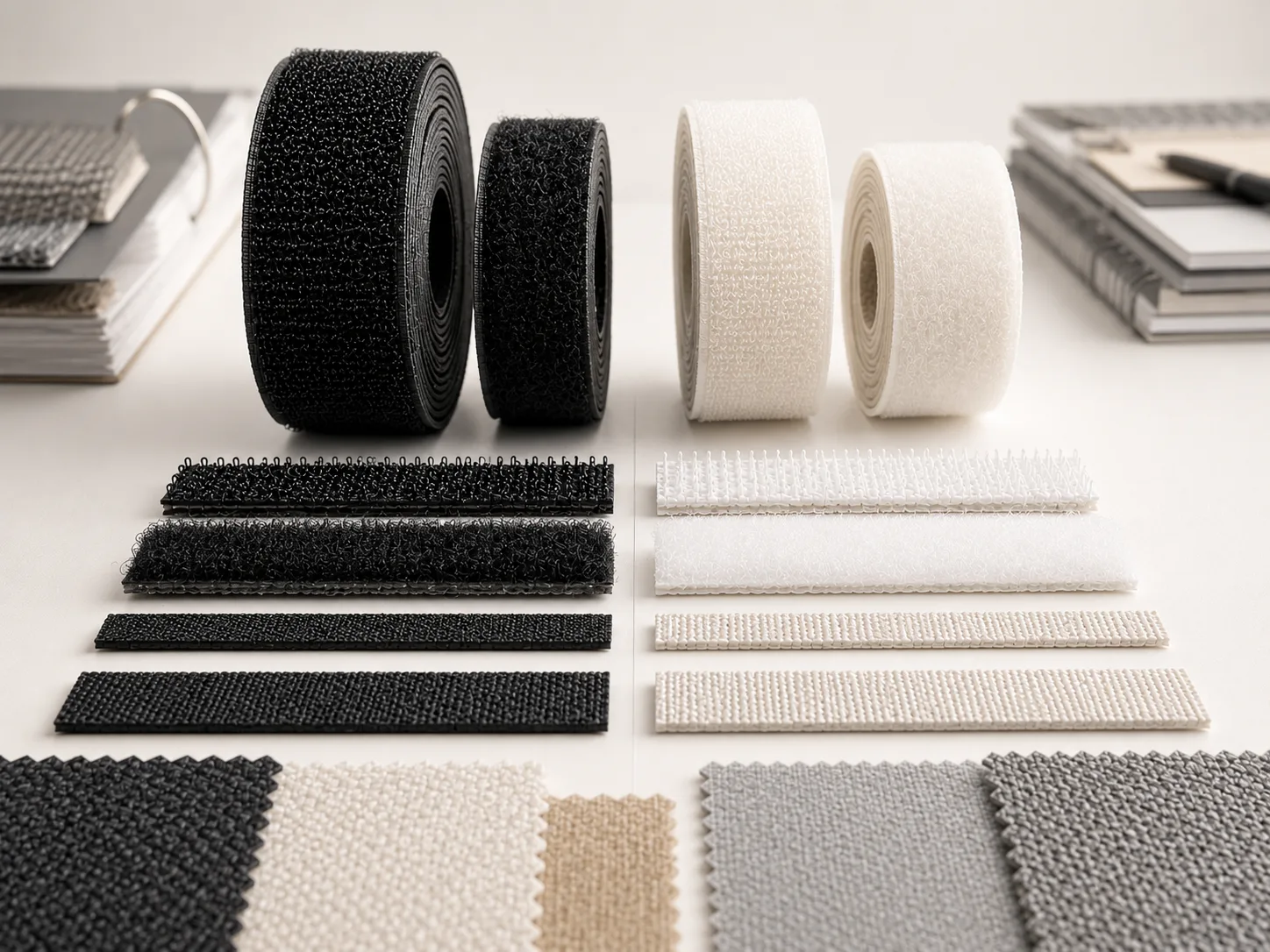
Nylon hook and loop tape is not a single product category. Construction type, nylon content percentage, hook geometry and backing format all influence performance. Procurement teams should understand the main types before requesting samples or approving a supplier specification.
Sew-on nylon tape is stitched directly into fabric, webbing or textile assemblies. It is the standard choice for garments, bags, footwear, medical supports and any product where the fastener must move with the textile substrate. Sew-on nylon tape remains the most dependable attachment method for washable and flexing products.
Adhesive-backed nylon tape combines a nylon textile with a pressure-sensitive adhesive backing. It suits applications where sewing is impractical or where the closure must attach to rigid panels, plastics or metals. Adhesive performance depends on both the nylon textile and the adhesive chemistry — material selection alone does not guarantee bond success.
Soft-loop nylon tape uses a loop side engineered for comfort against skin or delicate fabrics. It is common in medical supports, baby products, orthopedic braces and apparel where the loop side faces the wearer. The hook side may still use standard or molded nylon hooks depending on the engagement requirement.
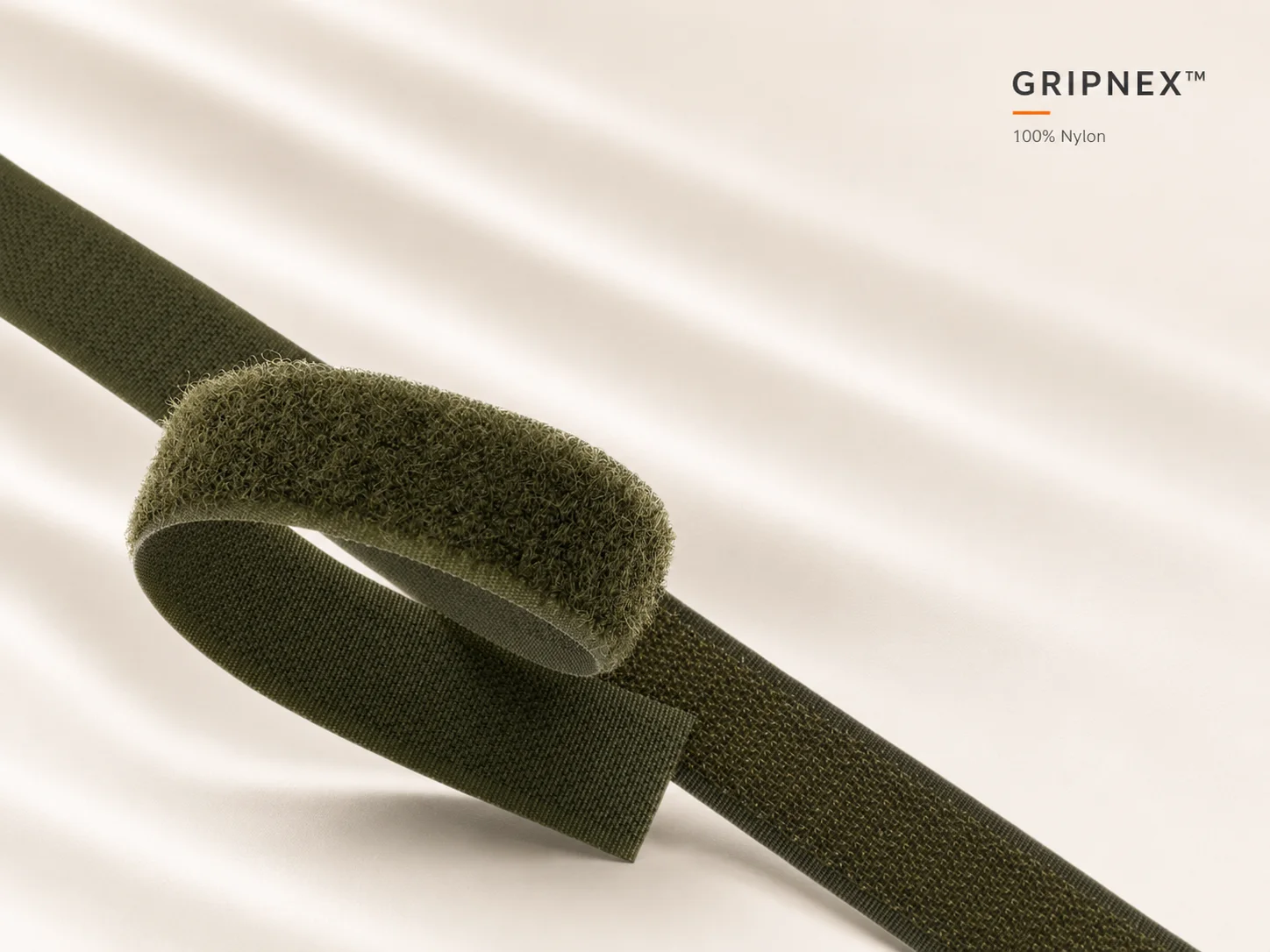
Industrial-grade nylon tape uses denser weaves, stronger hook formations and heavier backings for demanding load and cycle requirements. This category includes 100% nylon constructions such as Gripnex, designed for tactical gear, heavy-duty industrial closures and premium OEM applications.
Nylon vs polyester hook and loop comparison
Nylon and polyester are the two most common hook and loop textile bases. Both are valid industrial materials, but they behave differently under repeated use, moisture and UV exposure. The comparison below gives procurement and engineering teams a practical starting point. For a deeper material analysis, review the nylon vs polyester material guide.
Nylon Hook & Loop
Polyester Hook & Loop
Generally offers superior tensile strength and load-bearing capacity for demanding closures.
Adequate for many standard applications, but typically lower peak tensile performance.
Maintains engagement through thousands of open-close cycles in well-engineered constructions.
Suitable for lower-cycle or static fastening where maximum durability is less critical.
More pliable and comfortable for footwear, apparel and body-contact applications.
Stable and practical, but may feel stiffer depending on construction.
Absorbs more moisture; requires testing in humid or washing-heavy environments.
Better dimensional stability in damp, outdoor or washing-exposed conditions.
Handles friction, rubbing and daily wear better in high-use products.
Good for moderate use; may show wear sooner in abrasive environments.
Footwear, medical supports, tactical gear, apparel, high-cycle industrial closures.
Cable management, packaging, furniture panels, outdoor-facing and cost-sensitive use.
Strength, durability and cycle life
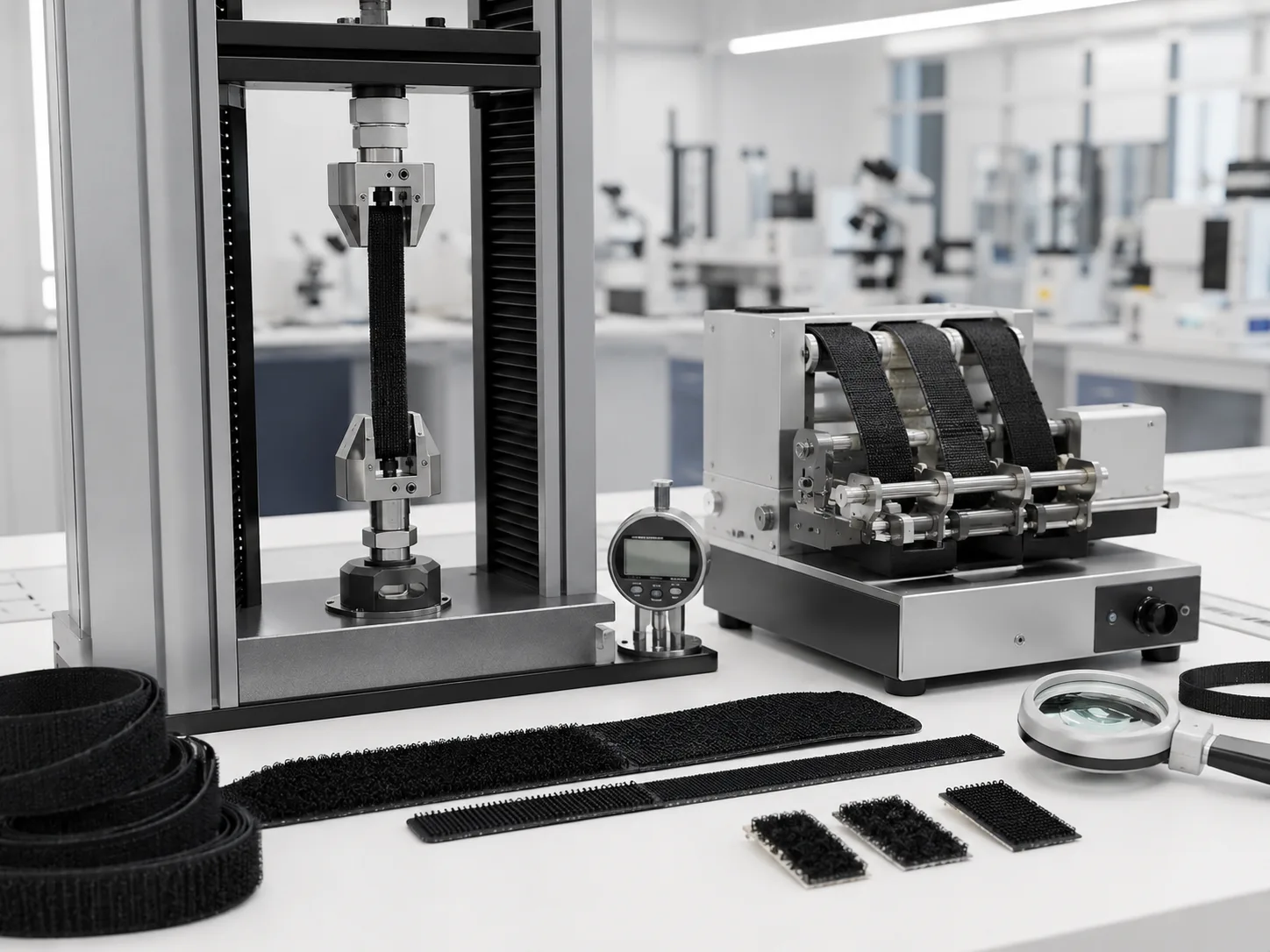
Nylon hook and loop tape is valued for mechanical performance under repeated stress. Tensile strength measures how much pulling force the tape can withstand before failure. Abrasion resistance measures how well the hooks and loops survive friction, rubbing and daily handling. Cycle life measures how many open-close engagements the fastener maintains before engagement weakens noticeably.
In practical OEM terms, these three parameters should be evaluated together. A tape with high tensile strength but poor hook retention may still fail in a product that is opened frequently. A tape that feels strong on first engagement may lose performance after washing, heat exposure or extended field use.
Well-engineered 100% nylon constructions such as Gripnex are designed to maintain engagement across demanding cycle profiles. Balanced blends like Suregrip offer practical durability for applications where full nylon performance is not required. For procurement teams, the question is not "how strong is the tape in a lab test?" but "how strong is it after assembly, use and environmental exposure in the finished product?"
Key strength characteristics of nylon hook and loop include high tensile strength for load-bearing straps and closures, excellent abrasion resistance for products handled daily, moderate heat tolerance suitable for most indoor and wearable applications, and water resistance adequate for typical use — though not equivalent to polyester in continuous wet exposure.
Industry applications and use cases
Nylon hook and loop tape appears across a wide range of industries because its combination of strength, flexibility and reusability solves real product engineering problems. The sections below outline where OEM and procurement teams most commonly specify nylon tape and what performance factors drive the decision.
Footwear and apparel. Nylon tape is widely used in shoe straps, sandal closures, jacket cuffs, uniform fasteners and sportswear adjustments. The material's flexibility and cycle durability make it the default choice where the closure is handled every day. Buyers should also review guidance on choosing hook and loop for clothes and fabric.
Medical and healthcare. Orthopedic braces, compression supports, patient positioning aids and wearable medical devices rely on nylon hook and loop for adjustable, reusable fastening. Soft-loop nylon constructions are preferred where the loop side contacts skin. Cycle life and comfort are both critical specification factors.
Automotive and upholstery. Car seat covers, headrest attachments, interior trim panels and furniture upholstery use nylon tape for secure, adjustable fastening. Applications range from hidden structural closures to visible adjustment straps on seat covers and cushion supports.
Tactical, military and safety equipment. Pouches, holsters, harnesses, protective gear and field equipment depend on nylon hook and loop for quick-access closures that survive rough handling. 100% nylon industrial-grade tape is the typical specification in this category.
Industrial and cable management. Nylon tape secures cable bundles, equipment panels, tool organizers and assembly fixtures. While polyester-rich options are common in static cable wraps, nylon is preferred where the wrap will be opened and re-closed frequently or where higher engagement strength is needed.
Sew-on, adhesive and specialty formats
Nylon hook and loop tape is available in multiple attachment formats. The format choice is as important as the material choice because it determines how the fastener integrates into the assembly process and how it behaves in the finished product.
Sew-on format is the most reliable attachment method for textile products. The tape is stitched onto fabric, webbing or backing material using standard or specialized sewing equipment. Sew-on nylon tape is the preferred specification for washable garments, bags, footwear and medical supports where adhesive bonding would not survive laundering or flexing.
Adhesive-backed format combines nylon hook and loop with a pressure-sensitive adhesive layer. It suits rigid substrates, quick assembly lines and applications where sewing is impractical. Adhesive performance depends on substrate compatibility and adhesive chemistry in addition to the nylon textile. For adhesive-specific guidance, see the adhesive hook and loop buying guide.
Specialty formats include die-cut coins, strips, back-to-back tape and custom shapes for specific assembly requirements. These formats reduce manual cutting on the production line and improve placement consistency in high-volume manufacturing.
Standard widths include 16mm, 20mm, 25mm, 38mm, 50mm and 75mm, though OEM programs often require custom widths, roll lengths and color matching. When requesting quotations, specify the exact format planned for production to avoid approving samples that do not match the production specification.
Walonium product recommendations for nylon tape
OEM buyers should begin with the finished product requirement, not the product catalogue. Define the application, expected cycles, load, environmental exposure, attachment method, production volume and acceptable failure risk. Then map those requirements to the right Walonium nylon product.
For premium 100% nylon performance, evaluate Gripnex. It is Walonium's highest-nylon hook and loop tape, engineered for demanding repeated-use applications such as footwear, medical supports, tactical gear, industrial closures and any product where maximum cycle life and engagement strength are critical.
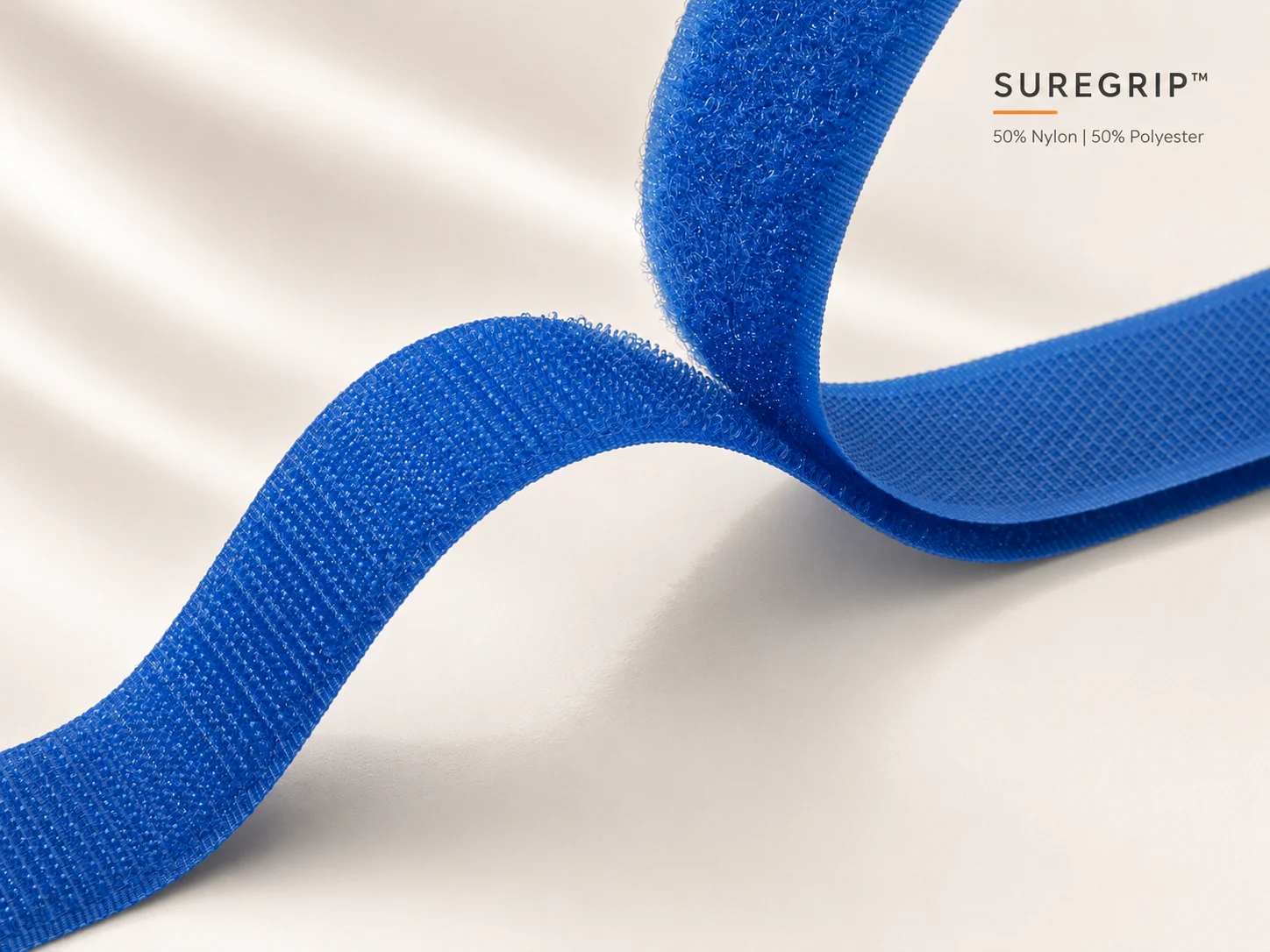
For balanced performance, evaluate Suregrip, a 50% nylon / 50% polyester construction. This is a practical middle path when the application needs nylon comfort and useful durability but also benefits from polyester stability. It suits medical, baby care, apparel and mixed-use OEM applications.
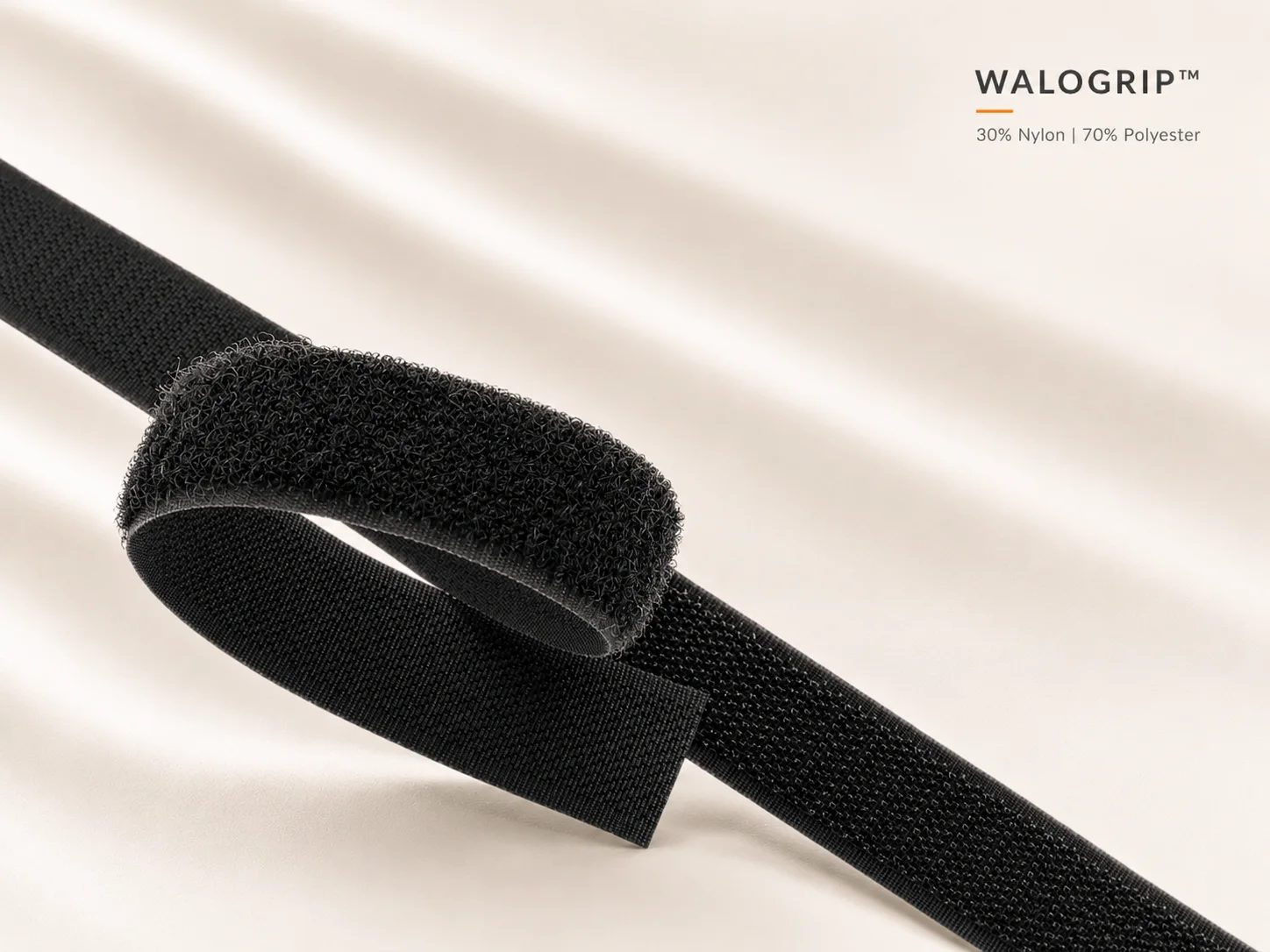
For cost-effective general-purpose fastening with partial nylon content, evaluate Walogrip, a 30% nylon / 70% polyester sew-on tape. It is useful for light industrial fastening, packaging, cable organization and applications where cost control and dependable standard performance matter more than maximum cycle life.
All three products are available in custom widths, colors and roll lengths for domestic and export orders. Businesses sourcing in volume can also contact Walonium Textile for supplier evaluation criteria.
Industry recommendations by application
Use 100% nylon for straps
Shoe and sandal closures need flexibility, comfort and daily cycle durability. Gripnex is the stronger starting point for premium footwear programs.
Prioritize comfort and cycles
Braces, supports and wearable devices need soft-loop options and reliable repeated adjustment. Gripnex or Suregrip are typical specifications.
Match nylon to wash exposure
Jackets, uniforms and sportswear benefit from nylon flexibility. Test after laundering if washing stability is a concern alongside cycle life.
Specify for trim and covers
Seat covers, headrest attachments and interior panels use nylon tape for secure, adjustable fastening. Validate heat and vibration exposure.
Demand industrial-grade nylon
Pouches, holsters and field equipment require maximum abrasion resistance and cycle life. 100% nylon Gripnex is the standard specification.
Choose by load and cycles
Equipment panels and assembly fixtures should be matched to tensile and cycle requirements. Nylon-rich tape for high use; blends for static fastening.
Balance cost with performance
Reusable cartons and sample kits often use nylon blends like Walogrip where cost control and adequate cycle life are the main goals.
Common mistakes when specifying nylon tape
The most common mistake is selecting nylon tape by price alone without confirming cycle life requirements. A lower-cost nylon blend can be correct for packaging or static fastening, but the same grade may be under-specified for footwear or medical applications where closure failure creates warranty exposure.
The second mistake is ignoring moisture and washing exposure. Nylon absorbs more moisture than polyester. If the product will be laundered, stored in humid conditions or used in wet environments, buyers should test dimensional stability and engagement after moisture exposure — not only on a dry sample.
The third mistake is testing only initial engagement strength. A nylon tape that feels strong on first contact may still lose hook retention after hundreds or thousands of cycles. Evaluate cycle performance, not just first-peel force.
The fourth mistake is using adhesive-backed nylon where sew-on is the better engineering answer. Flexible fabrics, washable textiles and products with repeated laundering often need sew-on nylon tape rather than a pressure-sensitive bond that will degrade over time.
Buying advice for procurement teams
When requesting a nylon tape quotation, provide more than width and color. Share the application, fabric or substrate, expected open-close cycles, environmental exposure, attachment method, required roll length, die-cut needs, color tolerance, production volume and whether the order is for domestic or export use.
For high-volume OEM programs, request at least two sample options: a performance-led 100% nylon grade and a balanced or value-led blend. Comparing Gripnex and Suregrip in the same assembly gives procurement and engineering teams a practical basis for deciding whether premium nylon performance is justified.
Evaluate total manufacturing cost, not unit tape cost. The right nylon specification can reduce field failures, improve product feel, simplify assembly and support a longer service life. The cheapest tape is rarely the best purchase if it creates problems after production.
Businesses evaluating suppliers for the first time can contact Walonium Textile for quality, customization and export capability criteria before placing bulk orders.
Key takeaways
Nylon hook and loop tape is the performance choice for products that need repeated fastening, flexibility, abrasion resistance and long service life. It is widely used across footwear, medical, apparel, automotive, tactical and industrial applications where closure reliability directly affects product value.
For Walonium buyers, the practical mapping is straightforward: Gripnex for 100% nylon premium performance, Suregrip for balanced nylon-polyester durability, and Walogrip for cost-effective general-purpose fastening with partial nylon content.
The final decision should always be confirmed with real samples in the finished product environment. Nylon tape selection is a manufacturing decision, and the best answer is proven in the assembled product — not in a catalogue datasheet alone.
FAQ
What is nylon hook and loop tape used for?
Nylon hook and loop tape is used in footwear, apparel, medical products, automotive components, cable management, military equipment and industrial fastening applications. Due to its high strength and durability, nylon tape is ideal for applications requiring repeated opening and closing.
Is nylon hook and loop tape stronger than polyester tape?
Yes. Nylon hook and loop tape generally offers higher tensile strength, superior flexibility and better abrasion resistance than polyester alternatives. It is commonly selected for heavy-duty fastening applications where long-term cycle performance is critical.
Which industries commonly use nylon hook and loop fasteners?
Nylon hook and loop fasteners are used across footwear manufacturing, garment production, medical devices, automotive assembly, cable management, furniture upholstery, packaging, defense equipment and industrial automation.
What is the difference between nylon tape and standard fastening tapes?
Unlike conventional fastening tapes, nylon hook and loop provides reusable fastening, easy adjustability and long service life. It can be opened and closed thousands of times without significant performance loss, making it ideal for industrial and commercial applications.
Can nylon hook and loop tape be customized?
Yes. Walonium Textile LLP offers custom widths, colors, roll lengths and fastening specifications for OEM manufacturers, exporters and industrial buyers. Customization helps teams meet product design, branding and assembly requirements.
Why choose Walonium Textile as a nylon hook and loop tape manufacturer?
Walonium Textile LLP manufactures premium fastening solutions including Gripnex, Suregrip and Walogrip. The company supplies domestic and international customers with export-quality hook and loop products for apparel, footwear, medical, automotive and industrial applications.
Where can I buy nylon hook and loop tape in bulk?
Businesses looking for bulk supply, OEM manufacturing or export-quality fastening solutions can explore the Walonium hook and loop tape range or contact the team for quotations, custom specifications and export requirements.
What are the key advantages of Gripnex 100% Nylon Hook and Loop Tape?
Gripnex 100% Nylon Hook and Loop Tape offers excellent tensile strength, superior abrasion resistance, long service life and reliable fastening performance for industrial, automotive, medical, military and heavy-duty commercial applications.