On this page
What is adhesive hook and loop tape?
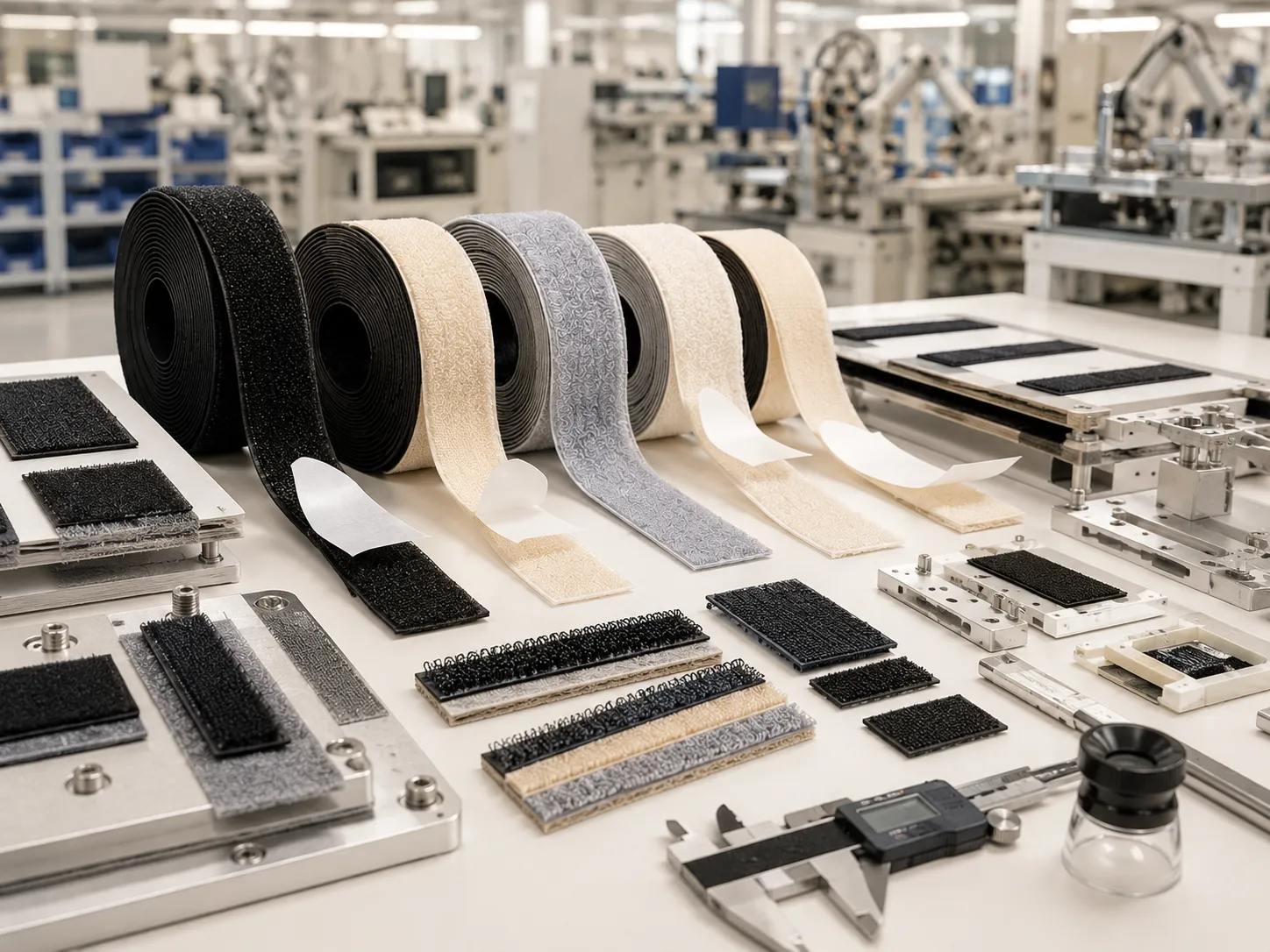
Adhesive hook and loop tape combines a textile fastening system with a pressure-sensitive adhesive backing. The hook side uses small molded or woven hooks that engage the raised fibers on the loop side. When pressed together, the two sides create a reusable closure. When peeled apart, the fastener opens and can be re-engaged without tools. Explore industry-specific solutions when your specification is tied to a particular industry.
Unlike sew-on hook and loop, adhesive-backed tape attaches directly to a substrate. Manufacturers peel away the release liner and press the tape onto metal, plastic, wood, glass, painted panels or other suitable surfaces. This makes adhesive hook and loop popular in production lines where speed, flexibility and reduced assembly steps matter.
The specification has two distinct layers. The textile construction controls engagement strength, cycle life, flexibility and hand feel. The adhesive backing controls initial tack, peel strength, shear resistance and long-term bond stability on the target surface. A strong hook and loop textile on the wrong adhesive can still fail in the field.
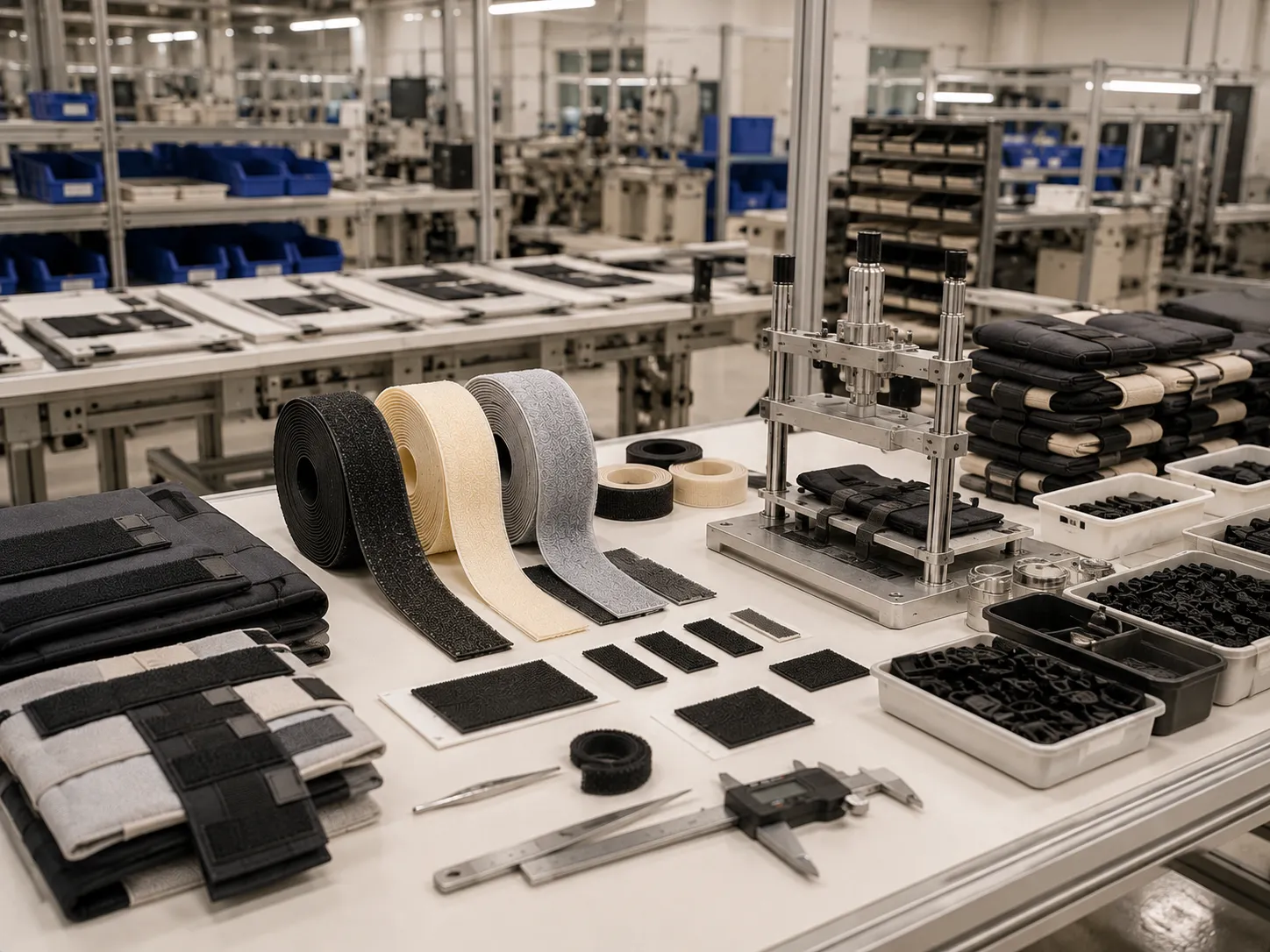
Manufacturing teams use adhesive hook and loop across automotive interiors, electronics, signage, furniture, medical supports, packaging, retail displays and general industrial assembly. The right tape reduces drilling, eliminates some mechanical fasteners and helps teams build products that can be opened, adjusted or serviced without permanent fixings.
Why choosing the right tape matters in manufacturing
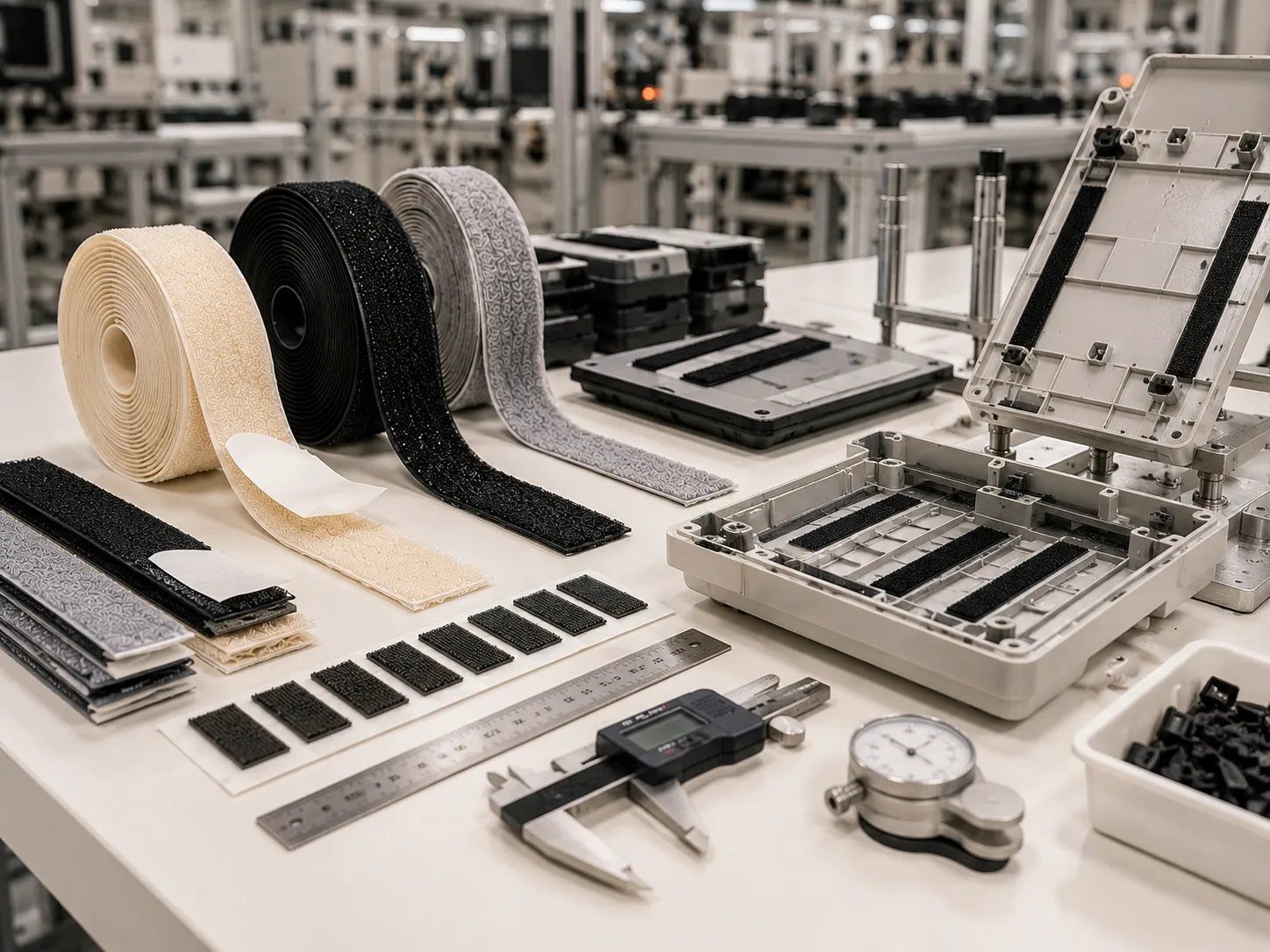
Fastener selection affects more than the closure itself. It influences assembly speed, rework rates, warranty exposure, product weight, end-user experience and total production cost. A tape that bonds well in the sample room but fails after heat cycling or humid storage can create expensive field complaints and production delays.
Adhesive hook and loop is often chosen because it supports lean assembly. Workers can position closures quickly, replace panels without tools and reduce dependence on sewing stations or drilled mechanical fixings. But those benefits only hold when the adhesive chemistry matches the substrate and the textile construction matches the cycle requirement.
The wrong specification can cause edge lift, adhesive residue, weak engagement, premature delamination or inconsistent peel behavior across production batches. For OEM buyers, those failures are rarely minor. They can trigger line stoppages, customer returns or a complete redesign before the next production run.
Good specification starts with the finished product, not the tape datasheet. Define the substrate, expected open-close cycles, environmental exposure, attachment method, width, color and production volume before comparing product options.
Rubber vs acrylic adhesive comparison
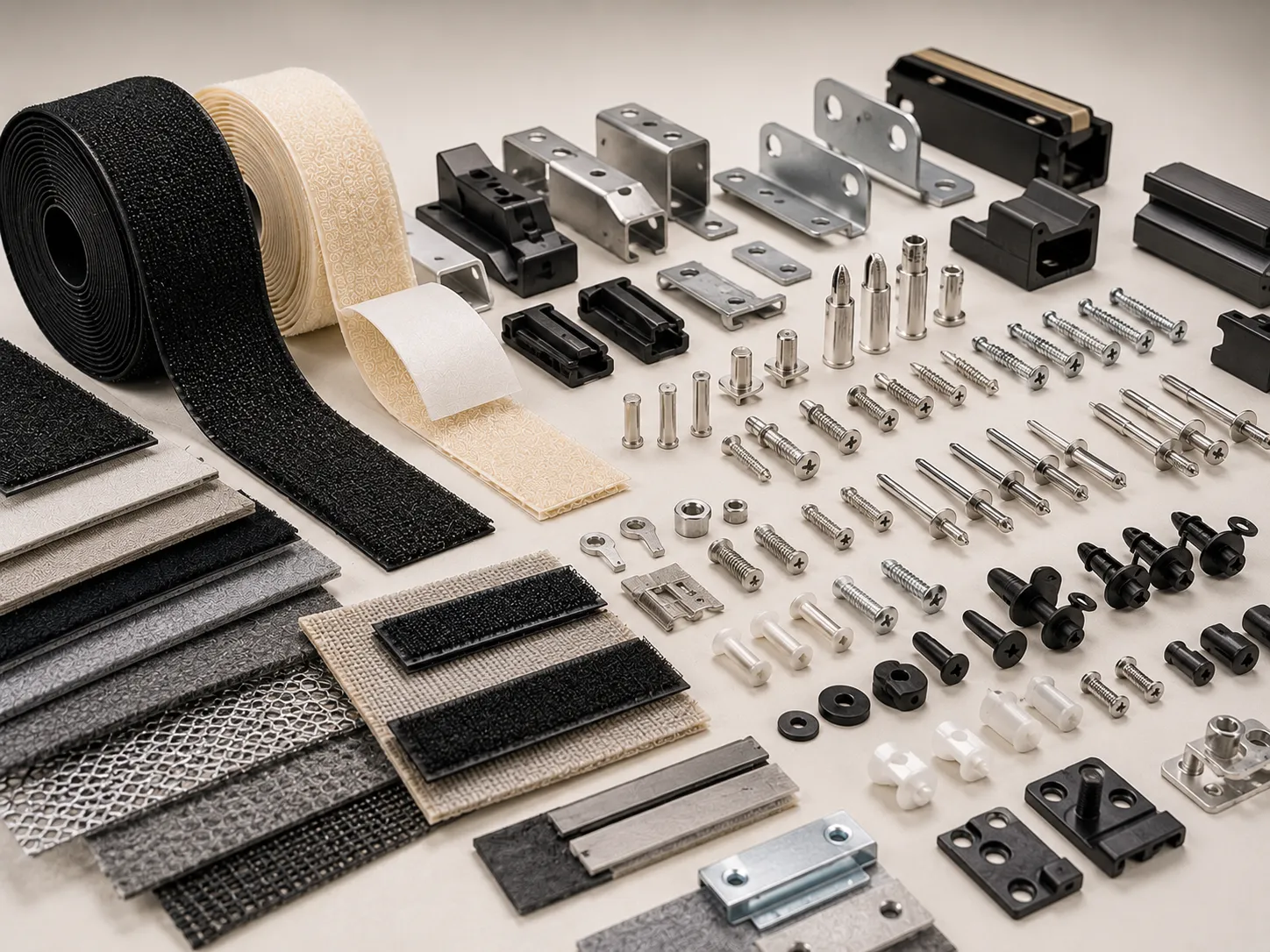
Adhesive chemistry is usually the first technical fork in the decision. Rubber and acrylic pressure-sensitive adhesives behave differently on contact, under heat and over time. The comparison below gives procurement and engineering teams a practical starting point before requesting production samples.
Rubber Adhesive
Acrylic Adhesive
Usually offers strong immediate stick on contact, which helps fast assembly lines.
Can build bond strength over time; initial tack may feel lower on some surfaces.
Often works well on polypropylene, polyethylene, foam and many smooth indoor substrates.
Stronger fit for metals, glass, painted panels and higher-energy industrial surfaces.
Best for moderate indoor temperatures; high heat can soften bond performance.
Generally preferred where heat, sunlight or long service life matter.
Usually suited to protected indoor environments with limited moisture or UV exposure.
Better long-term stability in humidity, cleaning exposure and outdoor-facing use.
Often more economical for general commercial and display applications.
Higher specification cost, justified when bond failure risk is expensive.
Retail displays, packaging, office equipment, POP structures and indoor commercial assembly.
Automotive, signage, fixtures, equipment panels and demanding industrial OEM use.
Surface compatibility requirements
Adhesive performance depends heavily on the substrate. Surface energy, texture, cleanliness and flexibility all influence whether the tape bonds immediately and stays bonded over time. A smooth, clean, rigid panel usually gives more predictable results than a dusty, oily or highly flexible surface.
Common manufacturing substrates include metal, glass, painted panels, rigid plastics, wood, powder-coated surfaces, foam and some laminated boards. Rubber adhesives often perform well on low-energy plastics and indoor commercial substrates. Acrylic adhesives are usually the safer choice for metals, glass, painted industrial panels and applications that need stronger long-term stability.
Fabrics, textiles, silicone, rough concrete and some molded surfaces are more challenging for pressure-sensitive adhesive. In those cases, buyers may need surface preparation, a different adhesive chemistry, mechanical reinforcement or a sew-on alternative such as Walogrip.
Testing small samples on the actual production substrate is essential. A tape that bonds well to brushed aluminum may not behave the same on powder-coated steel or textured polypropylene.
Environmental conditions to evaluate
Manufacturing environments rarely stay constant. Temperature swings, humidity, cleaning chemicals, dust, vibration and sunlight can all affect adhesive bond life. Buyers should define the full operating profile before approving a tape specification.
Heat is a common failure driver. Automotive interiors, equipment housings and industrial panels can expose tape to elevated temperatures during use, storage or transport. Acrylic adhesive systems are often preferred where heat resistance matters. Rubber adhesives can work well indoors but may soften or lose stability under sustained heat.
Humidity and UV exposure are equally important. Outdoor signage, exterior panels and warehouse-stored products can face damp air or direct sunlight. Acrylic systems generally offer better long-term stability in those conditions. Cleaning exposure also matters: a tape that survives assembly may still fail if the finished product is wiped with solvents or detergents.
Vibration and repeated flexing can stress both the adhesive bond and the textile closure. For electronics, automotive trim and industrial equipment, evaluate peel and shear performance under movement rather than only under static laboratory conditions.
Hook and loop textile material selection
Even with the right adhesive, the textile construction still matters. Nylon-rich hook and loop usually delivers stronger repeated engagement, softer hand feel and better performance in high-cycle closures. Polyester-rich constructions often provide better dimensional stability, lower moisture absorption and more practical value for static or outdoor-facing applications.
For adhesive products used in footwear, medical supports, wearable equipment or frequently adjusted closures, nylon-rich textiles are often preferred. For signage, panels, packaging, cable organization and cost-sensitive assemblies with lower cycle demand, polyester-rich constructions can be the smarter specification.
Material choice should be reviewed alongside adhesive chemistry. A premium textile on a general-purpose adhesive, or a strong adhesive on a low-cycle textile, can both create mismatched performance. Buyers who need deeper material guidance should also review the nylon vs polyester material guide.
Peel, shear and tack strength
Industrial buyers should evaluate three strength parameters together. Peel strength measures resistance to pulling the tape away from the substrate at an angle. Shear strength measures resistance to sliding force along the bonded surface. Tack measures how quickly and aggressively the adhesive grips on initial contact.
High tack is useful when assembly speed matters and the substrate is compatible. But tack alone does not guarantee a durable bond. A tape with excellent initial stick may still fail under heat, moisture or long-term load if peel and shear performance are insufficient for the application.
Heavy-duty assemblies, vibration-prone products and large panel mounting usually need stronger peel and shear values. Display work, packaging and light commercial fastening may prioritize workable tack and sufficient bond strength at lower cost. Match the strength profile to the actual load, not to the most aggressive datasheet available.
Width, length and custom sizing
Manufacturing efficiency often depends on getting the right tape format, not only the right adhesive. Standard widths such as 20mm, 25mm, 38mm, 50mm, 75mm and 100mm cover many assembly needs, but OEM lines may require custom widths, die-cut pieces, strips or specific roll lengths to reduce waste and handling time.
Wider tape can improve holding area on large panels, while narrower tape may be better for compact electronics, cable routing or trim applications. Roll length affects how often operators change rolls on the line. Die-cut formats can reduce manual cutting and improve placement consistency in high-volume production.
When requesting samples or quotations, specify the exact width, roll length, color, cut format and packaging requirement planned for production. A sample in the wrong width or format can lead to an incorrect approval decision.
Advantages of adhesive hook and loop fastening
Adhesive hook and loop offers several manufacturing advantages. It supports faster assembly because workers can position closures without sewing, drilling or additional mechanical hardware. It also gives product teams more design freedom on substrates where traditional fastening is difficult or costly.
Peel-and-stick tape is especially useful for removable panels, serviceable assemblies, display structures, cable management and products that must be adjusted during installation. It can reduce labor steps, lower tooling requirements and simplify rework when a closure must be replaced in the field.
For many OEM programs, adhesive fastening also helps standardize a closure method across multiple product variants. One approved tape specification can support several panel sizes, display formats or accessory assemblies when the substrate and environment are similar.
Limitations and disadvantages to understand
Adhesive hook and loop is not the right answer for every application. It can struggle on oily, dusty, silicone-rich or highly flexible surfaces. It may not be ideal where the product must survive extreme heat, aggressive solvents or permanent outdoor exposure without validation.
Removable adhesive fastening can also leave residue or cause edge lift if the wrong chemistry is used or if the surface was poorly prepared. In textile-heavy products, sew-on tape may still be the more dependable option because fabric movement and laundering can stress adhesive bonds over time.
Another limitation is over-simplification. Buyers sometimes treat all adhesive hook and loop as interchangeable. In reality, general-purpose and industrial grades are built for different risk levels. Using a commercial-grade tape in a demanding industrial environment can create warranty exposure that far exceeds any upfront savings.
OEM product recommendations from Walonium
OEM buyers should begin with the finished product requirement, not the product catalogue. Define the substrate, environmental exposure, cycle requirement, attachment method, production volume and acceptable failure risk. Then map those requirements to the right Walonium product family.
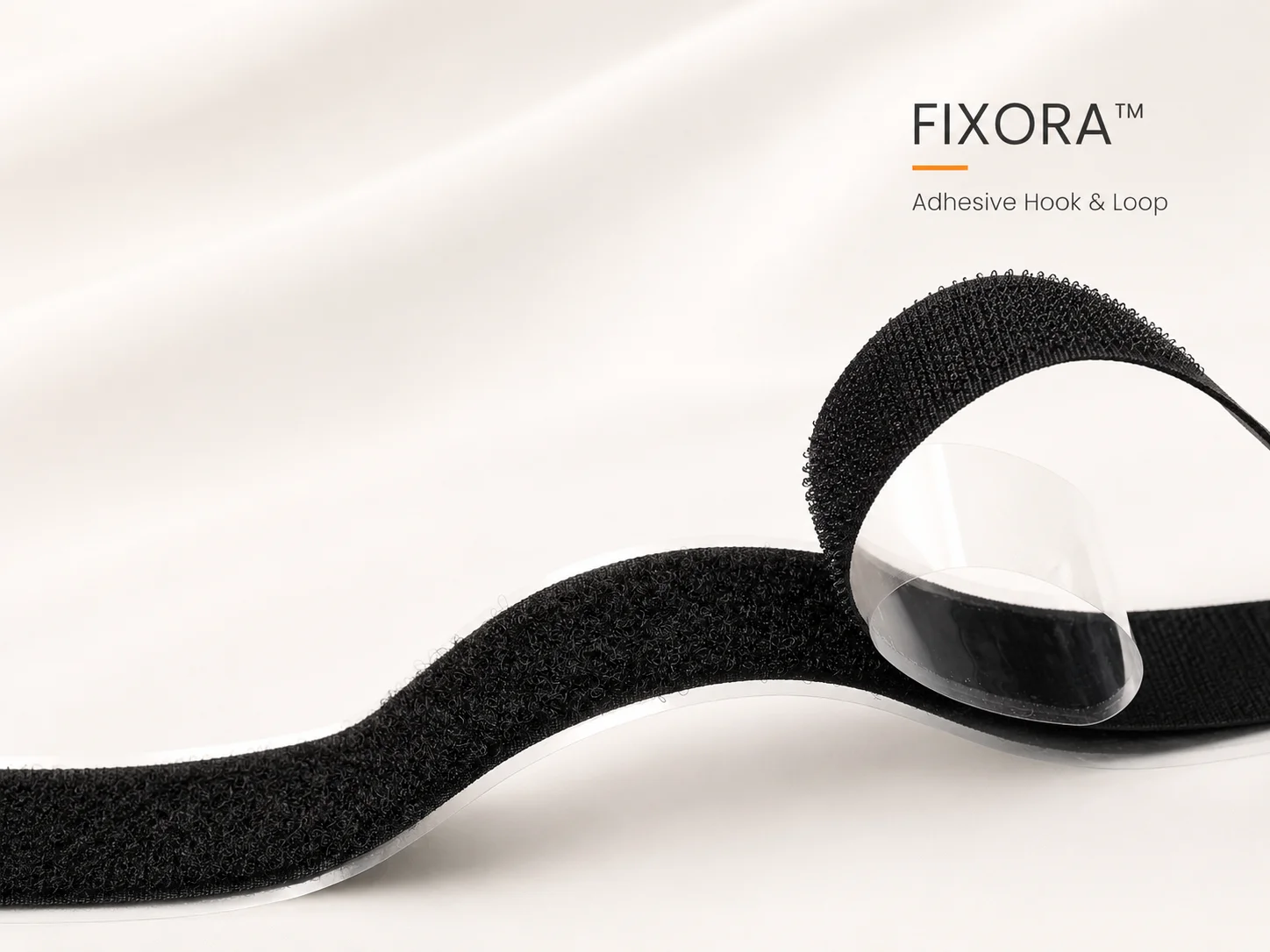
For general-purpose adhesive fastening, evaluate Fixora. It is designed for everyday commercial assembly such as retail displays, packaging, office equipment, POP structures, furniture accessories and light manufacturing where easy peel-and-stick installation and cost control matter.
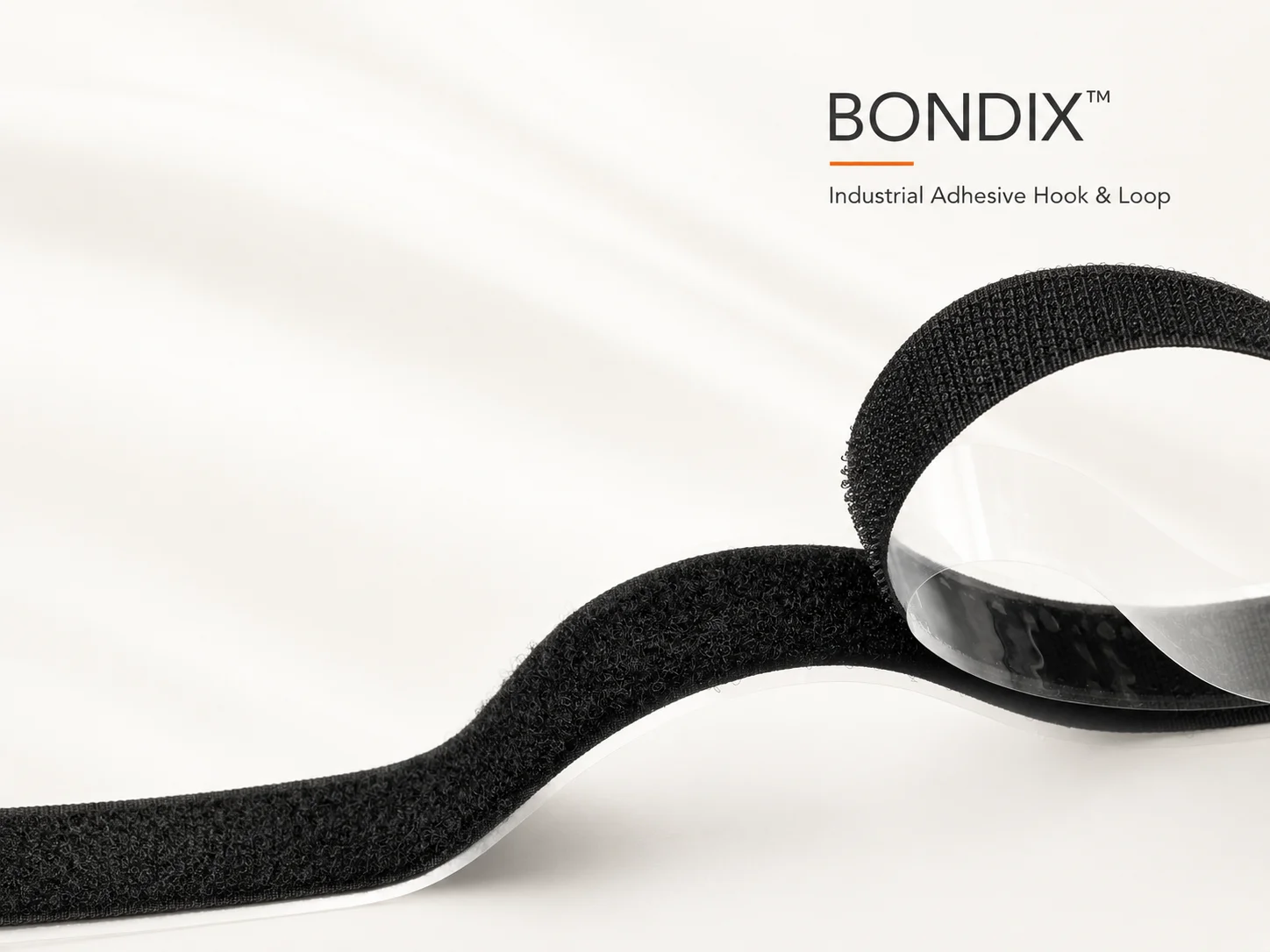
For industrial peel-and-stick performance, evaluate Bondix. It is the stronger fit for automotive, signage, fixtures, equipment panels and demanding OEM applications where higher bond stability, production reliability and industrial-grade performance are required.
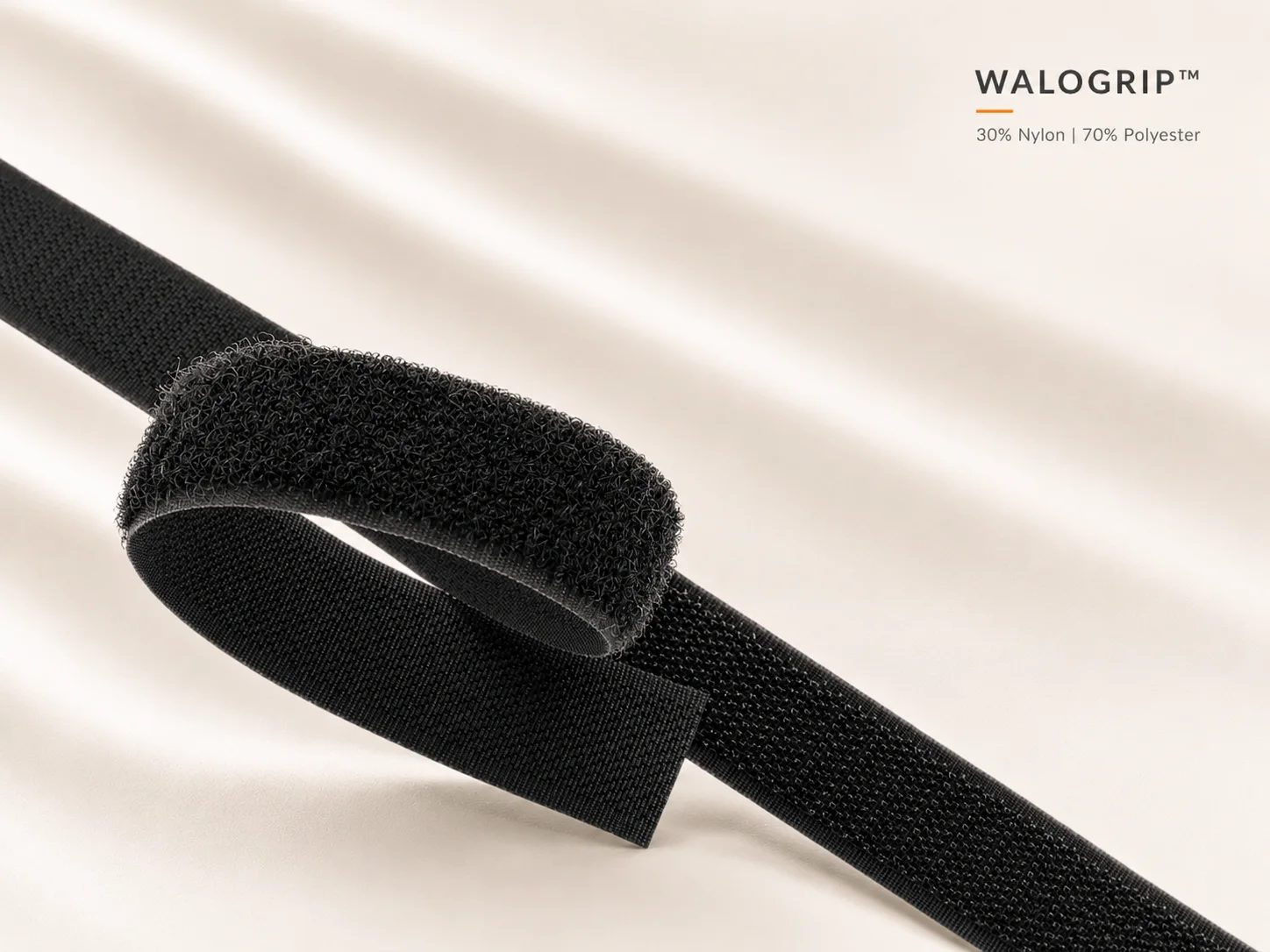
When adhesive bonding is not suitable, or when the same product line also needs a sew-on textile option, evaluate Walogrip. This 30% nylon / 70% polyester sew-on tape is a practical complement for fabric-based assemblies, hybrid product families and buyers who need a cost-effective non-adhesive fastening option.
Industry recommendations by application
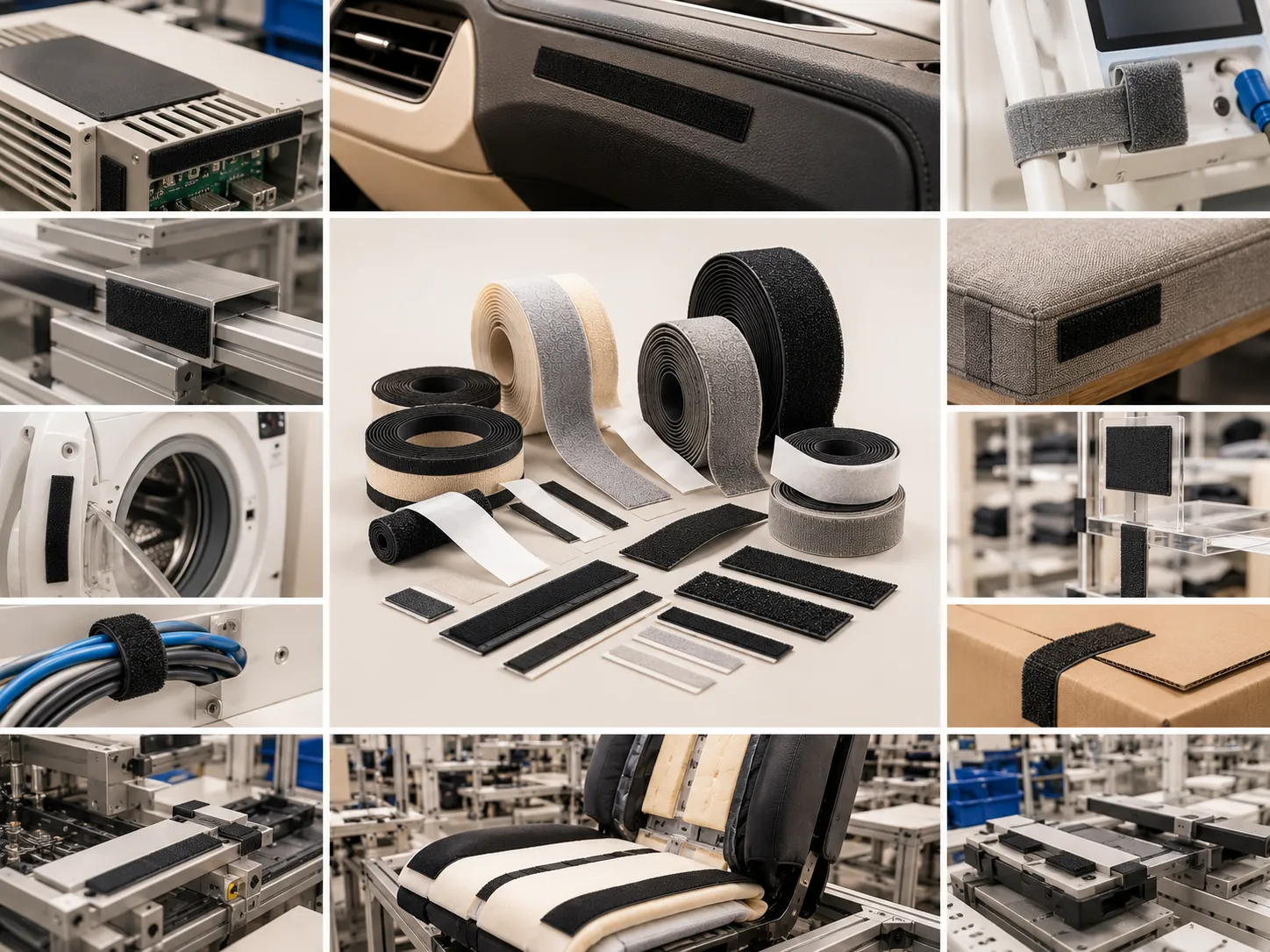
Use industrial adhesive grades
Interior panels, trim and assembly applications often need heat resistance, vibration stability and dependable peel strength. Bondix is usually the stronger starting point.
Prioritize clean bond and sizing
Cable routing, lightweight panels and serviceable enclosures benefit from the right width, workable tack and controlled residue behavior. Validate on the actual housing material.
Match acrylic performance to exposure
Display boards, changeable panels and promotional structures need stable bonding on rigid substrates. Outdoor or semi-outdoor signage should be tested for heat and UV ageing.
Balance bond strength with removability
Cushion attachments, panels and accessory mounting often use general-purpose adhesive fastening where indoor stability and neat installation are the main goals.
Validate skin contact and cycles
Supports and wearable products may use adhesive hook and loop where substrate bonding is suitable, but textile comfort and repeated adjustment still require careful sample testing.
Choose value with enough tack
Reusable cartons, sample kits and display packaging often need economical adhesive fastening with reliable initial stick and practical cycle life. Fixora is a common fit.
Specify for load and environment
Equipment panels, fixtures and assembly aids should be matched to peel and shear requirements, not just convenience. Bondix is often preferred for heavier industrial use.
Common mistakes when choosing adhesive hook and loop
The most common mistake is selecting adhesive tape by price alone. A lower-cost grade can be correct for a display or packaging application, but the same grade may be under-specified for automotive or industrial use. Upfront savings are quickly lost when bond failure creates rework, returns or line stoppages.
The second mistake is ignoring substrate preparation. Dust, mold release, oils and hand contamination can reduce bond performance even when the tape itself is correctly specified. If production samples were tested on carefully cleaned panels but the live line does not replicate that preparation, results will differ.
The third mistake is testing only initial tack. A tape that feels sticky immediately may still fail under heat ageing, humidity, vibration or side loading. Buyers should evaluate peel, shear and field-style exposure together.
The fourth mistake is using adhesive tape where sew-on fastening is the better engineering answer. Flexible fabrics, washable textiles and products with repeated laundering often need a sew-on option such as Walogrip rather than a pressure-sensitive bond.
Buying advice for procurement teams
When requesting a quotation, provide more than width and color. Share the substrate material, application, expected cycles, temperature range, humidity or UV exposure, required roll length, die-cut needs, color tolerance, production volume and whether the order is for domestic or export use.
For high-volume OEM programs, request at least two sample options: a value-led general-purpose grade and an industrial-grade alternative. Comparing Fixora and Bondix in the same assembly gives procurement and engineering teams a practical basis for deciding whether the higher-performance product is justified.
Evaluate total manufacturing cost, not unit tape cost. The right adhesive specification can reduce assembly labor, prevent field failures, simplify panel replacement and support a more reliable product lifecycle. The cheapest tape is rarely the best purchase if it creates problems after production.
Key takeaways
Choose adhesive hook and loop by substrate compatibility first, then by adhesive chemistry, environmental exposure and strength requirements. Rubber-based systems often fit indoor commercial use. Acrylic-based systems are usually better for heat, moisture, outdoor exposure and industrial substrates.
For Walonium buyers, the practical mapping is straightforward: Fixora for general-purpose adhesive fastening, Bondix for industrial peel-and-stick performance, and Walogrip when a sew-on textile alternative is the better fit.
The final decision should always be confirmed with real samples on the actual substrate in the finished product environment. Adhesive tape selection is a manufacturing decision, and the best answer is proven in the assembled product.
FAQ
What is adhesive hook and loop tape used for in manufacturing?
Adhesive hook and loop tape is used in manufacturing to create peel-and-stick closures on automotive interiors, electronics, signage, furniture, medical supports, packaging and industrial assemblies where sewing or mechanical fasteners are impractical or too slow.
Should I choose rubber or acrylic adhesive for hook and loop tape?
Choose rubber adhesive for indoor, low-energy surfaces such as plastics and foam where strong initial tack and cost efficiency matter. Choose acrylic adhesive for metals, glass, painted surfaces, outdoor exposure, heat, humidity and applications that need long-term bond stability.
How do Walonium Fixora and Bondix compare?
Fixora is Walonium's general-purpose adhesive hook and loop tape for retail displays, packaging, office equipment and everyday commercial assembly. Bondix is the industrial-grade option for demanding OEM applications such as automotive, signage, fixtures and equipment where stronger peel-and-stick performance is required.
When should I use Walogrip instead of adhesive tape?
Use Walogrip when the fastener will be sewn onto fabric or textile substrates, when adhesive bonding is not suitable for the surface, or when a cost-effective polyester-rich sew-on tape is needed alongside adhesive options in the same product line.
What strength ratings matter for industrial adhesive hook and loop?
Industrial buyers should evaluate peel strength, shear strength and initial tack together. Peel strength measures resistance to pulling apart, shear strength measures sliding force resistance, and tack measures how quickly the adhesive grips on contact. Heavy-load or vibration-prone applications need higher ratings across all three.
Which surfaces work best with adhesive hook and loop tape?
Adhesive hook and loop works best on clean, dry, smooth substrates including metal, glass, painted panels, rigid plastics, wood and powder-coated surfaces. Low-energy plastics, dusty surfaces, oily finishes and flexible fabrics often need surface preparation, a different adhesive chemistry or a sew-on alternative.
Should manufacturers test adhesive hook and loop samples before production?
Yes. Test samples on the actual substrate under real temperature, humidity, cleaning and load conditions before approving production. Adhesive performance can change significantly once the tape is die-cut, applied in assembly and exposed to the finished product environment.
What information should I share when requesting an adhesive tape quote?
Share the substrate material, application, expected open-close cycles, environmental exposure, required width and roll length, color, attachment method, production volume and whether the order is for domestic or export use. A complete brief helps the supplier recommend the right adhesive chemistry and textile construction.