On this page
What is adhesive hook and loop tape?
Adhesive hook and loop tape is a fastening system with two mating sides: a hook side and a loop side. When pressed together, the hooks engage the loops to create a secure closure that can be opened and reclosed many times. The difference from standard sew-on hook and loop is the pressure-sensitive adhesive backing, which allows the tape to bond directly to a substrate without stitching, drilling or additional mechanical hardware. Explore vertical fastening solutions when your specification is tied to a particular industry.
For manufacturing teams, that simple change matters. A closure that once required multiple operations can often be applied in one step: peel the liner, position the tape, press firmly, and mate the hook and loop sides. This makes adhesive hook and loop especially useful in panel attachment, cable organization, display systems, removable covers, medical accessories, furniture assembly and lightweight industrial products.
Cost savings do not come from the tape alone. They come from what the tape replaces. When adhesive fastening removes sewing stations, drill fixtures, rivet insertion, clip procurement or secondary handling, the production process becomes leaner. That is why procurement and engineering teams should evaluate adhesive hook and loop as a process improvement tool, not only as a component purchase.
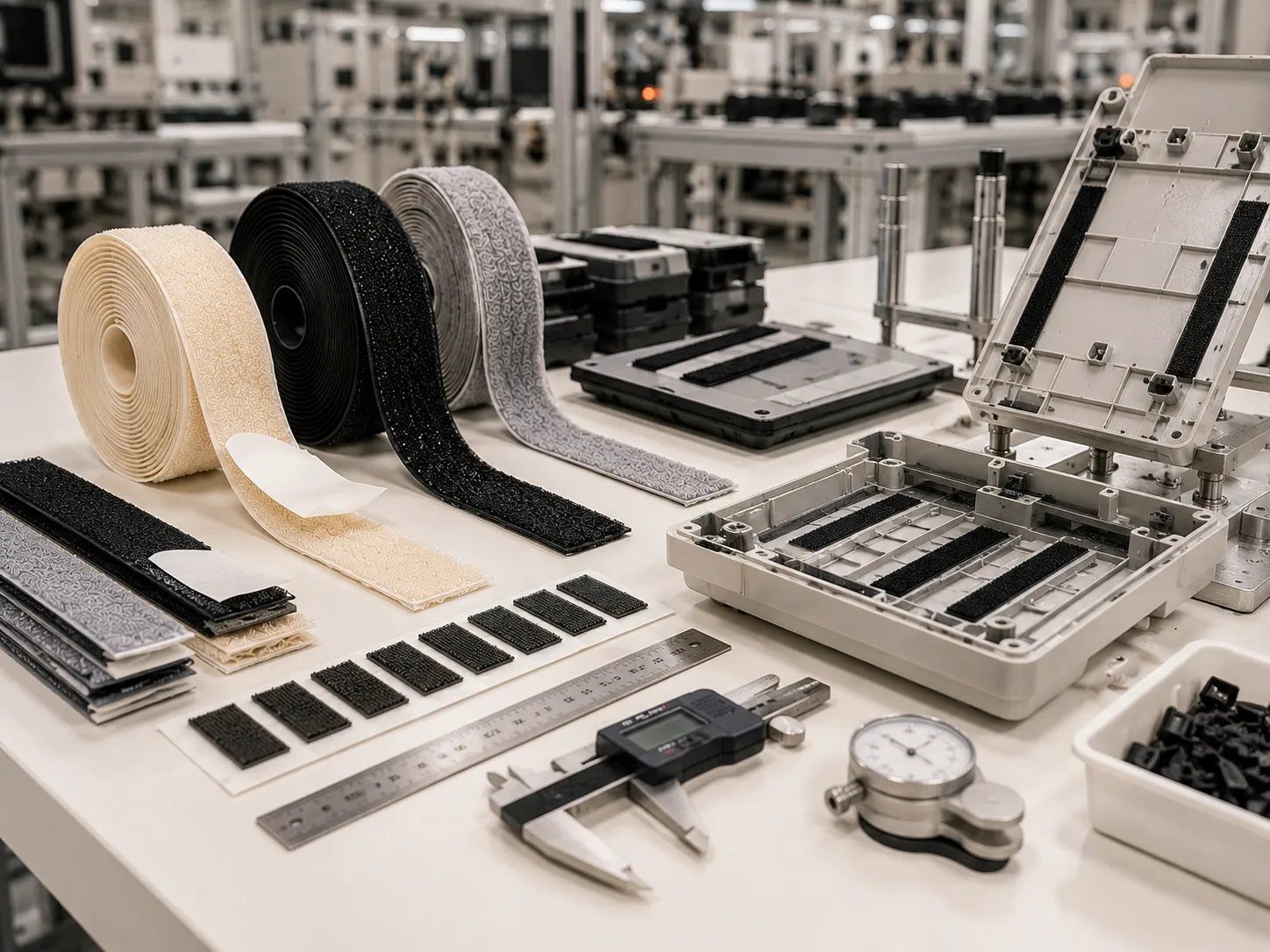
Why manufacturing costs matter today
Modern OEM production faces pressure from every direction: raw material volatility, labor availability, shorter launch windows, export competition and rising customer expectations for product quality. A fastening method that looks inexpensive on a purchase order can become expensive once labor, tooling, scrap, rework and warranty claims are included.
Buyers who optimize only component price often miss the larger opportunity. A faster attachment method can increase line throughput. A repositionable closure can shorten prototyping. A lightweight fastener can reduce handling and logistics burden. A dependable bond can lower return rates. These effects compound across thousands or millions of units.
Adhesive hook and loop is not the right answer for every product. But in the applications where it fits, it can improve margins without sacrificing function. That is why cost-focused manufacturers across automotive, electronics, furniture, medical, packaging and industrial sectors continue to specify adhesive-backed fastening solutions.
How adhesive hook and loop tape reduces manufacturing costs
The cost impact is best understood as a set of connected savings rather than one single line item. Below are the main ways adhesive hook and loop changes the economics of production.
1. Faster assembly time. Traditional fasteners often require preparation, alignment, tool use and verification. Adhesive hook and loop can be applied immediately on compatible surfaces. That supports quicker line balancing, shorter takt time and higher output from the same labor pool.
2. Lower hardware and tooling expense. Mechanical fastening usually depends on screws, rivets, clips, washers, drill bits, sewing needles, fixture maintenance and replacement tooling. Adhesive fastening removes much of that procurement and upkeep when the application allows it.
3. Reduced labor cost per unit. Because installation is simpler, fewer specialized skills are needed. Operators can complete attachment faster and with fewer errors. In high-volume production, even a few saved seconds per unit creates meaningful annual savings.
4. Cheaper prototyping and product development. Engineering teams can reposition, test and refine layouts without damaging prototype housings or panels. That reduces wasted shells, shortens design cycles and helps products reach market faster.
5. Lower maintenance and service burden. In serviceable products, hook and loop allows covers and panels to be opened without breaking fasteners or damaging substrates. That can reduce warranty labor, spare-part consumption and customer downtime.
6. Better lifecycle value through fewer returns. When the correct adhesive grade is used, the closure remains dependable across expected use. Fewer field failures mean fewer replacements, fewer complaints and less brand risk.
7. Lightweight manufacturing benefits. Adhesive hook and loop is non-metallic and compact. For products where shipping weight, handling ergonomics or fuel-related logistics matter, removing metal hardware can support additional downstream savings.
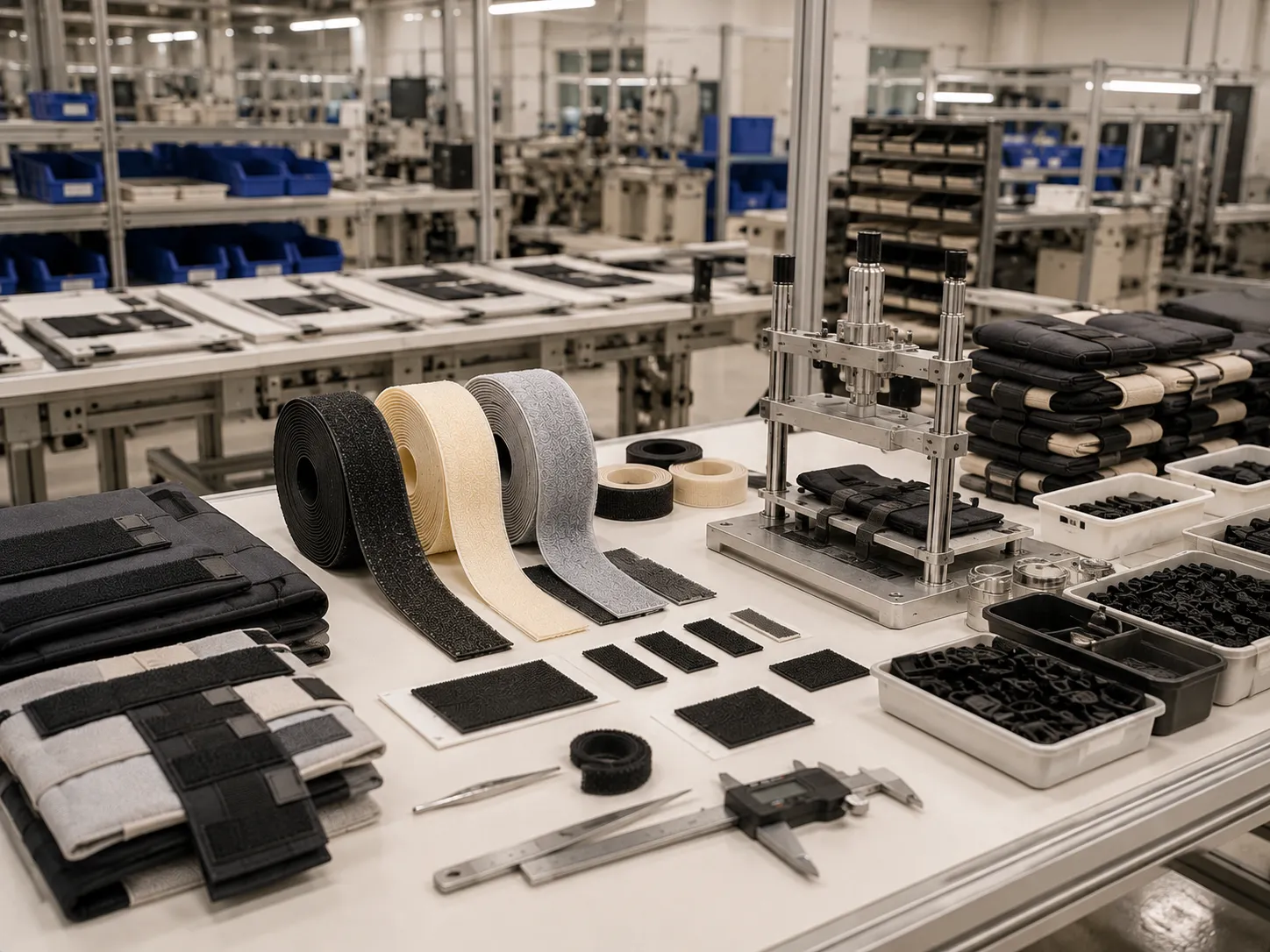
Adhesive hook and loop vs traditional fastening
The comparison below is designed for procurement and production engineers who need a practical view of where adhesive fastening wins on cost. Actual results depend on substrate, cycle requirement and process design, but these patterns are common across OEM environments.
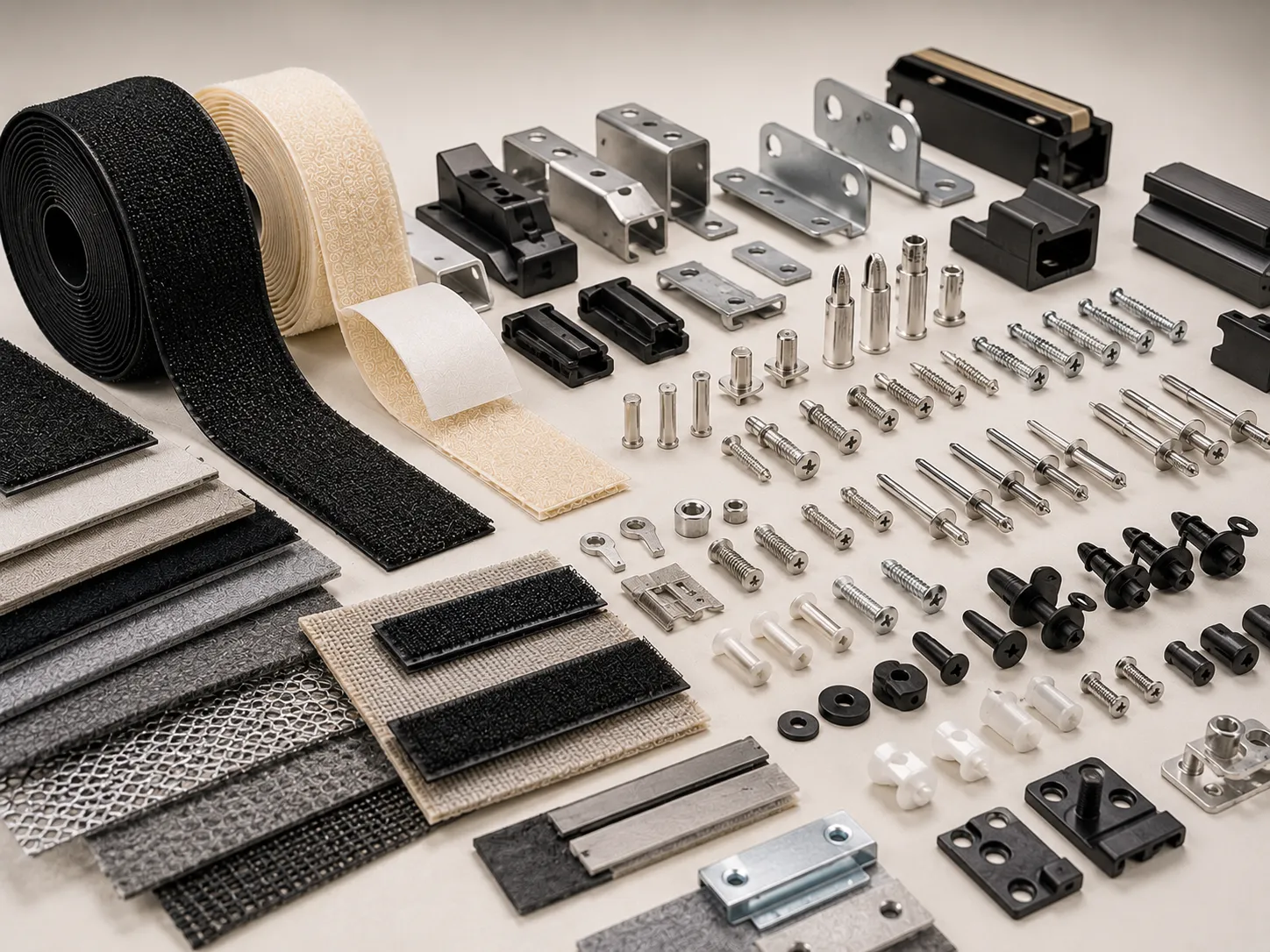
Adhesive Hook & Loop
Traditional Mechanical Fastening
Peel, position and press. Often reduces handling steps on compatible substrates.
Usually slower due to drilling, sewing, alignment or hardware insertion.
Often needs only cutting, placement and pressure rather than dedicated fastening tools.
May require drills, presses, sewing machines, riveters or fixture maintenance.
Easier operator training and more consistent repetitive attachment.
Often needs more specialized handling, especially for sewing or precision drilling.
Supports faster design iteration without damaging prototype parts.
Changes can require new holes, reworked panels or replaced hardware.
Allows removable panels and serviceable closures without breaking permanent fasteners.
Permanent fasteners can increase service labor and replacement part demand.
Panels, covers, cable wraps, signage, interior trim and repositionable OEM assemblies.
High-load, safety-critical or permanent structural joints where mechanical integrity is mandatory.
What are the main cost advantages for OEM buyers?
The strongest advantage is process simplification. Every step removed from the line has a cost: labor seconds, tooling wear, inspection time, training and error recovery. Adhesive hook and loop can compress multiple steps into one repeatable action when the substrate and environment are suitable.
Another advantage is procurement consolidation. Instead of managing separate bills of materials for fasteners, washers, clips and attachment hardware, teams can standardize on tape widths, adhesive grades and roll formats that fit multiple SKUs. That improves purchasing efficiency and inventory control.
Adhesive fastening also supports modular product design. Manufacturers can build platforms where panels, accessories or service covers are swapped or upgraded without redesigning the full enclosure. That flexibility can reduce engineering change cost over the life of a product family.
Finally, adhesive hook and loop can improve perceived product quality. Clean attachment without visible screws or puncture marks matters in consumer-facing electronics, medical accessories, furniture and interior automotive components. Better finish can support premium pricing and lower complaint rates.
What are the limitations and cost risks?
Adhesive hook and loop is not a universal replacement for every fastening method. If the substrate is oily, dusty, low-surface-energy plastic or uneven, bond performance may fail without surface preparation or a different adhesive system. Failure creates rework, which quickly destroys any projected savings.
Heat, moisture, cleaning chemicals and outdoor exposure also matter. A general-purpose adhesive that works in a climate-controlled assembly room may underperform in an automotive cabin, wash-down environment or export shipment with temperature swings. Under-specifying adhesive grade is one of the most expensive mistakes an OEM buyer can make.
Load requirement is another boundary. Adhesive hook and loop is excellent for many panel, strap and closure applications, but it should not be forced into structural roles without validation. In those cases, mechanical reinforcement or sew-on fastening may still be the lower-risk option.
The final risk is buying on tape price alone. A cheaper adhesive product with weak peel strength or poor edge hold can increase scrap, slow the line with touch-up work and create warranty exposure. Total cost of ownership should guide the decision.
How to calculate total cost of ownership
Procurement teams should compare fastening options using a simple total cost model. Start with the current method and capture the real production inputs, not only the fastener purchase price.
Include attachment labor time per unit, tooling setup and maintenance, hardware BOM cost, scrap and rework rate, inspection time, service/removal requirements and expected field failure rate. Then run the same model with an adhesive hook and loop trial using the intended substrate, width, adhesive grade and assembly pressure method.
For high-volume OEM programs, even small differences matter. Saving eight seconds of labor per unit across one million units is more than 2,200 labor hours. Eliminating two mechanical fasteners per unit can remove millions of small parts from procurement and handling. That is where adhesive hook and loop often wins the business case.
Also consider secondary savings: cleaner product appearance, reduced panel damage during service, faster prototyping and lower shipping weight. These may not appear on the BOM, but they affect margin and customer satisfaction.
OEM recommendations for Walonium products
Walonium buyers should match the fastening method to the process first, then choose the product grade. For adhesive applications, the decision usually starts with environment and substrate, then moves to holding requirement and expected cycle life.
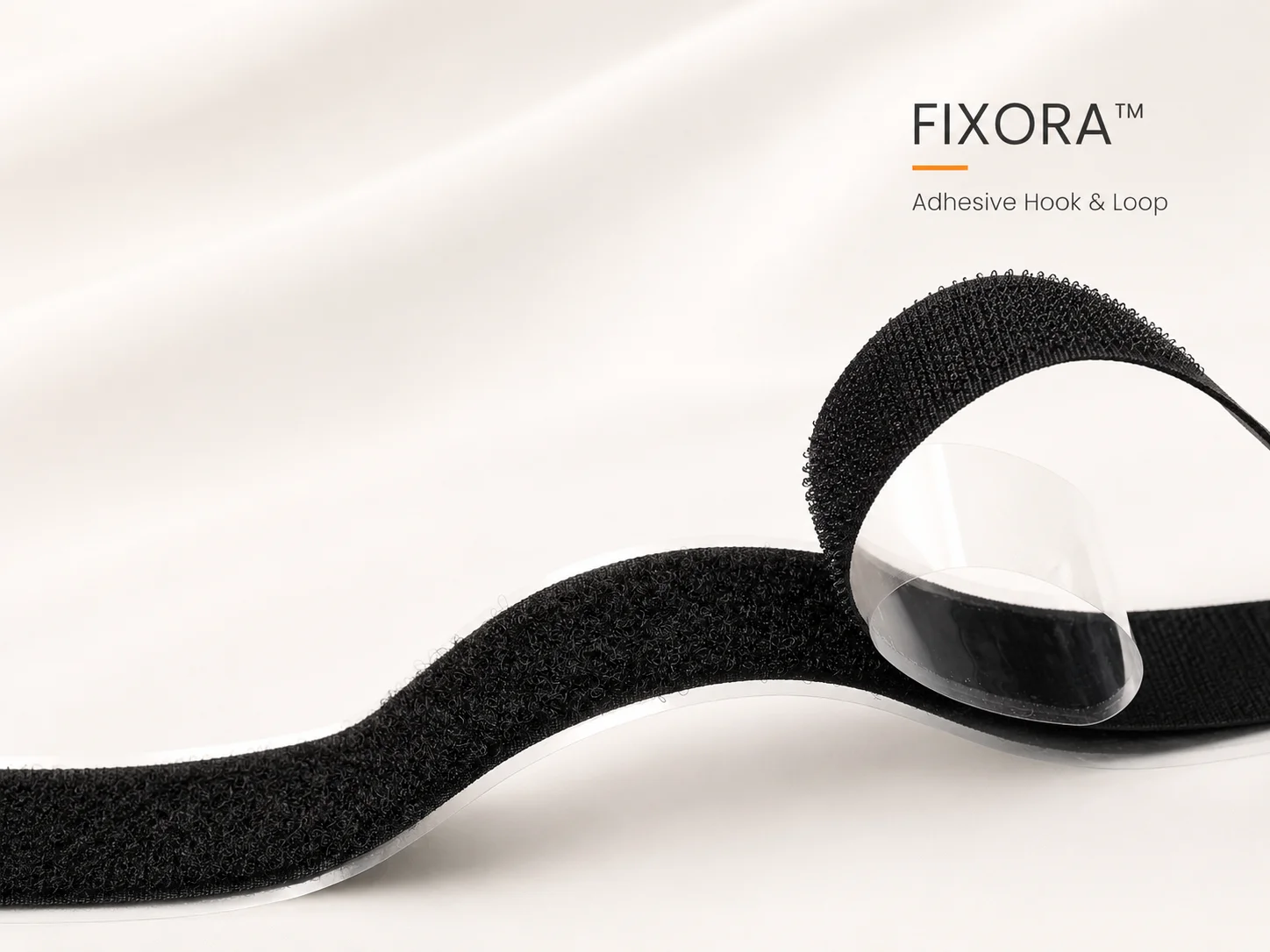
For general commercial and indoor OEM use, evaluate Fixora, Walonium's general-purpose adhesive hook and loop tape. It is a practical starting point for signage, display panels, office products, packaging prototypes, cable management and standard assembly tasks where dependable peel-and-stick fastening is needed without industrial extremes.
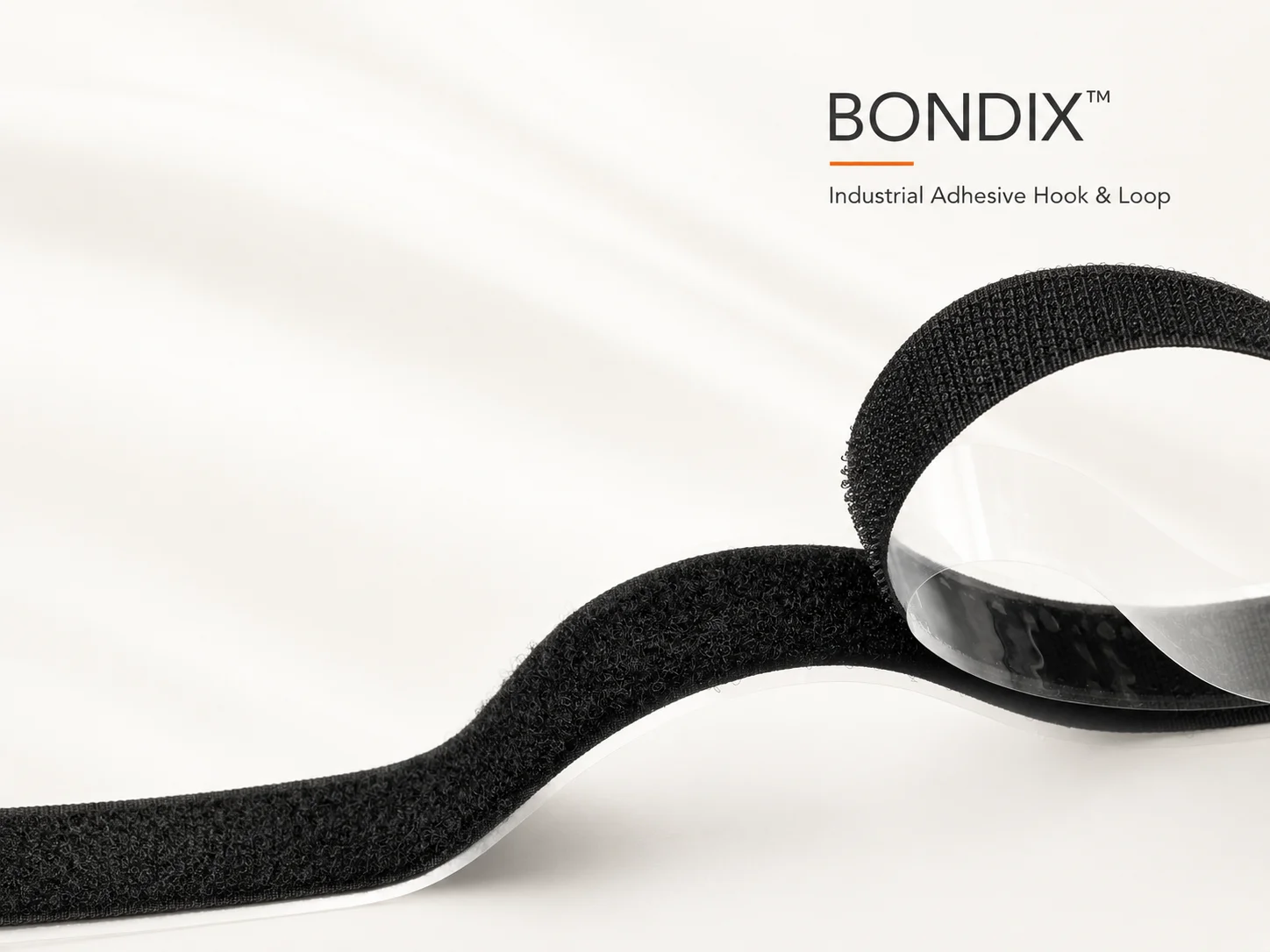
For tougher production environments, evaluate Bondix, the industrial adhesive option. Bondix is the better fit when the assembly faces higher handling stress, more demanding substrates, stronger holding requirements or conditions where a general-purpose adhesive would create too much rework risk.
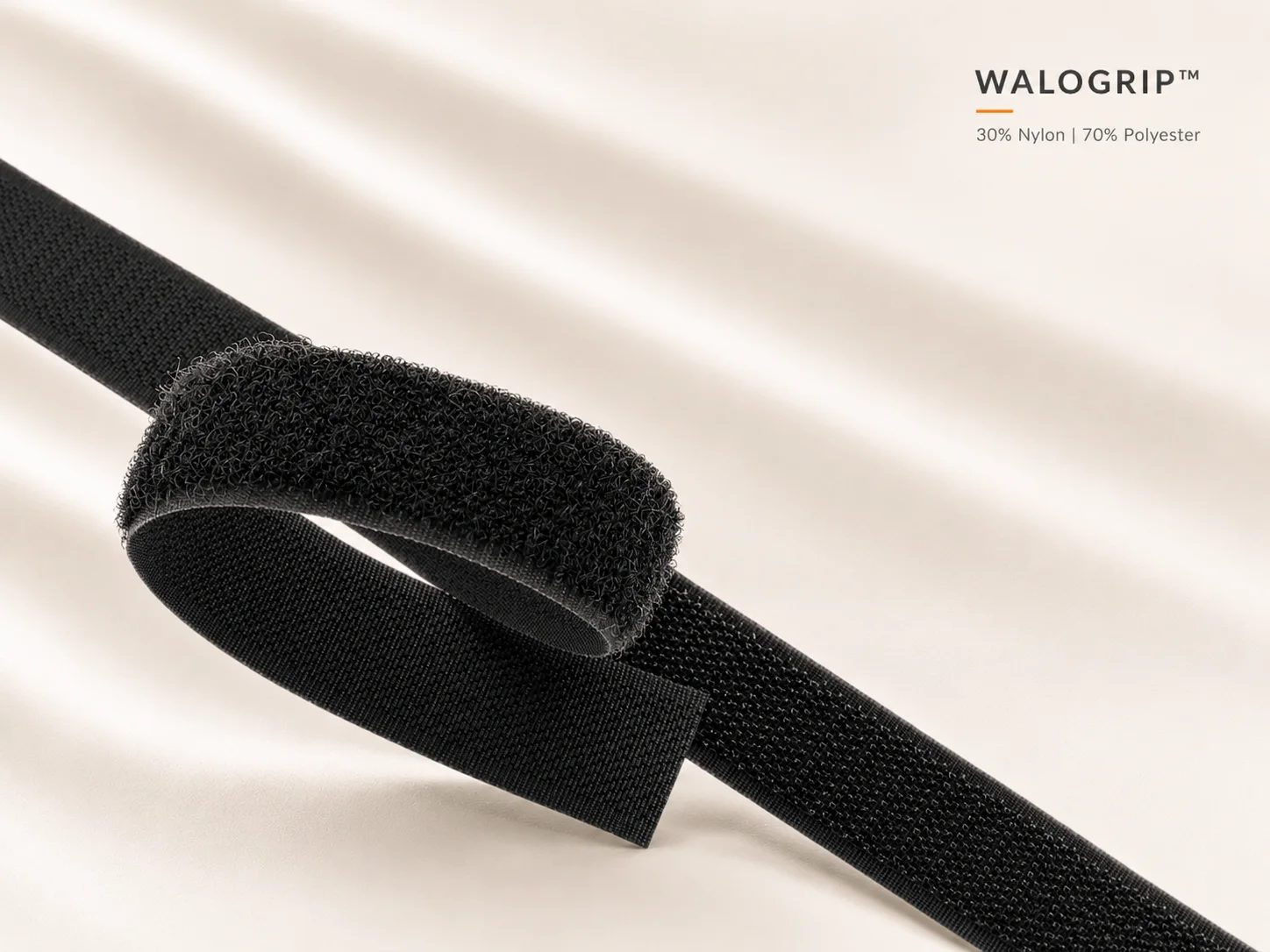
Not every cost-saving fastening decision should be adhesive. When the product is textile-based, laundered, sewn or reused across very high cycle counts, evaluate Walogrip as a non-adhesive, cost-efficient hook and loop option. Walogrip can be the lower-risk path for apparel, furniture textiles, reusable packaging and general sew-on applications where adhesive bonding is unnecessary or unsuitable.
Industry recommendations by application
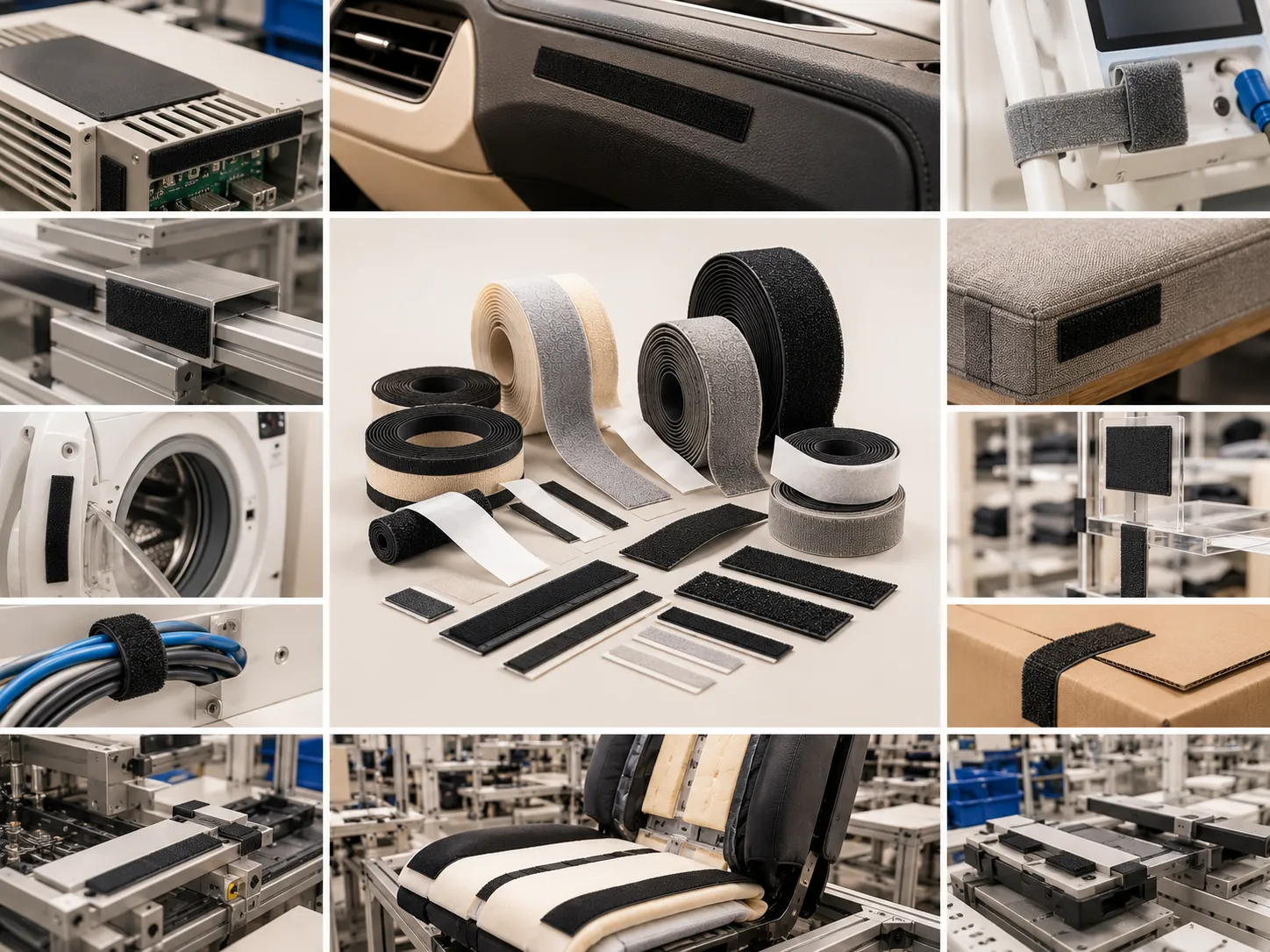
Trim and interior panels
Adhesive hook and loop can speed interior assembly and serviceable panel attachment. Use Bondix where heat, vibration and cabin exposure demand stronger industrial bonding.
Covers and cable routing
Fixora and Bondix support removable enclosures, wire management and accessory mounting without drilling fragile housings or adding metal hardware weight.
Panels and upholstery
Adhesive fastening helps removable covers and assembly aids; Walogrip remains useful where sew-on textile attachment is the long-term lower-cost route.
Straps and repositionable closures
Adhesive hook and loop can simplify device assembly and adjustable accessories when substrate compatibility and cleaning requirements are validated early.
Reusable closures
Adhesive and sew-on options both reduce hardware cost. Choose based on whether the package surface supports reliable bonding or needs textile reusability.
Fast installation
Fixora is often ideal for display boards, exhibition panels and temporary mounting where fast installation and clean removal matter more than industrial load.
Tool mounting and fixturing
Bondix supports workshop organization, temporary fixturing and production-floor applications where stronger adhesive performance reduces downtime and repositioning effort.
Common mistakes when switching to adhesive fastening
The first mistake is assuming all adhesive hook and loop performs the same. Peel strength, shear resistance, backing stability and adhesive chemistry vary significantly between general-purpose and industrial grades. A failed bond is more expensive than never switching at all.
The second mistake is skipping surface preparation. Dust, mold release, oils and low-energy plastics can weaken bond performance. A simple cleaning or primer step can be the difference between cost savings and production complaints.
The third mistake is ignoring environmental exposure. Buyers often test at room temperature indoors, then discover issues after shipping, washing, heat exposure or humidity. Test conditions should reflect real product life.
The fourth mistake is replacing mechanical fasteners without validating load. Adhesive hook and loop can reduce cost dramatically in the right role, but it should not be forced into structural or safety-critical joints without engineering review.
Buying advice for procurement teams
When requesting a quotation, share more than width and quantity. Provide the substrate material, surface texture, attachment method, expected open-close cycles, operating temperature range, cleaning process, production volume and whether the part is for domestic use or export.
For OEM cost reduction programs, ask the supplier to recommend both a value option and an industrial validation option. Comparing Fixora and Bondix on the same assembly gives procurement and engineering a clear view of whether stronger adhesive performance is worth the material premium.
Also standardize roll widths and cut methods where possible. Consistent formats reduce scrap, simplify operator training and improve purchasing leverage on repeat orders. For textile programs, keep Walogrip in the comparison set so the team does not default to adhesive when sew-on fastening is the cheaper long-term solution.
Finally, measure results after implementation. Track attachment time, scrap, rework, warranty claims and operator feedback for at least one production cycle. Cost reduction should be verified on the line, not assumed from a catalogue claim.
Key takeaways
Adhesive hook and loop tape reduces manufacturing costs mainly by simplifying assembly, not by being the lowest-price fastener available. The biggest savings come from faster attachment, lower labor burden, reduced hardware use, easier prototyping and fewer field failures when the adhesive grade matches the application.
For Walonium buyers, the practical mapping is straightforward: Fixora for general adhesive fastening, Bondix for industrial adhesive performance, and Walogrip when sew-on textile fastening is the better cost path.
Evaluate total cost of ownership, test on the real substrate and confirm performance in the finished assembly. That is how OEM teams turn adhesive hook and loop from a simple tape purchase into a measurable manufacturing advantage.
FAQ
How does adhesive hook and loop tape reduce manufacturing costs?
Adhesive hook and loop tape reduces manufacturing costs by shortening assembly time, eliminating drilling and hardware, lowering skilled labor requirements, simplifying prototyping, and reducing rework and field failures when the correct adhesive grade is specified for the substrate.
What industries benefit most from adhesive hook and loop fasteners?
Automotive interiors, electronics, furniture, medical devices, packaging, signage, cable management and general industrial assembly benefit most when the application needs quick attachment, repositionable closure or lightweight fastening without permanent mechanical hardware.
Does adhesive hook and loop eliminate the need for drilling and screws?
In many applications, yes. Adhesive-backed hook and loop can replace screws, rivets, clips and drilled holes on compatible substrates, which reduces tooling costs, setup time and surface damage. High-load or safety-critical assemblies may still need mechanical reinforcement.
How does adhesive fastening reduce labor costs?
Workers can apply adhesive hook and loop with peel-and-stick handling instead of sewing, drilling or fastening hardware. That reduces training time, speeds up line operations and lowers the chance of attachment errors that create rework.
Can adhesive hook and loop lower prototyping and R&D expenses?
Yes. Because adhesive hook and loop allows repositioning and non-destructive removal during development, engineering teams can test layouts faster, avoid damaging prototype shells, and iterate designs with less material waste.
What is the difference between Fixora and Bondix adhesive tapes?
Fixora is Walonium's general-purpose adhesive hook and loop tape for standard indoor and commercial substrates. Bondix is the industrial-grade adhesive option for tougher environments, higher holding demand and more demanding OEM assembly requirements.
When should OEM buyers choose Walogrip over adhesive tapes?
Choose Walogrip when the product will be sewn, laundered, reused across many cycles, or when adhesive bonding is not suitable for the fabric or substrate. Walogrip is a cost-effective non-adhesive option for textile and general-purpose fastening.
Should B2B buyers test adhesive hook and loop samples before production?
Yes. OEM buyers should test adhesive hook and loop on the actual substrate, with the planned temperature, humidity, cleaning process and cycle load. Bond performance and total manufacturing savings can only be validated in the finished assembly.