On this page
What kind of hook and loop works on clothes and fabric?
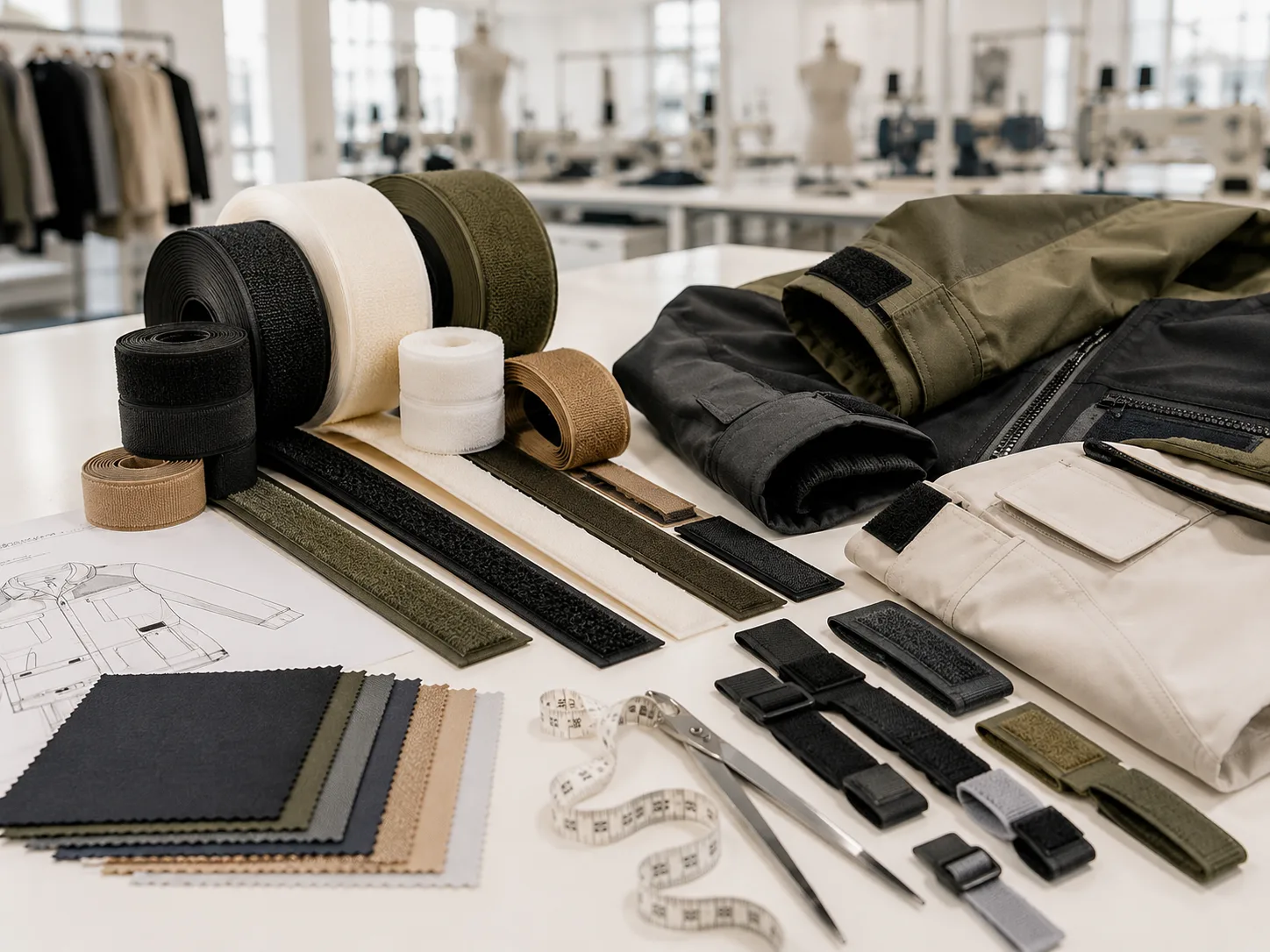
Hook and loop fasteners — commonly called Velcro — use two complementary textile surfaces. The hook side carries small molded or woven hooks. The loop side carries raised fibers that receive those hooks. When pressed together, the two sides form a secure, reusable closure. When peeled apart, the fastener opens and can be re-engaged depending on construction quality and how much stress the application applies. Explore industry-specific solutions when your specification is tied to a particular industry. When the same brand spans garments and shoes, review footwear manufacturing applications.
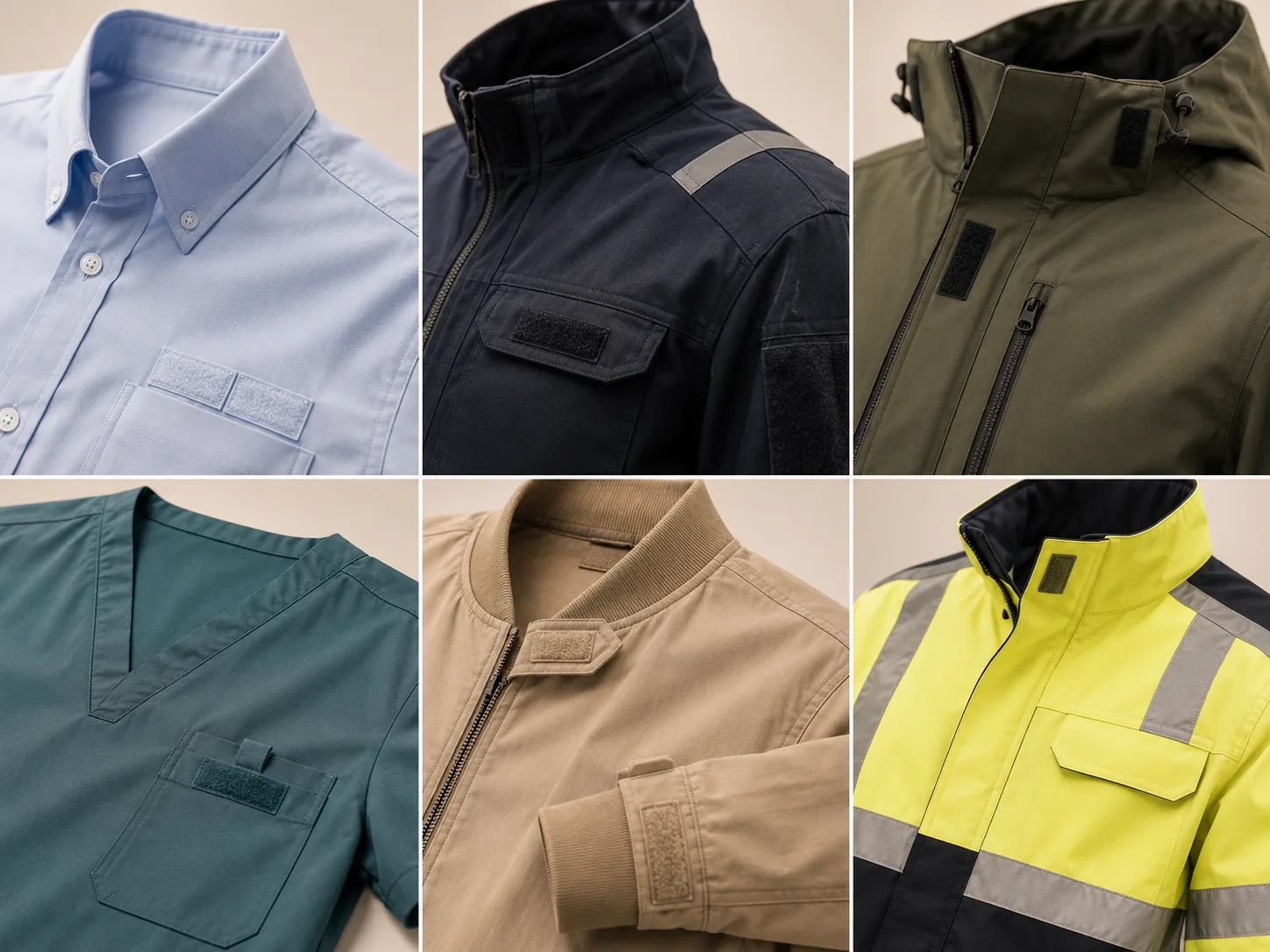
On clothes and fabric, hook and loop appears on jacket fronts, uniform closures, cuff tabs, waist adjustments, bag flaps, medical garment panels and children's wear. The fastener must survive sewing, flexing with body movement and repeated laundering without losing engagement or damaging the fabric. That makes specification more demanding than simply picking the first Velcro tape in a catalogue.
The decision involves three layers: attachment method (sew-on vs adhesive), textile construction (nylon content, weave type, width) and application context (fabric weight, wash program, cycle frequency and wearer comfort). Getting any one of these wrong leads to closures that peel off, feel stiff against skin or fail after a few wash cycles.
For a broader view of how hook and loop fits into garment production lines, see the Walonium guide on hook and loop fasteners for the apparel and garment industry.
Sew-on vs adhesive-backed Velcro for clothes
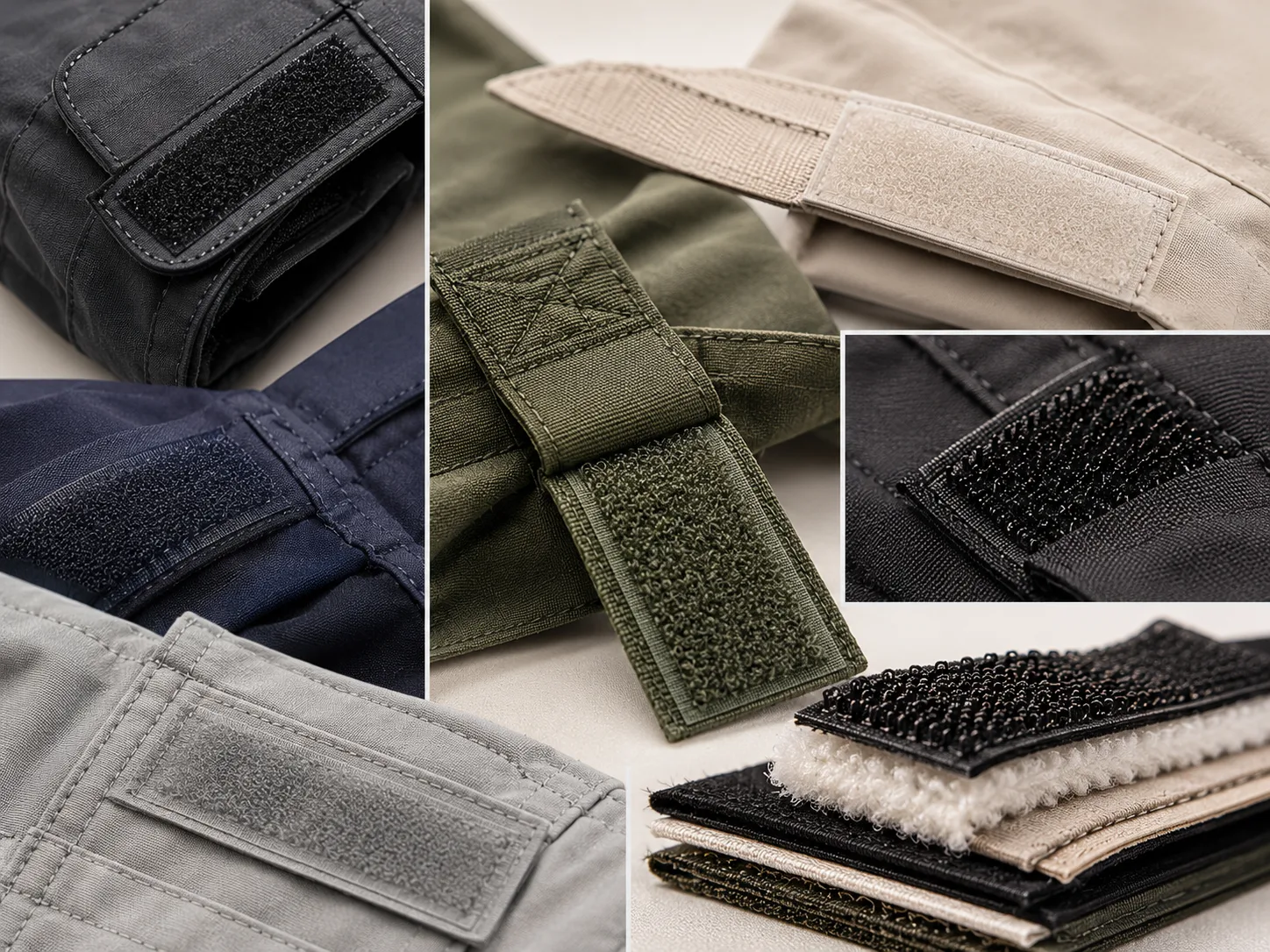
Attachment method is the most important fork when choosing Velcro for clothes and fabric. Sew-on hook and loop is stitched directly into the garment. Adhesive-backed Velcro sticks to the fabric surface through a pressure-sensitive adhesive layer. Both exist in the market, but they serve very different roles on textile products.
Sew-on hook and loop is the standard for clothing that will be washed, worn and opened repeatedly. Stitching creates a mechanical bond that survives detergent exposure, heat, flexing and the mechanical agitation of home and industrial laundering. School uniforms, jackets, workwear, medical scrubs, bags and everyday apparel all rely on sew-on tape because it integrates permanently into the garment construction.
Adhesive-backed Velcro attaches without sewing. Peel away the release liner and press the tape onto the fabric. This is faster for DIY projects, costumes, craft applications, temporary repairs and decorative panels where long-term wash durability is not required. Adhesive bonds can weaken when fabric flexes, when moisture penetrates the substrate or when the garment goes through repeated wash cycles. For any garment intended for regular laundering, sew-on remains the safer engineering choice.
Some hybrid applications use adhesive hook and loop on rigid reinforcement patches that are then sewn into the garment, but the primary load-bearing bond for washable clothing should still be mechanical stitching wherever possible.
Sew-On Hook & Loop
Adhesive-Backed Velcro
Withstands home and industrial laundering when properly stitched.
Limited; adhesive weakens with moisture, heat and repeated washing.
Integrated into garment panels, cuffs, tabs and reinforcement layers.
Peel-and-stick; no sewing required.
Uniforms, jackets, workwear, bags, medical wear and everyday apparel.
Costumes, crafts, quick repairs and low-wash decorative applications.
Nylon-rich sew-on tape supports hundreds to thousands of open-close cycles.
Moderate to low depending on fabric and wash exposure.
Stitching allows the tape to flex with body movement and fabric drape.
Can delaminate on stretchy or highly flexible fabrics.
Nylon vs polyester blends for garment hook and loop
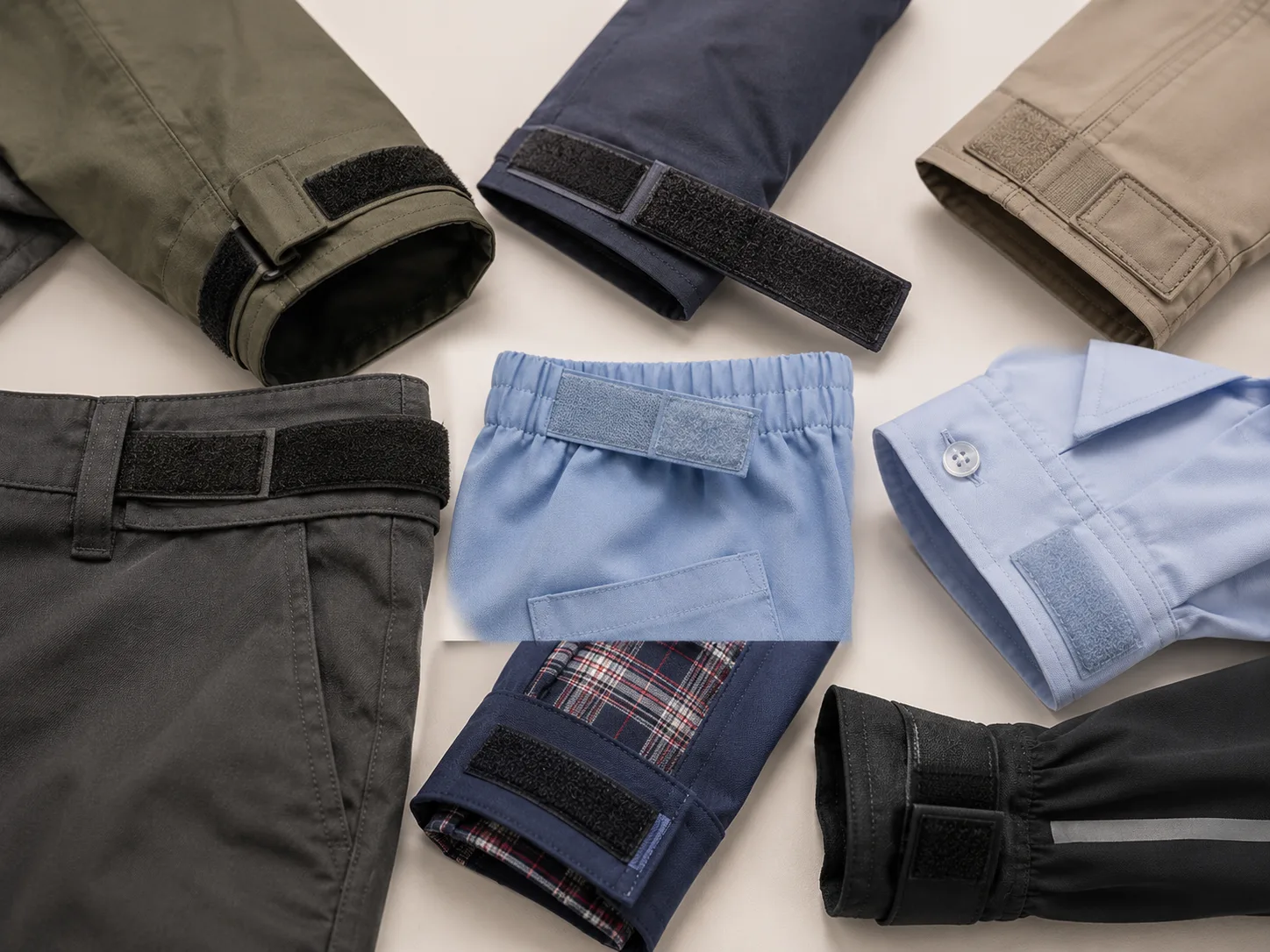
Once you have chosen sew-on attachment, material composition determines cycle life, hand feel, wash behavior and cost. Hook and loop for clothes is typically made from nylon, polyester or a blend of both fibers. Each composition behaves differently on fabric substrates and under laundering.
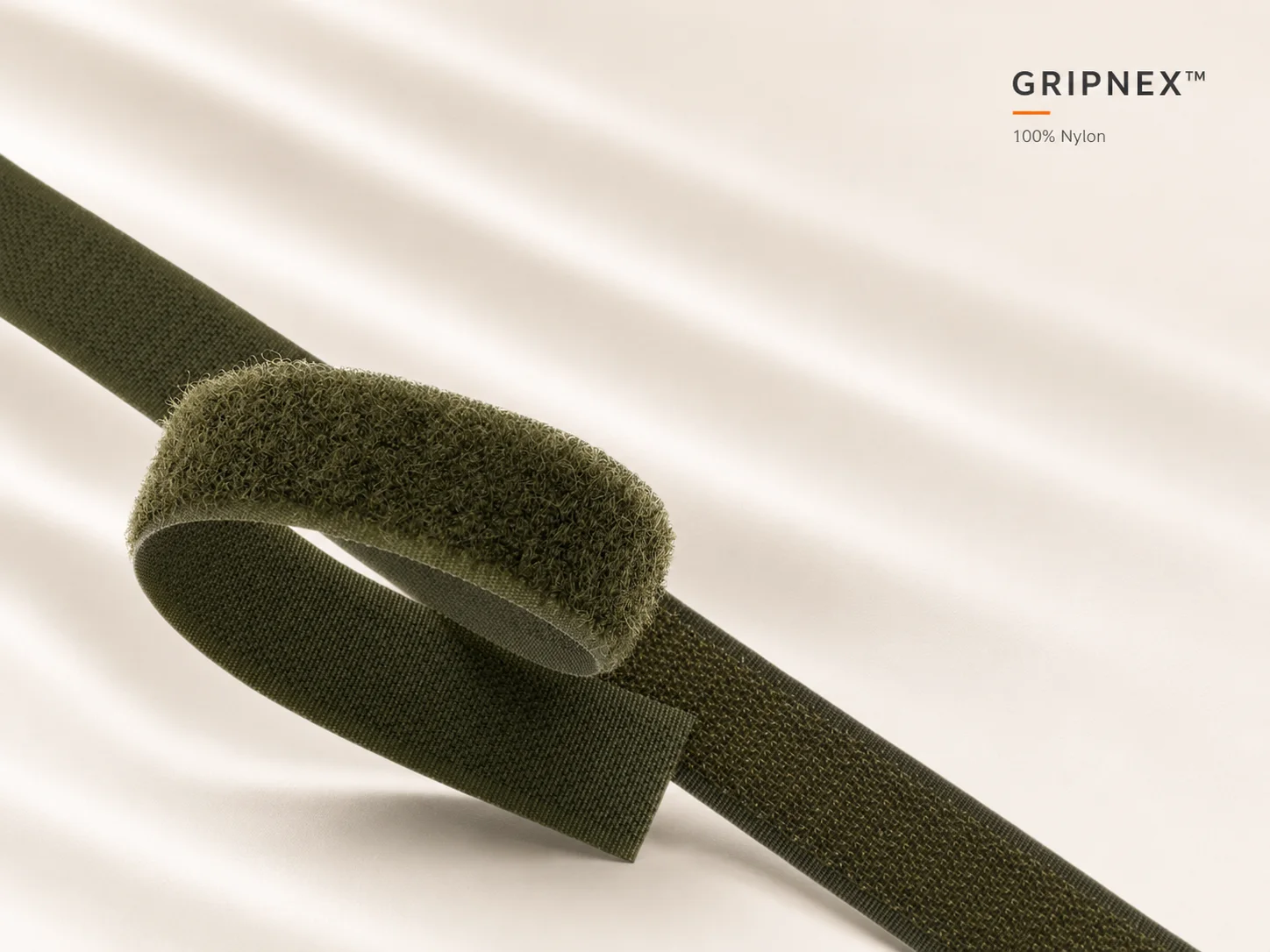
100% nylon (Gripnex) delivers the strongest repeated engagement, flexible hand feel and best abrasion resistance. Nylon hooks maintain their shape through hundreds of open-close cycles and generally survive more wash cycles before engagement drops noticeably. This makes nylon-rich tape the premium choice for uniforms, workwear, outerwear and any garment where the closure is used daily.
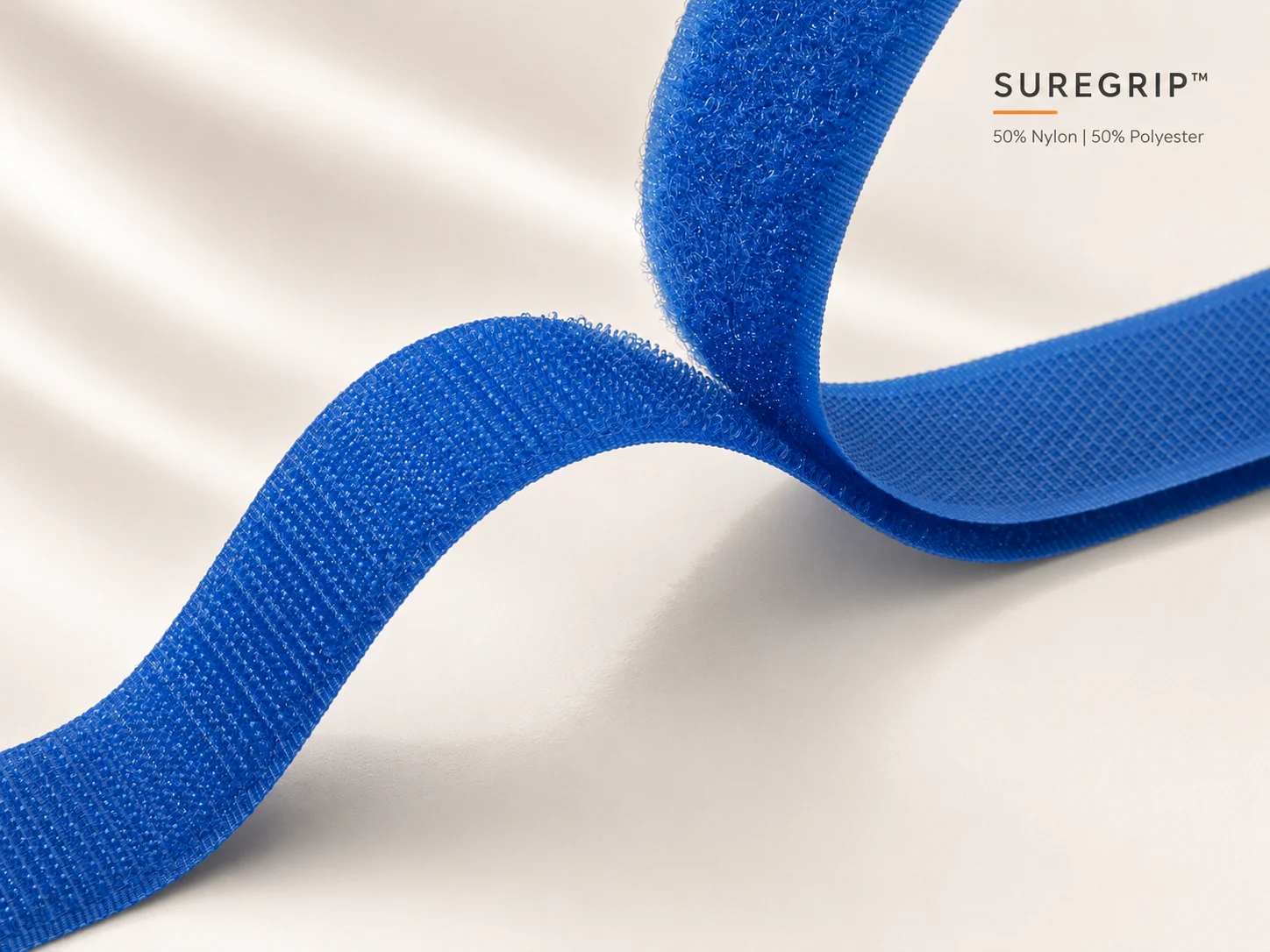
50% nylon / 50% polyester (Suregrip) balances engagement strength with comfortable drape and practical wash durability. It works well on fashion apparel, sportswear, cuff tabs and waist adjustments where the garment needs reliable fastening without the stiffness or cost of full nylon construction.
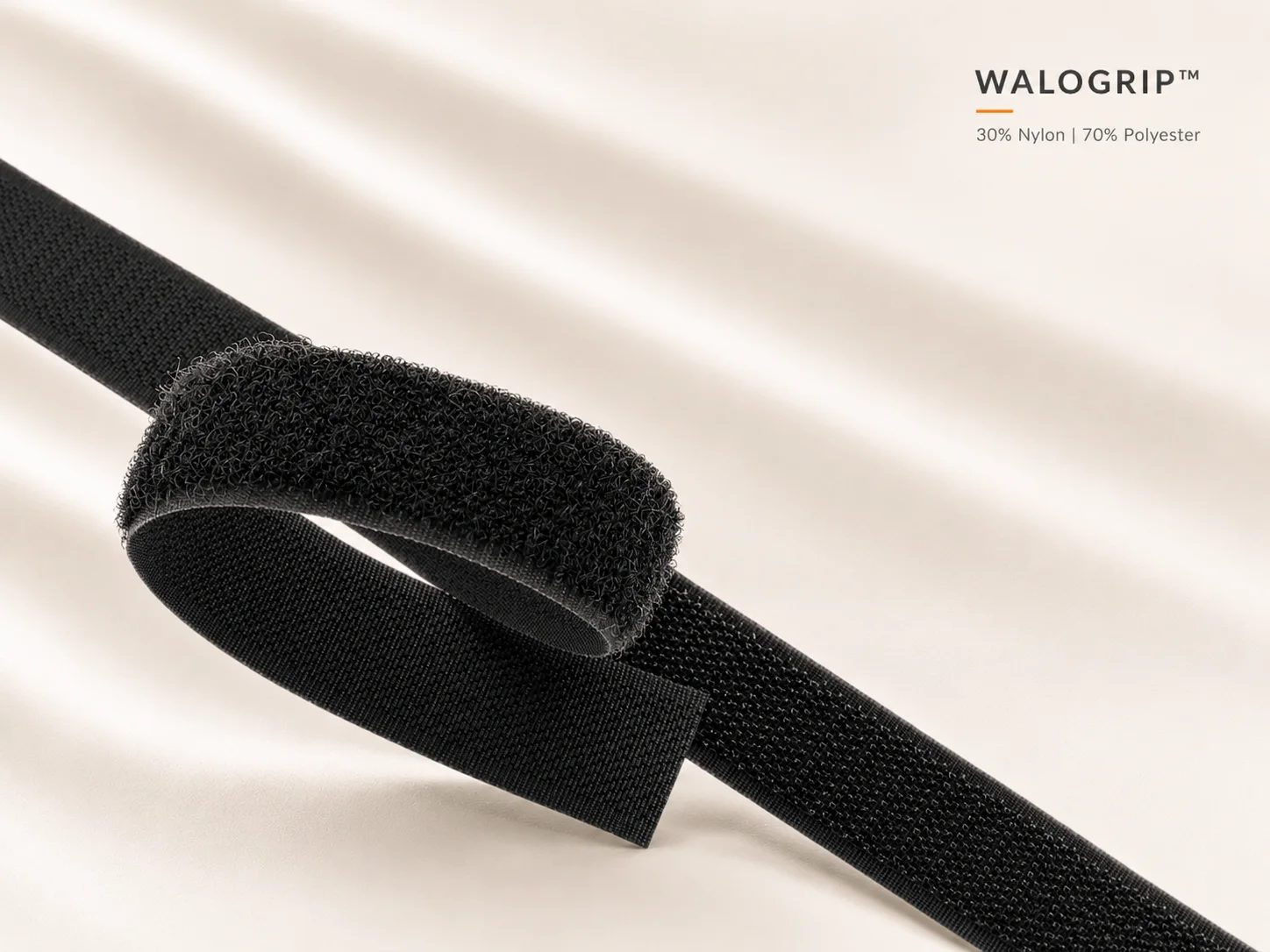
30% nylon / 70% polyester (Walogrip) prioritizes dimensional stability in hot washes and cost efficiency for volume lines. Polyester absorbs less moisture than nylon, which can help the tape maintain its shape through high-temperature laundering. It suits bags, moderate-cycle apparel and price-sensitive programs where maximum cycle life is not the primary requirement.
For a deeper comparison across industries, review the Walonium guide on nylon vs polyester hook and loop tape.
Woven hook and loop for lightweight garments
Woven hook and loop tape is made on a textile loom, producing a flat, flexible construction that blends cleanly with fabric. It is lightweight, drapes well and adds minimal bulk compared with some molded hook alternatives. Designers often specify woven tape on sportswear, children's clothing, fashion garments and custom apparel where the closure must lie flat and move with the fabric.
Woven constructions are available in nylon-rich, balanced and polyester-rich blends. The weave pattern affects both engagement strength and hand feel. A tighter weave generally provides stronger hold but may feel slightly stiffer. A more open weave feels softer but may lose engagement faster on high-cycle applications.
When specifying woven tape for clothes, confirm width, color match and edge finish alongside material composition. Clean-cut edges sew more predictably on lightweight shirting and prevent fraying at the tape boundary.
Matching hook and loop to fabric weight
Fabric weight is one of the most overlooked variables in Velcro selection. Lightweight fabrics need soft, flexible tape in narrower widths. Heavy fabrics need stronger tape in wider widths with stable sew-on attachment. Using the wrong combination creates puckering, stiffness, weak engagement or premature failure.
Lightweight fabrics such as shirting, scrubs, linings and children's wear typically use 15mm to 20mm soft woven hook and loop. Suregrip or Walogrip in balanced or polyester-rich construction often provides the right combination of flexibility and cost. Use fine needles and moderate stitch density to avoid distorting delicate substrates.
Medium-weight fabrics such as uniform twills, chinos and light outerwear use 20mm to 25mm tape. Suregrip is a common fit when comfort and wash durability must balance. Gripnex becomes appropriate when the closure faces heavy daily use.
Heavy fabrics such as workwear canvas, padded jackets and industrial uniforms use 25mm to 30mm nylon-rich sew-on tape. Gripnex delivers the engagement strength and wash durability these substrates demand. Wider tape increases holding area, which matters when the closure must resist pulling across a thick or structured panel.
Laundering and wash durability on clothes
Laundering is the primary stress test for hook and loop on clothes. Every wash cycle exposes the fastener to detergent chemistry, hot water, mechanical tumbling and drying heat. Over time, loop surfaces collect lint and fiber debris. Hook surfaces can flatten or become contaminated. Engagement strength drops gradually until the closure no longer holds reliably.
Home laundering on everyday apparel typically involves warm water, standard detergent and tumble drying. Industrial uniform programs may use high-temperature wash, strong alkaline detergents and press drying. Medical and hospitality garments face similarly demanding programs. The hook and loop specification must match the most aggressive wash conditions the product will encounter, not the gentlest.
Nylon-rich constructions generally maintain engagement across more wash cycles because nylon fibers are flexible and abrasion-resistant. Polyester-rich blends offer better dimensional stability in hot washes, which helps the tape retain its shape when the garment shrinks or relaxes during laundering. Neither property alone guarantees success — the tape must be tested on the sewn garment under the actual wash program.
Practical laundering tips for garment makers: close hook and loop fasteners before washing to reduce snagging on other garments; avoid bleach on colored tape unless validated; inspect engagement after 5, 10 and 25 wash cycles during sample approval; and document the wash program used during testing so production batches can be compared consistently.
Soft loop and delicate fabric applications
Delicate fabrics — including baby wear, lightweight knits, satin linings and medical textiles — require hook and loop that feels soft against skin and does not add stiffness to the garment. Standard heavy-duty hook tape can feel abrasive on cuff tabs and collar closures that contact the wearer directly.
Soft loop constructions use finer, more flexible loop fibers that engage reliably without the scratchy feel of aggressive hook profiles. Pair soft loop with a compatible hook side rated for the expected cycle count. On baby products and sensitive-skin applications, prioritize hand feel and validate after multiple wash cycles.
Width matters on delicate fabrics. Narrower tape in the 15mm range reduces bulk and sewing stress. Use fine needles, low thread tension and edge finishing that prevents the tape from cutting into lightweight substrates during wear and washing.
Garment applications by category
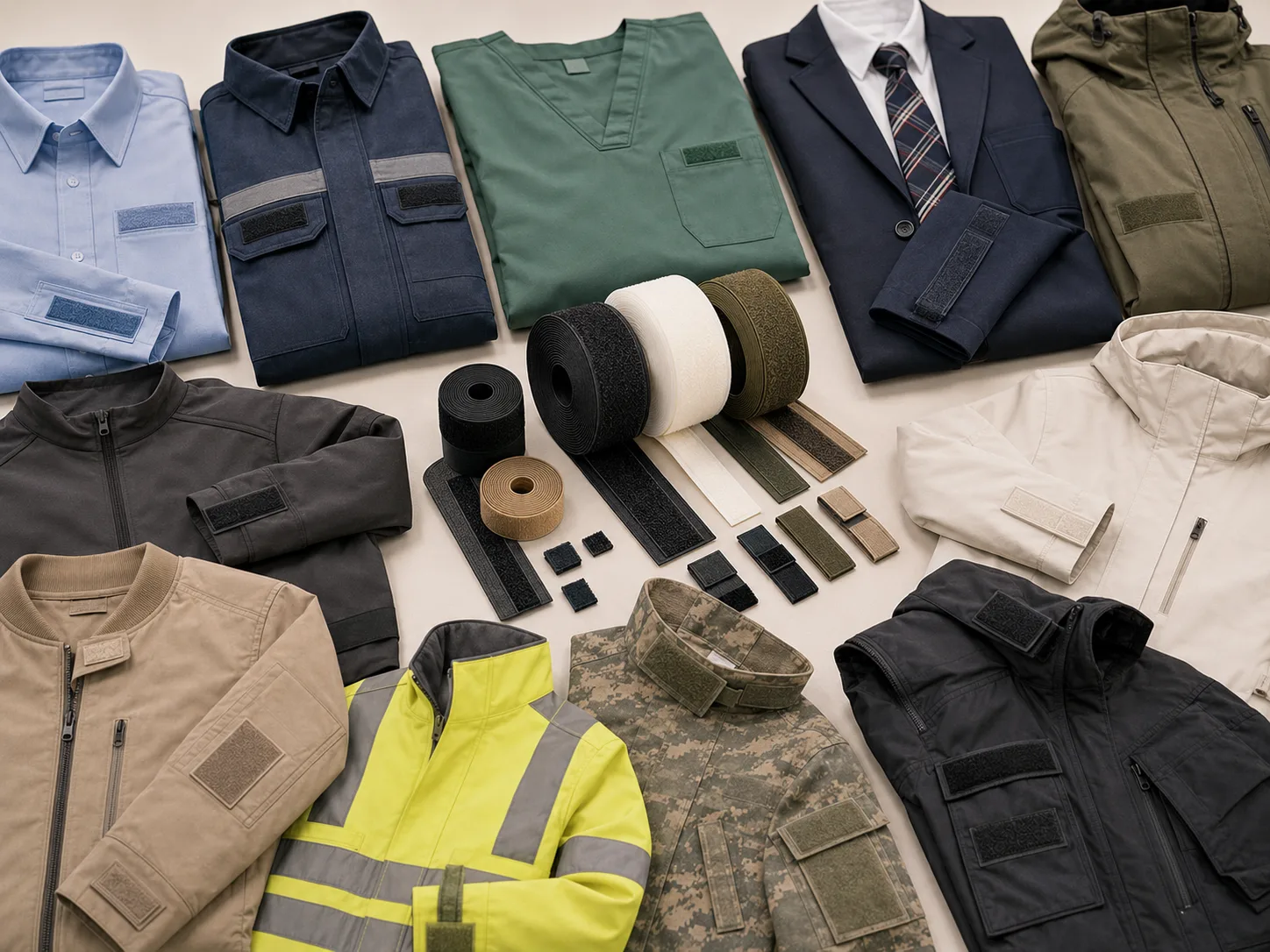
Daily-wear durability
Sew-on Gripnex or Suregrip in 20mm to 25mm widths with color-matched presentation for visible closures.
Outerwear closures
Nylon-rich Gripnex for storm flaps, front panels and cuff tabs on padded and structured outerwear.
Flexible adjustment
Lightweight woven Suregrip for adjustable panels, strap features and high-movement activewear zones.
Industrial strength
Gripnex in 25mm to 30mm widths for heavy fabrics and high-cycle uniform programs.
Panel and pocket closures
Suregrip or Walogrip for pocket flaps, divider panels and adjustable straps on textile bags.
Soft, washable closures
Suregrip with soft loop characteristics for gowns, supports and adjustable medical garments.
Easy open-close
Balanced Suregrip or Walogrip in narrow widths for cuff tabs and waist adjustments on daily-wear garments.
Specialty hook and loop for high-performance clothing
Some garment categories require hook and loop beyond standard sew-on tape. Military uniforms, fire-retardant workwear, industrial safety clothing and branded corporate apparel may need specialty constructions that standard catalogue products cannot deliver.
Fire-retardant hook and loop is used on safety clothing where the fastener must not propagate flame along the garment surface. Specify FR-rated tape validated for the relevant safety standard before approving bulk production.
Custom-dyed hook and loop matches garment colors for visible closures on uniforms, corporate apparel and fashion lines. Provide Pantone references or physical swatches and confirm color stability after washing.
High-visibility and reflective programs may combine color-matched hook and loop with specific width and placement requirements on safety vests and workwear.
For industrial-grade programs beyond standard garment lines, contact Walonium Textile for export-quality sourcing options.
Walonium product recommendations for clothes and fabric
Walonium manufactures three non-adhesive hook and loop constructions well suited to clothes and fabric applications. The right product depends on cycle requirement, fabric weight, wash program and cost position.
For uniforms, workwear, outerwear and high-cycle garment closures, evaluate Gripnex — a 100% nylon sew-on hook and loop tape. It delivers maximum wash durability, strong repeated engagement and flexible hand feel for demanding clothing applications.
For fashion apparel, sportswear, cuff tabs and balanced comfort applications, evaluate Suregrip — a 50% nylon / 50% polyester construction that offers practical wash durability, comfortable drape and manageable cost for volume garment lines.
For cost-sensitive volume programs, bags and moderate-cycle garments, evaluate Walogrip — a 30% nylon / 70% polyester blend that provides wash stability, dependable fastening and strong value on textile products.
Common mistakes when choosing Velcro for clothes
The first mistake is using adhesive-backed Velcro on garments that will be washed regularly. Adhesive bonds fail on flexible fabric substrates under moisture and mechanical stress. Sew-on attachment is the correct default for commercial clothing.
The second mistake is ignoring fabric weight. Heavy-duty hook tape on lightweight shirting creates stiffness and puckering. Soft narrow tape on heavy workwear canvas fails under load. Match width and material to the substrate.
The third mistake is skipping wash testing on the sewn garment. Loose tape samples washed in a bag do not replicate how the fastener performs once stitched, tensioned and exposed to the full garment wash environment.
The fourth mistake is choosing by price alone. A lower-cost tape may be correct for moderate-cycle fashion lines but under-specified for industrial uniform programs where failure creates contract rejections and brand damage.
Buying advice for garment and textile buyers
When requesting a quotation, share the garment category, fabric type and weight, closure location, expected wash program, open-close cycle requirement, preferred width and color, attachment method and production volume. A complete brief leads to a better product recommendation and fewer sample iterations.
Compare at least two material options in live assembly tests. Evaluate Gripnex against Suregrip on the same garment style to determine whether premium nylon performance is justified or whether a balanced blend meets the requirement at lower cost.
Think in total garment quality cost, not tape unit price. The right hook and loop specification reduces returns, improves wearer satisfaction and supports consistent production. That is where material selection becomes a measurable business outcome for garment brands and contract manufacturers.
Key takeaways
For clothes and fabric, sew-on hook and loop is the right default. Adhesive-backed Velcro suits temporary and low-wash applications only. Match nylon content to cycle requirements: Gripnex for high-cycle garments, Suregrip for balanced comfort applications and Walogrip for value-led volume lines.
Validate every specification on the finished sewn garment after laundering — not on loose tape samples. Fabric weight, wash program, width, color matching and hand feel all affect whether the closure performs in real use.
For production-line guidance on cuffs, waist tabs, uniforms and workwear, continue with the Walonium apparel and garment industry guide.
FAQ
What is the best type of Velcro for clothing that will be frequently washed?
Sew-on hook and loop is the best choice for frequently washed clothing. Nylon-rich tapes such as Gripnex maintain engagement strength across industrial and home laundering. Sew-on attachment integrates the fastener into the fabric so it survives detergent, heat and mechanical agitation better than adhesive-backed options.
Can I use adhesive-backed Velcro on clothing?
Adhesive-backed Velcro can be used on clothing for temporary applications, costume projects, quick repairs and decorative uses where washing is limited. It is not recommended for garments that require frequent laundering because fabric flexing, moisture and detergent exposure can weaken the adhesive bond over time.
Should I choose nylon or polyester-blend hook and loop for garments?
Choose nylon-rich hook and loop such as Gripnex when garments need maximum cycle life and strong engagement on uniforms and workwear. Choose Suregrip for fashion apparel and cuff tabs where comfort and wash durability must balance. Choose Walogrip when wash stability and cost efficiency matter on moderate-cycle garments.
What hook and loop works best on delicate fabrics?
Soft loop hook and loop with flexible nylon or balanced blend construction works best on delicate fabrics, baby products and lightweight garments. Use narrower widths of 15mm to 20mm, sew with fine needles and low tension, and validate hand feel after washing to avoid stiffness or skin irritation.
How do I choose hook and loop for different fabric weights?
Lightweight fabrics use 15mm to 20mm soft woven tape. Medium-weight fabrics use 20mm to 25mm sew-on tape. Heavy fabrics such as outerwear and industrial workwear need nylon-rich tape in 25mm to 30mm widths with stable sew-on attachment.
How does laundering affect hook and loop on clothes?
Laundering exposes hook and loop to detergent, heat and mechanical agitation that reduce engagement over time. Loop surfaces may collect lint and fiber debris. Hook surfaces can flatten under repeated washing. Always test the sewn garment under the actual wash program, not loose tape samples washed separately.
Can I customize Velcro colors to match my garments?
Yes. Custom-dyed hook and loop tapes are available to match garment colors, branding requirements and design preferences. Specify Pantone or physical swatch references, request batch consistency samples and confirm color stability after washing before approving bulk production.
Which Walonium products are best for clothes and fabric applications?
Gripnex (100% nylon) suits uniforms, workwear and high-cycle garment closures. Suregrip (50% nylon / 50% polyester) works for fashion apparel, cuffs and waist tabs. Walogrip (30% nylon / 70% polyester) offers dependable value for cost-sensitive volume lines and moderate-cycle garments.