On this page
What role does hook and loop play in footwear manufacturing?
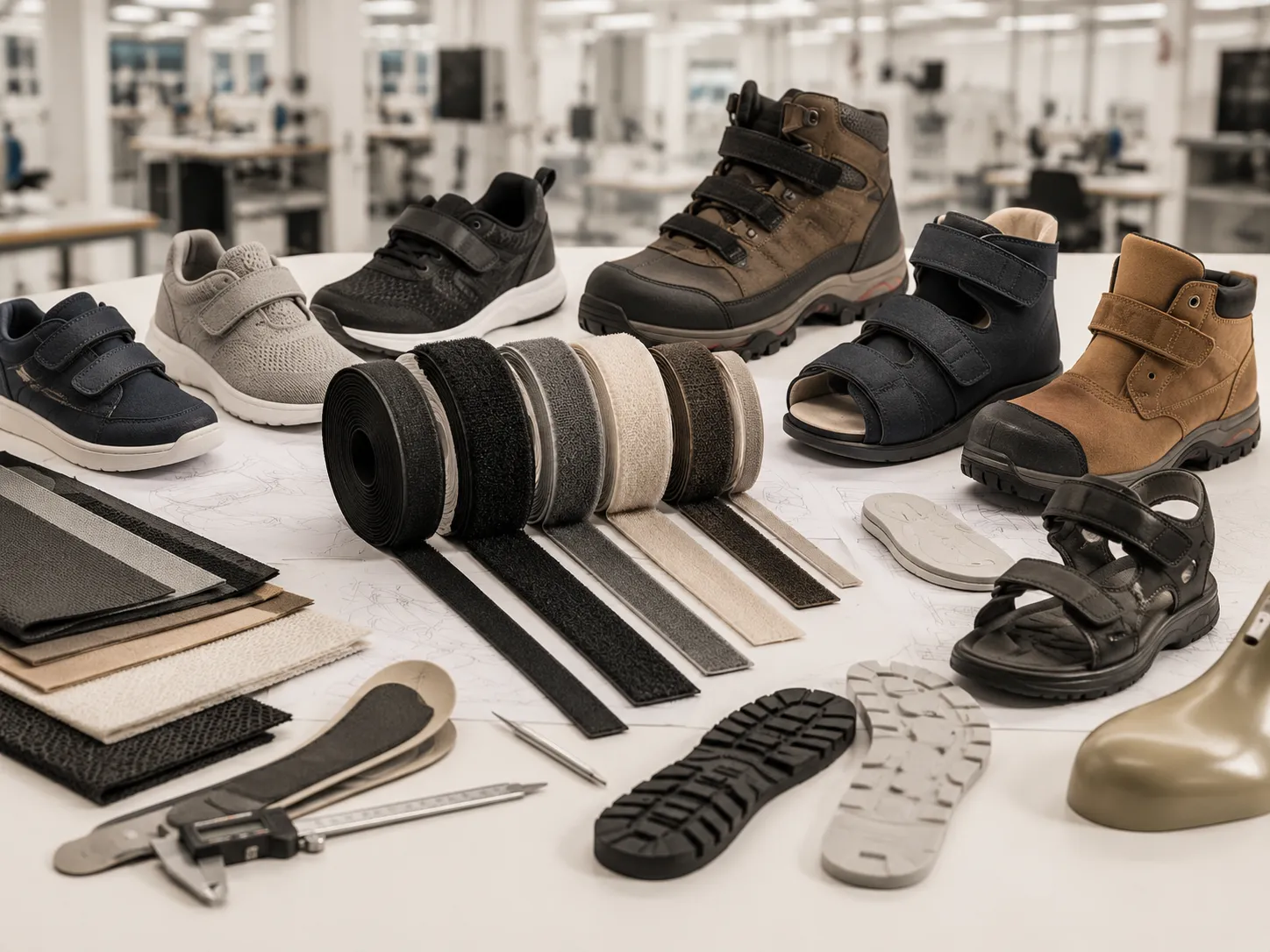
Hook and loop fasteners are among the most widely used closure systems in footwear production. They appear on kids shoes, school footwear, athletic trainers, hiking boots, sandals and casual styles where adjustable straps, instep closures and tongue retention are needed. The hook side uses molded or woven hooks that engage the loop side. The loop side uses raised fibers that receive those hooks. When pressed together, the two sides form a secure closure. When peeled apart, the fastener opens and can be reused depending on construction quality and application stress. Explore solutions by sector for footwear manufacturing requirements. For shared textile programmes, see our apparel and garment fastening guide.
For footwear manufacturers, hook and loop is not a minor trim item. It directly affects fit adjustment, strap security, wearer comfort and product warranty risk. A weak fastener leads to field complaints, returns and brand damage. A well-specified fastener supports smooth production, consistent sewing and reliable end-user performance across thousands of open-close cycles.
Most footwear applications use sew-on hook and loop rather than adhesive-backed tape. Sewing integrates the fastener into textile uppers, linings, strap substrates and reinforcement layers. This attachment method withstands the flexing, pulling and moisture exposure that shoes experience during daily wear. Understanding how hook and loop behaves once sewn into the finished strap is essential for any footwear sourcing or engineering team.
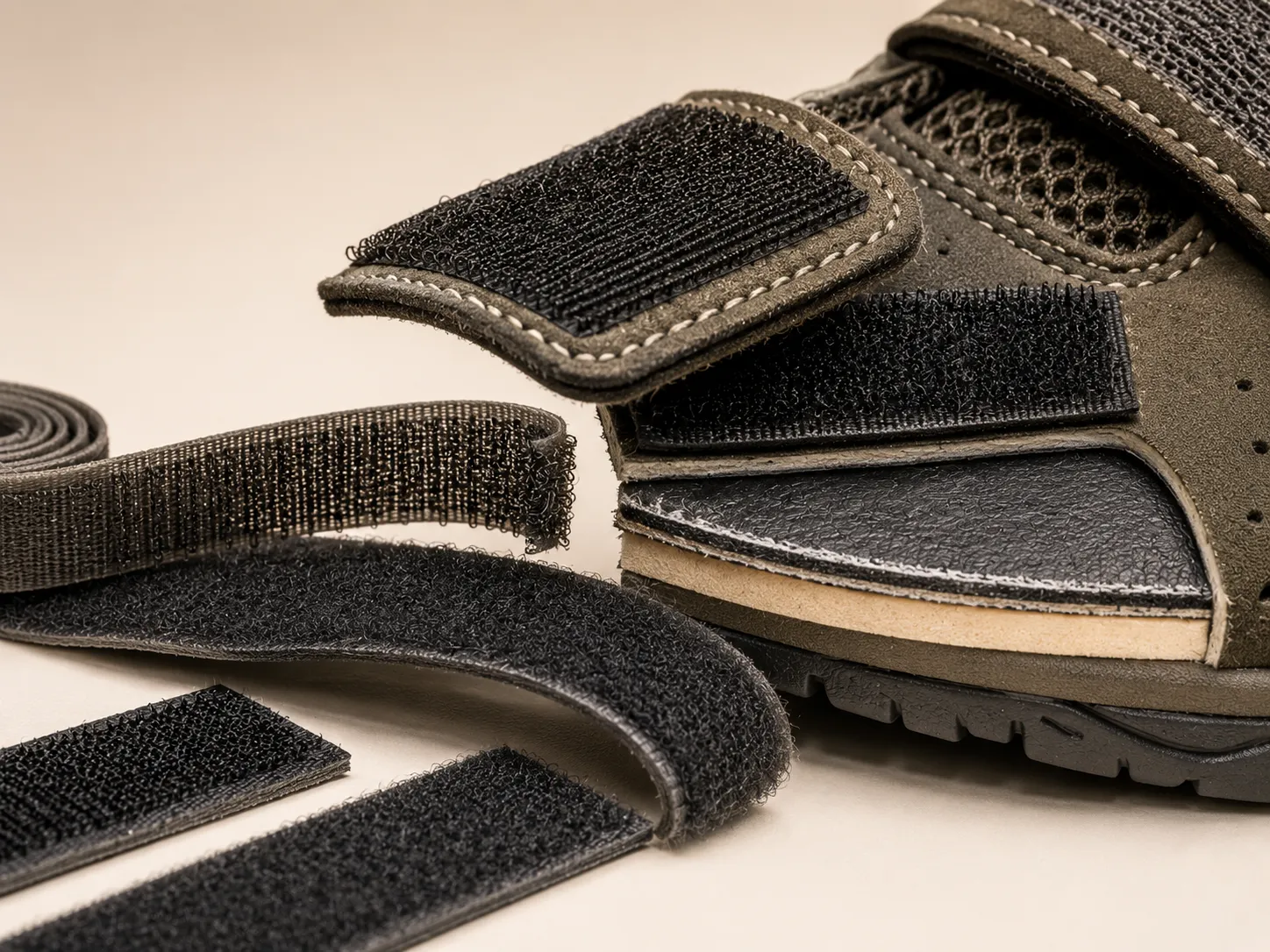
Strap durability and cycle life requirements
Strap durability is the ability of the hook and loop fastener to maintain acceptable peel strength, engagement feel and edge integrity after repeated use. In footwear, the strap is pulled during every closure. Hooks bend, loops compress and edges experience abrasion from stitching, lining contact and wearer handling. A tape that looks strong when new can weaken quickly if the material or construction is wrong for the application.
Cycle life measures how many open-close cycles the fastener can survive before engagement drops below an acceptable threshold. Kids shoes may need 3,000 to 5,000 cycles over the product life. Athletic and training footwear often requires 5,000 to 10,000 cycles or more because wearers adjust fit frequently. Sandals and casual styles may need fewer cycles but must tolerate outdoor exposure, sand abrasion and moisture without premature failure.
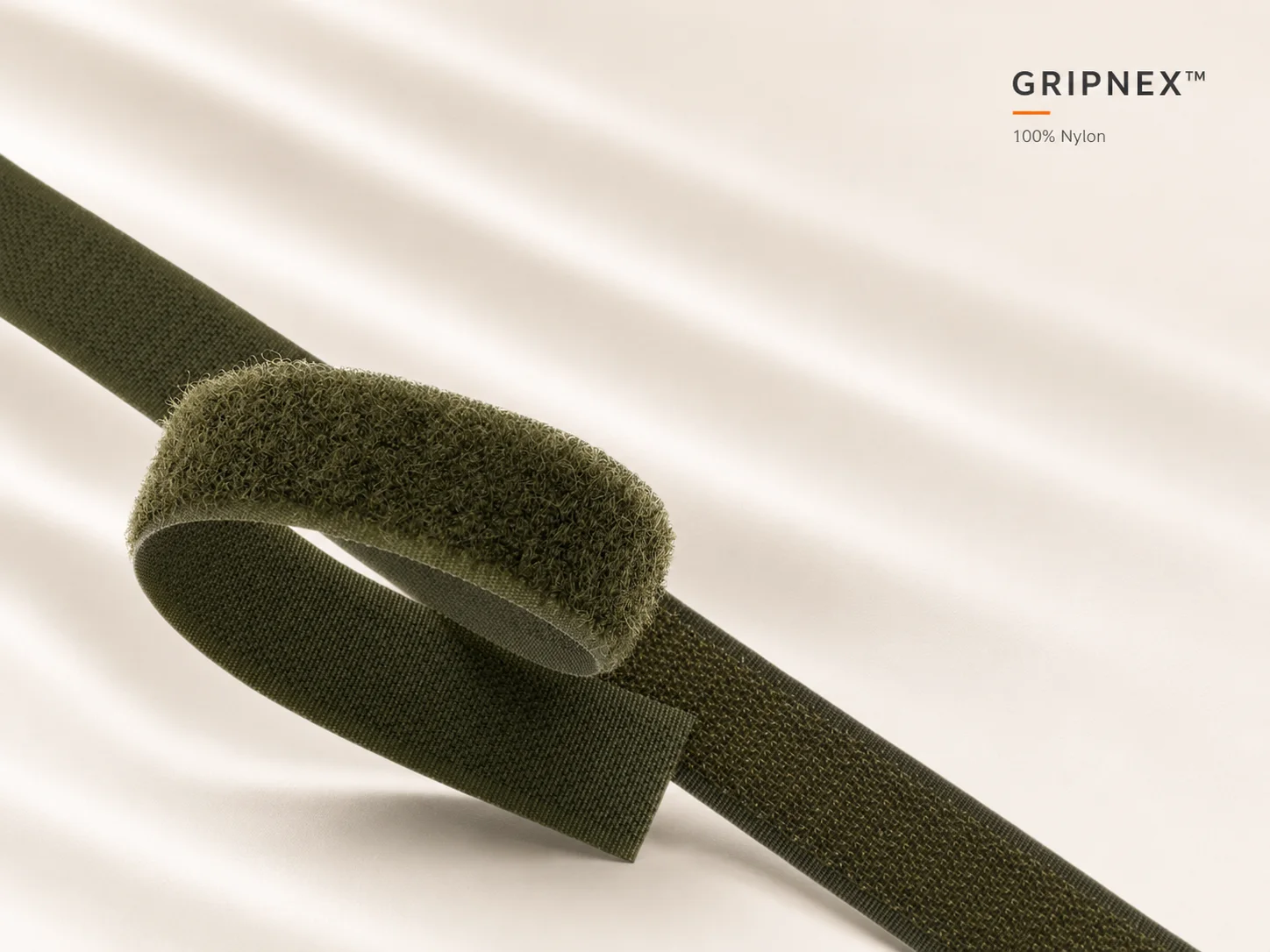
Nylon-rich hook and loop generally delivers the best cycle life because nylon fibers are flexible, abrasion-resistant and maintain strong hook engagement across repeated use. This is why premium athletic footwear, school shoes with daily adjustment and high-value casual lines often specify nylon-rich constructions such as Gripnex. Polyester-rich blends can be adequate when cycle demands are moderate and environmental stability is a higher priority than maximum engagement strength.
Comfort and wearer experience
Comfort in footwear hook and loop is about more than softness. The fastener must bend with the strap, lie flat against the foot or instep, avoid creating pressure points and remain easy to open and close for the target user. Stiff or bulky tape can make an otherwise well-designed shoe feel awkward, especially on kids footwear and low-profile athletic styles.
Flexible nylon constructions typically provide the best hand feel for straps that contact skin or thin lining materials. The tape conforms better to curved surfaces around the ankle, instep and forefoot. Edge finishing also matters. Clean-cut tape with stable backing reduces irritation where the strap edge meets the wearer. For school shoes and kids lines, ease of closure is a practical requirement because younger wearers may struggle with stiff or weak fasteners.
Comfort and durability work together. A fastener that loses engagement forces the wearer to over-tighten the strap, which reduces comfort and accelerates material fatigue. Specifying the right width, material and sew position helps the shoe feel secure without excessive pressure.
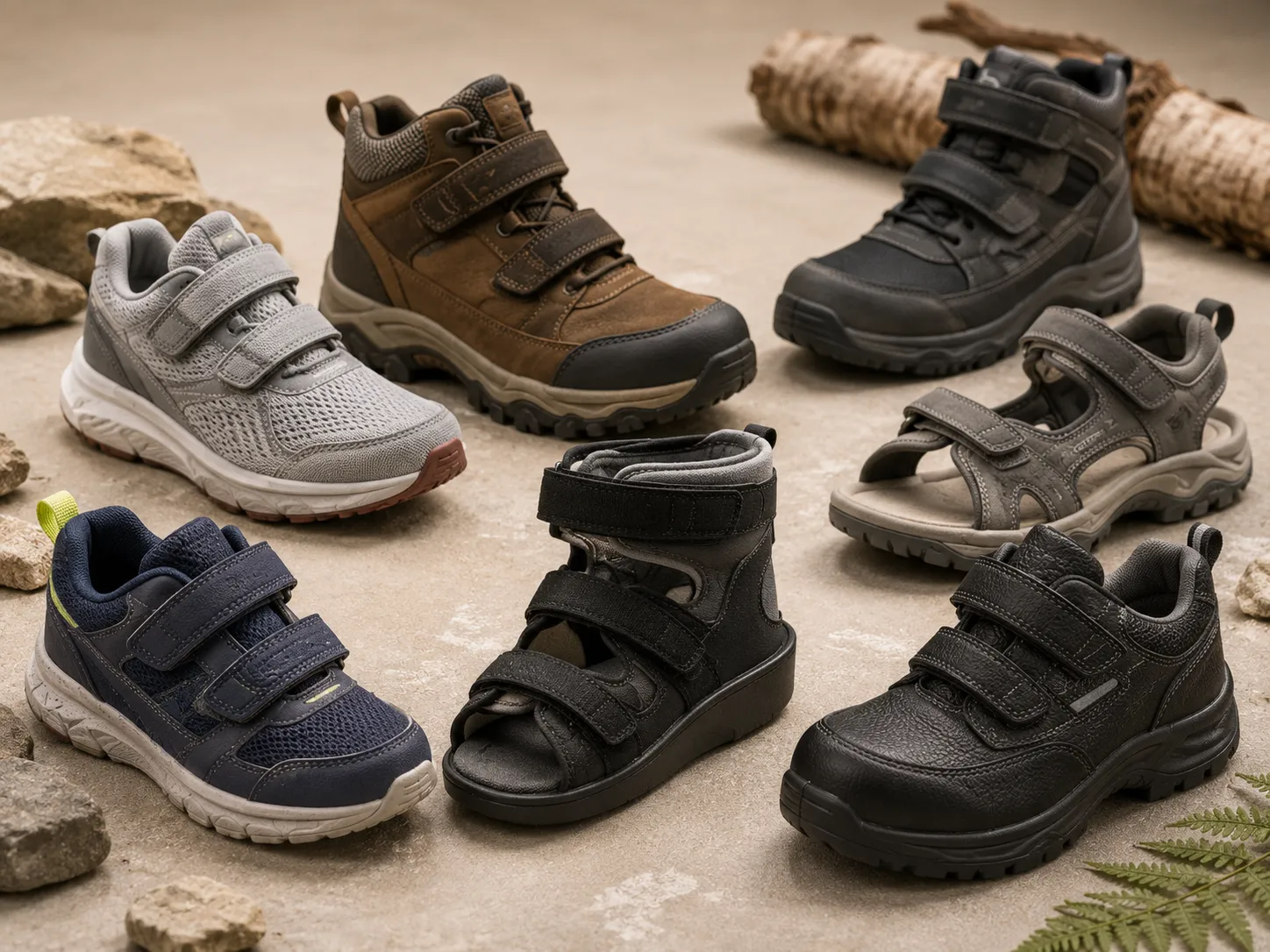
Moisture, sweat and environmental exposure
Footwear hook and loop frequently operates in moist conditions. Athletic shoes absorb sweat. Sandals face rain, humidity and UV exposure. Kids shoes encounter spills, washing and playground abrasion. Moisture affects dimensional stability, hand feel and long-term engagement strength.
Nylon absorbs more moisture than polyester, which can matter in high-sweat athletic applications or humid climates. When nylon-rich tape swells with moisture, engagement behavior and edge stability can change. Polyester-rich blends such as Walogrip absorb less moisture and often offer better dimensional stability in wet or humid conditions. This makes them a practical option for sandals, beach footwear and casual outdoor styles.
Environmental exposure also includes dust, sand, lint and fiber contamination. Loop surfaces can collect debris that reduces engagement over time. For outdoor and sandal applications, consider loop placement, strap protection and material blends that maintain acceptable performance after exposure. Always validate moisture and environmental behavior on the sewn strap, not only on raw tape samples stored in a climate-controlled room.
Kids vs athletic vs sandals: specification differences
The comparison below helps footwear sourcing and engineering teams align hook and loop specifications with product category requirements. Actual results vary by construction and brand standards, but the pattern is consistent across most footwear manufacturing programs.
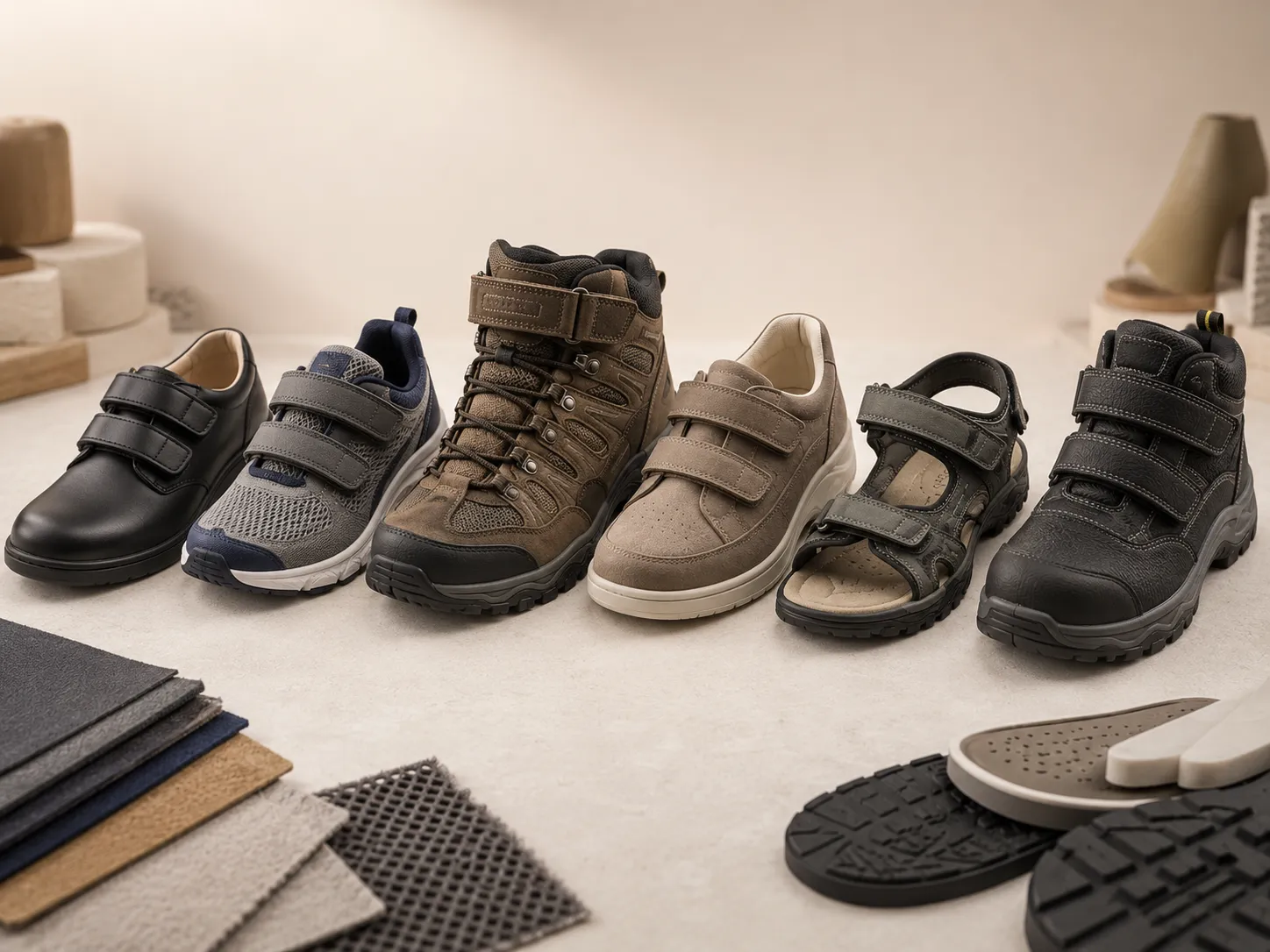
Kids Footwear
Athletic Footwear
3,000 to 5,000 cycles; daily school and play use.
5,000 to 10,000+ cycles; frequent fit adjustment during activity.
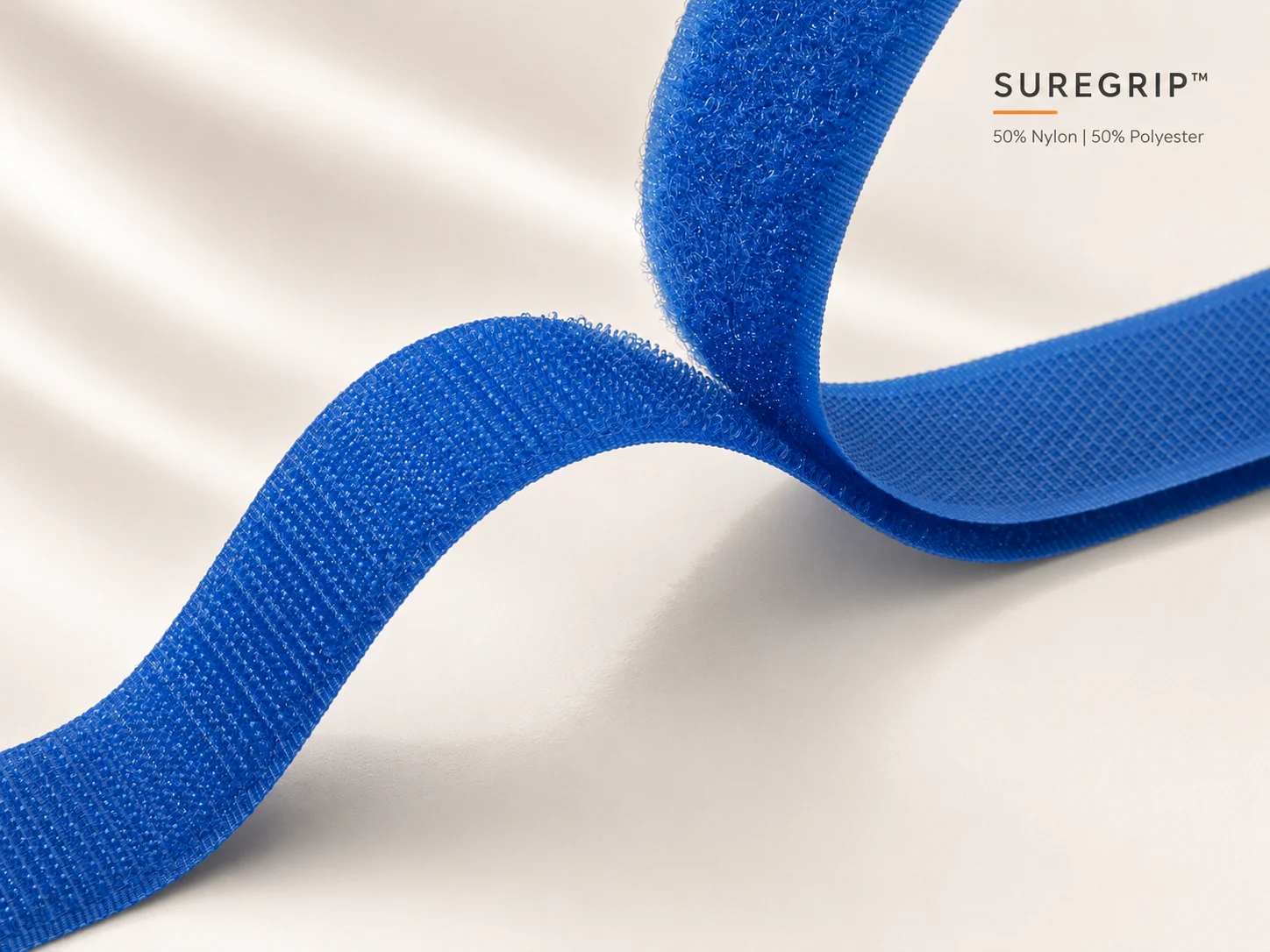
Suregrip (50/50) for comfort, value and practical durability.
Gripnex (100% nylon) for maximum engagement and cycle life.
Typically 20mm to 25mm sew-on tape on straps and instep closures.
Typically 25mm to 50mm for stronger hold on high-stress straps.
Soft, flexible tape; easy open-close for younger wearers.
Secure hold with flexible hand feel; must not create pressure points.
Moderate exposure; spills, washing and playground use.
Must tolerate perspiration and repeated flexing in humid conditions.
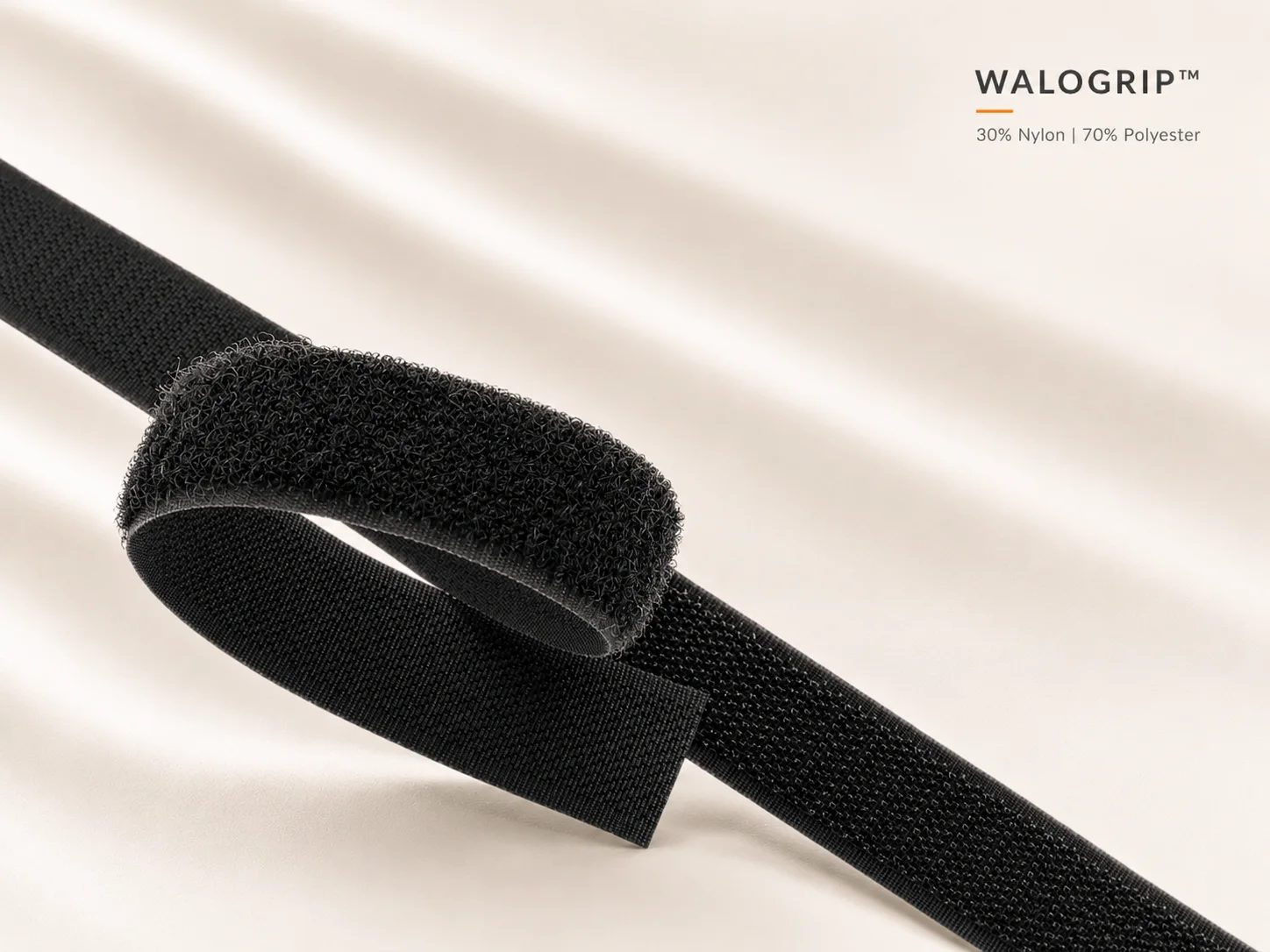
Sandals and casual outdoor footwear occupy a third category with distinct requirements. These styles face direct moisture, UV exposure, sand abrasion and less frequent but still meaningful open-close cycles. A polyester-rich blend such as Walogrip often provides the right balance of moisture stability, cost efficiency and dependable fastening for sandal straps, slide adjustments and casual summer lines. Widths of 20mm to 30mm are common. Validate outdoor performance on the complete strap assembly before approving bulk production.
Sew-on attachment for footwear production
Sew-on hook and loop is the standard attachment method in footwear manufacturing. The tape is stitched directly into the upper, strap, lining or reinforcement layer using industrial sewing machines. This creates a mechanical bond that withstands the pulling, flexing and environmental stress footwear experiences during wear.
Key sew-on considerations include needle type, stitch density, seam position and edge finishing. Fine needles and appropriate thread tension help prevent puckering and edge distortion. Stitch density should secure the tape without perforating it so heavily that peel strength drops. Hook and loop placement should account for strap alignment, loop orientation and wearer access.
Pre-cut strap lengths and matched hook-loop pairs reduce pairing errors on the line. Consistent roll widths and clean edges improve sewing throughput and reduce rework. For high-volume footwear factories, specify packaging formats that support quick material handling at the cutting and stitching stations.
Material selection: nylon vs blends
Material selection is one of the most important decisions in footwear hook and loop specification. Nylon offers flexibility, abrasion resistance and strong repeated engagement. Polyester offers lower moisture absorption and better dimensional stability. Blended constructions balance these properties for specific footwear categories.
100% nylon (Gripnex) is the premium choice for athletic, training and high-cycle footwear where maximum strap durability and engagement strength are required. It delivers the best cycle life and flexible hand feel for demanding applications.
50% nylon / 50% polyester (Suregrip) suits kids footwear, school shoes and balanced applications where comfort, practical durability and manageable cost matter. It offers a middle path between premium nylon performance and polyester stability.
30% nylon / 70% polyester (Walogrip) works for sandals, casual footwear and cost-sensitive volume lines where moisture stability and dependable value are higher priorities than maximum cycle life. It is a practical option when the closure is not opened dozens of times per day.
For a deeper material comparison, see the Walonium guide on nylon vs polyester hook and loop tape.
Production line specifications and sourcing
Footwear production lines require consistent, repeatable hook and loop supply. Variations in width, color, edge quality or roll length create stoppages at cutting and sewing stations. When sourcing hook and loop for footwear, specify the following production line parameters in your purchase order and sample approval process.
1. Tape width and color. Confirm exact widths (typically 20mm, 25mm, 30mm or 50mm) and color matching requirements against upper and strap materials. Color consistency across batches matters for brand presentation.
2. Roll length and packaging. Specify roll lengths that match cutting station workflow. Standard export packaging with clear width and material labeling reduces material mix-ups on shared lines.
3. Matched hook-loop pairs. Request pre-matched hook and loop sets to eliminate pairing errors. For automated cutting lines, pre-cut strap lengths further reduce handling time.
4. Edge quality and backing stability. Clean-cut edges sew more consistently. Stable backing prevents puckering and distortion under needle penetration.
5. Quality tolerance and cycle life target. Define acceptable peel strength range, cycle life minimum and visual defect tolerance. Include batch testing requirements for high-volume programs.
6. Needle and stitch compatibility. Share your needle type, stitch density and substrate details with the supplier so samples reflect actual production conditions.
OEM product recommendations from Walonium
Walonium offers three non-adhesive hook and loop constructions well suited to footwear manufacturing. The right product depends on footwear category, cycle life requirement, comfort needs and cost position.
For premium athletic, training and high-cycle footwear, evaluate Gripnex, a 100% nylon sew-on hook and loop tape. It delivers maximum strap durability, strong repeated engagement and flexible hand feel for demanding footwear applications.
For kids footwear, school shoes and balanced comfort applications, evaluate Suregrip, a 50% nylon / 50% polyester construction. It offers practical durability, comfortable strap feel and manageable cost for volume footwear lines.
For sandals, casual footwear and cost-sensitive programs, evaluate Walogrip, a 30% nylon / 70% polyester blend. It provides moisture stability, dependable fastening and value for outdoor and casual styles.
Footwear applications by category
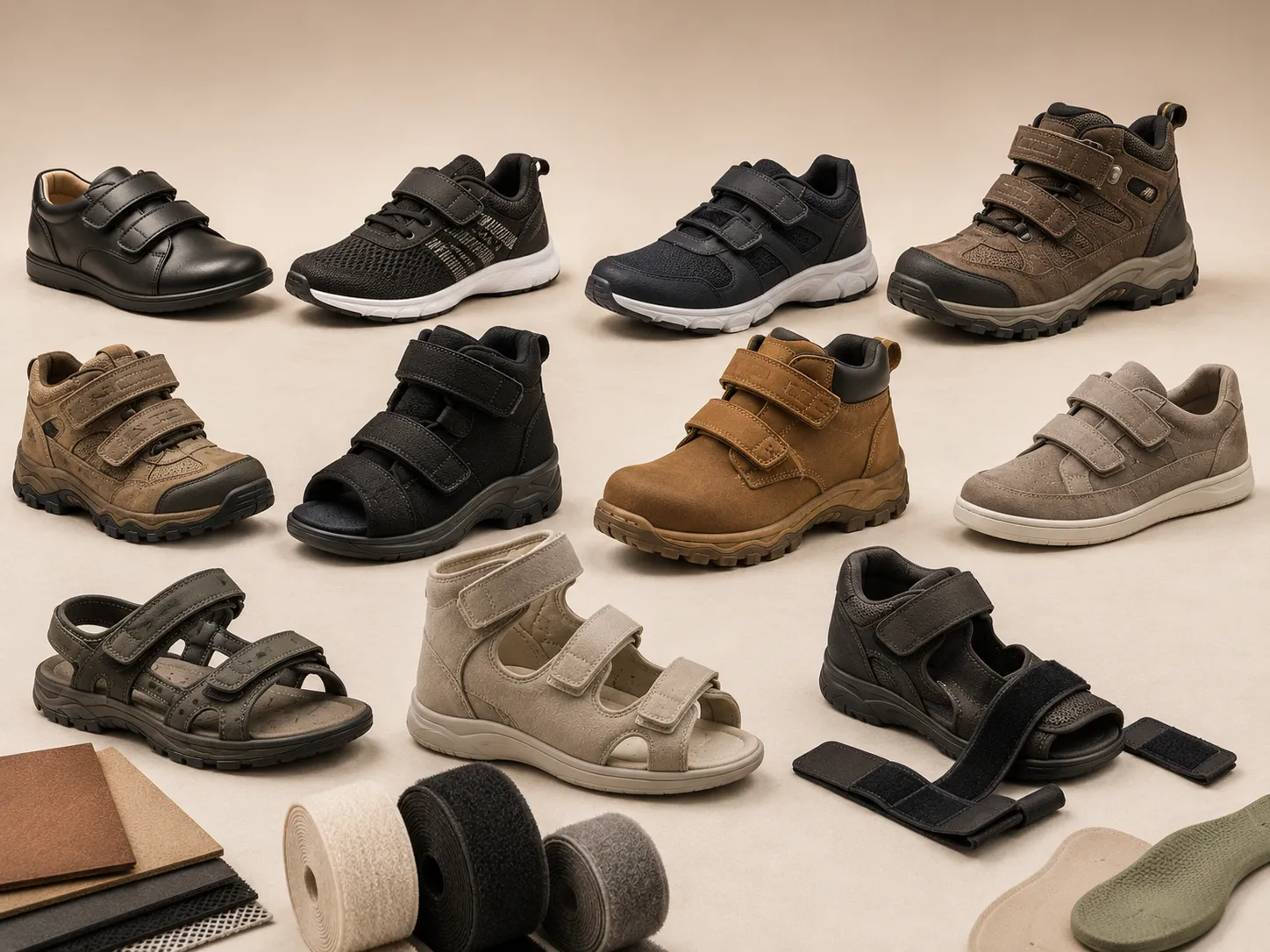
School and play footwear
Balanced Suregrip tape for daily adjustment, comfort and practical durability on straps and instep closures.
Training and running shoes
Nylon-rich Gripnex for high cycle life, secure hold and flexible performance under repeated fit adjustment.
Outdoor and beach styles
Polyester-rich Walogrip for moisture stability, UV tolerance and cost-efficient strap fastening.
Everyday slip-on and strap shoes
Suregrip or Walogrip depending on cycle demand and price position in the product range.
Trail and outdoor boots
Gripnex for high-stress strap closures that must survive abrasion, flexing and repeated adjustment.
Work and protective footwear
Nylon-rich tape for secure strap retention where reliable closure under stress is mandatory.
Designer and lifestyle footwear
Gripnex for premium hand feel, consistent engagement and brand-quality strap performance.
Common specification mistakes in footwear hook and loop
The first mistake is choosing hook and loop by price alone. A lower-cost tape can be correct for sandals or casual lines, but using it on athletic footwear with high cycle demands creates warranty risk and field complaints.
The second mistake is ignoring moisture and sweat exposure. Athletic and outdoor footwear face conditions that change engagement behavior over time. Test the sewn strap under humid and wet conditions before approving the specification.
The third mistake is specifying the wrong width. Too narrow a tape reduces holding area and peel strength. Too wide a tape adds bulk and can affect comfort, especially on kids and low-profile styles.
The fourth mistake is approving samples without sewing them into the actual upper or strap substrate. Stitch tension, needle type and edge position all change how the fastener performs on the production line and in the field.
Buying advice for footwear procurement teams
When requesting a quotation, share the footwear category, strap geometry, substrate material, expected cycle life, moisture exposure, preferred width and color, sew-on attachment method, production volume and packaging requirement. A better brief leads to a better recommendation and fewer line trials.
For OEM footwear programs, compare at least two product options in live assembly tests. For example, evaluate Gripnex for premium athletic lines, then compare Suregrip for kids or casual alternatives. Document cycle life, comfort feedback, sew-ability and peel strength after environmental exposure.
Think in total product cost, not tape cost alone. The right hook and loop specification reduces field failures, improves wearer satisfaction and supports consistent production. That is where material selection becomes a measurable business outcome for footwear brands and contract manufacturers.
Key takeaways
Hook and loop fasteners are a critical component in footwear manufacturing. Strap durability, cycle life, comfort and moisture resistance must be evaluated together on the finished sewn strap, not on loose tape samples alone.
For Walonium buyers, the practical mapping is simple: Gripnex for premium athletic and high-cycle footwear, Suregrip for kids and balanced comfort applications, and Walogrip for sandals and cost-sensitive casual lines.
Sew-on attachment remains the standard for footwear production. Specify width, material, cycle life, packaging and quality tolerance for your line. Validate the specification on the actual strap assembly before scaling production.
FAQ
What hook and loop tape is best for footwear straps?
Nylon-rich sew-on hook and loop is usually the best starting point for footwear straps. Gripnex (100% nylon) suits high-cycle athletic and premium footwear. Suregrip (50% nylon / 50% polyester) works for balanced comfort and durability. Walogrip (30% nylon / 70% polyester) suits cost-sensitive kids and sandal lines.
How many open-close cycles should footwear hook and loop withstand?
Kids shoes may need 3,000 to 5,000 cycles. Athletic footwear often requires 5,000 to 10,000 cycles or more. Sandals and casual styles may need fewer cycles but must tolerate moisture and UV exposure. Always validate cycle life on the finished strap assembly.
Should footwear manufacturers use sew-on or adhesive hook and loop?
Sew-on hook and loop is the standard for footwear manufacturing. It withstands flexing, washing and repeated pulling better than adhesive-backed tape in most shoe applications. Adhesive hook and loop is occasionally used for temporary fixtures, but sew-on remains primary for lasting strap closures.
How does moisture and sweat affect hook and loop in shoes?
Moisture and sweat can affect dimensional stability, hand feel and engagement strength. Nylon absorbs more moisture than polyester. Polyester-rich blends like Walogrip offer better moisture stability. Test the complete strap after simulated wear in humid conditions before approving production.
What width and material should I specify for kids vs athletic footwear?
Kids footwear typically uses 20mm to 25mm sew-on tape with Suregrip for comfort and value. Athletic footwear often uses 25mm to 50mm nylon-rich Gripnex for stronger hold and higher cycle life. Sandals may use 20mm to 30mm polyester-rich Walogrip for moisture stability.
Which Walonium products are recommended for footwear manufacturing?
Gripnex (100% nylon) is recommended for premium athletic and high-cycle footwear. Suregrip (50% nylon / 50% polyester) suits kids shoes and balanced comfort applications. Walogrip (30% nylon / 70% polyester) works for sandals, casual styles and cost-sensitive volume lines.
What production line specs should footwear buyers request?
Specify tape width, color, material blend, sew-on backing type, roll length, packaging format, peel strength, cycle life target and quality tolerance. Request consistent roll widths, clean edges, matched hook-loop pairs and pre-cut strap lengths if your line uses automated cutting.
Should footwear OEM teams test hook and loop before mass production?
Yes. Test samples sewn into the actual upper or strap material under real flexing, moisture, abrasion and repeated open-close conditions. Line trials with at least 500 to 1,000 closure cycles reveal more than desk-side peel tests.