On this page
What role does hook and loop play in apparel and garment manufacturing?
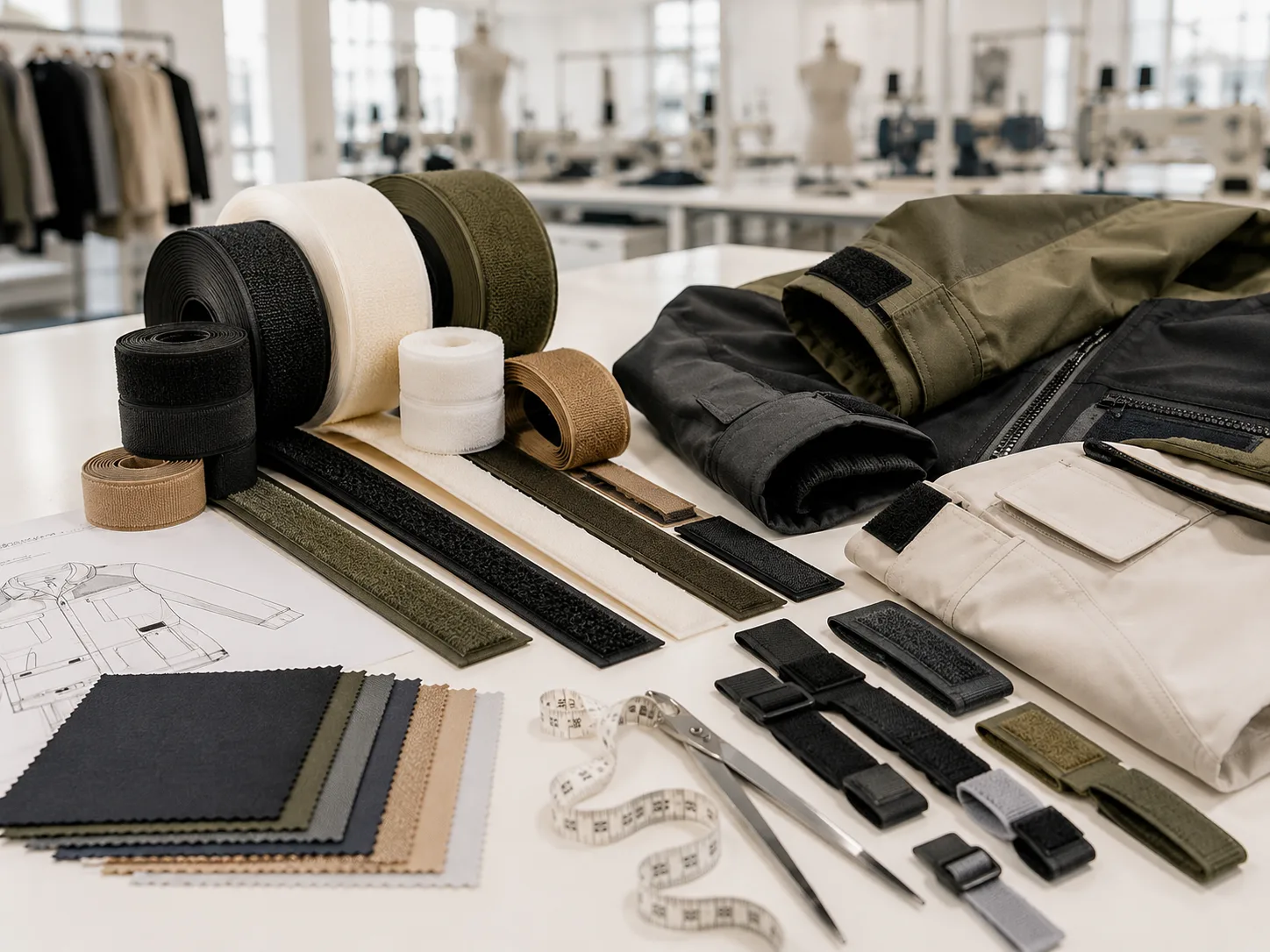
Hook and loop fasteners are among the most widely used closure systems in apparel production. They appear on uniform shirts, workwear jackets, medical scrubs, children's wear, activewear, outerwear and fashion garments where adjustable fit, quick closure and repeated open-close convenience are needed. The hook side uses molded or woven hooks that engage the loop side. The loop side uses raised fibers that receive those hooks. When pressed together, the two sides form a secure closure. When peeled apart, the fastener opens and can be reused depending on construction quality and application stress. See our industry-specific solutions for apparel and garment programmes.
For apparel manufacturers, hook and loop is not a minor trim item. It directly affects fit adjustment, garment functionality, wearer comfort and product quality perception. A weak fastener leads to returns, brand complaints and warranty risk. A well-specified fastener supports smooth sewing, consistent color presentation and reliable performance through industrial and home laundering cycles.
Most apparel applications use sew-on hook and loop rather than adhesive-backed tape. Sewing integrates the fastener into fabric panels, cuffs, waist tabs, plackets and reinforcement layers. This attachment method withstands the flexing, pulling and wash exposure that garments experience throughout their service life. Understanding how hook and loop behaves once sewn into the finished garment is essential for any apparel sourcing, technical design or production engineering team.
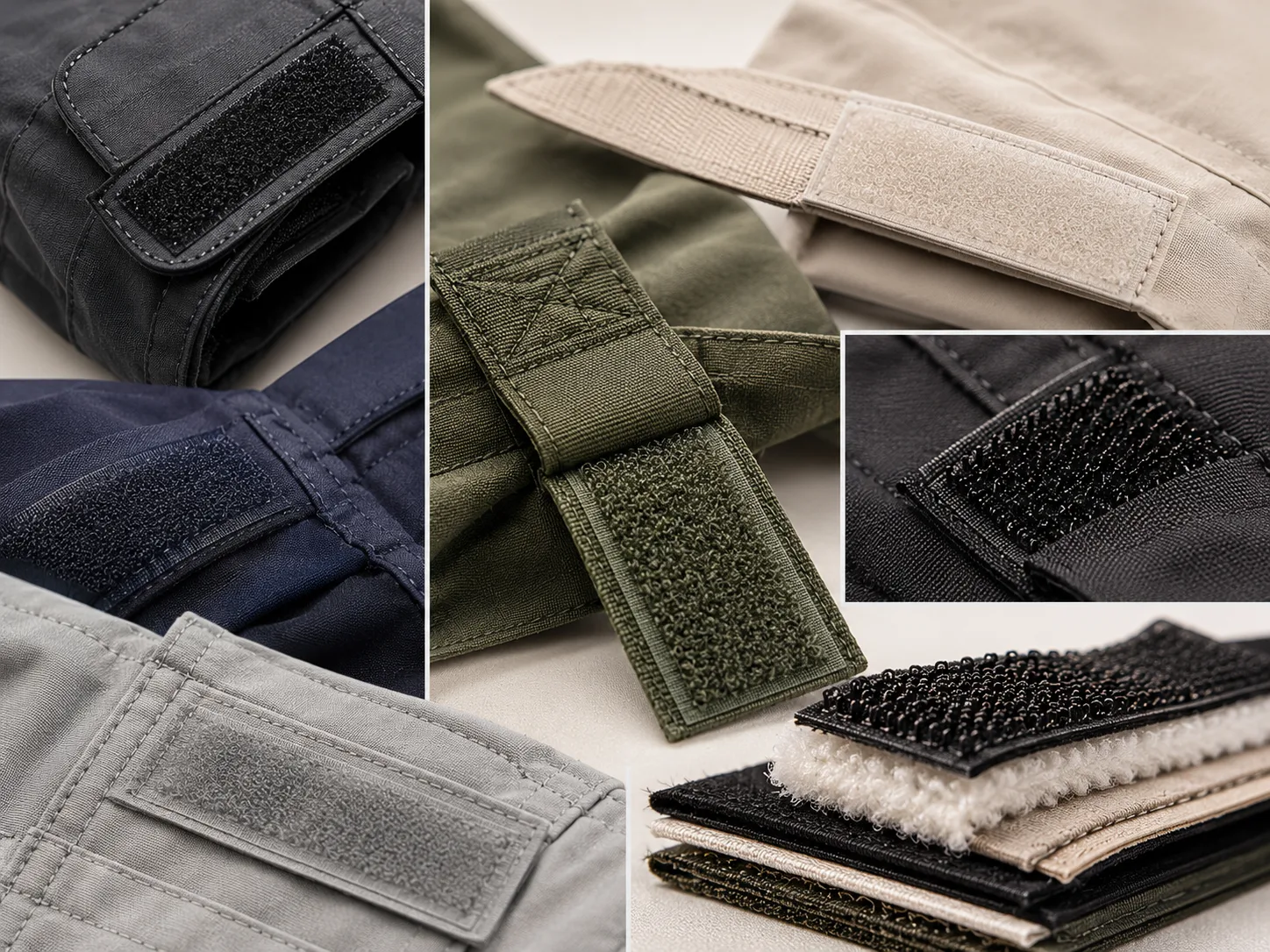
Sew-on closures for garments
Sew-on hook and loop is the standard attachment method in apparel and garment manufacturing. The tape is stitched directly into the fabric using industrial sewing machines at cuff stations, waist tab lines, placket areas and closure panels. This creates a mechanical bond that withstands the pulling, flexing and laundering stress garments experience during wear and care.
Key sew-on considerations include needle type, stitch density, seam position and edge finishing. Fine needles and appropriate thread tension help prevent puckering on lightweight fabrics such as shirting and scrubs. Stitch density should secure the tape without perforating it so heavily that peel strength drops. Hook and loop placement should account for garment alignment, loop orientation and wearer access, especially on uniform closures and workwear front panels.
Pre-cut tab lengths and matched hook-loop pairs reduce pairing errors on the line. Consistent roll widths and clean edges improve sewing throughput and reduce rework. For high-volume garment factories, specify packaging formats that support quick material handling at cutting and stitching stations. Compared with buttons, snaps or zippers, sew-on hook and loop often simplifies assembly when the design calls for adjustable or quick-release closure.
Cuffs, waist tabs and adjustable closures
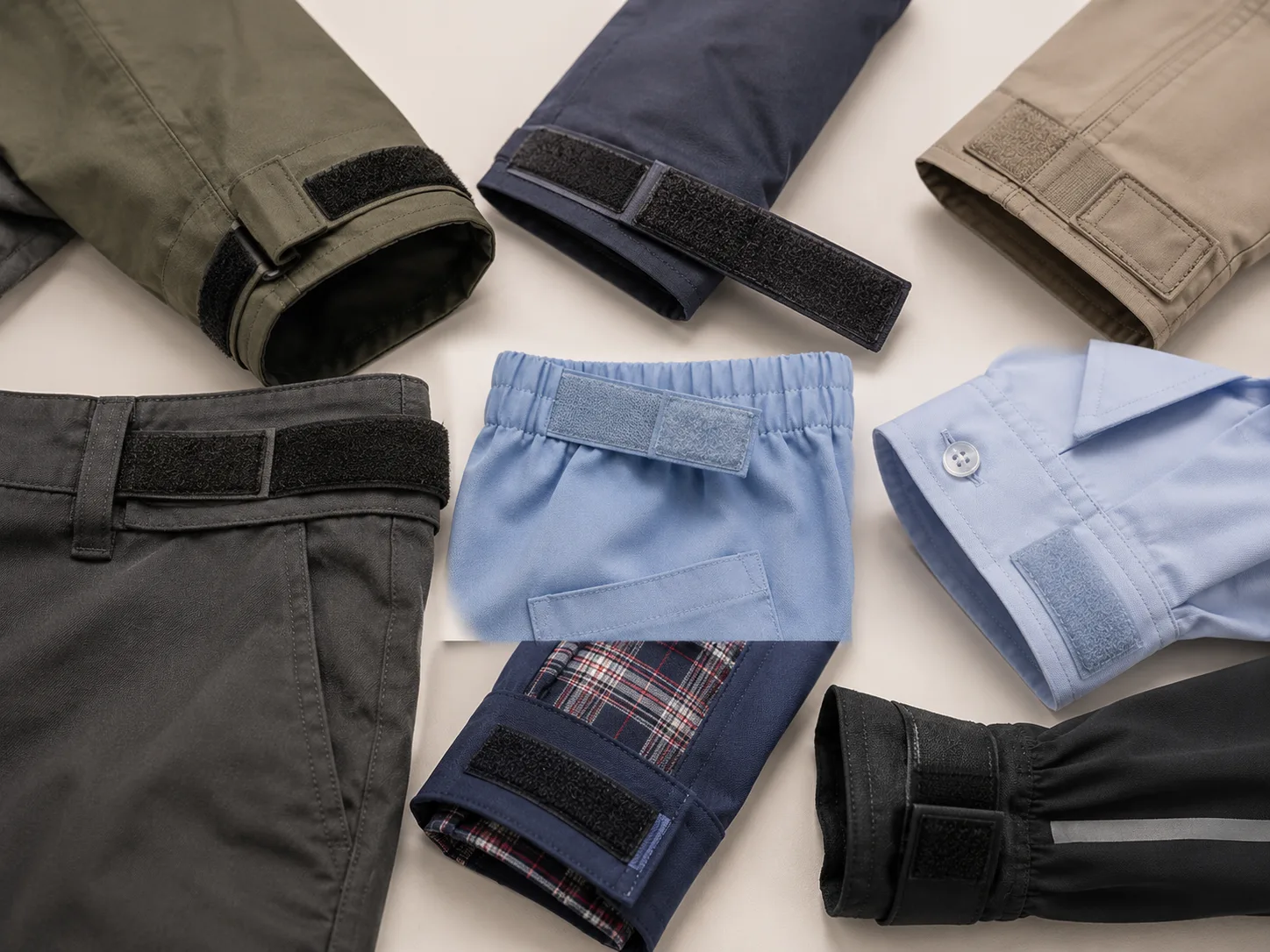
Cuff and waist tab applications are among the most common hook and loop uses in apparel. Sleeve cuff tabs allow fit adjustment on uniform shirts, workwear jackets and outerwear without adding bulk from additional buttons. Waist tabs on trousers, skirts and medical scrubs provide quick size adjustment for different body types within a single SKU range.
Width selection matters for both function and aesthetics. Cuff closures typically use 15mm to 20mm sew-on tape for lightweight adjustment tabs where minimal bulk is essential. Waist tabs and uniform closures often use 20mm to 25mm tape for adequate holding area without creating stiffness against the body. Workwear and heavy-duty uniform applications may use 25mm to 30mm tape where stronger engagement is required under repeated daily use.
Soft hand feel is especially important on cuff tabs that contact skin directly. Flexible nylon or balanced blend constructions lie flat against the wrist and forearm without creating pressure points. Edge finishing also matters. Clean-cut tape with stable backing reduces irritation where the tab edge meets the wearer. For children's wear and medical scrubs, ease of open-close is a practical requirement because users may operate the closure frequently throughout the day.
Uniforms and workwear applications
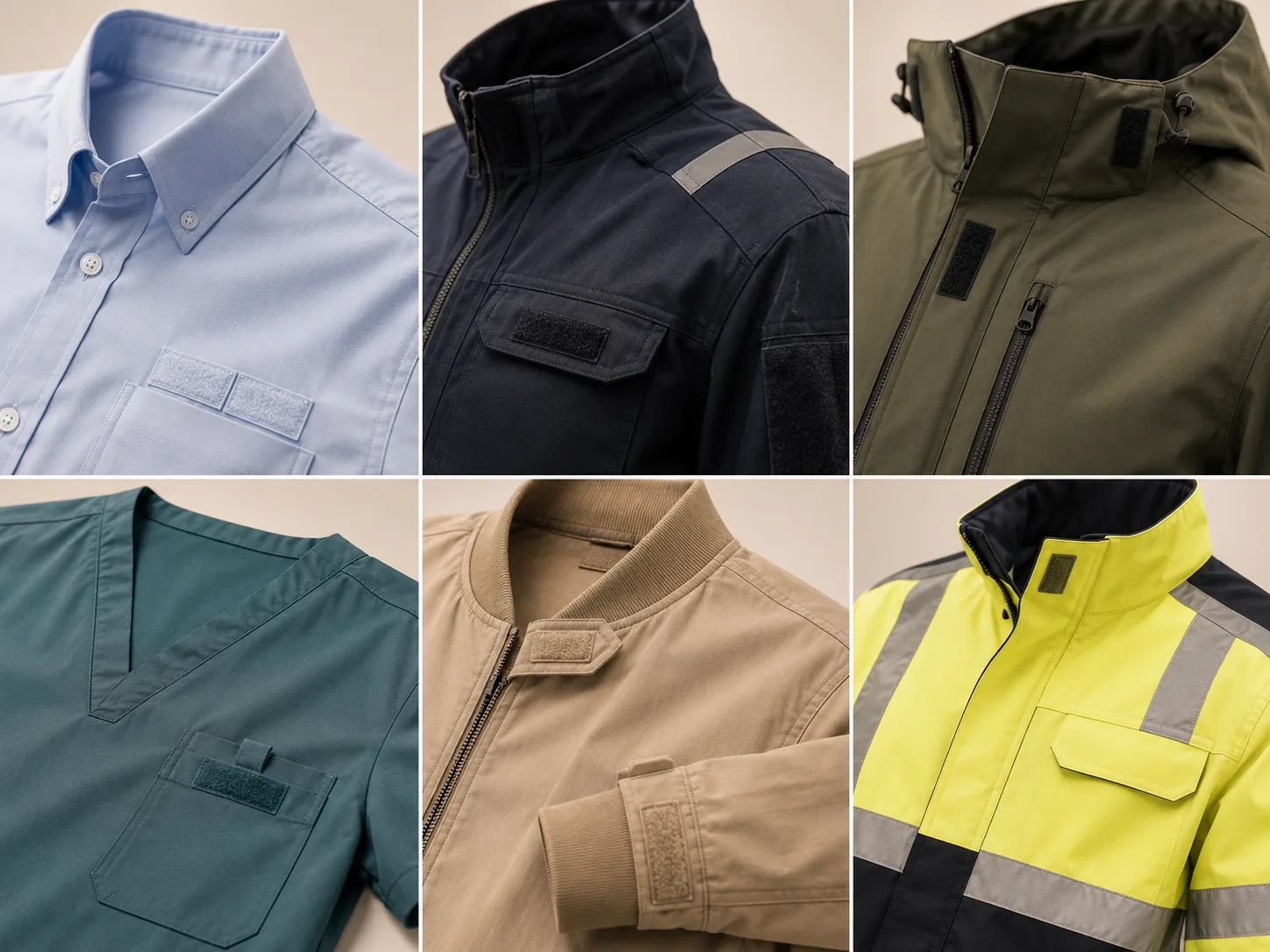
Uniform and workwear programs place demanding requirements on hook and loop fasteners. Corporate uniforms, hospitality wear, healthcare scrubs, security uniforms and industrial workwear all need closures that survive daily use, industrial laundering and visible brand presentation. The fastener must maintain engagement strength after hundreds of open-close cycles and dozens of wash cycles.
Uniform applications often involve visible closures on chest pockets, sleeve tabs, collar stays and front plackets. Color matching is critical because mismatched hook and loop undermines the professional appearance of corporate and institutional apparel. Workwear adds further demands: abrasion from tools and equipment, exposure to oils and chemicals in some environments, and heavier fabric substrates that require stable sew-on attachment.
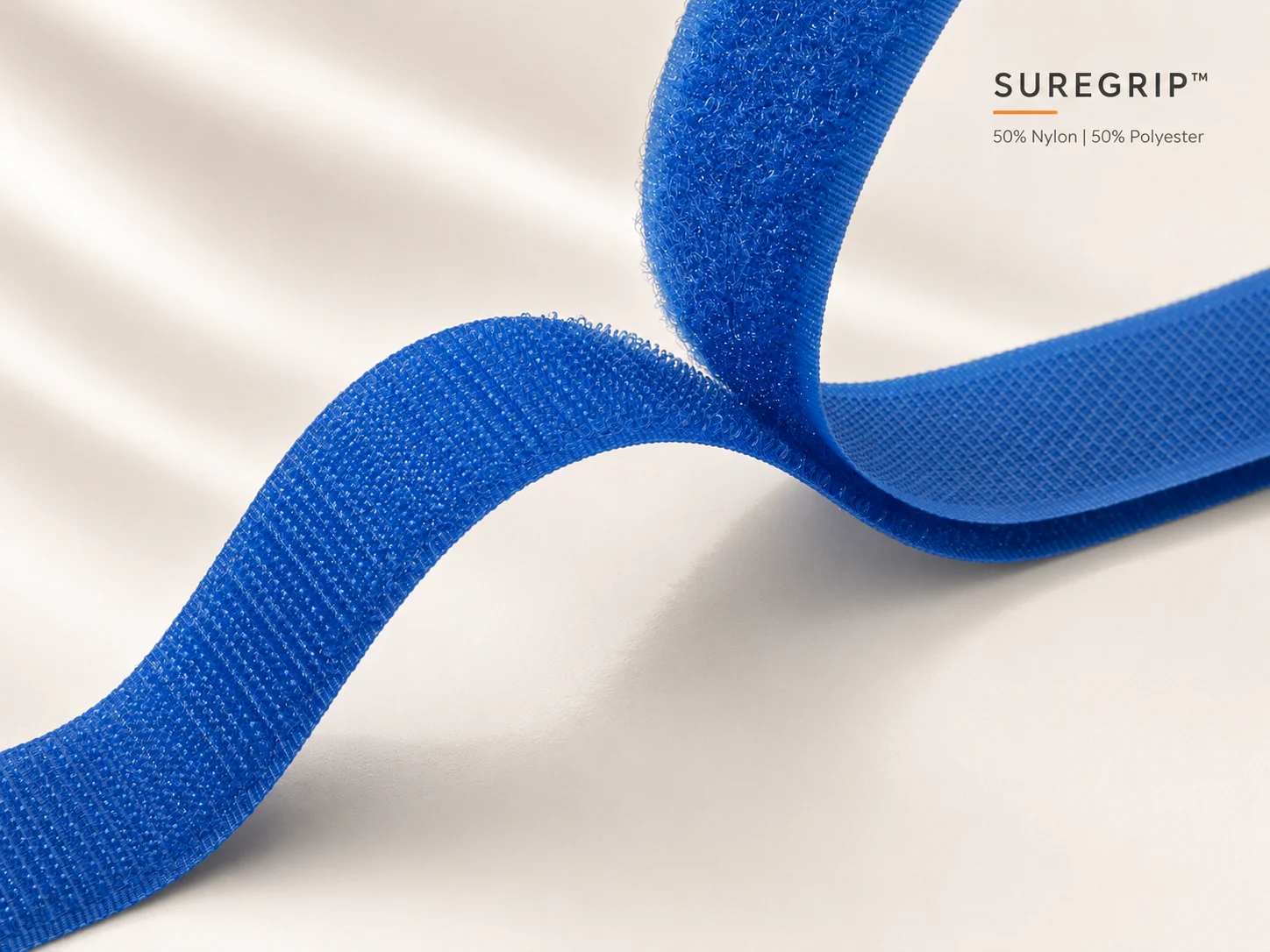
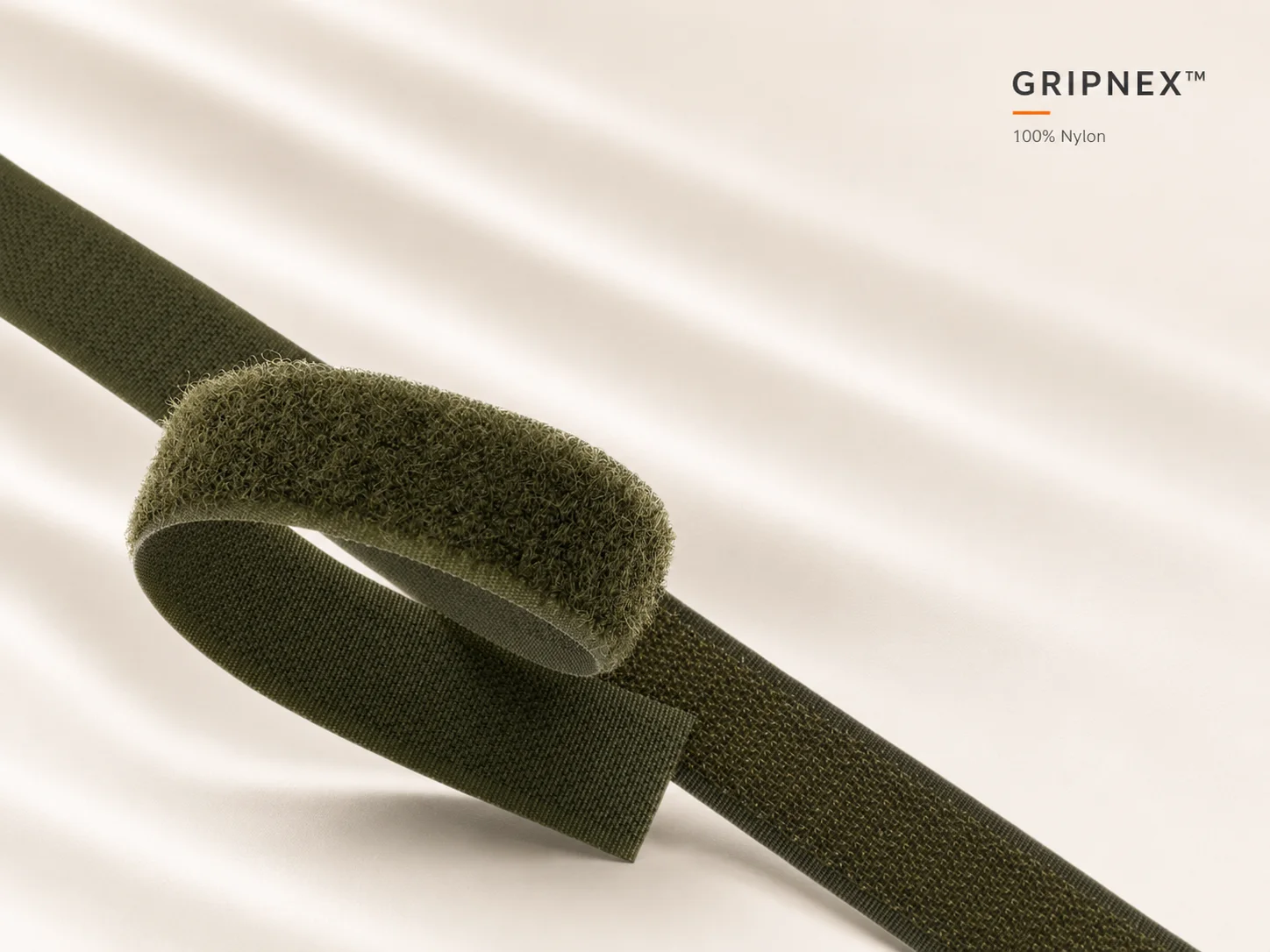
Nylon-rich constructions such as Gripnex generally deliver the best cycle life and engagement strength for uniform and workwear programs where the closure is used daily. For lighter uniform shirts and hospitality wear where soft hand feel and moderate cycle demands matter, Suregrip offers a balanced alternative. Specify the tape for the actual wash program and wear cycle your uniform contract requires, not for a generic catalogue rating.
Washing and laundering durability
Wash durability is one of the most critical performance requirements for apparel hook and loop. Garments face home laundering, industrial wash programs, dry cleaning in some categories and repeated moisture cycles throughout their service life. Detergent chemistry, wash temperature, mechanical agitation and drying methods all affect how hook and loop maintains engagement strength and edge integrity over time.
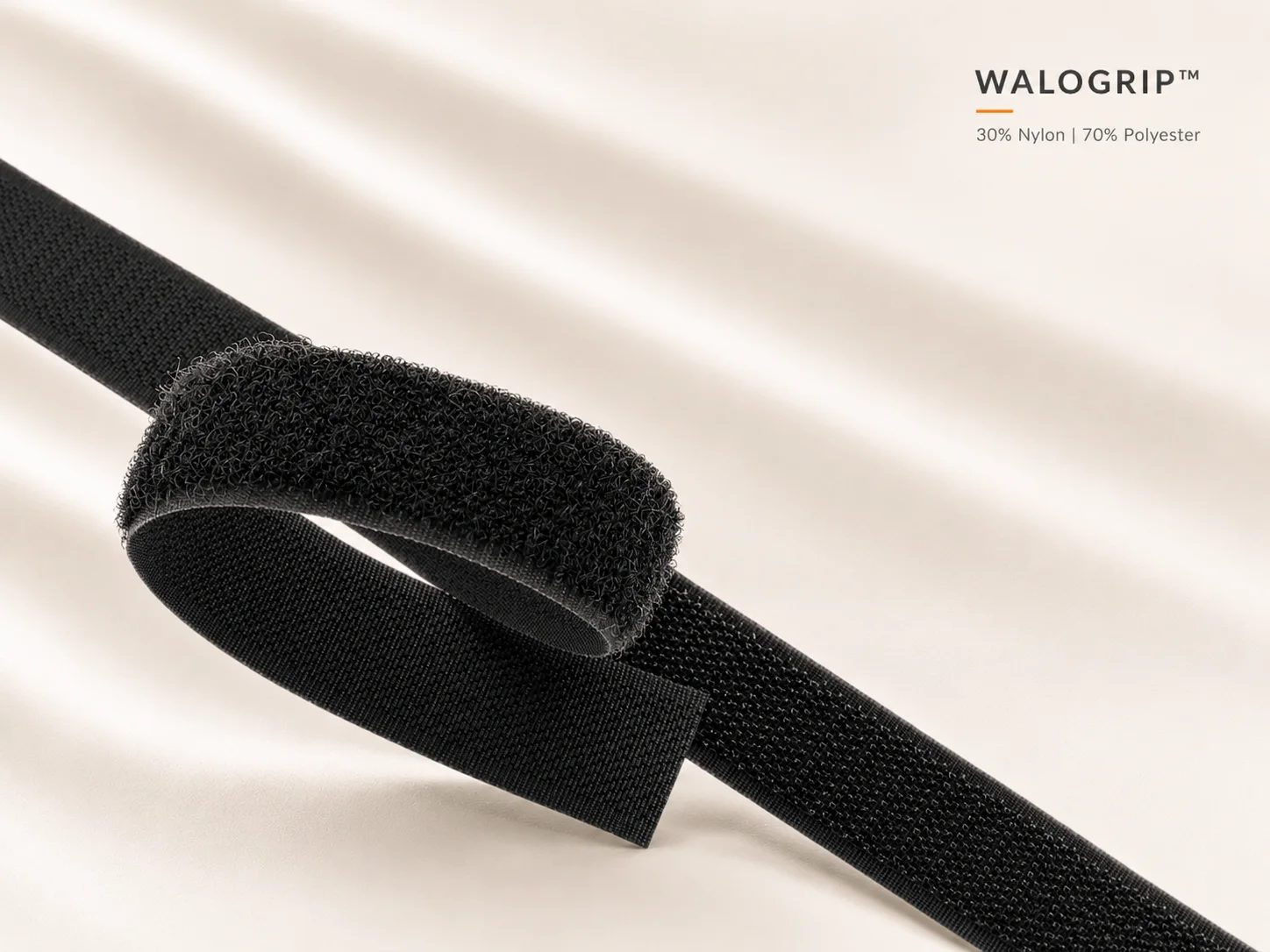
Industrial uniform and workwear programs often use high-temperature wash cycles with strong detergents and mechanical action. Hook and loop on these garments must survive hundreds of wash cycles without significant peel strength loss. Nylon-rich constructions generally maintain engagement across more wash cycles because nylon fibers are flexible and abrasion-resistant. Polyester-rich blends such as Walogrip offer better dimensional stability in hot washes, which can matter for garments that shrink or stretch during laundering.
Loop surfaces can collect lint, fiber debris and detergent residue that reduce engagement over time. Hook surfaces can flatten or collect contamination from wash water. For healthcare scrubs and food-service uniforms, consider loop placement and whether the closure should be closed during washing to reduce debris accumulation. Always validate wash durability on the finished sewn garment using the actual wash program, not on loose tape samples washed separately.
Soft hand feel and wearer comfort
Soft hand feel matters whenever hook and loop contacts skin directly or sits against a thin fabric layer. Cuff tabs on uniform shirts, waist adjustments on scrubs and closures on children's wear all require tape that lies flat, flexes with body movement and avoids creating stiffness or irritation.
Flexible nylon constructions typically provide the best hand feel for skin-contact applications. Balanced blends such as Suregrip offer a softer drape on lightweight fabrics while maintaining practical engagement strength. Stiff or bulky tape can make an otherwise well-designed garment feel awkward, especially on fitted styles and lightweight shirting.
Comfort and durability work together in apparel. A fastener that loses engagement after washing forces the wearer to over-tighten the closure, which reduces comfort and accelerates material fatigue. Specifying the right width, material and sew position helps the garment feel secure without excessive pressure against the body.
Color matching for apparel lines
Color matching is a production requirement, not a cosmetic preference, for visible hook and loop on uniforms, corporate apparel and fashion garments. Mismatched hook and loop on a navy uniform shirt or branded workwear jacket undermines quality perception and can trigger buyer rejections on bulk shipments.
Specify exact color references using Pantone, lab dip standards or physical swatches from your fabric supplier. Request batch consistency samples before bulk approval and confirm color stability after washing, because some dyes and fiber blends shift tone under heat and detergent exposure. When hook and loop sits on contrasting fabric, even slight color variation becomes visible at arm's length.
For multi-SKU apparel programs, maintain a color library that maps each fabric shade to an approved hook and loop color. This reduces sourcing errors when new styles launch and helps contract manufacturers pick the correct tape quickly on shared production lines.
Uniforms vs fashion vs workwear: specification differences
The comparison below helps apparel sourcing and technical design teams align hook and loop specifications with garment category requirements. Actual results vary by construction and brand standards, but the pattern is consistent across most apparel manufacturing programs.
Uniforms
Workwear
Industrial or frequent home laundering; 50 to 200+ cycles.
High-temperature industrial wash; abrasion from tools and equipment.
Suregrip (50/50) for hospitality and corporate shirts; Gripnex for high-cycle programs.
Gripnex (100% nylon) for maximum engagement and wash durability.
Typically 15mm to 25mm on cuffs, pockets and placket tabs.
Typically 20mm to 30mm for stronger hold on heavy fabric substrates.
Visible closures must match corporate and institutional brand colors.
Color match matters; often high-visibility or branded colorways.
Soft, flexible tape on cuff tabs and collar closures.
Durability priority; moderate hand feel on outer closures.
Fashion apparel occupies a third category with distinct requirements. Fashion garments often prioritize soft hand feel, minimal bulk and aesthetic integration over maximum cycle life. Cuff tabs, waist adjustments and decorative closures on lightweight fabrics benefit from Suregrip or Walogrip depending on price position and wash expectations. Widths of 15mm to 20mm are common. Validate hand feel and color matching on the complete garment after washing before approving bulk production. For guidance on fabric-specific selection, see the Walonium article on what kind of Velcro to use on clothes and fabric.
Production efficiency on garment lines
Production efficiency in apparel manufacturing depends on how quickly and reliably each closure can be applied without rework. Sew-on hook and loop simplifies many garment assembly tasks compared with buttons, snaps or zip insertion, especially on adjustable cuff tabs, waist closures and quick-release panels where alignment tolerance is wider than precision buttonhole work.
Format and supply consistency directly affect line speed. Pre-cut tab lengths eliminate cutting steps at the sewing station. Matched hook-loop pairs reduce pairing errors. Consistent roll widths and clean edges sew more predictably, which lowers defect rates and rework volume. For contract manufacturers running multiple apparel programs on shared lines, clearly labeled rolls with width, color and material identification prevent material mix-ups that cause stoppages.
Think in total process cost, not tape price alone. A slightly higher-cost tape that sews cleanly, matches color consistently and survives the required wash program reduces returns, inspection failures and line rework. That is where hook and loop specification becomes a measurable efficiency outcome for apparel brands and garment factories.
Material selection: nylon vs blends
Material selection is one of the most important decisions in apparel hook and loop specification. Nylon offers flexibility, abrasion resistance and strong repeated engagement. Polyester offers lower moisture absorption and better dimensional stability in hot wash conditions. Blended constructions balance these properties for specific garment categories.
100% nylon (Gripnex) is the premium choice for uniforms, workwear and high-cycle garment closures where maximum wash durability and engagement strength are required. It delivers the best cycle life and flexible hand feel for demanding applications.
50% nylon / 50% polyester (Suregrip) suits fashion apparel, cuff tabs, waist adjustments and balanced applications where comfort, practical wash durability and manageable cost matter. It offers a middle path between premium nylon performance and polyester stability.
30% nylon / 70% polyester (Walogrip) works for cost-sensitive volume lines and moderate-cycle garments where wash stability and dependable value are higher priorities than maximum engagement strength. It is a practical option when the closure is not opened dozens of times per day.
For a deeper material comparison, see the Walonium guide on nylon vs polyester hook and loop tape.
Production line specifications and sourcing
Apparel production lines require consistent, repeatable hook and loop supply. Variations in width, color, edge quality or roll length create stoppages at cutting and sewing stations. When sourcing hook and loop for garments, specify the following production line parameters in your purchase order and sample approval process.
1. Tape width and color. Confirm exact widths (typically 15mm, 20mm, 25mm or 30mm) and color matching requirements against fabric and trim materials. Color consistency across batches matters for uniform and fashion brand presentation.
2. Roll length and packaging. Specify roll lengths that match cutting station workflow. Standard export packaging with clear width, color and material labeling reduces material mix-ups on shared lines.
3. Matched hook-loop pairs. Request pre-matched hook and loop sets to eliminate pairing errors. For automated cutting lines, pre-cut tab lengths further reduce handling time.
4. Edge quality and backing stability. Clean-cut edges sew more consistently on lightweight and heavyweight fabrics. Stable backing prevents puckering and distortion under needle penetration.
5. Wash durability and cycle life target. Define acceptable peel strength range after specified wash cycles, open-close cycle minimum and visual defect tolerance. Include batch testing requirements for high-volume programs.
6. Needle and stitch compatibility. Share your needle type, stitch density and fabric substrate details with the supplier so samples reflect actual production conditions.
OEM product recommendations from Walonium
Walonium offers three non-adhesive hook and loop constructions well suited to apparel and garment manufacturing. The right product depends on garment category, wash durability requirement, hand feel needs and cost position.
For uniforms, workwear and high-cycle garment closures, evaluate Gripnex, a 100% nylon sew-on hook and loop tape. It delivers maximum wash durability, strong repeated engagement and flexible hand feel for demanding apparel applications.
For fashion apparel, cuff tabs, waist adjustments and balanced comfort applications, evaluate Suregrip, a 50% nylon / 50% polyester construction. It offers practical wash durability, comfortable hand feel and manageable cost for volume garment lines.
For cost-sensitive volume programs and moderate-cycle garments, evaluate Walogrip, a 30% nylon / 70% polyester blend. It provides wash stability, dependable fastening and value for apparel styles where dimensional consistency matters.
Apparel applications by category
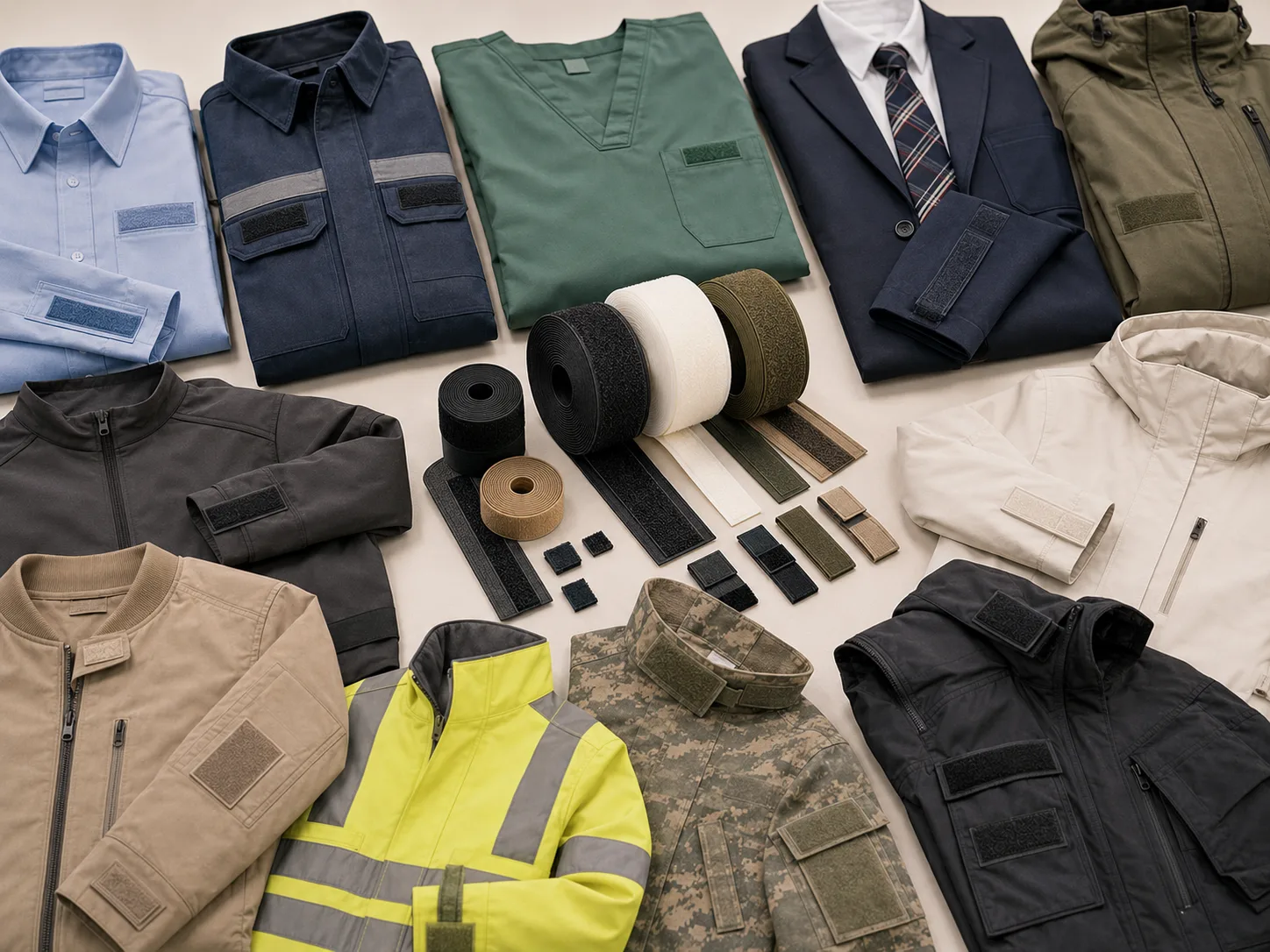
Corporate and institutional wear
Suregrip or Gripnex for cuff tabs, pocket closures and placket adjustments with color-matched presentation.
Industrial and safety apparel
Nylon-rich Gripnex for high-cycle closures on jackets, vests and heavy-duty uniform programs.
Scrubs and medical wear
Soft Suregrip tape for waist tabs and cuff adjustments with wash durability for frequent laundering.
Ready-to-wear and lifestyle
Suregrip or Walogrip for lightweight cuff tabs and adjustable closures with minimal bulk.
Kids and school wear
Balanced Suregrip for easy open-close cuff tabs and waist adjustments on daily-wear garments.
Sport and fitness apparel
Gripnex for high-cycle closures on adjustable panels and strap-style garment features.
Jackets and coats
Gripnex or Suregrip for storm flaps, cuff tabs and adjustable hood closures on outer layers.
Common specification mistakes in apparel hook and loop
The first mistake is choosing hook and loop by price alone. A lower-cost tape can be correct for fashion lines with moderate wash demands, but using it on industrial workwear with heavy laundering creates quality complaints and contract rejections.
The second mistake is ignoring wash program requirements. Uniform and workwear garments face wash conditions that change engagement behavior over time. Test the sewn garment under the actual wash program before approving the specification.
The third mistake is neglecting color matching. Visible hook and loop on branded apparel must match fabric and trim colors consistently across batches. Request lab dips and post-wash color confirmation before bulk production.
The fourth mistake is approving samples without sewing them into the actual fabric substrate. Stitch tension, needle type and fabric weight all change how the fastener performs on the production line and after laundering.
Buying advice for apparel procurement teams
When requesting a quotation, share the garment category, fabric substrate, closure location, expected wash program, open-close cycle requirement, preferred width and color, sew-on attachment method, production volume and packaging requirement. A better brief leads to a better recommendation and fewer line trials.
For OEM apparel programs, compare at least two product options in live assembly tests. For example, evaluate Gripnex for uniform and workwear lines, then compare Suregrip for fashion or hospitality alternatives. Document wash durability, hand feel feedback, sew-ability and peel strength after laundering.
Think in total product cost, not tape cost alone. The right hook and loop specification reduces returns, improves wearer satisfaction and supports consistent production. That is where material selection becomes a measurable business outcome for apparel brands and contract manufacturers.
Key takeaways
Hook and loop fasteners are a critical component in apparel and garment manufacturing. Sew-on attachment, wash durability, soft hand feel and color matching must be evaluated together on the finished sewn garment, not on loose tape samples alone.
For Walonium buyers, the practical mapping is simple: Suregrip for fashion apparel and balanced comfort applications, Gripnex for uniforms and high-cycle workwear, and Walogrip for cost-sensitive volume lines.
Sew-on attachment remains the standard for apparel production. Specify width, material, wash durability, color matching, packaging and quality tolerance for your line. Validate the specification on the actual garment after laundering before scaling production.
FAQ
What hook and loop tape is best for apparel and garments?
Sew-on hook and loop is the standard for apparel. Gripnex (100% nylon) suits uniforms, workwear and high-cycle closures. Suregrip (50% nylon / 50% polyester) works for fashion apparel, cuffs and waist tabs. Walogrip (30% nylon / 70% polyester) suits cost-sensitive volume lines with moderate closure demands.
Should apparel manufacturers use sew-on or adhesive hook and loop?
Sew-on hook and loop is the primary method for apparel manufacturing. It withstands washing, flexing and repeated open-close cycles better than adhesive-backed tape on fabric substrates. Adhesive hook and loop is occasionally used for temporary fixtures, but sew-on remains standard for cuffs, waist tabs and uniform closures.
How does washing and laundering affect hook and loop on garments?
Industrial and home laundering expose hook and loop to detergent, heat and mechanical agitation. Nylon-rich constructions generally maintain engagement across more wash cycles. Polyester-rich blends offer better dimensional stability in hot washes. Always validate wash durability on the finished sewn garment using the actual wash program.
What width should I specify for cuff and waist tab closures?
Cuff closures typically use 15mm to 20mm sew-on tape. Waist tabs and uniform closures often use 20mm to 25mm tape. Workwear and heavy-duty uniform applications may use 25mm to 30mm tape where stronger engagement is required.
How important is color matching for apparel hook and loop?
Color matching is critical for visible closures on uniforms, corporate apparel and fashion garments. Specify exact color references, request batch consistency samples and confirm color stability after washing before approving bulk production.
Which Walonium products are recommended for apparel manufacturing?
Gripnex (100% nylon) is recommended for uniforms, workwear and high-cycle garment closures. Suregrip (50% nylon / 50% polyester) suits fashion apparel, cuffs and balanced comfort applications. Walogrip (30% nylon / 70% polyester) works for cost-sensitive volume lines.
How does hook and loop improve apparel production efficiency?
Sew-on hook and loop simplifies garment assembly compared with buttons, snaps or zippers in many applications. Pre-cut tabs, matched hook-loop pairs and consistent roll quality reduce handling time at cutting and sewing stations and minimize rework.
Should apparel OEM teams test hook and loop before mass production?
Yes. Test samples sewn into the actual fabric under real washing, flexing and repeated open-close conditions. Line trials with at least 500 closure cycles and multiple wash cycles reveal more than desk-side peel tests.