On this page
Why hook and loop is essential in footwear and apparel
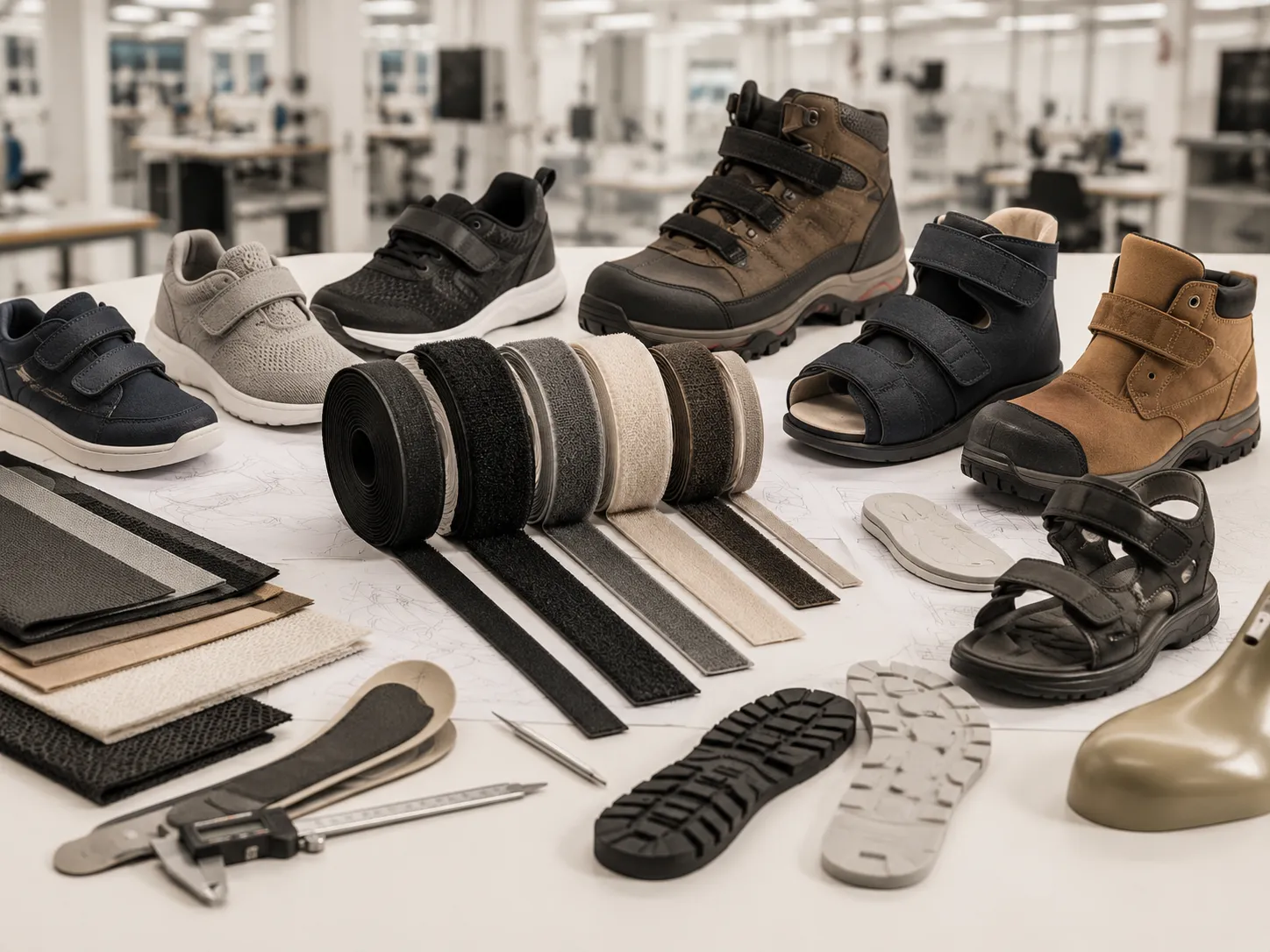
Footwear and apparel brands compete on comfort, convenience and durability. Hook and loop supports all three. It allows consumers to adjust fit quickly, reduces dependency on laces or complex hardware in certain styles and gives designers a closure method that works across size ranges without changing buckle positions. Start with our vertical fastening solutions for footwear and apparel sourcing teams. Designers specifying garment closures should also read Velcro for clothes and fabric.
In footwear, hook and loop straps appear on kids shoes, adaptive footwear, sandals, training styles and specialty categories where easy on-off matters. In apparel, it supports adjustable cuffs, pocket flaps, strap systems, workwear panels and children’s garments where independent dressing is a product benefit.
For OEM manufacturers and procurement teams, the specification challenge is translating consumer expectations into measurable technical requirements. A closure that feels secure on the shelf must still perform after weeks of daily use, exposure to sweat or rain, repeated flexing at the strap root and, in apparel, repeated washing and drying.
Production teams also care about sewing efficiency, roll handling, color matching and waste reduction. The right hook and loop program supports consistent strap performance while fitting cleanly into cut-and-sew or footwear assembly lines without creating bottlenecks or quality escapes.
Durability and cycle life requirements
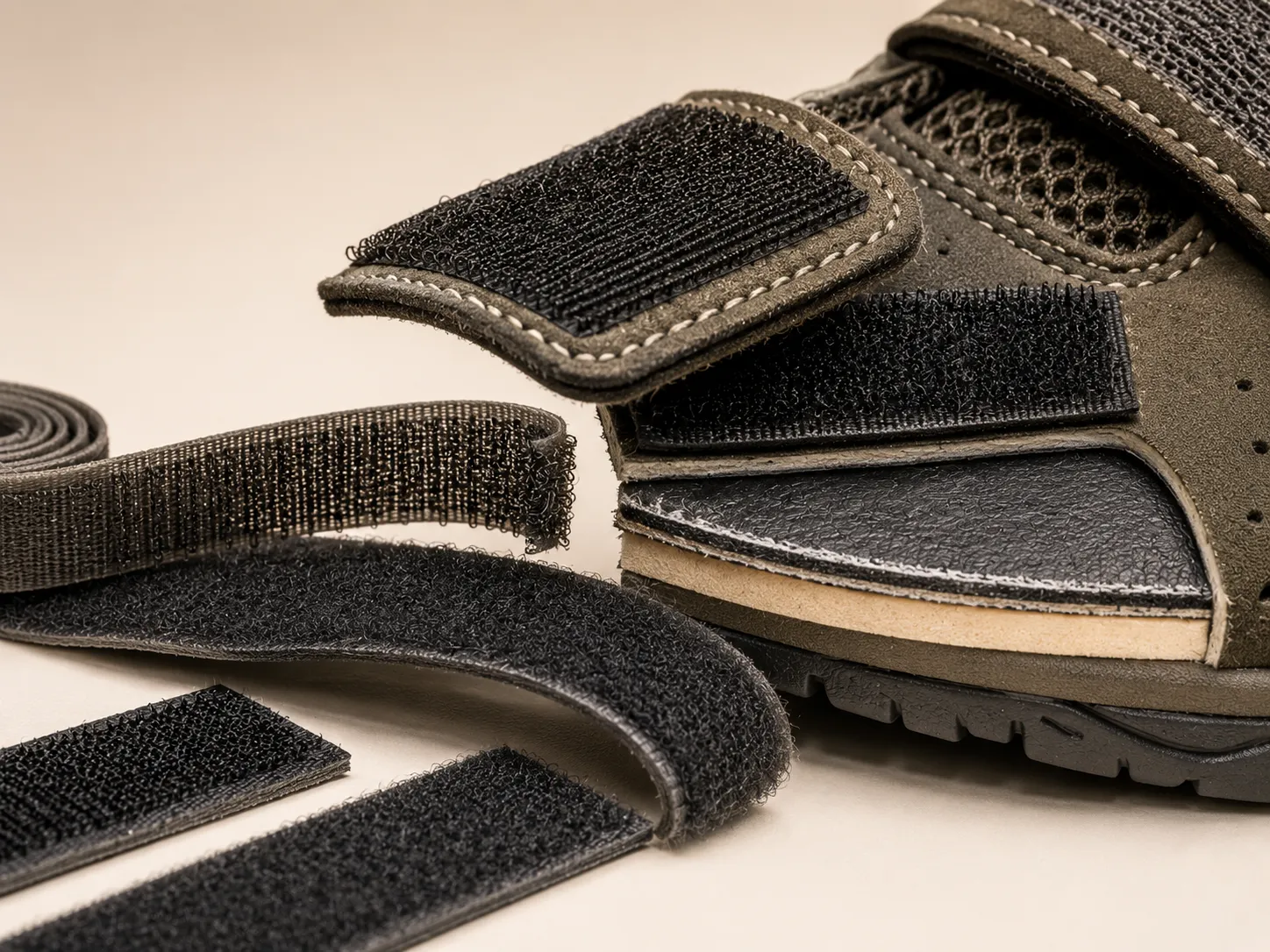
Durability in footwear and apparel hook and loop is best expressed as cycle life: the number of open-close cycles the closure must survive while maintaining acceptable holding force. Different product categories carry very different cycle demands.
Kids shoes may see enthusiastic daily use with thousands of closure cycles over the product life. Athletic footwear can exceed that under training conditions. Sandals and casual styles may see lower cycle counts but face more UV, sand and moisture exposure. Apparel closures on jackets or uniforms may cycle less frequently but must survive laundering without significant engagement loss.
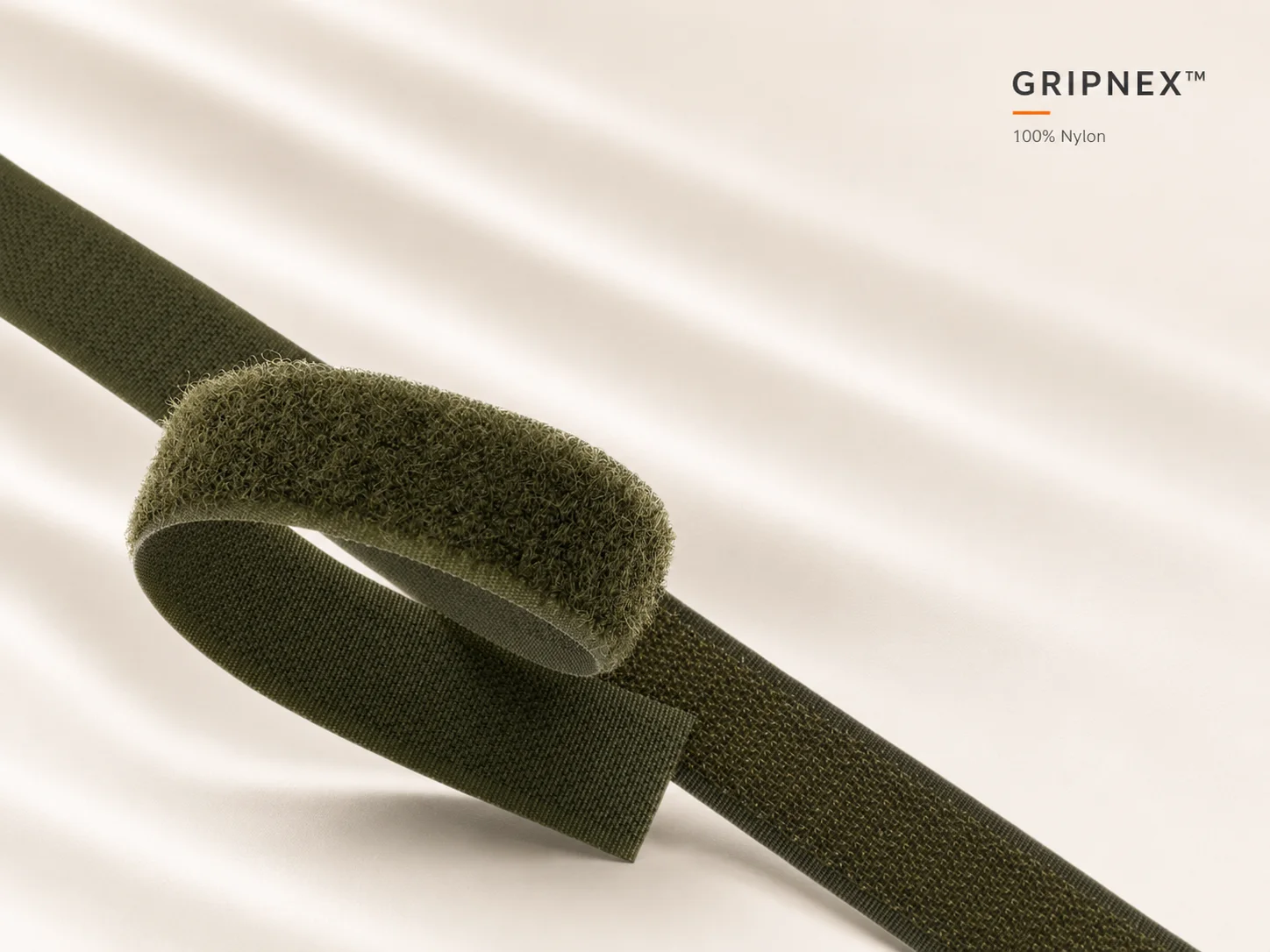
Hook density, material blend and mating overlap all influence cycle life. Nylon-rich constructions such as Gripnex generally support higher repeated engagement than polyester-heavy grades. However, higher grip is not always desirable: overly aggressive hook profiles can make adjustment difficult and increase wear on loop surfaces in kids products.
OEM teams should define a minimum cycle target and acceptable peel-force range at end of life. Testing 500 cycles in development is a starting point; many footwear programs require 3,000 to 10,000 cycles depending on category claims and warranty expectations.
Sew-on attachment for footwear and apparel production
Sew-on hook and loop is the industry standard for footwear straps and most garment closures. Mechanical stitching anchors the tape into textile uppers, linings, webbing and garment panels in a way that flexing and repeated pulling cannot easily defeat, unlike many adhesive bonds on fabric substrates.
Attachment quality depends on stitch type, stitch density, needle selection and tape placement relative to stress points. Straps that pivot at a single stitch line concentrate force at the root; reinforcing this area or widening the sewn footprint improves field durability. For footwear lines, coordinate hook and loop specification with the lasting and strobel processes so tape placement does not conflict with upper shaping.
Roll format affects line efficiency. Consistent width, clean edges and matched hook-loop pairs reduce sewing defects and material waste. Some programs use pre-cut strap lengths or die-cut tabs to standardize placement and reduce operator variation on high-volume lines.
Adhesive hook and loop has limited use in footwear and apparel except for specific panel mounts or temporary fixtures. For lasting strap performance, sew-on remains the engineering default. See the dedicated footwear manufacturing fastener guide for production-line specifications.
Moisture, sweat and environmental exposure
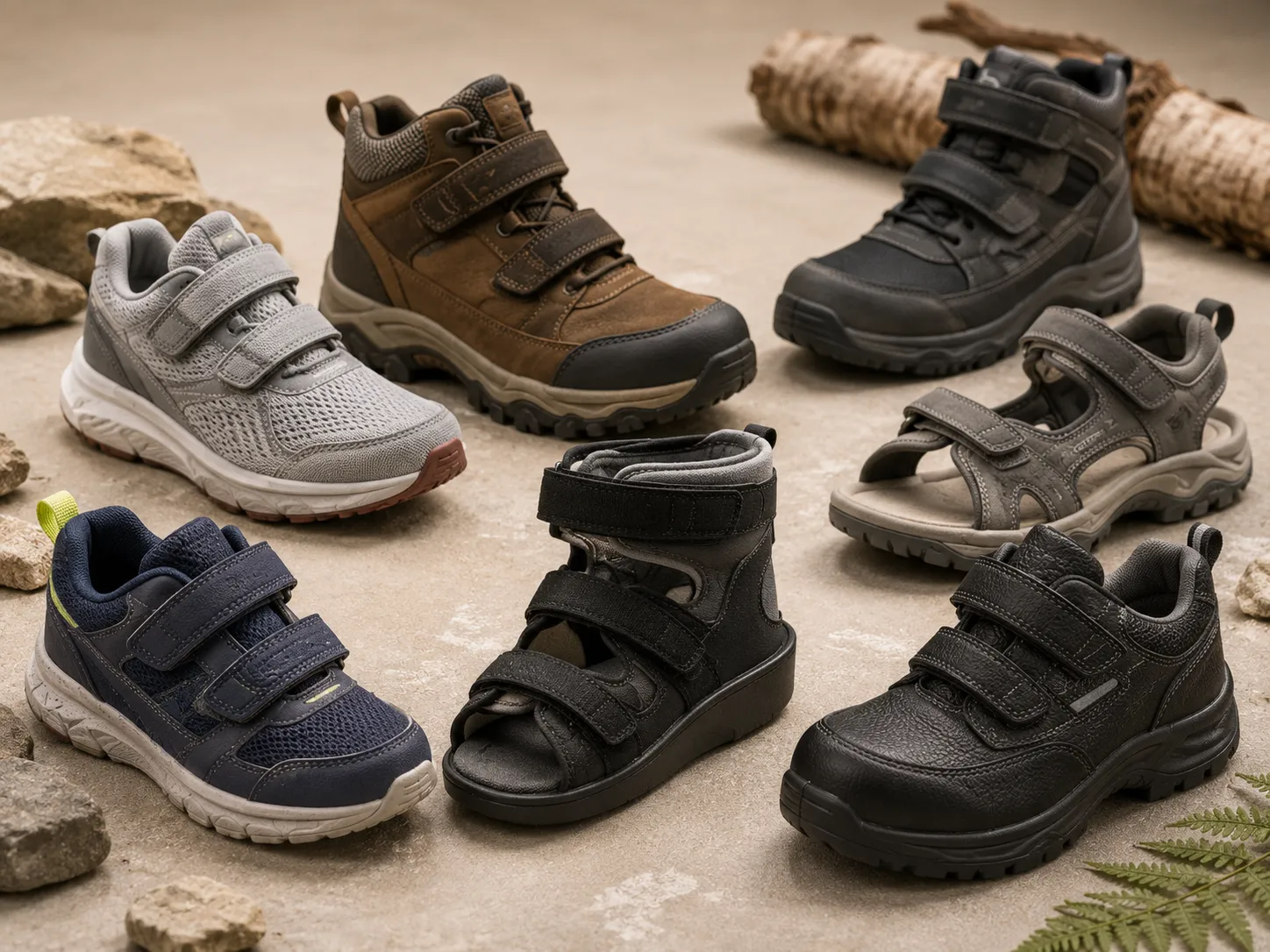
Footwear and activewear operate in humid, sweaty and sometimes wet environments. Moisture affects hook and loop in several ways: fiber absorption, dimensional change, hand feel and long-term engagement after drying.
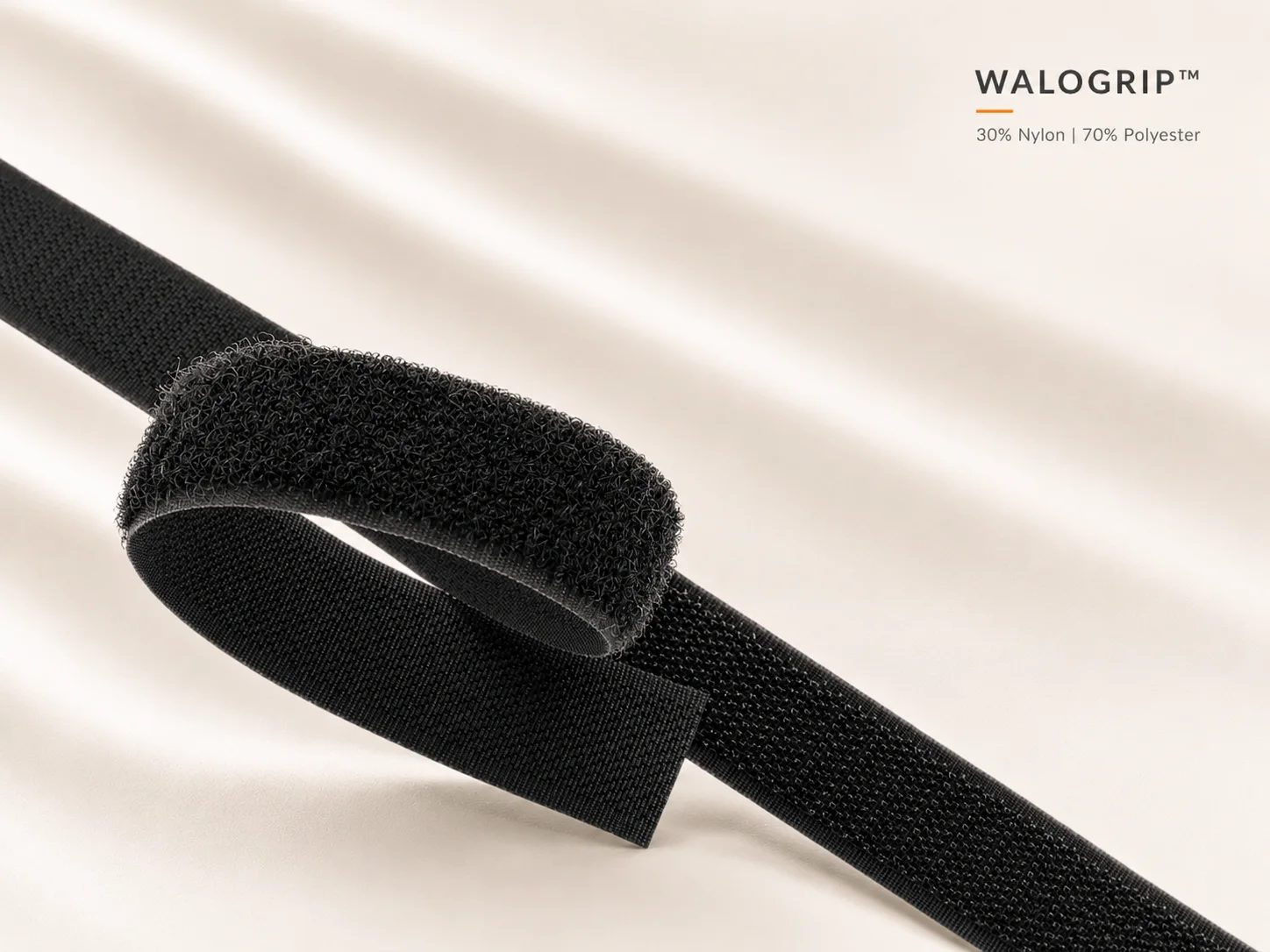
Nylon absorbs more moisture than polyester, which can temporarily soften or swell fibers and change closure feel in athletic use. Polyester-rich blends such as Walogrip offer better dimensional stability in sandal straps, outdoor apparel and products exposed to frequent wet-dry cycles.
Salt water, road dust, gym floor lint and detergent residue can accumulate in loop surfaces and reduce engagement over time. Designs that protect the closure when not in use, or that allow the loop zone to be brushed clean, often outperform exposed closures in harsh environments.
Validate moisture performance on finished products, not bench samples. A strap sewn into a shoe upper behaves differently once tensioned, padded and exposed to the microclimate inside the footwear during wear.
Material comparison for footwear and apparel
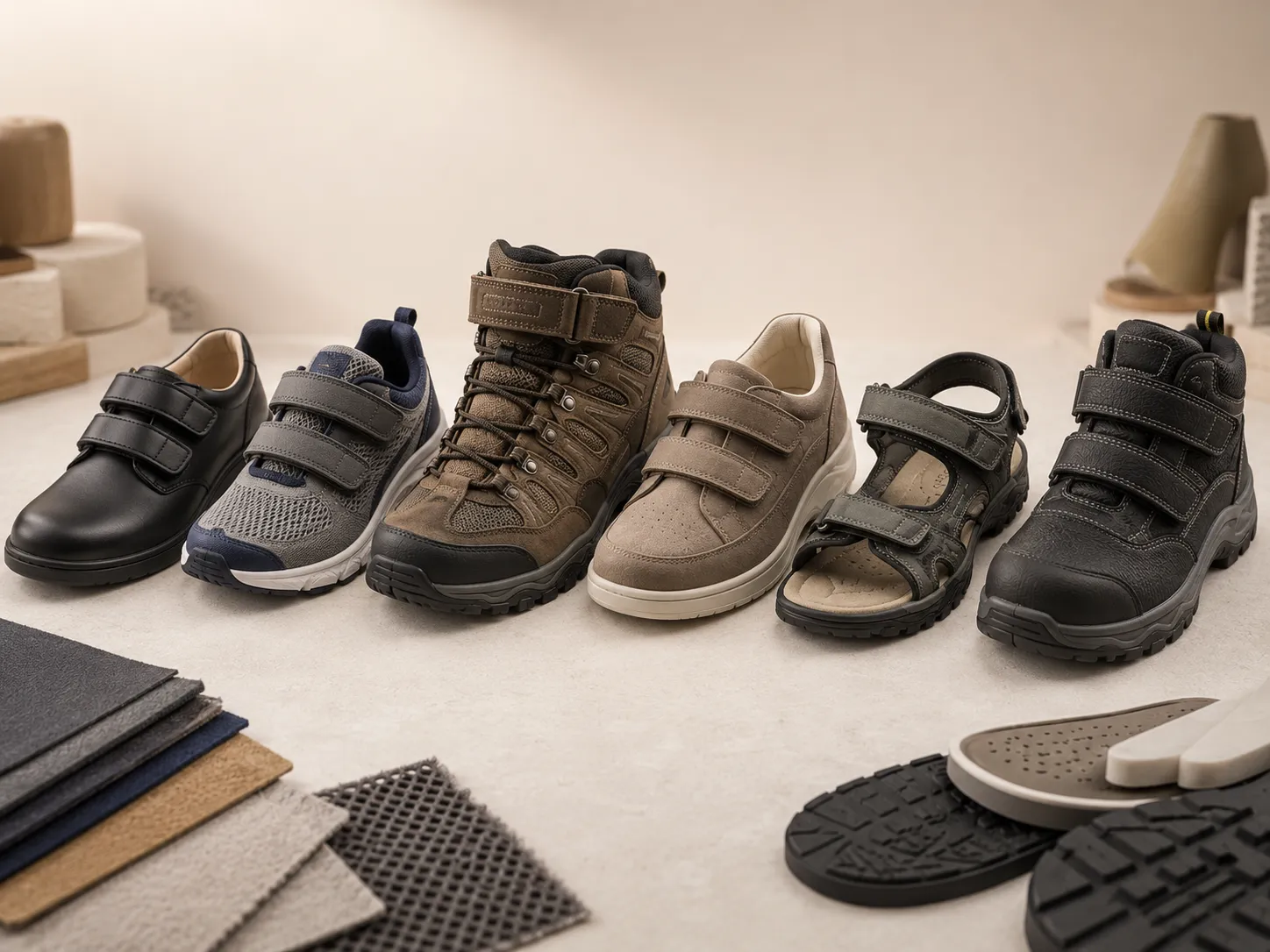
Material selection is the main lever for balancing cycle life, moisture behavior, hand feel and cost across footwear and apparel programs.
Gripnex (100% Nylon)
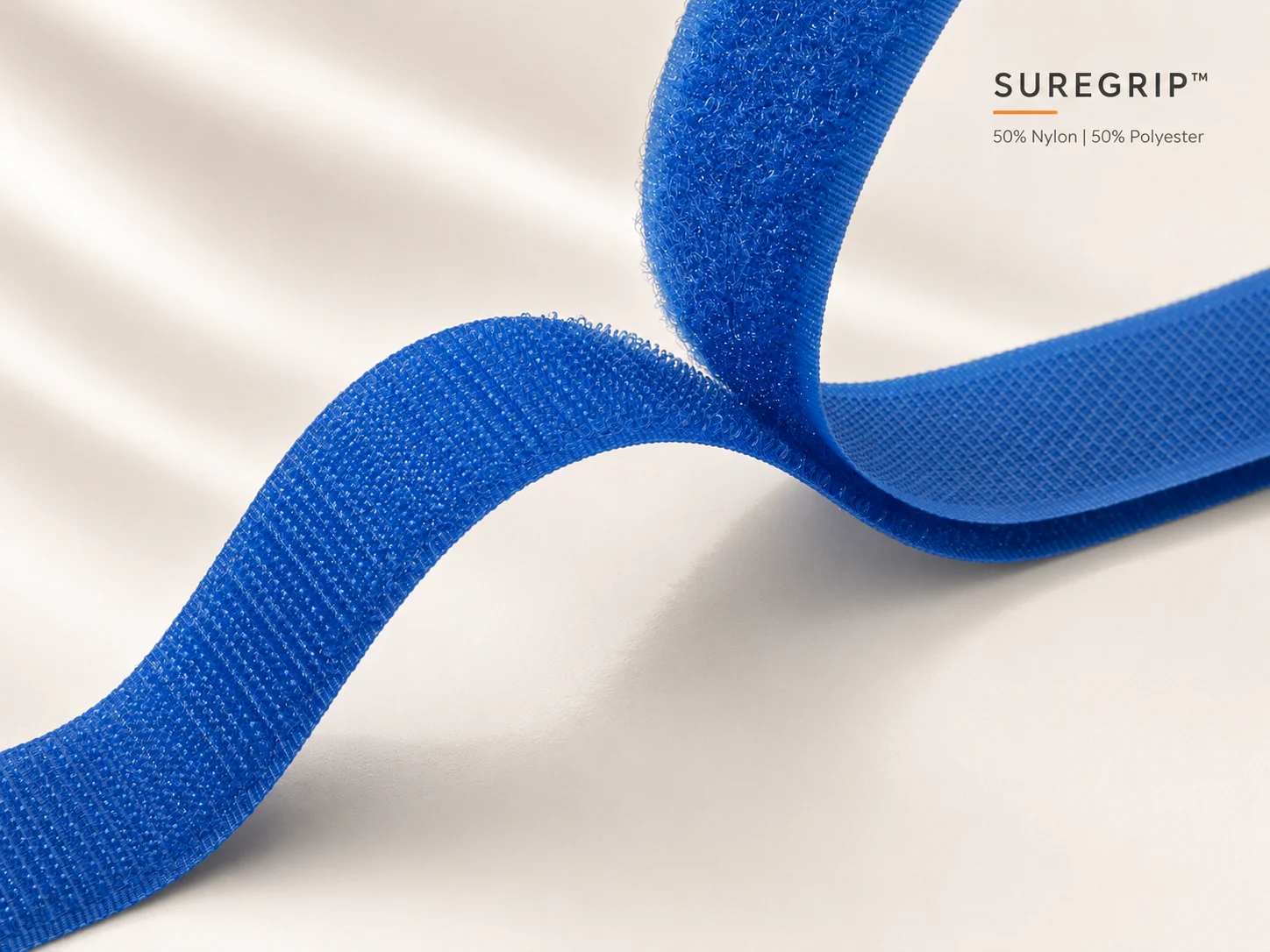
Suregrip / Walogrip (Blends)
Best for athletic footwear and high-cycle garment straps.
Moderate to good cycles suited to kids shoes and casual apparel.
Nylon loop surfaces feel smoother on adjustable straps.
Balanced or firmer hand depending on polyester content.
Good performance; nylon absorbs more moisture than polyester.
Polyester-rich Walogrip suits sandals and outdoor exposure.
Premium specification cost for performance-led products.
Suregrip and Walogrip support high-volume lines efficiently.
Athletic footwear, training shoes, premium apparel straps.
Kids shoes, school footwear, sandals, uniforms, casual wear.
For deeper material guidance across industries, review the nylon vs polyester material guide. For apparel-specific closure design, see the apparel and garment industry guide.
Hook and loop in kids footwear
Kids shoes are one of the largest hook and loop footwear categories. Children need closures they can operate independently, while parents need confidence that shoes stay secure during play. The fastener must be easy to align, forgiving during partial engagement and durable enough for daily school and playground use.
Moderate hook strength is often preferable to maximum grip because overly strong closures frustrate young users and accelerate loop wear when straps are yanked open. A balanced sew-on tape such as Suregrip is a common specification for kids lines where comfort, cost and dependable cycles must coexist.
Visual alignment matters in kids products. Contrasting hook and loop colors can help children locate the mating zone. Rounded strap ends and sufficient overlap reduce failed closures when users do not fully engage the tape.
Safety and compliance considerations include small-parts policies, chemical restrictions and sharp-edge avoidance at strap tips. Hook and loop generally performs well here because it eliminates metal buckles, though edge finishing and stitch bulk should still be reviewed for very small sizes.
Athletic footwear and performance apparel
Athletic footwear and performance apparel place the highest cycle and moisture demands on hook and loop. Training shoes with forefoot straps, gym bags, glove cuffs and compression garment tabs all require strong, repeatable engagement under sweat, heat and rapid adjustment.
Premium nylon sew-on tape such as Gripnex is typically the starting point for athletic straps because it delivers higher cycle life and consistent closure force after repeated use. Wider tape formats (25mm to 50mm) spread load across a larger mating area and improve holding security on high-stress zones.
Performance products also face brand scrutiny on return rates. Premature strap weakness creates visible quality problems that social media and marketplace reviews amplify quickly. Investing in validated cycle-life specifications upfront is often cheaper than managing field complaints on a hero SKU.
Performance apparel closures must also survive washing. Define whether the hook and loop zone is protected during laundry or exposed to agitation, then test accordingly. Engagement loss after 20 to 50 wash cycles is a common benchmark for garment programs.
Garment closures and apparel manufacturing
Apparel applications span a wide range: jacket cuffs, uniform flaps, workwear pockets, babywear, adaptive clothing and accessory straps. Each subcategory has different cycle, aesthetic and wash requirements, but sew-on hook and loop remains the dominant attachment method.
Fashion-oriented products prioritize color matching, low profile and clean appearance when the closure is visible. Industrial workwear prioritizes strength, dust tolerance and long service life. Babywear adds skin-softness expectations and frequent laundering. The tape grade that works for a tactical jacket may be over-specified for a lightweight child’s gilet.
Garment engineers should coordinate hook and loop width with pattern pieces and seam allowances. Insufficient overlap looks neat in prototyping but fails in production when stitch tolerance varies. Specifying minimum overlap dimensions on tech packs reduces assembly ambiguity across factories.
For apparel procurement teams sourcing across regions, document color standards, width tolerance, roll length and packaging requirements clearly. Consistency across factories protects brand appearance and reduces cut-room waste when the same SKU is produced in multiple locations.
Walonium product recommendations for footwear and apparel OEMs
Walonium supplies sew-on hook and loop tapes used by footwear factories, apparel manufacturers and private-label brands worldwide. Product selection should follow category cycle life, moisture exposure and cost targets.
For premium athletic footwear, high-cycle straps and performance apparel closures, evaluate Gripnex 100% nylon sew-on tape. It delivers strong repeated engagement and flexible strap performance for demanding categories.
For kids shoes, school footwear, uniform programs and balanced garment closures, evaluate Suregrip 50% nylon / 50% polyester sew-on tape. It offers dependable performance at the volumes these categories require.
For sandals, casual footwear, outdoor apparel and cost-sensitive volume lines where moisture stability matters, evaluate Walogrip 30% nylon / 70% polyester sew-on tape.
Industry application examples
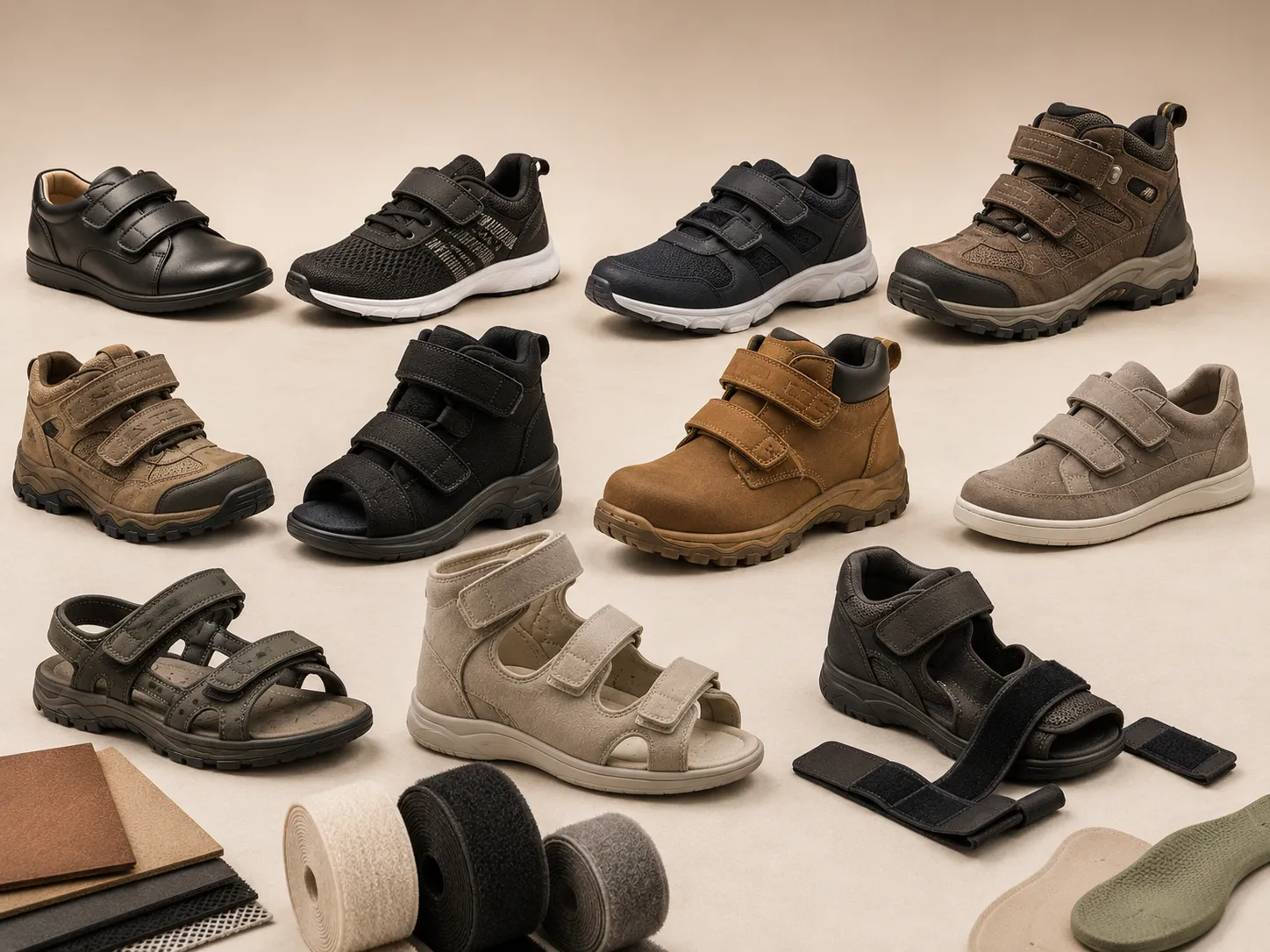
School and casual shoes
Balanced sew-on tape supports easy self-fastening and dependable daily cycles at accessible cost.
Training and sport shoes
Nylon-rich straps deliver high cycle life under sweat, flexing and repeated adjustment.
Outdoor and casual styles
Polyester-rich tape improves moisture stability in open footwear exposed to wet-dry cycles.
Easy-entry shoes
Hook and loop simplifies donning for seniors and mobility-limited users without complex hardware.
Jackets and cuffs
Adjustable closures allow fit tuning while surviving seasonal wear and laundering.
Uniforms and pockets
Strong sew-on engagement supports repeated use in demanding occupational environments.
Easy-dress garments
Soft loop surfaces and manageable grip help independent dressing with washable performance.
Common mistakes in footwear and apparel hook and loop specification
The first mistake is under-specifying cycle life for kids and athletic categories. A tape that works for a low-cycle sandal may fail quickly on a daily-wear school shoe or training strap.
The second mistake is ignoring stitch design. Even premium tape fails if the strap root is poorly reinforced or if overlap is too short for production tolerance.
The third mistake is choosing adhesive hook and loop on fabric straps to save sewing cost. The bond often degrades under flexing, washing and pull forces that sew-on attachment handles routinely.
The fourth mistake is skipping post-wash validation for apparel. A closure that feels strong when new may lose engagement after repeated laundering if loop loft collapses or fibers mat down.
Buying advice for footwear and apparel procurement teams
When requesting quotations, share the product category, substrate, expected cycle life, moisture or wash exposure, width, color, roll length, production volume and export requirements. Include stitch details if available so the supplier understands how the tape will be loaded in use.
Request samples sewn into production-representative materials, then test under category-appropriate conditions: flexing, moisture, abrasion and repeated open-close cycles. Field-relevant testing prevents costly line changes after tooling is approved.
Evaluate total landed cost and return risk, not roll price alone. The right specification reduces warranty claims, protects brand reviews and keeps factory sewing lines running with fewer strap-related defects.
Key takeaways
Footwear and apparel hook and loop must be specified for cycle life, sew-on durability, moisture exposure and category-appropriate hand feel. Material blend selection drives performance more than width alone.
For Walonium buyers, the practical mapping is: Gripnex for athletic and high-cycle programs, Suregrip for kids shoes and balanced apparel closures, and Walogrip for sandals, casual footwear and moisture-sensitive volume lines.
Validate on the finished strap or garment, document minimum cycle targets and align hook-loop orientation with user experience. The best fastening decision is proven in wear, not only in the sample room.
FAQ
Why is hook and loop used in footwear and apparel manufacturing?
Hook and loop is used because it provides quick, adjustable closures without laces or complex hardware. In footwear it simplifies fastening for kids shoes and adaptive styles. In apparel it supports adjustable cuffs, straps and panel closures while enabling faster assembly on production lines.
How many open-close cycles should footwear hook and loop withstand?
Cycle life depends on the category. Kids shoes often need 3,000 to 5,000 cycles. Athletic and training footwear may require 5,000 to 10,000 cycles or more. Casual sandals and apparel closures may need fewer cycles but must tolerate moisture and laundering. Always validate on the finished strap assembly.
Should footwear and apparel use sew-on or adhesive hook and loop?
Sew-on hook and loop is the standard for footwear and most apparel applications because it withstands flexing, washing and repeated pulling better than adhesive-backed tape. Adhesive formats are occasionally used for temporary fixtures or specific panel attachments, but sew-on remains the primary method for lasting strap and garment closures.
How does moisture affect hook and loop in shoes and activewear?
Moisture and sweat can affect dimensional stability, hand feel and long-term engagement strength. Nylon absorbs more moisture than polyester. Polyester-rich blends like Walogrip offer better moisture stability for sandals and outdoor apparel. High-sweat athletic products should be tested after simulated wear in humid conditions.
Which Walonium products are recommended for footwear and apparel?
Gripnex 100% nylon sew-on tape is recommended for premium athletic footwear and high-cycle garment straps. Suregrip 50% nylon / 50% polyester suits kids shoes, school footwear and balanced apparel closures. Walogrip 30% nylon / 70% polyester works for sandals, casual styles and cost-sensitive volume lines.
What width should I specify for kids vs athletic footwear straps?
Kids footwear typically uses 20mm to 25mm sew-on tape with a balanced blend like Suregrip. Athletic footwear often uses 25mm to 50mm nylon-rich tape such as Gripnex for stronger hold and higher cycle life. Sandals may use 20mm to 30mm polyester-rich tape for moisture stability.
What production specs should footwear and apparel buyers request?
Specify tape width, color, material blend, sew-on backing type, roll length, packaging format, peel strength, cycle life target and quality tolerance. Include needle type, stitch density and substrate details in sample approval. Request matched hook-loop pairs and consistent roll widths for sewing lines.
Should manufacturers test hook and loop samples before mass production?
Yes. Test samples sewn into the actual upper, strap or garment fabric under real flexing, moisture, abrasion and repeated open-close conditions. Footwear and apparel performance changes significantly once stitched, tensioned and exposed to wearer stress and washing.