On this page
Why hook and loop matters in medical and healthcare manufacturing
Healthcare products operate under different expectations than general industrial assemblies. A fastener in a warehouse panel and a fastener on a knee brace do not carry the same consequences. In medical and healthcare applications, hook and loop must support quick adjustment by caregivers, repeated opening and closing by patients, compatibility with cleaning protocols and acceptable comfort when placed near skin. See our industry-specific solutions for the medical and healthcare vertical.
Unlike buttons, buckles or zippers, hook and loop allows infinite micro-adjustment within the strap overlap zone. That makes it especially valuable in orthotics, compression supports, cervical collars, limb positioning systems and post-surgical braces where fit changes during recovery. The same adjustability benefits hospital bed accessories, wheelchair cushions and therapy equipment used across multiple patients when paired with appropriate cleaning procedures.
For OEM buyers and procurement teams, the challenge is not finding hook and loop tape. It is specifying the right construction for a regulated or semi-regulated healthcare environment. Material blend, loop softness, hook profile, attachment method and post-processing tolerance all influence whether the finished product performs safely and reliably in clinical use.
Healthcare manufacturers also face production realities: high-volume cut-and-sew lines, export packaging requirements, color consistency across batches and documentation for quality audits. A well-specified hook and loop program reduces rework, complaint rates and supplier change risk across the product lifecycle.
Hook and loop in orthotics and braces
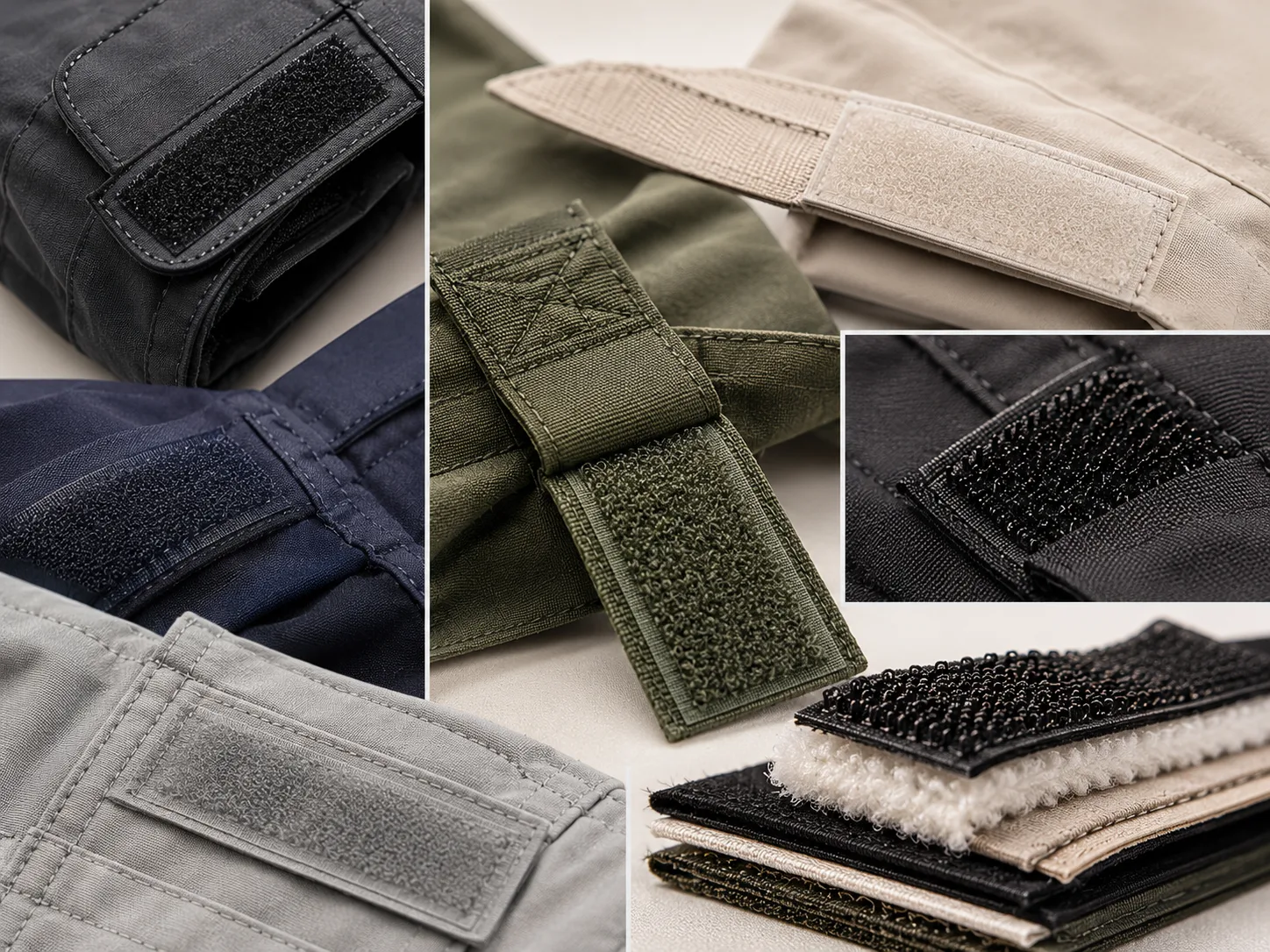
Orthotics and braces represent some of the most demanding hook and loop applications in healthcare. These products are worn for extended periods, adjusted multiple times per day and subjected to pulling forces that exceed typical apparel closures. The fastener must hold securely during activity yet release predictably when the patient or therapist needs to reposition the device.
Custom orthotics and off-the-shelf supports often use wide sew-on tape segments on straps that cross joints or wrap limbs. Nylon-rich loop surfaces are commonly preferred because they provide a softer hand against skin while maintaining engagement after hundreds of cycles. Hook density must be balanced: too aggressive a hook profile can feel scratchy on direct-contact loop zones, while too light a profile may not hold under load.
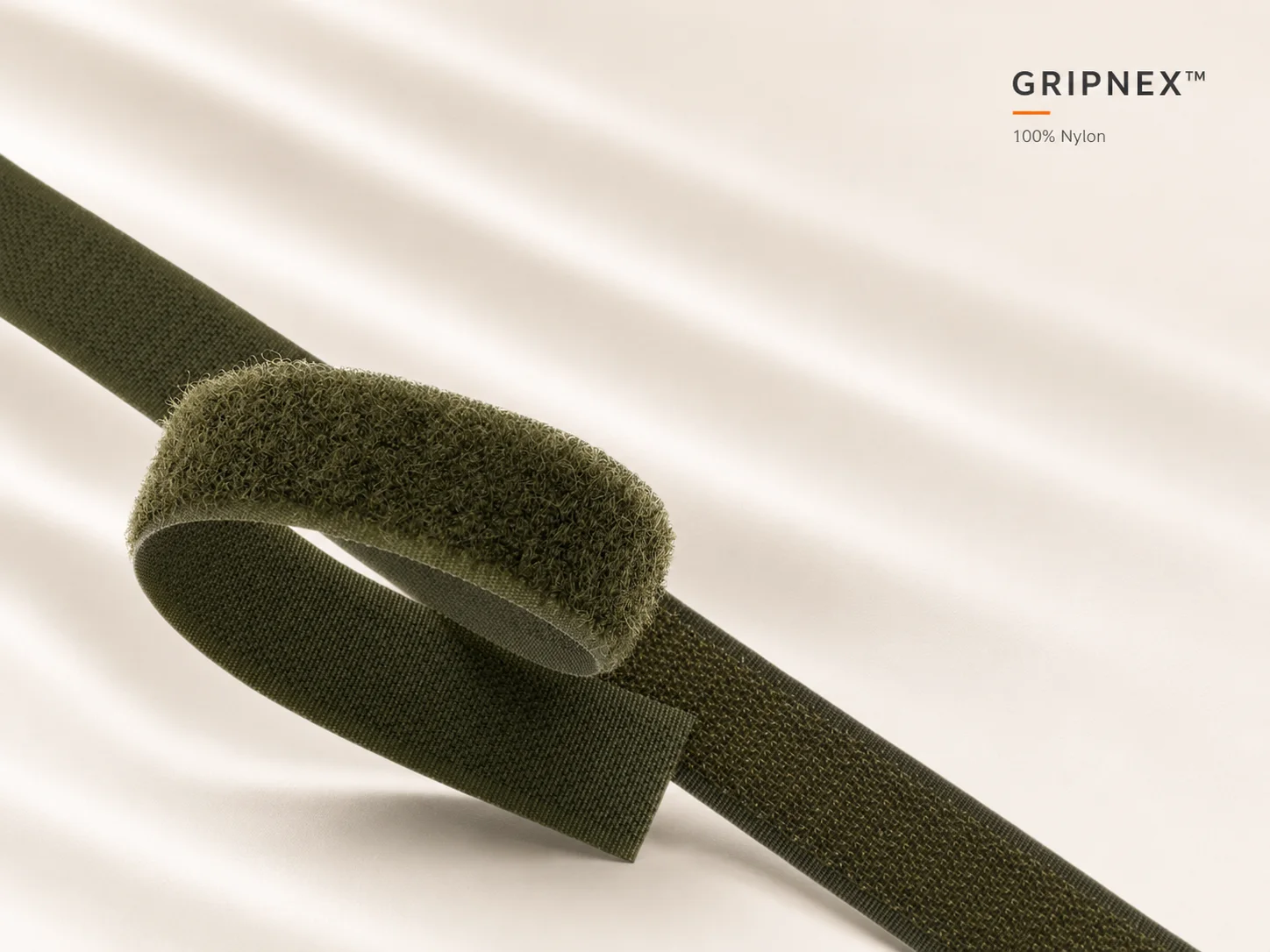
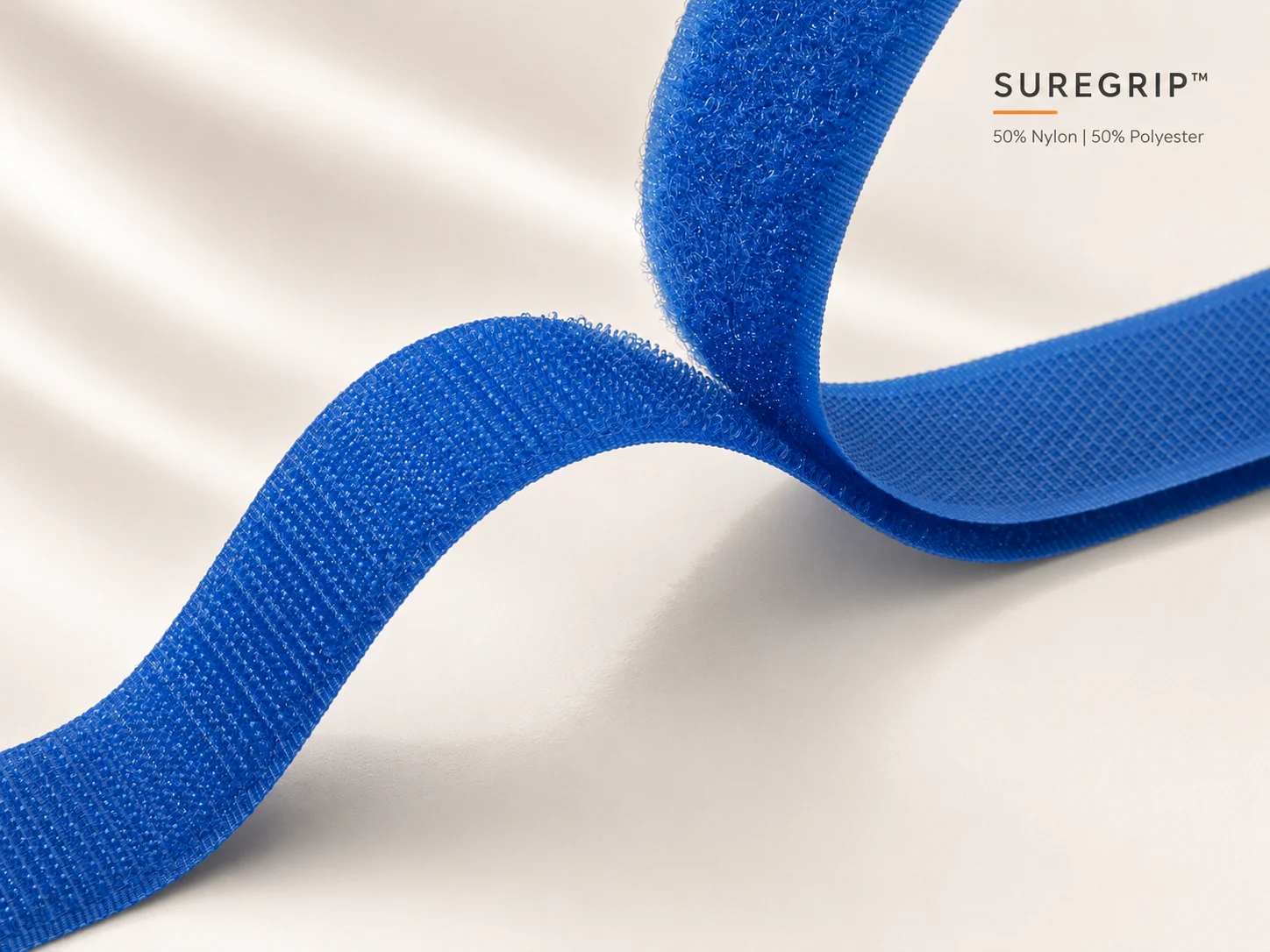
Brace manufacturers should specify minimum peel strength, cycle-life targets and acceptable performance after washing before selecting a supplier grade. A premium sew-on nylon such as Gripnex is often the starting point for patient-worn braces where long service life and consistent adjustment matter. For moderate-duty supports and volume programs, Suregrip offers a practical balance of nylon and polyester performance.
Strap design interacts directly with fastener choice. Wide overlap zones improve holding security but can increase bulk. Narrow straps with short overlap may need higher-performance hook constructions or reinforced stitching. OEM teams should prototype strap geometry and fastener width together rather than treating tape as an afterthought.
Patient positioning and hospital textile applications
Patient positioning systems rely on fasteners that caregivers can operate quickly under time pressure. Hook and loop supports adjustable wedges, limb holders, transfer aids and bed positioning accessories where buckles would slow setup or create hard contact points.
Hospital textile programs add another layer: reusable products must survive industrial laundering, chemical disinfection and frequent handling. Sew-on hook and loop generally outperforms adhesive-backed formats in these environments because mechanical attachment resists edge lift and bond degradation through wash cycles.
Positioning products may not always contact skin directly, but they often contact patient gowns, linens or support surfaces that introduce lint and fiber contamination. Loop surfaces can accumulate debris that reduces engagement over time. Designs that allow inspection and cleaning of the closure zone, or that use hook-facing orientations away from heavy lint sources, often perform better in long hospital service.
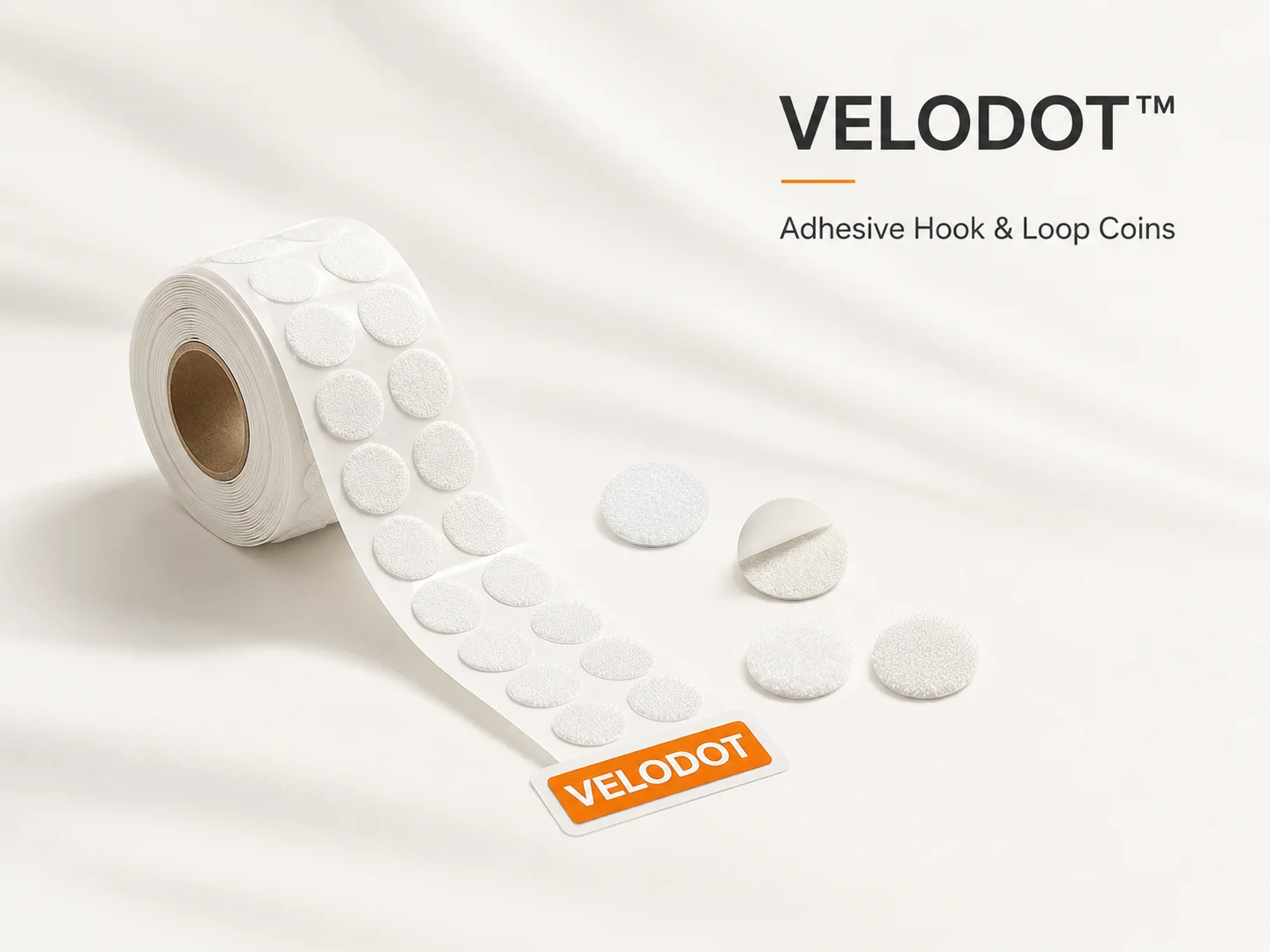
For compact positioning accessories where tape strips are too bulky, Velodot hook and loop coins provide discrete fastening points with consistent die-cut placement. Coins can simplify assembly on small pads, restraint alternatives and modular positioning components where precise alignment matters on the production line.
Skin contact, comfort and hypoallergenic performance
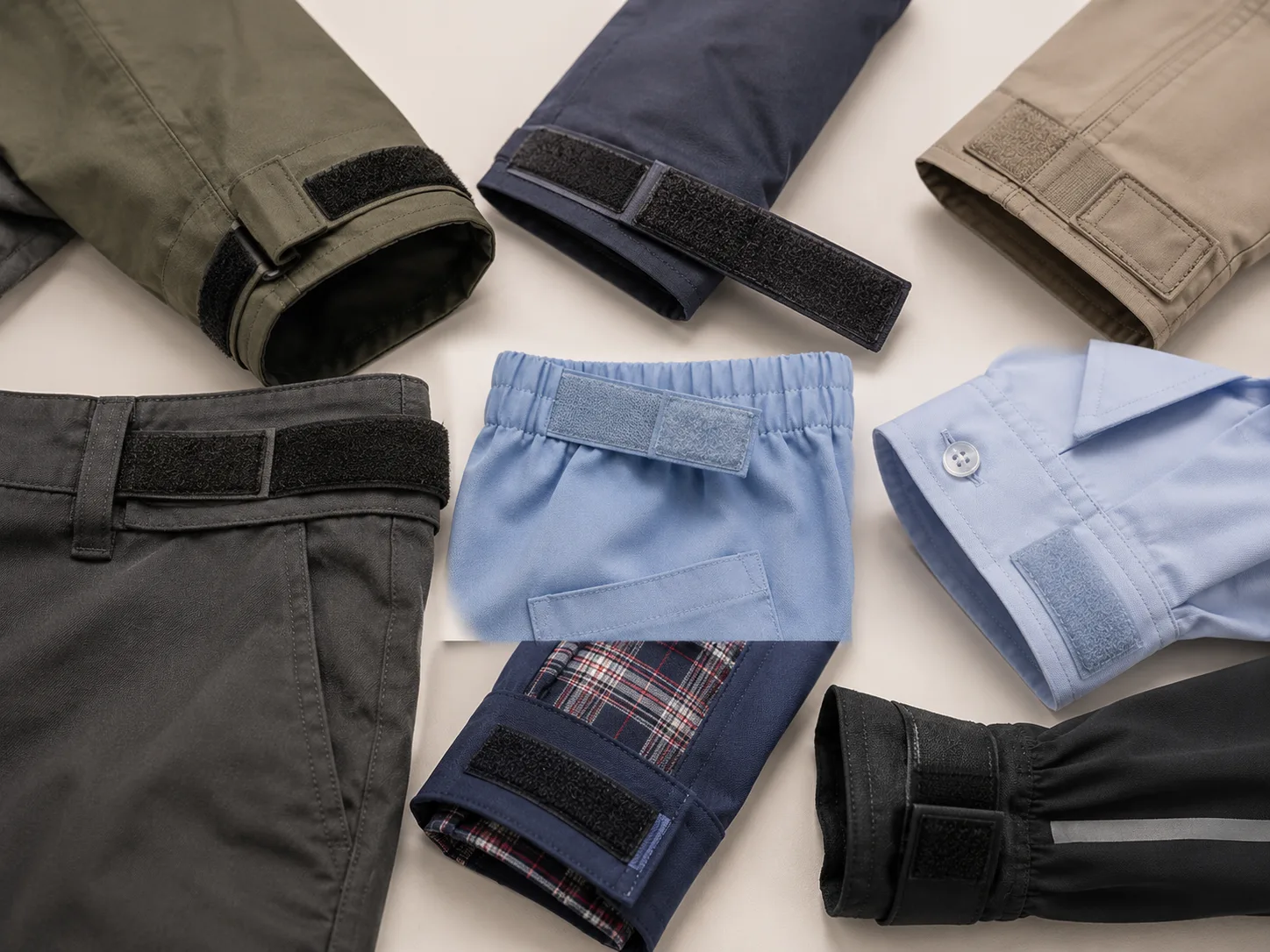
Skin-contact applications require careful attention to loop surface texture, edge finishing and material composition. Patients wearing braces or supports for hours daily will notice abrasive loops, stiff edges or fasteners that grab clothing and skin unpredictably.
Soft loop constructions with brushed or knitted surfaces are typically preferred on straps that touch intact skin. Hook components are often placed on the non-contact strap end or oriented away from direct skin touch. Where hook must sit near skin, lower-profile hook designs and controlled engagement force reduce irritation during adjustment.
Hypoallergenic requests are common in healthcare procurement, but the practical specification is controlled material selection with validated finishing processes. Latex-free construction is standard in modern hook and loop textiles. OEM teams should also confirm dye systems, backing treatments and any adhesive layers if hybrid constructions are used.
Moisture and perspiration affect comfort as well as hygiene. Patient-worn products may trap moisture at the closure interface if materials retain water or if the strap design limits airflow. Material selection and strap breathability should be evaluated together. For deeper material guidance, see the medical device fastener selection guide.
Washability and hospital cleaning compatibility
Washability is a defining requirement for reusable healthcare products. Hook and loop used in braces, positioning aids, therapy cuffs and hospital accessories must retain acceptable engagement after repeated exposure to water, detergents and mechanical action.
Sew-on nylon and nylon-polyester blends generally tolerate laundering better than adhesive-backed tapes, which can show edge lift, adhesive softening or bond loss when exposed to wash chemistry and heat. For products labeled as reusable, the fastener specification should reference the same cleaning instructions intended for the finished product label.
Cleaning exposure also includes surface wiping with disinfectants in clinical settings. Alcohol-based wipes, quaternary ammonium compounds and other hospital disinfectants can affect textile hand feel and, in some cases, fiber integrity over time. Validation should include the disinfection products caregivers actually use, not only machine washing.
After washing, engagement force often changes. Some constructions soften and maintain adequate hold; others lose loop loft or hook stiffness and feel weak prematurely. Define acceptable peel-force limits at new condition and after a specified number of wash cycles so suppliers and QA teams share the same pass-fail criteria.
Sterilization considerations for healthcare fasteners
Not every healthcare product is sterilized, but many OEM programs must evaluate sterilization compatibility during development. Single-use kits, certain device accessories and components entering sterile fields may pass through ethylene oxide, gamma radiation or autoclave processes depending on material limits and device classification.
Textile hook and loop can be compatible with some sterilization methods when the fiber, backing and any laminated layers are qualified for the process. Gamma sterilization is commonly evaluated for textile components, but post-sterilization engagement and color stability should still be tested. Autoclave steam sterilization is more aggressive and may not suit all hook and loop constructions or assembled strap laminates.
Sterilization planning should occur early. A strap assembly that includes foams, films or adhesives may fail sterilization validation even if the hook and loop textile alone appears compatible. Treat the fastener as part of the full bill of materials, not an isolated component.
If your product will not be sterilized but will be disinfected or laundered, prioritize wash validation over sterilization testing unless regulatory requirements demand both. Over-specifying sterilization tolerance can add cost without benefit for patient-worn reusable textiles that never enter a sterile field.
Sew-on vs adhesive hook and loop in healthcare
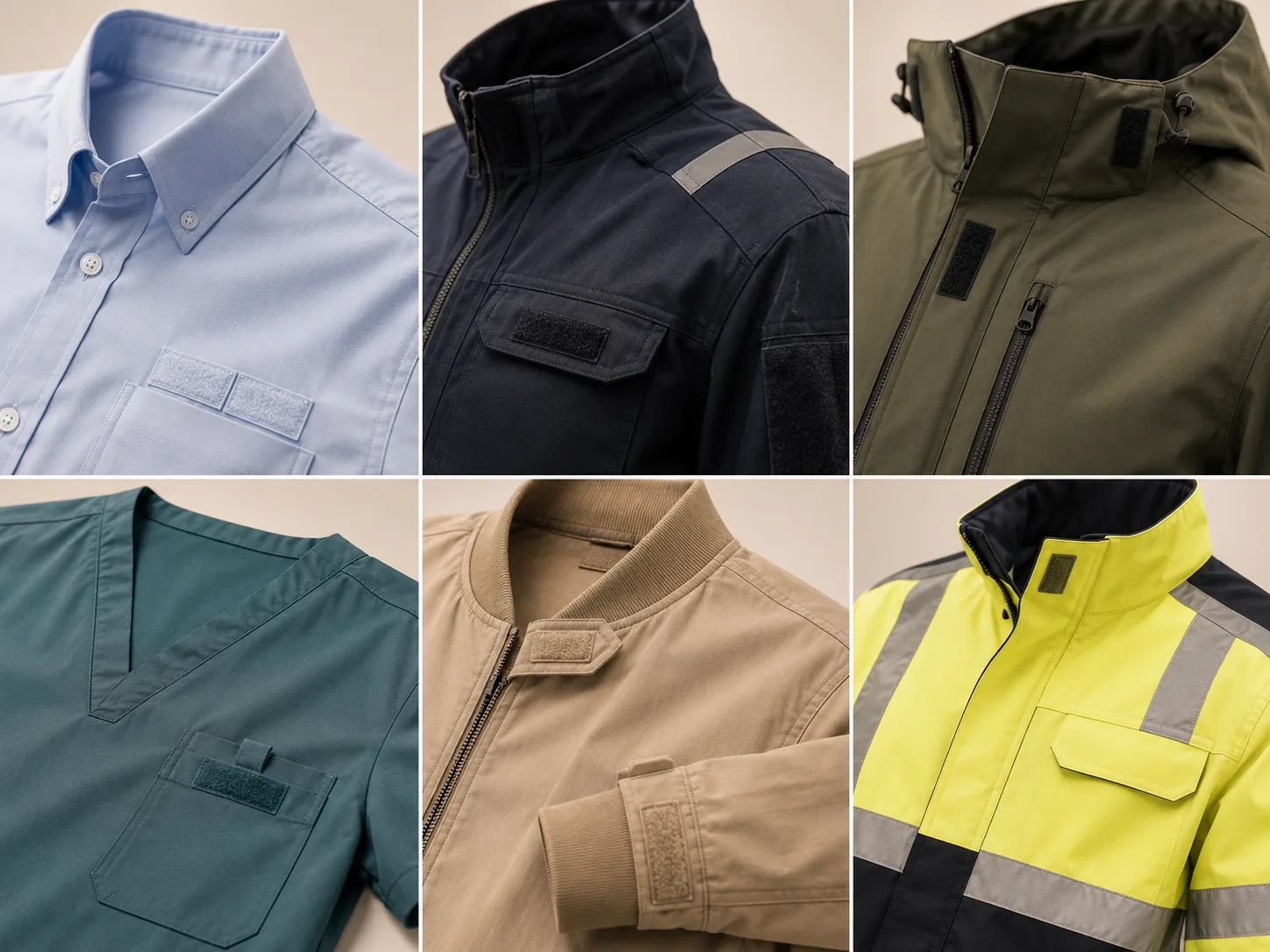
Healthcare buyers frequently ask whether sew-on or adhesive hook and loop is the better choice. In most patient-worn and washable applications, sew-on remains the default because mechanical attachment survives cleaning and repeated adjustment more reliably.
Sew-on Hook & Loop
Adhesive Hook & Loop
Standard for braces, orthotics, cuffs and adjustable healthcare textiles.
Limited to validated non-contact or indirect-contact mounting.
Mechanical stitching survives repeated laundering and flexing.
May delaminate or lift at edges under wash and disinfectant exposure.
Premium nylon sew-on grades support long-life adjustable closures.
Often adequate for short-life or low-cycle disposable formats.
Requires sewing stations and seam control.
Peel-and-stick can speed attachment on rigid panels or housings.
Reusable braces, orthotics, positioning straps and hospital textiles.
Internal device mounts, disposable panels and accessory attachment on validated substrates.
Adhesive hook and loop still has a place in healthcare manufacturing when the substrate is rigid, skin contact is absent and rapid assembly matters. However, introducing adhesive layers near patient-worn zones adds biocompatibility and residue considerations that sew-on textile fasteners avoid. When in doubt, default to sew-on for anything washable or adjustable on the body.
Material selection for healthcare hook and loop
Material blend influences cycle life, moisture behavior, hand feel and cost. Nylon-rich hook and loop typically delivers stronger repeated engagement and softer loop surfaces, making it well suited to premium healthcare straps and long-life braces. Polyester contributes dimensional stability and can improve value for products with moderate cycle demands.
Gripnex, a 100% nylon sew-on tape, is the premium option when patient comfort, high cycle life and consistent engagement after washing are priorities. Suregrip, with a 50% nylon / 50% polyester blend, offers balanced performance for hospital programs and moderate-duty closures where cost efficiency matters at volume.
Specialty formats also play a role. Velodot coins allow OEM teams to place pre-cut hook and loop pairs on small components without manual measuring on the line. That can improve consistency on positioning pads, therapy accessories and compact brace subassemblies.
Color consistency matters in healthcare branding and inventory control. White, black and skin-tone adjacent colors are common. Specify color tolerance and batch consistency requirements if multiple product lines share the same tape specification across regions.
Walonium product recommendations for healthcare OEMs
Walonium manufactures hook and loop tapes and specialty formats used across medical, healthcare and industrial OEM programs worldwide. For healthcare applications, map product choice to contact level, wash requirements and cycle-life targets.
For premium patient-worn straps, orthotics and braces requiring soft loop feel and high cycle life, evaluate Gripnex 100% nylon sew-on tape. It is suited to adjustable closures that must remain dependable after repeated use and laundering.
For moderate-duty healthcare straps, hospital textile accessories and volume programs where balanced performance and cost control are both important, evaluate Suregrip 50% nylon / 50% polyester sew-on tape.
For discrete fastening on compact medical accessories, positioning components and assemblies that benefit from pre-cut placement accuracy, evaluate Velodot hook and loop coins.
Healthcare application examples
Knee and ankle braces
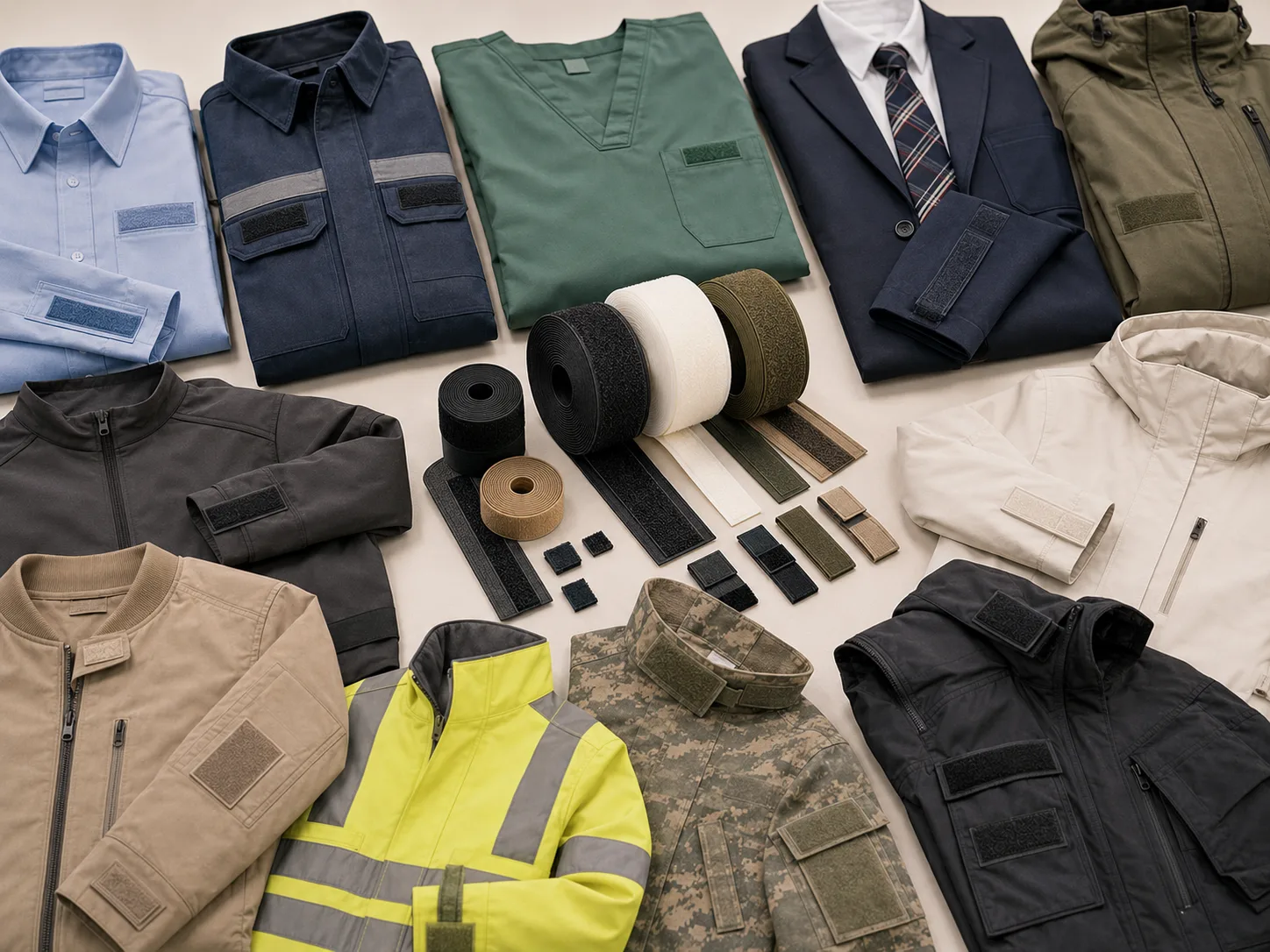
Adjustable sew-on straps allow therapists to refine fit during recovery while supporting repeated patient self-adjustment.
Foot and limb supports
Hook and loop enables modular adjustment on devices that must accommodate swelling and gait changes.
Bed and transfer aids
Fast, secure closures help caregivers reposition patients safely without complex buckles.
Therapy cuffs and wraps
Washable sew-on fasteners support reusable therapy products exposed to sweat and frequent cleaning.
Adaptive garments
Easy-open closures improve independence for seniors while remaining gentle on sensitive skin when specified correctly.
Support wraps and slings
Quick adjustment helps caregivers respond to growth and comfort needs without re-fitting hardware.
Reusable positioning pads
Discrete coin fasteners or sew-on tape support modular hospital accessories cleaned on industrial laundry lines.
Common mistakes in healthcare hook and loop specification
The first mistake is selecting tape by width and price without defining contact level and wash protocol. Healthcare products fail in the field when the fastener was never validated for the cleaning method caregivers actually use.
The second mistake is using adhesive hook and loop on washable patient-worn straps to save sewing cost. Short-term assembly savings often become long-term warranty and complaint costs once edge lift or bond loss appears after laundering.
The third mistake is ignoring edge finishing. Raw-cut tape on skin-adjacent straps can fray and irritate patients. Specify hems, edge sealing or die-cut parts where necessary.
The fourth mistake is skipping cycle-life targets. Without a defined open-close requirement, suppliers cannot confirm whether a construction is appropriately engineered for reusable braces versus single-use accessories.
Buying advice for healthcare procurement teams
When requesting quotations, share the application type, contact classification, substrate, wash or sterilization method, expected cycle life, width, color, format, production volume and target markets. Include any documentation requirements for quality audits or regulatory files.
Ask for production-representative samples sewn into the actual strap material, then test after the full cleaning sequence you intend to publish. Engagement force, edge integrity and surface feel can all shift after processing.
Evaluate total program cost, not roll price alone. The right specification reduces returns, supports faster caregiver workflows and protects brand reputation in categories where product failure is visible and immediate.
Key takeaways
Hook and loop is a proven healthcare fastening solution when specified for patient contact, washability, sterilization compatibility and cycle life. Sew-on constructions are the default for reusable patient-worn products, while specialty coin formats support compact medical accessories.
For Walonium buyers, the practical mapping is: Gripnex for premium sew-on healthcare closures, Suregrip for balanced volume programs, and Velodot for discrete fastening points on braces and positioning aids.
Validate on the finished assembly, document cleaning requirements and treat hook and loop as a specified component in your quality system. The safest healthcare fastening decision is the one proven under real clinical use conditions.
FAQ
Why is hook and loop used in medical and healthcare applications?
Hook and loop is used because it enables adjustable, reusable closures without buckles or metal hardware. It supports quick donning and doffing in braces, orthotics, patient positioning aids and hospital textiles while allowing caregivers to fine-tune fit during treatment.
Is hook and loop safe for skin contact in healthcare products?
Hook and loop can be suitable for skin-contact applications when the textile construction, dyes and finishing processes are specified for patient-worn use. Soft loop surfaces and controlled hook profiles reduce abrasion. Final biocompatibility must be validated on the finished device or product, not assumed from the tape alone.
Can medical hook and loop be washed and sterilized?
Yes, when the correct sew-on material and construction are selected. Nylon-rich hook and loop such as Gripnex generally tolerates repeated laundering better than adhesive-backed formats. Sterilization compatibility depends on the method used. Always validate performance after your specific wash temperature, detergent, autoclave or gamma process.
Should healthcare products use sew-on or adhesive hook and loop?
Sew-on hook and loop is preferred for patient-worn straps, washable textiles, braces and orthotics because mechanical attachment survives laundering and repeated adjustment. Adhesive hook and loop suits internal mounting, disposable panels or rigid substrates where skin contact is limited and bonding is validated.
Which Walonium products are recommended for medical applications?
Gripnex 100% nylon sew-on tape is recommended for premium patient-worn closures requiring soft loop feel and high cycle life. Suregrip 50% nylon / 50% polyester suits moderate-duty healthcare straps at scale. Velodot hook and loop coins support discrete fastening points on braces, positioning aids and compact medical accessories.
What cycle life should medical hook and loop provide?
Cycle life varies by application. Reusable braces and orthotics may need 500 to 2,000 open-close cycles. Hospital positioning aids exposed to daily adjustment may need fewer cycles but must tolerate frequent cleaning. Disposable products need minimal cycle life. Specify your target count so the supplier can recommend hook density and material grade.
What should procurement teams include in a medical hook and loop specification?
Include contact type, application, width, color, material blend, sew-on or adhesive format, expected cycle life, wash or sterilization method, substrate details, production volume and required documentation. A complete brief reduces sourcing risk and supports faster sample approval.
Should healthcare manufacturers test hook and loop samples before production?
Yes. Test samples sewn or bonded into the actual strap assembly under real cleaning, flexing and open-close conditions. Tape performance changes significantly once stitched, tensioned and exposed to patient wear, moisture and hospital laundering.