On this page
Why hook and loop supply chain reliability matters
Hook and loop tape is one of the most underestimated production-critical components in manufacturing. It sits low on the bill of materials, rarely appears in executive dashboards and is often reordered reactively when stock runs low. Yet when a shipment is delayed, the consequences ripple through the entire production schedule. Explore industry hook & loop guide when your specification is tied to a particular industry.
Automotive trim lines, apparel cut-and-sew floors, medical device assembly and industrial equipment manufacturers all depend on consistent fastener supply. A two-week delay on 25mm black loop tape can halt dozens of SKUs simultaneously if that width is shared across product families. Procurement teams that treat hook and loop as a commodity rather than a scheduled input learn this lesson expensively.
Reliable supply chains for hook and loop tape combine four elements: transparent lead times from the manufacturer, MOQ structures aligned with realistic batch sizes, export-ready documentation for international programs and inventory planning that maintains buffer stock for critical specifications. When all four are managed proactively, production delays from fastener shortages become rare rather than routine.
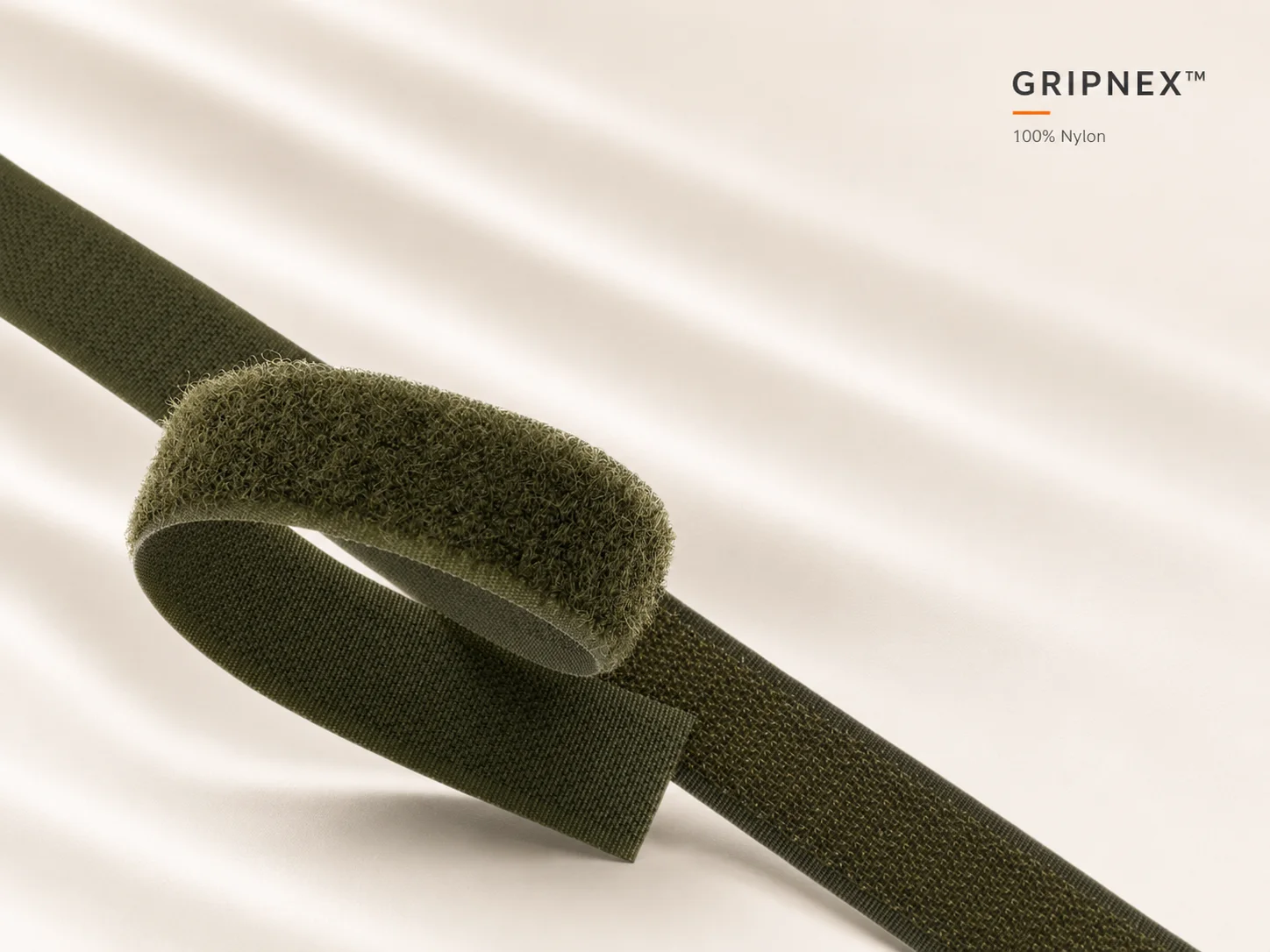
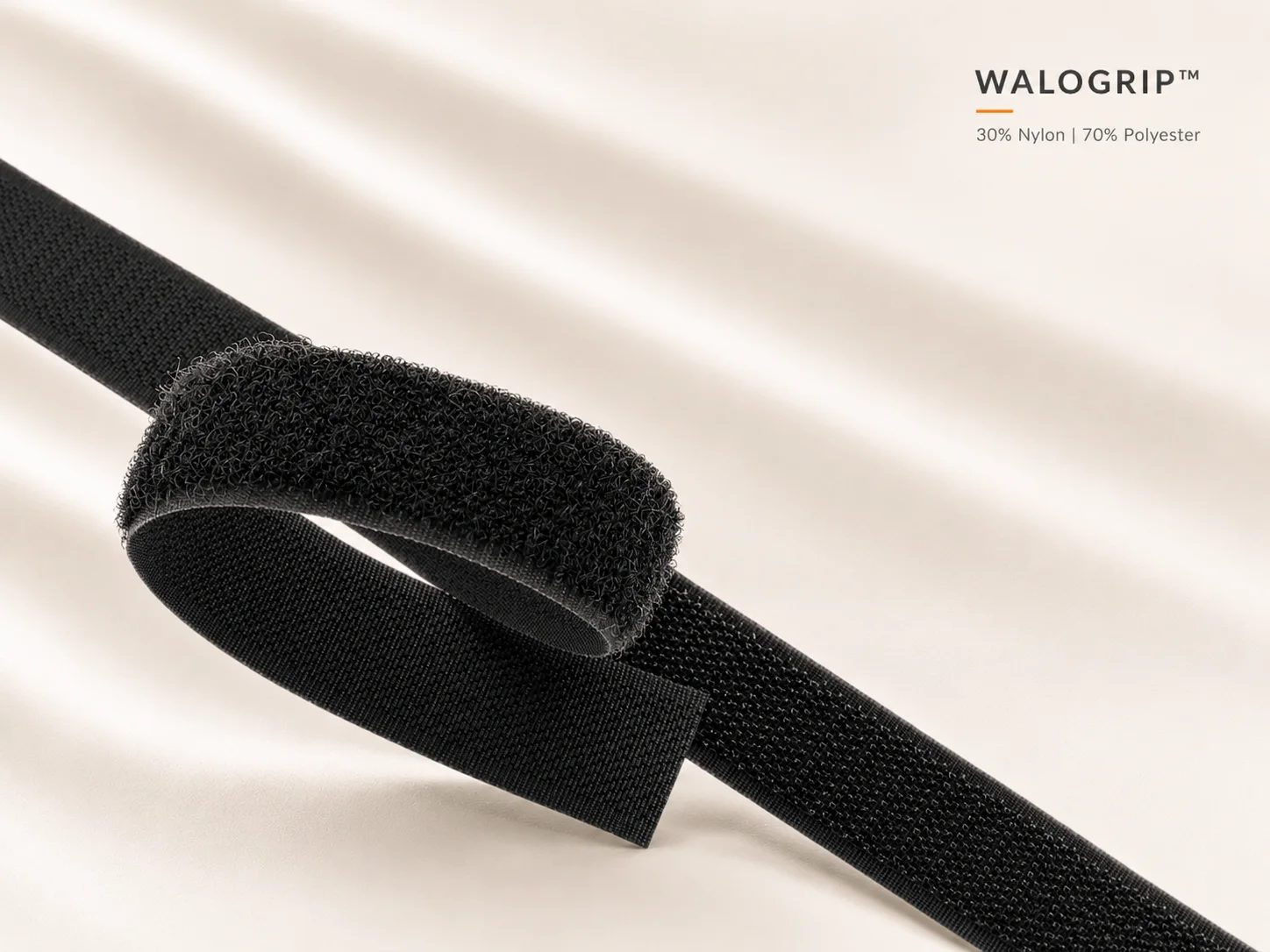
Walonium Textile supports OEM and export programs across India and international markets with production planning built around forecast visibility. Programs using Gripnex, Suregrip and Walogrip benefit from structured replenishment cycles rather than emergency reorder patterns.
Understanding lead times for hook and loop tape
Lead time is the total elapsed time from purchase order confirmation to tape arrival at your facility. For hook and loop tape, this includes production scheduling, textile weaving or knitting, hook molding, finishing, quality inspection, packaging and transit. Buyers who only ask about production time and ignore shipping windows routinely underestimate total lead time.
Standard non-custom orders for common widths such as 16mm, 20mm, 25mm and 50mm in standard colors typically require two to three weeks of production time at established manufacturers. Custom colors, specialty widths or branded packaging extend this window. Export shipments from India to North America or Europe add two to four weeks depending on freight mode, customs clearance and destination port congestion.
Premium nylon constructions like Gripnex may have slightly longer production windows because nylon yarn allocation and hook molding cycles require tighter process control. Value-oriented grades like Walogrip often ship faster because polyester-rich constructions support higher throughput on standard looms. Suregrip sits between the two, offering balanced lead times for mixed programs.
The practical takeaway for procurement teams is to confirm total lead time in writing, split into production days and transit days, before approving a supplier. Build your reorder trigger based on total lead time plus a safety buffer, not on optimistic production-only estimates.
MOQ structures and production batch alignment
Minimum order quantity directly affects how much inventory capital a buyer must commit and how frequently replenishment orders can be placed. Hook and loop MOQ varies by product grade, width, color and whether the order is domestic or export. Understanding MOQ before selecting a product grade prevents costly mismatches between order size and consumption rate.
High-volume programs running a single width and color across many SKUs can absorb larger MOQ efficiently. A footwear manufacturer using 25mm black hook and loop across ten styles benefits from ordering full MOQ rolls because consumption is predictable and shared. A medical device maker with five custom colors and three widths faces a different calculation because each SKU consumes less individually.
Walogrip supports programs where lower per-SKU consumption makes large MOQ uneconomical. Suregrip works well for mid-volume programs needing balanced performance without premium nylon pricing. Gripnex suits programs where performance justifies larger batch commitments and longer planning horizons.
Buyers should map annual consumption by SKU, divide by MOQ to calculate order frequency, and assess whether holding the resulting inventory is acceptable. If MOQ implies six months of stock for a low-volume SKU, discuss split shipments or consolidated ordering across product lines with the supplier before committing.
Export logistics and documentation requirements
International hook and loop supply adds documentation, compliance and transit complexity that domestic orders avoid. Export programs require correct HS code classification, certificates of origin, commercial invoices aligned with customs valuation rules and destination-specific compliance documentation. Missing or incorrect paperwork is one of the most common causes of export shipment delays.
Hook and loop tape typically classifies under HS heading 5806.32 covering narrow woven fabrics of man-made fibres. Correct classification affects duty rates, preferential trade agreement eligibility and customs processing speed. Buyers should confirm classification with their customs broker and supplier before the first shipment rather than discovering discrepancies at port.
Export lead times depend on freight mode. Sea freight from India to Europe or North America typically requires three to five weeks in transit plus one week for export processing and customs clearance at destination. Air freight reduces transit to five to ten days but increases cost significantly. Programs with predictable consumption should plan sea freight cycles; emergency air freight should remain a exception with a defined cost threshold.
Programs importing into the European Union should confirm REACH compliance documentation. North American buyers may need CPSIA compliance for products entering consumer markets. Walonium provides export documentation support for established trade lanes, but buyers remain responsible for confirming destination-specific requirements with their compliance team.
Dual sourcing strategies for supply resilience
Single-source dependency creates concentration risk. When one supplier faces raw material shortages, capacity constraints, logistics disruptions or quality holds, the buyer has no fallback. Dual sourcing means qualifying a secondary supplier on the same specification before an emergency forces a rushed decision that may compromise quality or cost.
Effective dual sourcing requires specification alignment, not just product similarity. The secondary supplier must match width tolerance, color reference, peel strength range and textile construction closely enough that assembly lines do not require retooling or process changes. Qualifying two suppliers on different product grades creates false redundancy because the assembly line cannot switch between them without engineering review.
A practical dual-source model assigns 70 to 80 percent of volume to the primary supplier for cost efficiency and relationship depth, while maintaining 20 to 30 percent with the secondary supplier to keep qualification current and provide surge capacity. The secondary supplier should receive regular orders, not sit dormant until an emergency, because dormant qualifications expire when specifications drift.
For Walonium programs, buyers can structure primary supply on Gripnex or Suregrip with Walogrip as a qualified alternative for applications where specification tolerance allows a grade change. Document the approved substitution matrix before production starts so planners know which alternatives are pre-approved.
Single Source
Dual Source
Consolidated volume with one supplier typically yields better unit pricing and simpler account management.
Split volume may reduce negotiating leverage on per-unit price with each supplier.
Any supplier disruption directly stops production with no qualified fallback.
Secondary supplier provides continuity during primary supplier delays or capacity constraints.
One supplier means one quality baseline and simpler incoming inspection.
Requires ongoing qualification to ensure both suppliers meet the same specification window.
One PO cycle, one set of documentation and one relationship to manage.
Two supplier relationships, two qualification records and split forecasting requirements.
Stable programs with predictable demand, long supplier relationships and low disruption tolerance cost.
High-volume OEM lines, export programs, seasonal products and industries with zero line-stoppage tolerance.
Inventory planning and safety stock management
Inventory planning transforms reactive reordering into predictable supply continuity. The goal is to maintain enough buffer stock to cover total lead time plus demand variability without tying up excessive working capital. Hook and loop tape is well suited to safety stock strategies because it has long shelf life, stable storage requirements and predictable consumption patterns in established programs.
Calculate reorder point using the formula: average daily consumption multiplied by total lead time in days, plus safety stock. Safety stock should cover demand variability during the lead time window. For a program consuming 500 meters per week with four-week total lead time, the reorder point is approximately 2,000 meters plus safety stock of 500 to 1,000 meters depending on demand volatility.
ABC classification helps prioritize inventory investment. A-grade SKUs consumed across multiple product lines deserve higher safety stock and more frequent review. C-grade SKUs with low consumption and long MOQ cycles should be monitored for obsolescence risk rather than over-stocked. Review classification quarterly as product portfolios change.
Integrate hook and loop inventory into your MRP or ERP system with the same discipline applied to higher-value components. Set automated reorder alerts based on calculated reorder points. Include hook and loop in production planning meetings when new product launches or seasonal builds will spike demand beyond normal consumption patterns.
How supply failures cause production delays
Production delays from hook and loop shortages follow predictable patterns. The most common is the last-minute reorder placed without adequate lead time buffer. A planner discovers stock will run out in five days and places an emergency order, but production lead time is three weeks. The line stops or switches to an unqualified substitute while waiting.
The second pattern is specification change without supply chain coordination. Engineering approves a width change from 20mm to 25mm, but procurement continues ordering the old specification until stock depletes. The new specification has its own lead time, creating a gap. The third pattern is export documentation failure where tape is produced on schedule but held at customs due to missing certificates or incorrect HS classification.
The fourth pattern is seasonal demand underestimation. Apparel and footwear programs often spike before retail seasons. Suppliers with finite production capacity allocate slots based on confirmed orders, not verbal forecasts. Buyers who confirm orders too late find themselves queued behind earlier commitments.
Preventing these delays requires treating hook and loop procurement with the same rigor as any production-critical input. Formal reorder points, forecast sharing, specification change protocols and export documentation checklists eliminate most delay scenarios before they reach the production floor.
Walonium supply programs for OEM buyers
Walonium Textile structures supply programs around buyer forecast visibility and production planning requirements. Rather than transactional reordering, established OEM accounts benefit from scheduled production slots, consolidated export shipments and dedicated account coordination for documentation and logistics.
For high-performance programs, Gripnex delivers 100% nylon construction with production scheduling that accounts for nylon yarn allocation and hook molding capacity. Premium programs with longer planning horizons receive priority slot allocation during peak demand periods.
Suregrip serves as the primary workhorse for mixed domestic and export programs where 50/50 nylon-polyester construction balances performance and replenishment flexibility. Its moderate MOQ thresholds and consistent production throughput make it the most common choice for multi-SKU programs.
Walogrip supports high-volume, cost-sensitive lines where inventory buffering is the primary supply strategy. Lower unit cost enables buyers to hold larger safety stock positions without excessive capital commitment, reducing delay risk for standard specifications.
Industry supply chain considerations
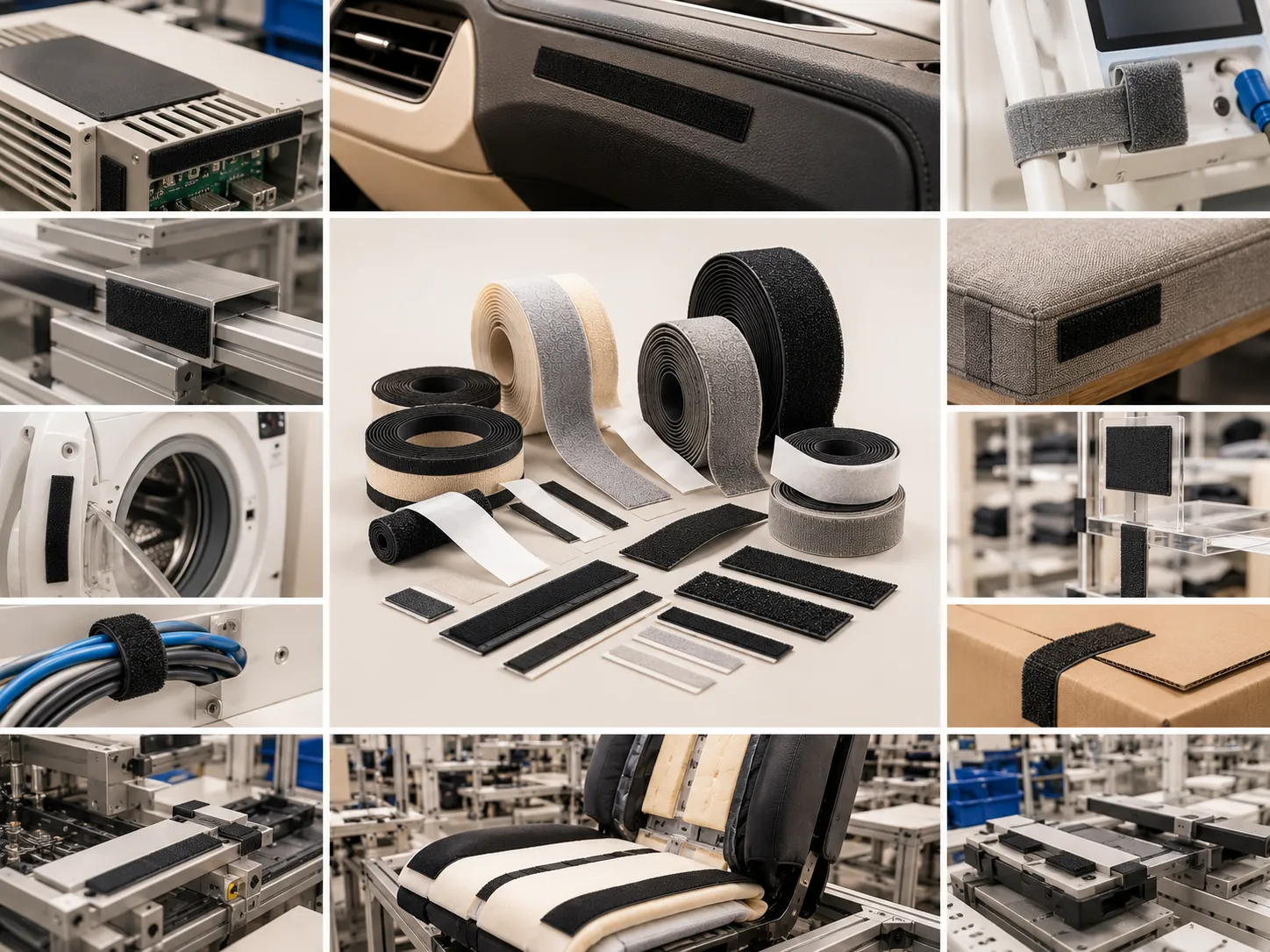
Long program lifecycles
Automotive programs run five to seven years with stable specifications. Lock in supply agreements early and qualify dual sources before SOP. Gripnex for interior trim with documented batch consistency.
Seasonal demand spikes
Confirm orders eight to twelve weeks before seasonal production peaks. Share size-run forecasts so suppliers allocate loom capacity. Suregrip for balanced performance across garment categories.
Regulated supply documentation
Maintain supplier qualification records, batch traceability and change-control documentation. Supply interruptions in medical programs trigger formal deviation processes. Plan buffer stock accordingly.
Multi-SKU width sharing
Consolidate common widths across styles to maximize MOQ efficiency. Walogrip for high-volume standard colors where cost per pair matters at scale.
Export-heavy programs
Plan sea freight cycles with documentation lead time included. Maintain safety stock at destination warehouse to decouple production from transit variability.
Small-format precision
Narrow widths and die-cut formats have longer lead times than standard rolls. Order die-cut tooling separately and maintain finished-goods buffer for cable management SKUs.
Stable specifications
Furniture programs change infrequently, making single-source agreements viable. Hold two-month safety stock for standard widths used across cushion and panel attachments.
Common supply chain mistakes
The most damaging mistake is treating hook and loop as a low-priority purchase exempt from formal procurement controls. When tape reorders bypass the MRP system and are handled informally by production staff, lead time discipline disappears and emergency orders become normal rather than exceptional.
The second mistake is ignoring total lead time by planning only around production days. Buyers who reorder when stock hits two weeks of cover but total lead time is four weeks will experience recurring shortages regardless of supplier reliability.
The third mistake is failing to communicate forecast changes. A new product launch doubling hook and loop consumption will deplete safety stock unless procurement updates the supplier and adjusts reorder points before the launch date.
The fourth mistake is qualifying dual sources on paper but never placing orders with the secondary supplier. An unexercised qualification decays as specifications drift, making the backup useless when actually needed.
Procurement checklist for hook and loop supply
Before approving a hook and loop supplier for production programs, verify production lead time by product grade and width, total lead time including transit for your destination, MOQ by SKU and whether split shipments are available, export documentation support for your target markets, quality certification and batch traceability capability, and communication process for forecast sharing and specification changes.
After supplier approval, establish reorder points by SKU in your inventory system, document approved substitution grades for supply continuity, schedule quarterly review of consumption rates against safety stock levels, and include hook and loop in new product introduction checklists so specification changes trigger procurement updates simultaneously.
For deeper guidance on product selection that affects supply planning, review the nylon vs polyester material guide and the quality assurance guide to understand how product grade affects lead time and MOQ structures.
Key takeaways
Hook and loop supply chain reliability is a planning discipline, not a supplier lottery. Map total lead time including transit, align MOQ with consumption patterns, maintain safety stock for critical SKUs and qualify dual sources before emergencies force the decision.
For Walonium programs, match product grade to supply strategy: Gripnex for premium programs with longer planning horizons, Suregrip for balanced multi-SKU production, and Walogrip for high-volume lines where inventory buffering at lower unit cost reduces delay risk.
Share forecast data proactively, treat specification changes as supply chain events and integrate hook and loop into the same procurement rigor applied to higher-value components. Production delays from fastener shortages are preventable when supply continuity is planned rather than hoped for.
FAQ
What lead times should OEM buyers expect for hook and loop tape?
Standard production lead times for custom widths and colors typically range from two to four weeks depending on volume, textile construction and finishing requirements. Export shipments add one to three weeks for documentation, freight booking and customs clearance. Confirm both production and transit windows in writing before placing production orders.
How do MOQ requirements affect production planning?
Minimum order quantities determine how much safety stock you can hold economically. High MOQ on premium grades like Gripnex may push buyers toward larger but less frequent orders. Walogrip and Suregrip often support lower MOQ thresholds, making them better fits for programs that need smaller replenishment batches without tying up excess inventory capital.
What export documentation is needed for hook and loop shipments?
Export orders typically require commercial invoices, packing lists, certificates of origin, HS code classification under textile heading 5806.32, and any destination-specific compliance certificates. Buyers importing into the EU or North America should confirm REACH or CPSIA documentation requirements before the first shipment to avoid customs delays.
When should manufacturers use dual sourcing for hook and loop?
Dual sourcing makes sense when production cannot tolerate a single-supplier delay, when seasonal demand creates unpredictable spikes, or when export routes face geopolitical or logistics risk. Qualify a secondary supplier on the same width, color and textile specification before an emergency forces a rushed approval that may compromise quality.
How much safety stock should procurement hold for critical SKUs?
A practical rule is to hold two to four weeks of consumption for standard widths and colors used across multiple product lines. For custom-dyed or die-cut formats, increase buffer stock to cover full production lead time plus transit. Review safety stock levels quarterly against actual consumption and supplier lead time changes.
Can Walonium support both domestic and export supply programs?
Yes. Walonium Textile manufactures hook and loop tape in India with established export logistics for North America, Europe, Middle East and Asia-Pacific destinations. Programs using Gripnex, Suregrip or Walogrip can be structured for domestic replenishment or consolidated export shipments with full documentation support.
What causes most hook and loop related production delays?
The most common causes are last-minute reorders without lead time buffer, unqualified color or width changes mid-program, missing export documentation, and treating fasteners as low-priority purchases that bypass formal procurement review. Delays are almost always planning failures, not manufacturing failures.
How should buyers communicate forecast data to their tape supplier?
Share rolling three-to-six-month volume forecasts by SKU, expected new product launches, seasonal peaks and any planned width or color changes. Forecast visibility helps the supplier schedule production slots, pre-position raw materials and avoid capacity conflicts that extend lead times during peak demand periods.