On this page
Why B2B sustainability standards matter for hook and loop
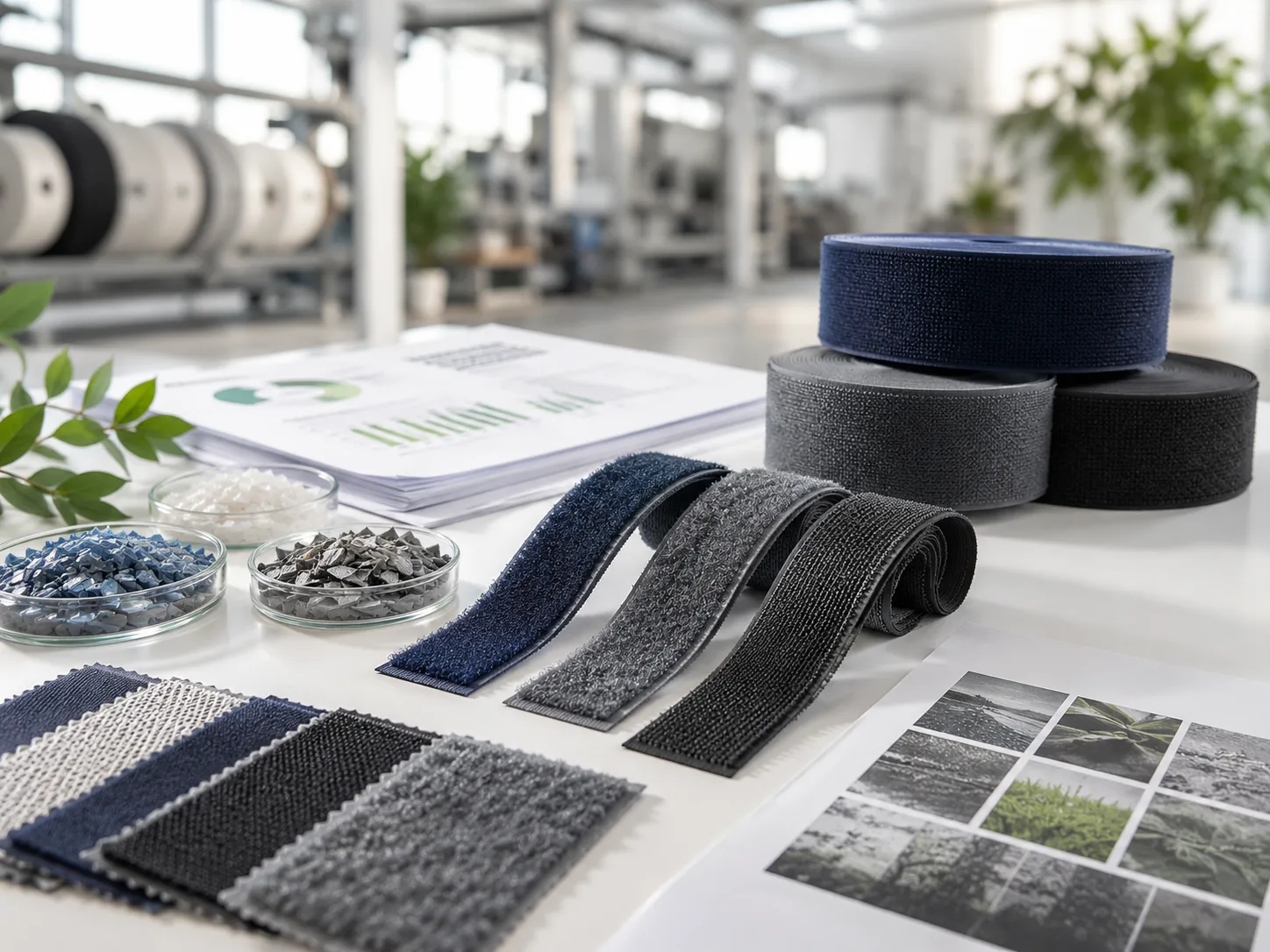
Sustainability requirements have moved from voluntary corporate initiatives to mandatory procurement criteria across European, North American and Asia-Pacific supply chains. Retailers, automotive OEMs, medical device manufacturers and export-oriented brands now require suppliers to demonstrate compliance with chemical safety, textile certification and environmental responsibility standards before approving vendor lists. Explore vertical fastening solutions when your specification is tied to a particular industry.
Hook and loop tape is a textile component subject to the same compliance scrutiny as fabrics, trims and packaging materials. A garment brand pursuing OEKO-TEX certification cannot achieve it if hook and loop fasteners fail chemical testing. An automotive program requiring REACH compliance needs documentation covering every material input including fastening components.
B2B buyers sourcing hook and loop tape must evaluate sustainability at two levels. Textile export teams should cross-read our B2B textile sourcing guide when sustainability and trim specification overlap. the chemical safety and certification status of the product itself, and the environmental practices of the manufacturing supplier. Both levels affect whether the finished product meets customer and regulatory requirements in target markets.
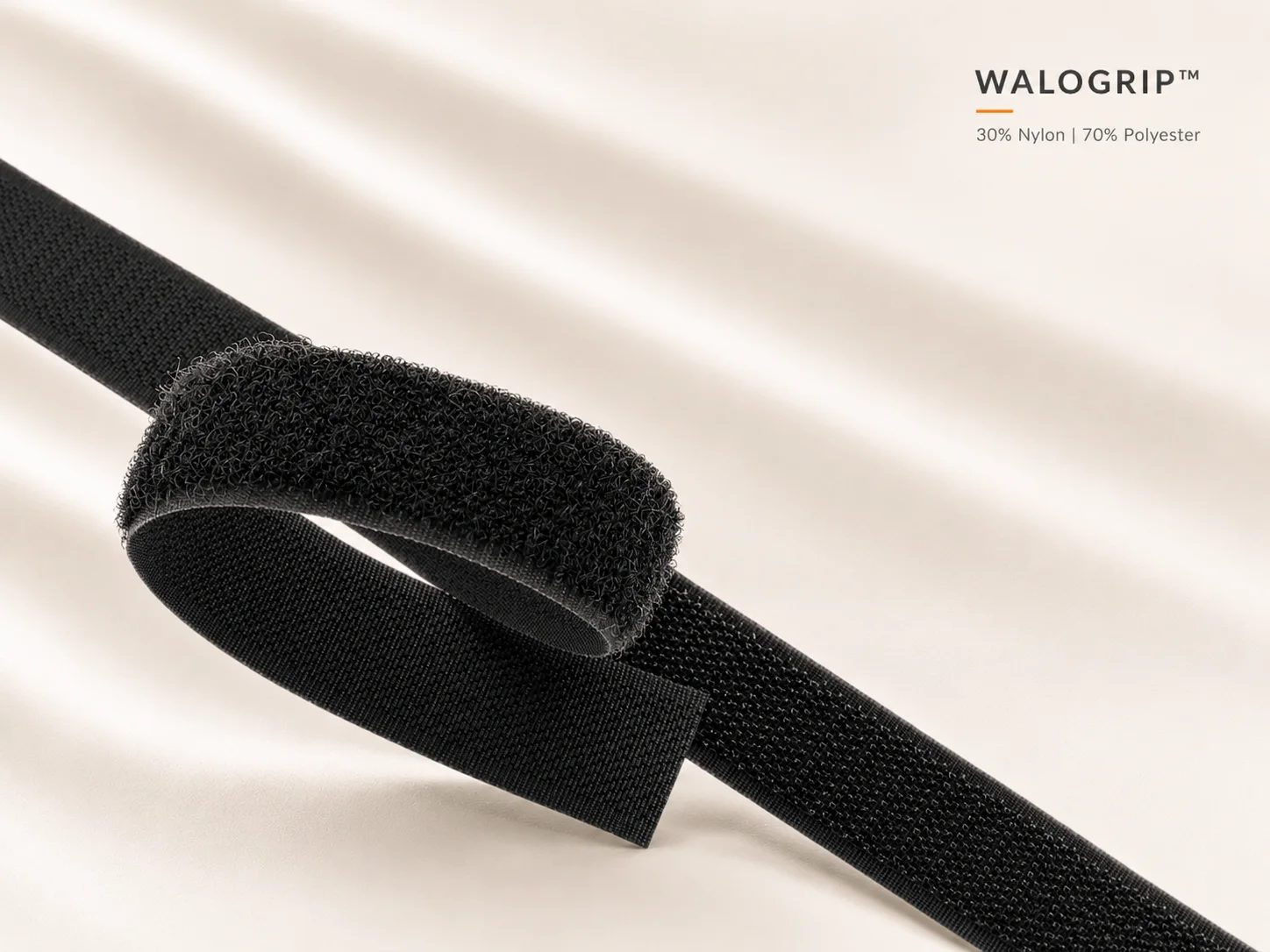
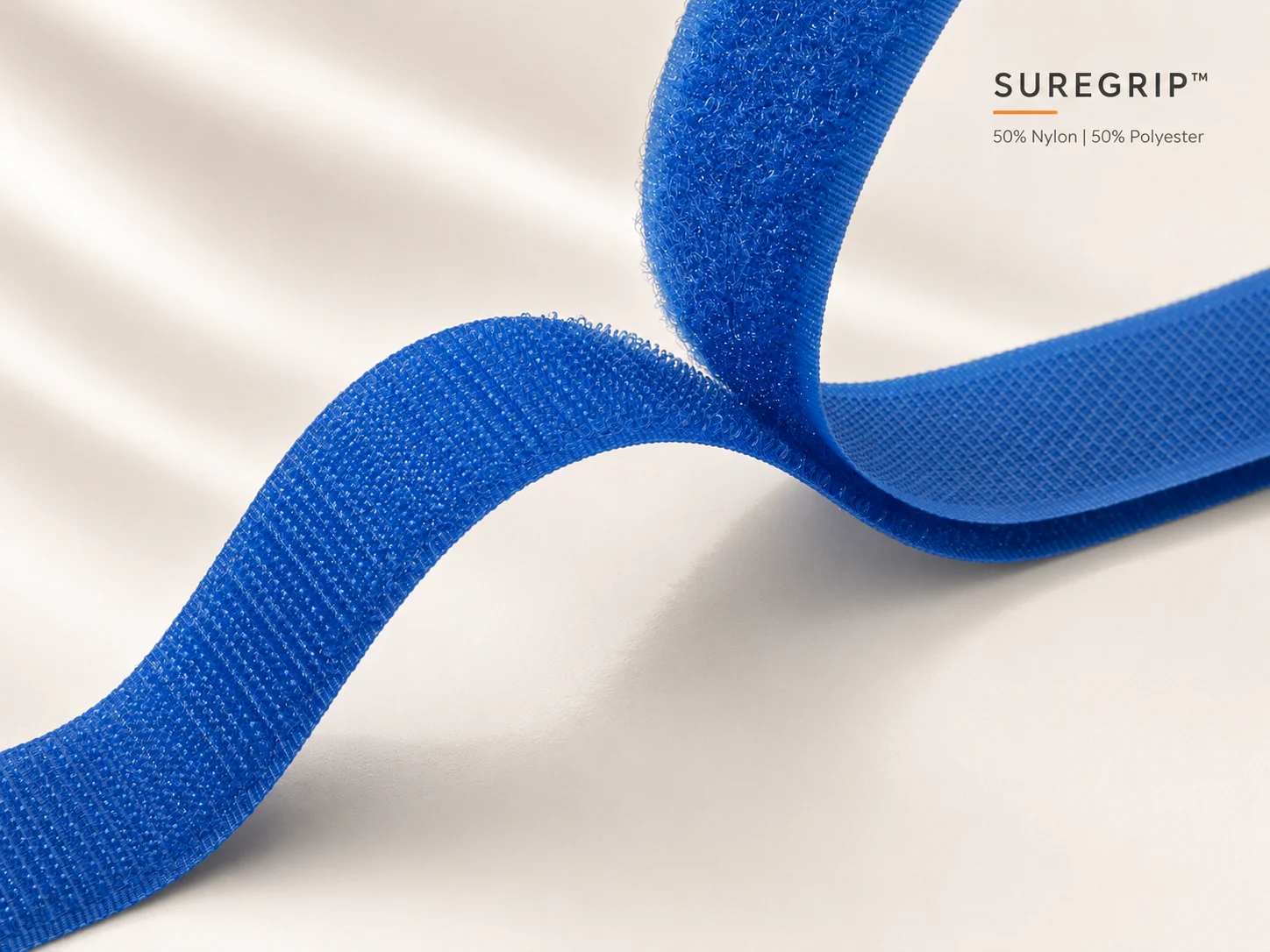
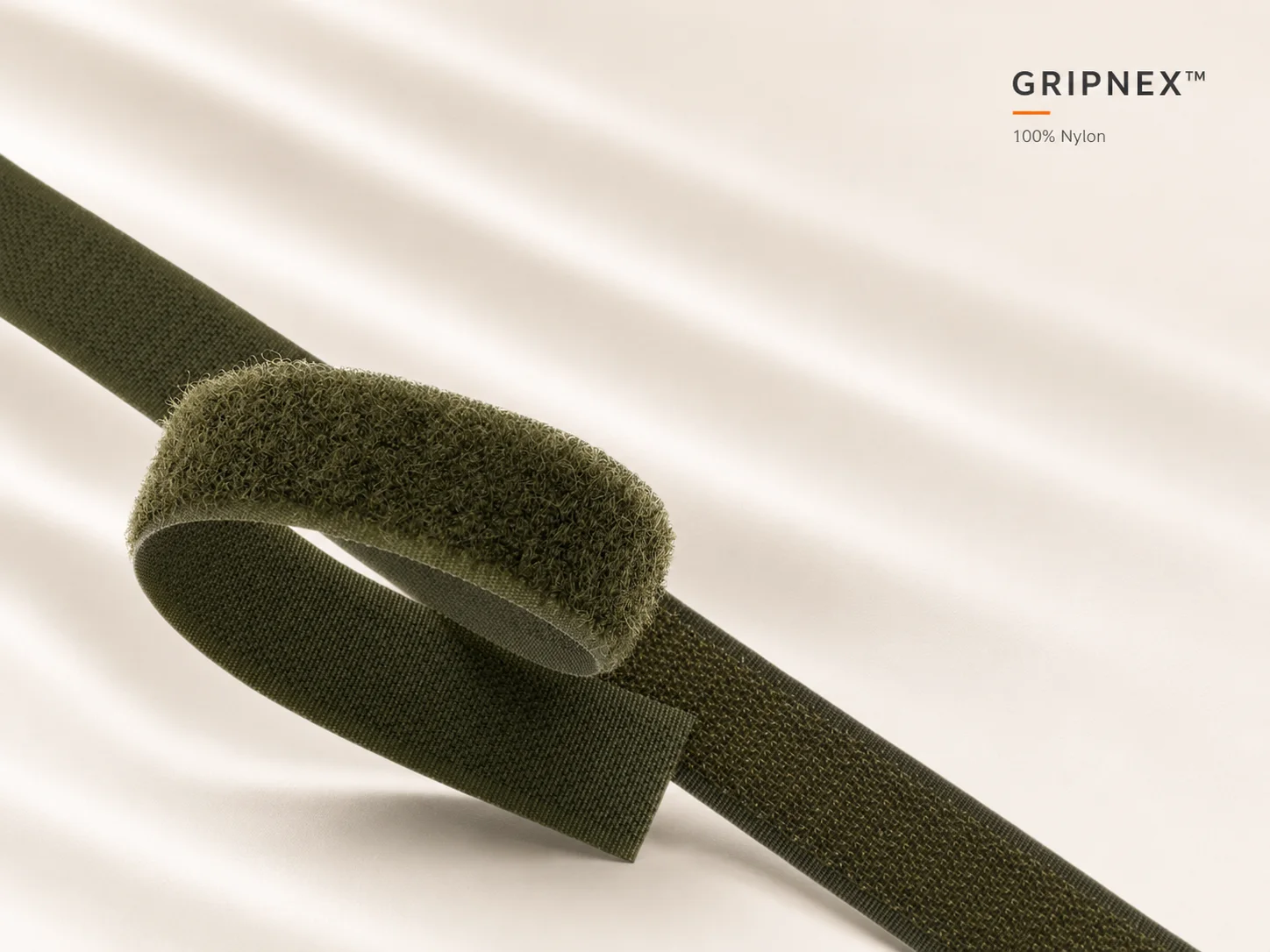
Walonium Textile manufactures hook and loop products including Walogrip, Suregrip and Gripnex with attention to chemical compliance, responsible material sourcing and documentation support for buyer sustainability programs.
REACH compliance for European markets
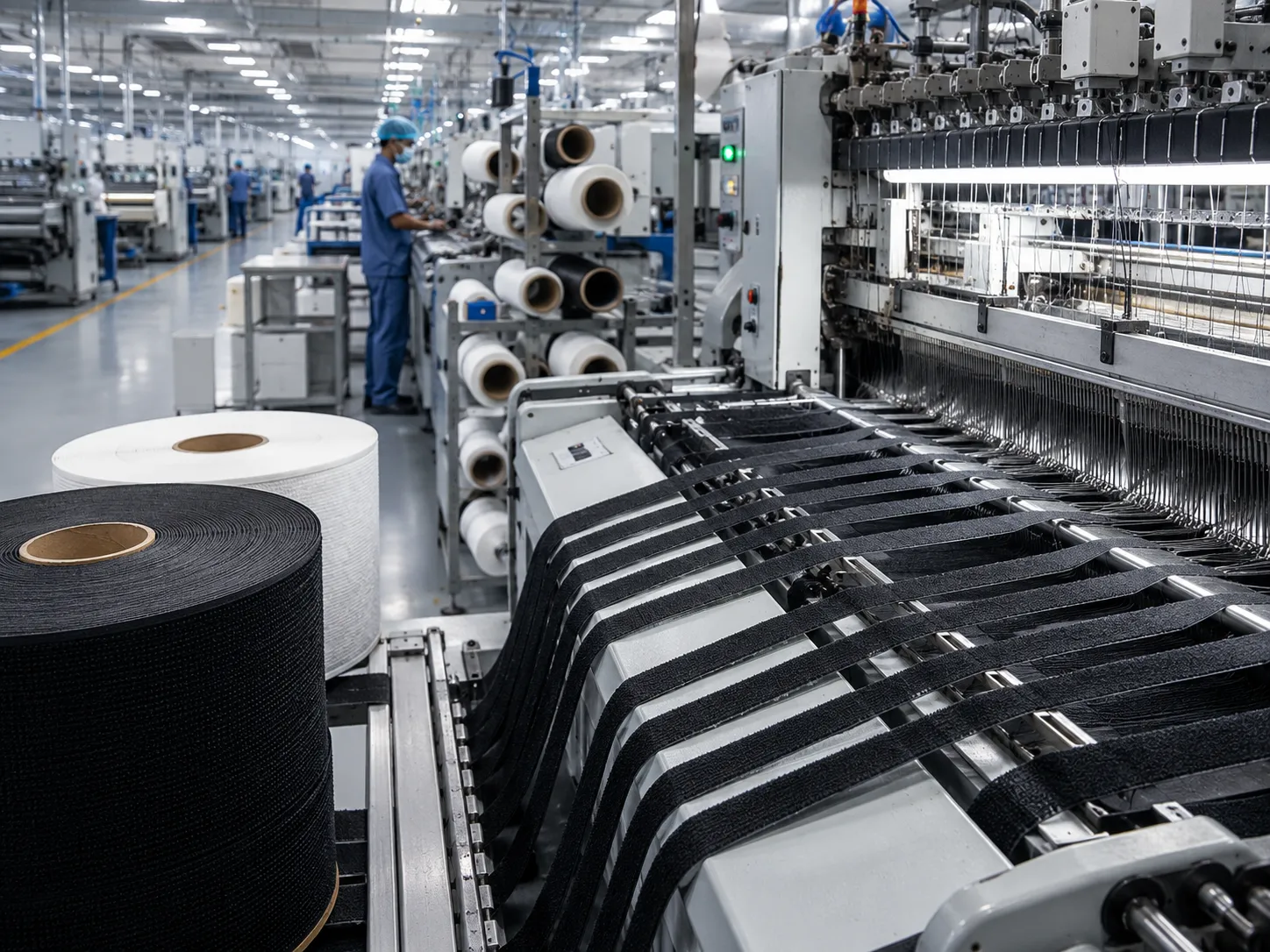
REACH (Registration, Evaluation, Authorisation and Restriction of Chemicals) is the European Union regulatory framework governing chemical substances in manufactured products. Hook and loop tape sold into EU markets must comply with REACH substance restrictions, particularly concerning SVHC (Substances of Very High Concern) listed on the ECHA candidate list.
Textile hook and loop components must demonstrate that dyes, finishing agents, backing adhesives and auxiliary chemicals do not contain restricted substances above defined concentration limits. Common concern areas include azo dyes that release restricted aromatic amines, heavy metals from dyeing processes, and phthalates or flame retardants in certain textile treatments.
B2B buyers importing hook and loop into the EU should request REACH compliance declarations from suppliers specifying product grade, test scope and date of declaration. Declarations should be updated when REACH candidate lists are revised, typically twice per year, because new SVHC additions may affect previously compliant products.
Walonium provides REACH compliance documentation for non-adhesive product grades including Walogrip, Suregrip and Gripnex. Buyers should confirm that declarations cover the specific colors and finishes in their order, not just base product grades, because dye chemistry varies by color.
OEKO-TEX certification and textile safety
OEKO-TEX Standard 100 is the most widely recognized textile safety certification for consumer-facing products. It tests for harmful substances across the production chain and certifies that products meet defined human-ecological requirements. Apparel brands, home textile manufacturers and children's product makers frequently require OEKO-TEX certified components including hook and loop fasteners.
Certification scope matters for procurement decisions. OEKO-TEX certification applies to specific product classes with defined test parameters. Class I covers products for babies and toddlers with the strictest limits. Class II covers products with direct skin contact. Class III covers products without direct skin contact. Class IV covers decoration materials. Hook and loop used in children's wear requires Class I or Class II certification depending on contact area.
Certification is product-specific and time-limited, typically requiring annual renewal with retesting. Buyers should verify certificate validity dates and confirm that certified product grades and colors match their purchase specifications. A valid OEKO-TEX certificate for black Gripnex does not cover custom-dyed colors unless separately tested and listed.
For B2B programs targeting retail partners with OEKO-TEX requirements, include hook and loop certification status in supplier qualification criteria alongside mechanical performance specifications. Non-certified fasteners can block entire product certification even when all other components comply.
Recycled materials and circular economy options
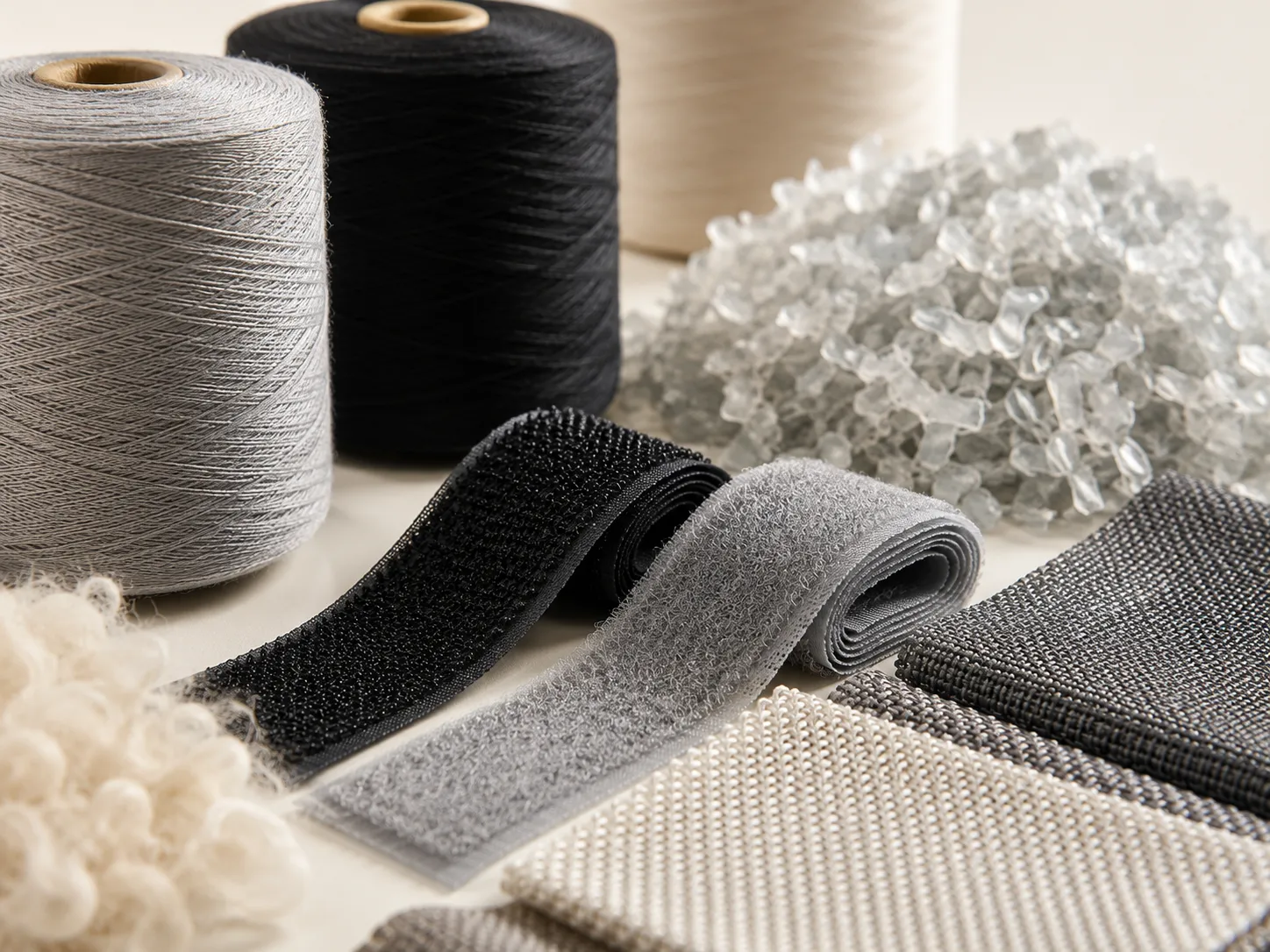
Recycled content requirements are expanding across retail and automotive supply chains driven by corporate sustainability commitments and emerging regulations such as the EU Textile Strategy. B2B buyers increasingly ask whether hook and loop tape is available with post-consumer recycled (PCR) or post-industrial recycled (PIR) content.
Recycled nylon and polyester yarns can be incorporated into hook and loop construction, though recycled content affects performance characteristics. Recycled nylon may show slightly lower tenacity affecting hook durability over very high cycle counts. Recycled polyester performs closer to virgin material for static applications with lower cycle demands.
Walogrip polyester-rich construction is the most natural fit for recycled content programs because polyester recycling infrastructure is more mature than nylon recycling at commercial scale. Suregrip blended construction can incorporate partial recycled content while maintaining balanced performance. Gripnex 100% nylon programs face more limited recycled yarn availability, though the landscape is evolving rapidly.
Buyers pursuing recycled content should define minimum recycled percentage requirements, acceptable performance trade-offs and documentation needs such as Global Recycled Standard (GRS) certification. Recycled content claims require chain-of-custody documentation from yarn supplier through finished product.
B2B sustainability procurement frameworks
Large B2B buyers increasingly evaluate suppliers through sustainability scorecards covering chemical compliance, environmental management, social responsibility and governance practices. Hook and loop suppliers participate in these evaluations as tier-two or tier-three vendors within the buyer's supply chain hierarchy.
Common B2B sustainability requirements include completed supplier sustainability questionnaires covering energy use, waste management and water consumption, chemical compliance declarations for all product grades supplied, environmental management system certification such as ISO 14001, social compliance documentation covering labor practices and working conditions, and carbon footprint data or reduction commitments where buyer programs require them.
Procurement teams should integrate sustainability criteria into vendor approval workflows alongside quality and cost evaluation. A supplier with competitive pricing but incomplete compliance documentation creates risk for the buyer's own sustainability commitments to customers and regulators.
Walonium supports B2B sustainability programs by providing product-level compliance declarations, responding to supplier assessment questionnaires, and maintaining documentation that buyers can incorporate into their own sustainability reporting and customer-facing claims.

REACH
OEKO-TEX Standard 100
EU regulatory requirement covering all chemical substances in products sold in European markets.
Voluntary textile certification focused on harmful substances in consumer textile products.
Non-compliance can result in market access restrictions, product recalls and regulatory penalties in the EU.
Market-driven requirement imposed by retailers and brands on their suppliers.
SVHC screening, substance registration and restriction compliance across all product inputs.
Harmful substance testing against defined human-ecological limit values by product class.
Compliance declarations, SDS where applicable, and SVHC communication above 0.1% threshold.
Test certificates with product class, valid date range and certified article numbers.
Required for all EU export programs regardless of end product category.
Required by retail brands and consumer product manufacturers globally.
Product-level sustainability by Walonium grade
Each Walonium product grade has distinct sustainability characteristics based on material composition, dye chemistry and production process. Buyers should match product selection to sustainability requirements rather than assuming all grades carry identical certification scope.
Walogrip with 30% nylon and 70% polyester construction offers the most straightforward path for recycled content programs due to mature polyester recycling supply chains. Its value positioning suits high-volume programs where sustainability compliance must be achieved without premium pricing.
Suregrip balanced 50/50 construction serves programs needing both performance and compliance documentation for export markets. It is commonly specified in apparel and bag programs where OEKO-TEX certification and REACH compliance are standard vendor requirements.
Gripnex 100% nylon premium construction supports programs where performance and sustainability must coexist. Nylon-specific dye chemistry and finishing require dedicated compliance testing, but the resulting documentation supports demanding applications in automotive, medical and premium apparel segments.
Environmental practices in manufacturing
Product-level compliance addresses what is in the tape. Manufacturing environmental practices address how the tape is made. B2B sustainability programs increasingly evaluate both dimensions when scoring supplier performance.
Key manufacturing environmental indicators include energy consumption per unit of production output, water usage and wastewater treatment in dyeing and finishing operations, waste generation and recycling rates for textile production scrap, and chemical management practices for storage, handling and disposal of dyes and finishing agents.
Walonium manufacturing operations incorporate waste segregation and recycling of textile production scrap where feasible, controlled chemical storage and handling procedures aligned with safety requirements, and ongoing evaluation of energy efficiency improvements in production equipment. Buyers requiring ISO 14001 environmental management certification should confirm current certification status during supplier qualification.
Manufacturing location also affects sustainability reporting. Products manufactured in India for export to Europe or North America carry embedded transportation emissions that buyers tracking scope 3 carbon footprints must account for. Sea freight produces lower per-unit emissions than air freight, reinforcing the supply chain planning guidance in the supply chain guide.
Documentation requests for compliance programs
B2B buyers should maintain a standard documentation request package for hook and loop suppliers that covers all sustainability requirements relevant to their market. A complete request typically includes REACH compliance declaration dated within the last twelve months, OEKO-TEX certificate copies with validity confirmation for ordered product grades and colors, material safety data sheets where chemical content requires disclosure, recycled content certificates with GRS chain-of-custody if applicable, and supplier environmental and social compliance questionnaire responses.
Organize documentation by product grade and color in your supplier qualification file. When specifications change or new colors are added, trigger updated documentation requests before approving production orders. Outdated compliance documents are a common finding in customer audits and retail certification reviews.
For adhesive products such as Bondix, request separate adhesive chemistry compliance documentation covering the pressure-sensitive adhesive layer independently from textile compliance. Adhesive formulations contain different chemical profiles than textile components and require distinct testing and declaration scope.
Industry sustainability requirements

OEKO-TEX and ZDHC
Apparel brands require OEKO-TEX certified components and increasingly align with ZDHC MRSL for chemical management. Suregrip and Walogrip for visible and contact-area applications.
IMDS and REACH
Automotive OEMs require International Material Data System entries and REACH compliance for all material inputs. Gripnex for interior applications with full material disclosure.
Biocompatibility standards
Medical programs require ISO 10993 biocompatibility testing and chemical safety documentation beyond standard textile certifications. Validate independently for clinical applications.
Brand sustainability pledges
Major retailers mandate supplier sustainability scorecards covering chemical compliance, recycled content and carbon reporting. Document hook and loop compliance for scorecard submission.
Restricted substance lists
Footwear brands maintain RSLs often stricter than regulatory minimums. Confirm hook and loop dye chemistry against brand-specific RSL before production approval.
CPSIA and OEKO-TEX Class I
Children's products require CPSIA compliance in the US and OEKO-TEX Class I in Europe. Hook and loop must meet strictest substance limits for these categories.
Recycled content claims
Home textile programs increasingly specify minimum recycled content. Walogrip polyester-rich construction supports GRS-certified recycled content programs.
Common sustainability compliance mistakes
The most frequent mistake is assuming supplier compliance declarations cover all product grades and colors generically. Compliance is product-specific, and a declaration for standard black may not cover custom-dyed colors without separate testing evidence.
The second mistake is treating sustainability documentation as a one-time qualification activity. Certificates expire, regulatory lists update and product specifications change. Compliance requires ongoing document management, not a single approval event.
The third mistake is ignoring adhesive chemistry compliance for products like Bondix when evaluating textile compliance for sew-on grades. Mixed product portfolios need grade-specific documentation covering both textile and adhesive chemical profiles.
The fourth mistake is failing to communicate sustainability requirements to suppliers at the quoting stage. Discovering that a supplier cannot provide OEKO-TEX certificates after approving a product specification wastes time and delays program launch.
Sustainability checklist for B2B buyers
Before adding a hook and loop supplier to your approved vendor list, confirm REACH compliance declarations for target export markets, OEKO-TEX certificate validity for required product class and colors, recycled content documentation if your program requires it, environmental and social compliance questionnaire completion, and change notification process for material or process modifications affecting compliance status.
During ongoing procurement, verify certificate validity before each major order, request updated declarations when regulatory lists change, include compliance documentation in incoming inspection records, and audit supplier documentation annually as part of vendor management review.
For related guidance on quality systems that support compliance programs, review the quality assurance guide and the material selection guide for understanding how product grade affects sustainability options.
Key takeaways
Sustainability compliance for hook and loop tape is a procurement requirement, not an optional enhancement. REACH governs EU market access. OEKO-TEX supports retail and consumer product certification. Recycled content programs require chain-of-custody documentation.
Walogrip supports recycled content and value-oriented compliance programs. Suregrip balances performance with standard export compliance documentation. Gripnex serves premium applications where performance and chemical safety must coexist with documented testing.
Request grade-specific and color-specific documentation, maintain renewal calendars, and integrate sustainability criteria into supplier qualification alongside quality and supply chain requirements. Compliance is continuous, not one-time.
FAQ
Is Walonium hook and loop tape REACH compliant for EU export?
Walonium provides REACH compliance declarations for non-adhesive product grades including Walogrip, Suregrip and Gripnex. Declarations specify tested product grades and colors. Confirm that your specific order colors are covered and request updated declarations when ECHA revises the SVHC candidate list.
Does Walonium offer OEKO-TEX certified hook and loop tape?
OEKO-TEX certification applies to specific product grades, colors and certification classes. Request current certificate copies with validity dates and verify that certified article numbers match your order specifications. Certification class requirements vary by end product contact level.
Can hook and loop tape contain recycled materials?
Yes. Recycled polyester and nylon yarns can be incorporated into hook and loop construction. Walogrip polyester-rich construction is the most natural fit for recycled content programs. Recycled content claims require GRS chain-of-custody documentation from yarn supplier through finished product.
What sustainability documentation should B2B buyers request?
Request REACH compliance declarations, OEKO-TEX certificate copies, material safety data sheets where applicable, recycled content certificates with GRS documentation if required, and completed supplier sustainability questionnaire responses covering environmental and social compliance.
Are sustainability declarations transferable between product grades?
No. Compliance documentation is product-grade and color specific. A REACH declaration for Walogrip does not cover Bondix adhesive products, which require separate adhesive chemistry documentation. Custom colors require separate testing from standard colors.
How often should compliance documentation be renewed?
OEKO-TEX certificates typically require annual renewal. REACH declarations should be refreshed when ECHA updates the SVHC candidate list, usually twice per year. Maintain a documentation calendar with renewal reminders aligned to certificate expiry dates.
What B2B sustainability frameworks apply to hook and loop suppliers?
Common frameworks include supplier sustainability scorecards, ZDHC MRSL alignment for apparel chemical management, IMDS material disclosure for automotive, CPSIA for US children's products, and corporate carbon reporting programs requiring scope 3 supply chain data.
How do I verify OEKO-TEX certificate authenticity?
Verify certificate numbers directly through the OEKO-TEX label check online database rather than accepting supplier-generated summaries. Confirm certificate validity dates, certified product class and listed article numbers match your order specifications.