On this page
Why hook and loop matters in B2B textile manufacturing
Textile manufacturers selling to apparel brands, workwear OEMs, medical garment makers and private-label retailers rarely treat hook and loop as a commodity trim. It is a functional component that affects fit adjustment, panel access, wash durability, line efficiency and export compliance. When procurement teams source tape without a clear specification brief, they often receive a grade that looks similar on a swatch but behaves differently after sewing, pressing, packing and end-customer use. Explore industry-specific solutions when your specification is tied to a particular industry.
B2B textile programs usually run on repeat orders, tight lead times and narrow tolerances for color, width and engagement. A closure that is too aggressive can distort lightweight knits; a closure that is too weak fails inspection on workwear or tactical gear. The buying decision therefore spans material blend, hook density, sew-on compatibility, roll presentation and minimum order quantity—not only unit price per meter.
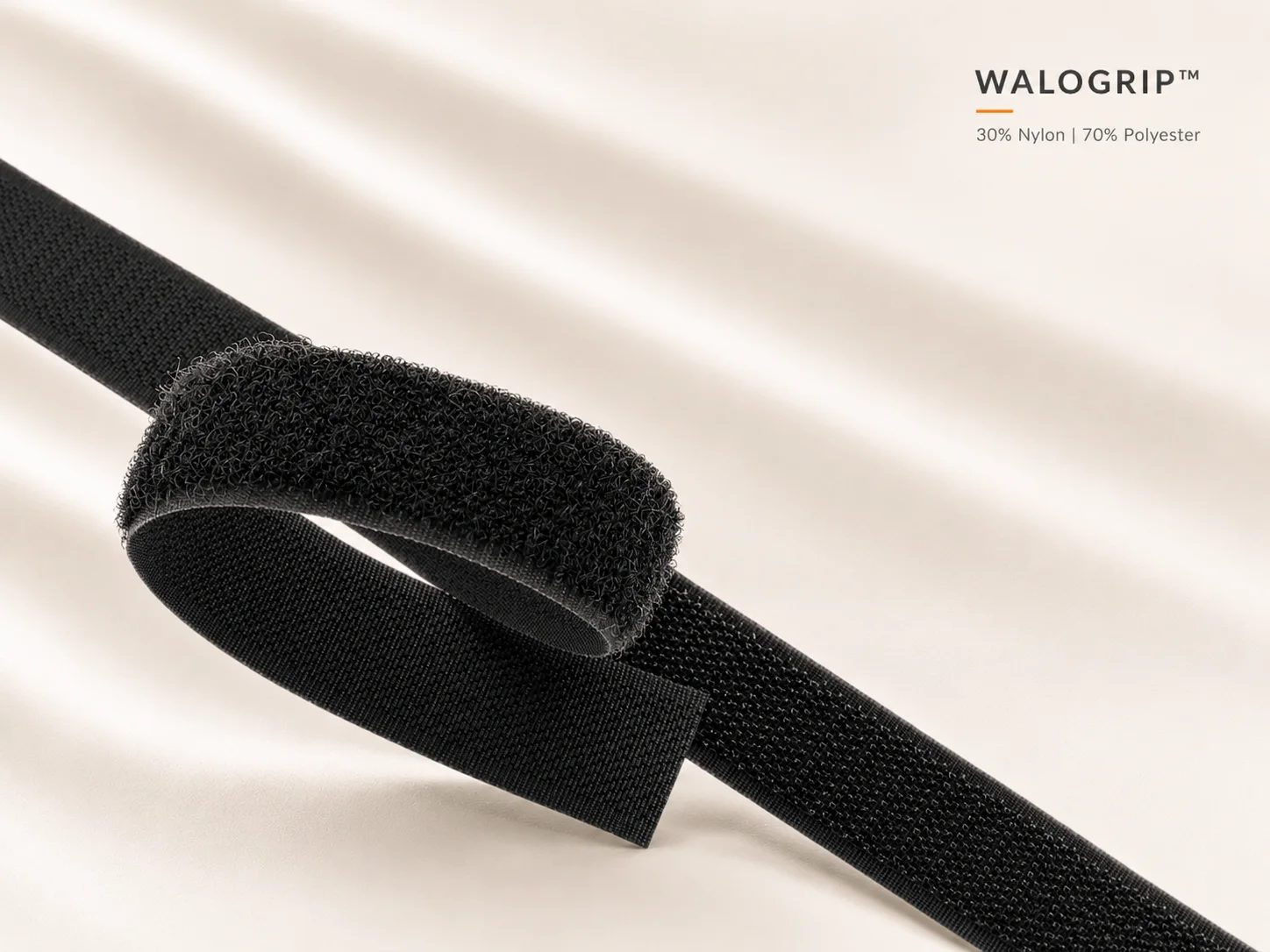
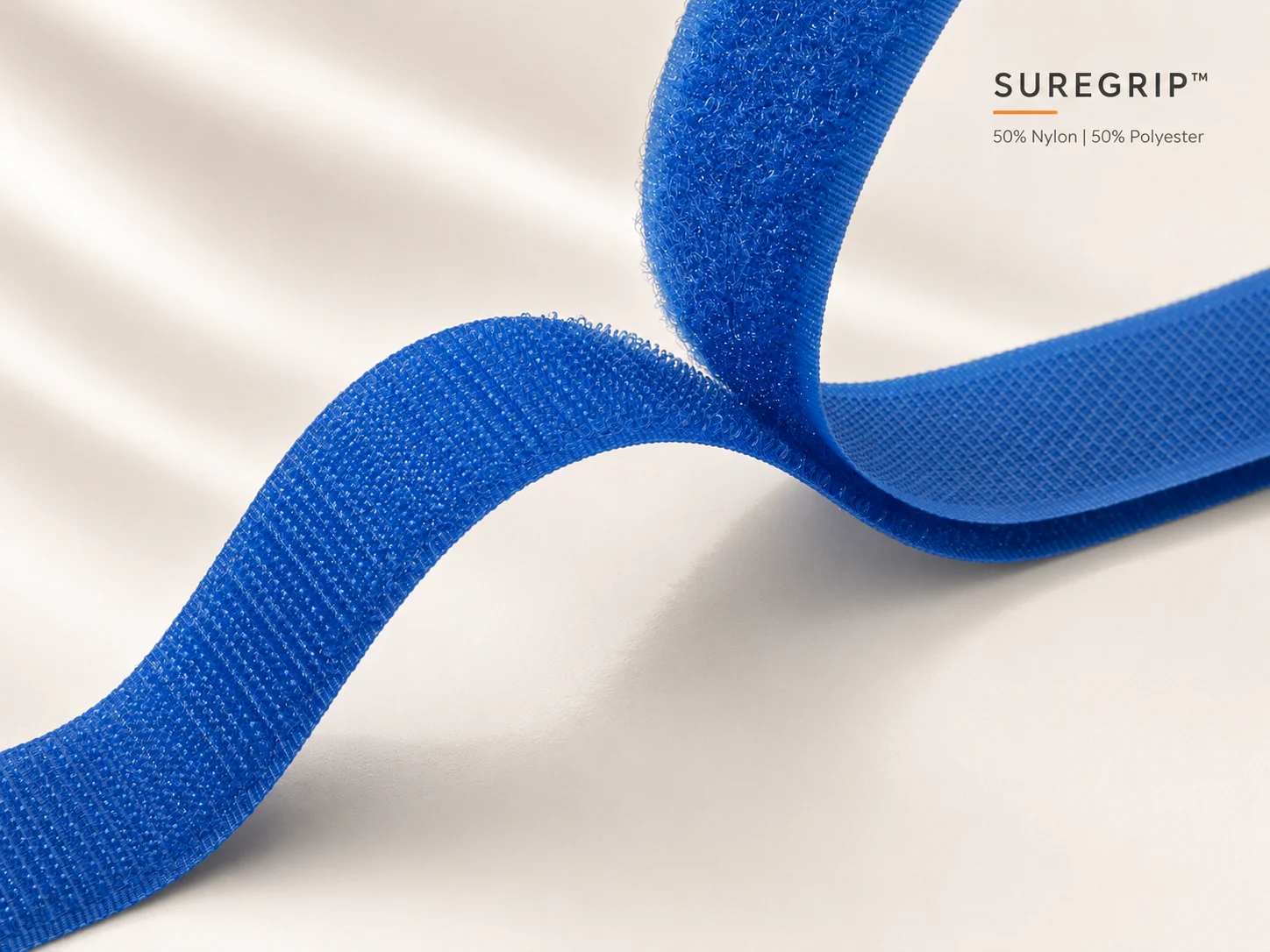
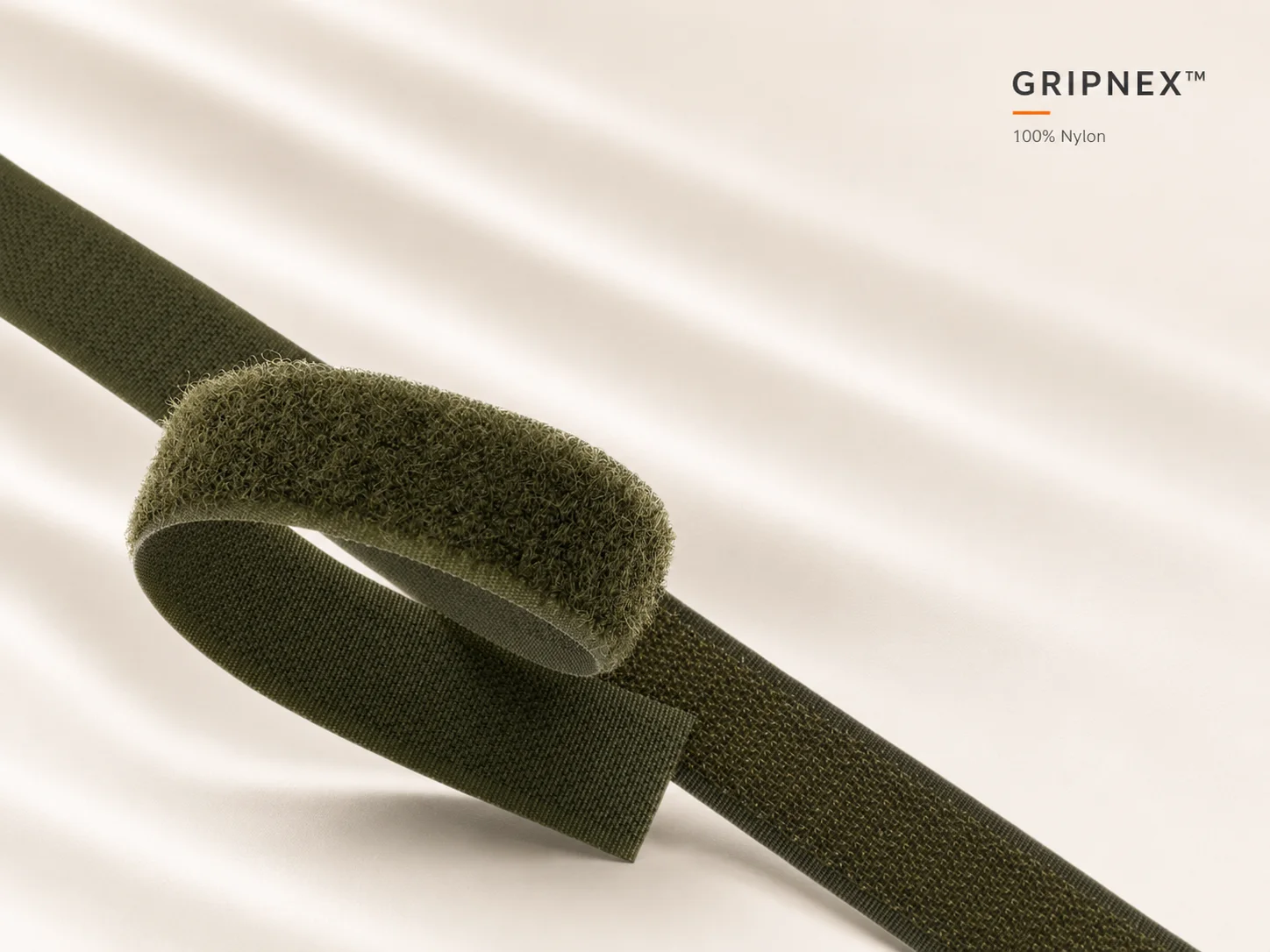
Walonium supports textile OEM and export programs with sew-on hook and loop in multiple nylon–polyester blends. Walogrip (30% nylon / 70% polyester) offers a cost-efficient base for high-volume apparel and promotional textile lines. Suregrip (50% / 50%) balances engagement and stability for uniforms, bags and industrial textiles. Gripnex (100% nylon) is the premium option when cycle life, hand feel and consistent engagement across widths matter most for brand-facing products.
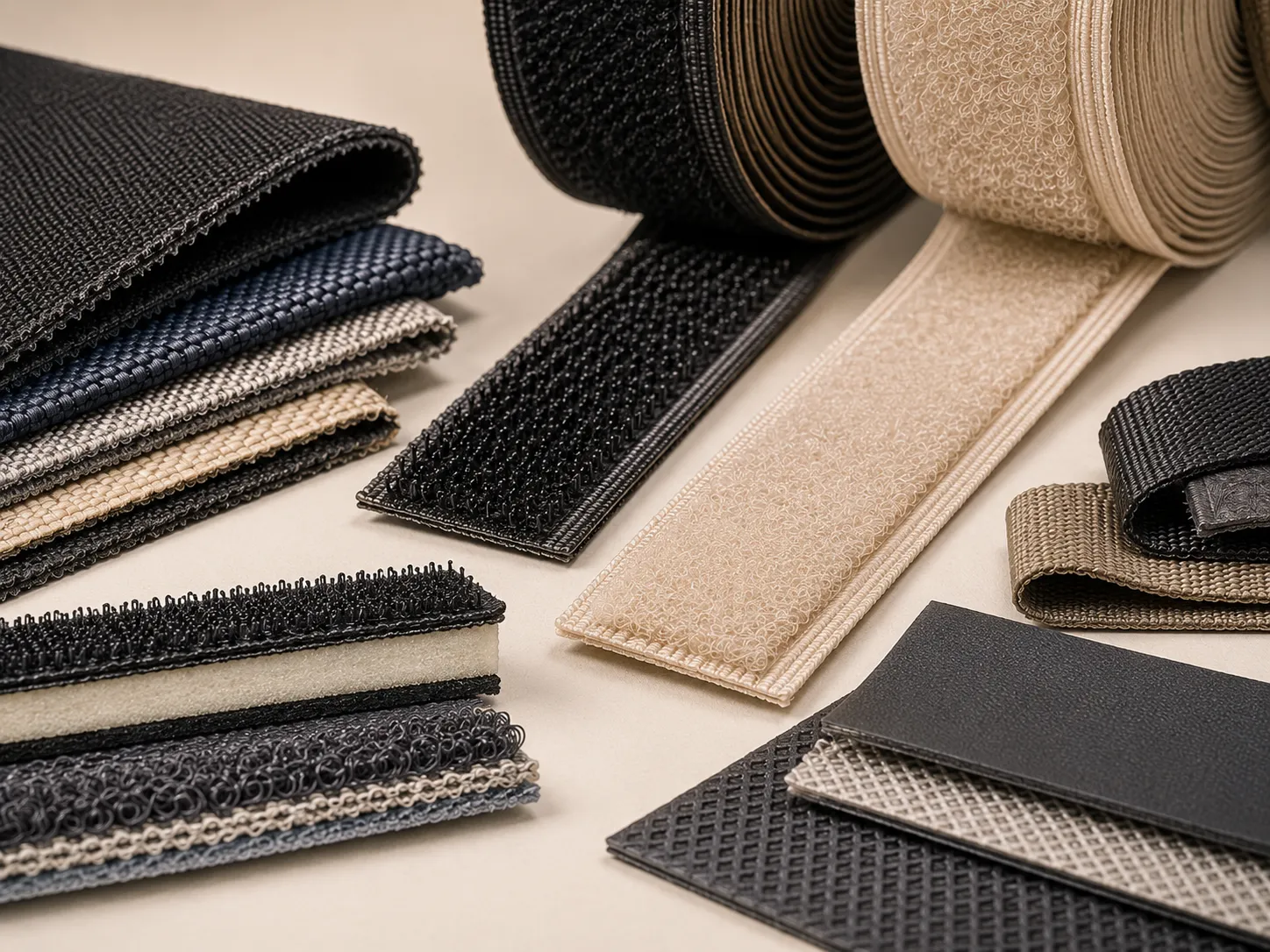
OEM buying process: from brief to approved roll standard
A reliable OEM buying process starts with a one-page technical brief shared with sourcing and the mill. Include garment style, fabric weight, stitch method (lockstitch, zigzag, bartack), expected cycle count, washing standard (home wash, industrial laundry, dry clean) and target markets. Procurement should also note whether the order is domestic, export-oriented or split across multiple cut-make-trim partners.
Next, request slit-width samples on the actual sewing line. Textile engineers should evaluate edge fray, needle penetration, thread tension and whether the tape cups or twists after steam pressing. Buyers often approve hook and loop on a desk sample but discover sewability issues only when the first bulk roll arrives at the CMT factory.
Finally, lock a roll standard: width tolerance, color reference under agreed lighting, core size, meters per roll, labeling and packing list format for export. Document the approved Walogrip, Suregrip or Gripnex grade in the BOM so alternate suppliers cannot substitute a lower blend without engineering sign-off. For export lead-time planning, read how reliable supply chains prevent production delays. For programs reviewed in the Knowledge Center, cross-check material choice against the nylon vs polyester guide and the adhesive tape guide when hybrid constructions use both sew-on and peel-and-stick zones.
Specifications textile buyers should document
At minimum, your specification sheet should list tape type (hook, loop or mixed roll), material blend, width in millimeters, thickness target, color (dyed or natural), engagement level and any flame-retardant or restricted-substance requirements. Export-oriented buyers should align these fields with the same data requested on packing lists and certificates of conformity. Programs with sustainability audits should also review our guide to eco-friendly hook & loop compliance for B2B buyers.
Hook density and loop pile height drive perceived strength. Lightweight fashion garments often use narrower tape with moderate engagement so wearers can open closures easily. Heavy-duty workwear, medical supports and tactical textiles may require wider tape and a higher-cycle blend such as Gripnex or Suregrip on high-stress points only, with Walogrip on secondary adjustments to manage BOM cost.
Document sewing parameters: stitch type, stitches per inch, needle size and whether the tape sits on the face or lining. Loop-on-skin applications need softer hand and rounded edges; hook exposure on wear-facing panels may need a cover flap or reversed orientation. These details prevent redesign after the first buyer fitting.
Widths, colors, MOQ and export order planning
Standard slit widths for apparel and textile accessories typically range from 12 mm to 50 mm, with 20 mm and 25 mm among the most common for cuffs, straps and pocket flaps. Wider formats support back straps on bags and medical positioning straps. Always specify whether width is measured under zero tension on a flat table; textile programs that skip this definition see disputes at incoming inspection.
Color matching for B2B textiles should reference a physical standard or Pantone under agreed light (commonly D65). Natural white, black and garment-matched dyed colors are typical. For export orders, confirm whether the buyer expects single-lot color consistency across multiple PO lines shipped over several months—this affects dye scheduling and MOQ per color.
MOQ is driven by dye lot, slit setup and backing preparation. High-volume Walogrip programs often achieve the lowest entry MOQ for natural and black. Custom dyed Suregrip or Gripnex may require higher minimums per width-color combination. Split shipments (hook in one color, loop in another) need explicit pairing rules so CMT factories do not mix lots with different engagement.
Export documentation should list HS code, composition, roll dimensions, gross and net weight and country of origin. Incoterms and lead-time buffers matter: sea freight programs should approve tape at least one season before bulk cutting to avoid air-freight premiums on trim. Share forecast rolls per month so the mill can plan slit schedules and avoid surprise short-ships on container stuffing days.
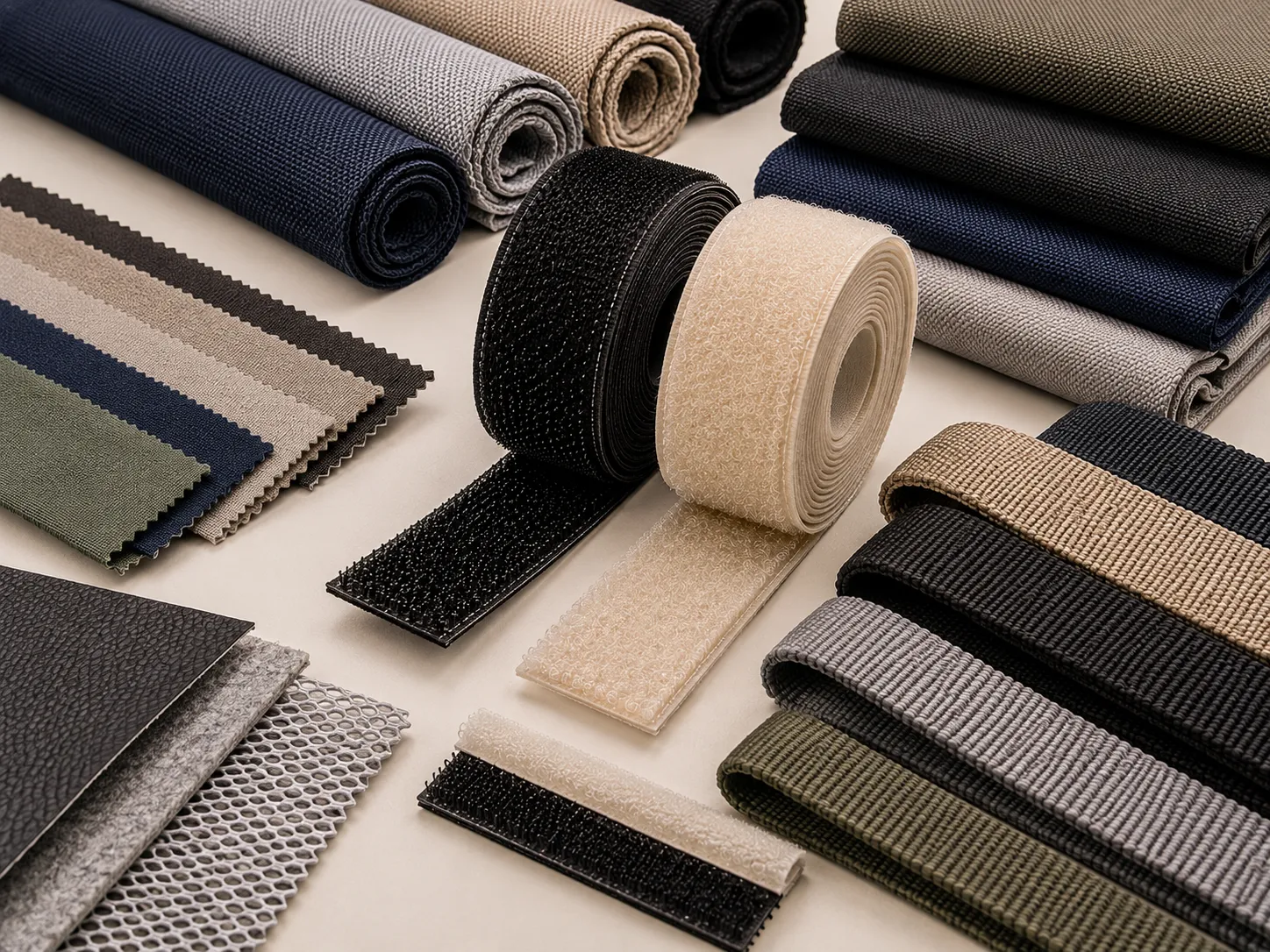
Walogrip
Gripnex
30% nylon / 70% polyester—cost-efficient for volume apparel, promotional garments and secondary adjustments.
100% nylon—premium engagement and cycle life for brand-facing or high-stress closure points.
Cuffs, basic straps, school uniforms, promotional jackets where price sensitivity is high.
Tactical panels, medical positioning, high-cycle bag flaps and premium outerwear.
Moderate cycles suitable for everyday wear; validate on finished garment after wash.
Higher cycle tolerance; preferred when specifications cite repeated open-close testing.
Often the most flexible entry point for multi-width programs in natural/black.
Higher MOQ on custom colors; best planned on forecasted hero SKUs.
Stable on mid-weight wovens; pair with appropriate needle and edge finish.
Consistent engagement across widths; useful when multiple BOM lines must feel identical.
Where Suregrip fits between value and premium
Suregrip’s 50% nylon / 50% polyester blend is a practical middle tier for textile OEMs that need better engagement than Walogrip without moving the entire BOM to Gripnex. It is commonly specified on workwear chest pockets, uniform adjustment tabs, bag dividers and textile equipment covers where products face daily handling but not extreme tactical cycles.
Procurement teams can use Suregrip as the default grade on main closure points while keeping Walogrip on low-stress tabs—this hybrid BOM strategy controls cost while protecting critical functions. Engineering should still validate hybrid programs through wash tests because mixing blends on adjacent panels can change perceived quality if engagement feels inconsistent to the end user.
Sew-on applications: line setup and quality control
Sew-on hook and loop avoids adhesive residue on fabrics and performs better on curved or breathable textiles where pressure-sensitive backings may not bond reliably. Line setup should include a dedicated feed guide so narrow tape does not twist entering the needle. For long runs, use marked reference points on the table to keep hook and loop halves aligned before bartack or perimeter stitching.
Incoming QC should check width with a calibrated ruler, visual shade against the approved swatch, edge fray and engagement spot-check every few rolls. Record lot numbers on the traveler so export recalls or warranty claims can trace trim back to a specific slit date. Textile buyers who skip lot traceability often struggle when a single container shows shade drift across rolls from different dye batches.

Common mistakes in B2B textile hook and loop sourcing
The most frequent mistake is approving tape from a generic swatch without sewing it on the actual fabric and lining stack. A tape that sews cleanly on a single-layer sample may pucker on a lined jacket or stretch knit. Another common error is specifying width without tolerance; even ±0.5 mm can misalign paired hook and loop on narrow cuffs.
Buyers sometimes optimize only MOQ and unit price but ignore roll length consistency. Short rolls increase changeovers on sewing lines and create mismatched leftover trim across sister factories. Export programs that do not align color standards across hook and loop dye lots see visible mismatch on contrasting closure flaps.
Substituting material grade without updating care labels or wash instructions is another risk. Moving from Walogrip to Gripnex on a high-cycle point without revising QC test protocols can pass desk approval yet fail buyer wear tests. Always update the BOM, test method and supplier letter of conformance together.
Industry examples: apparel, workwear and medical textiles
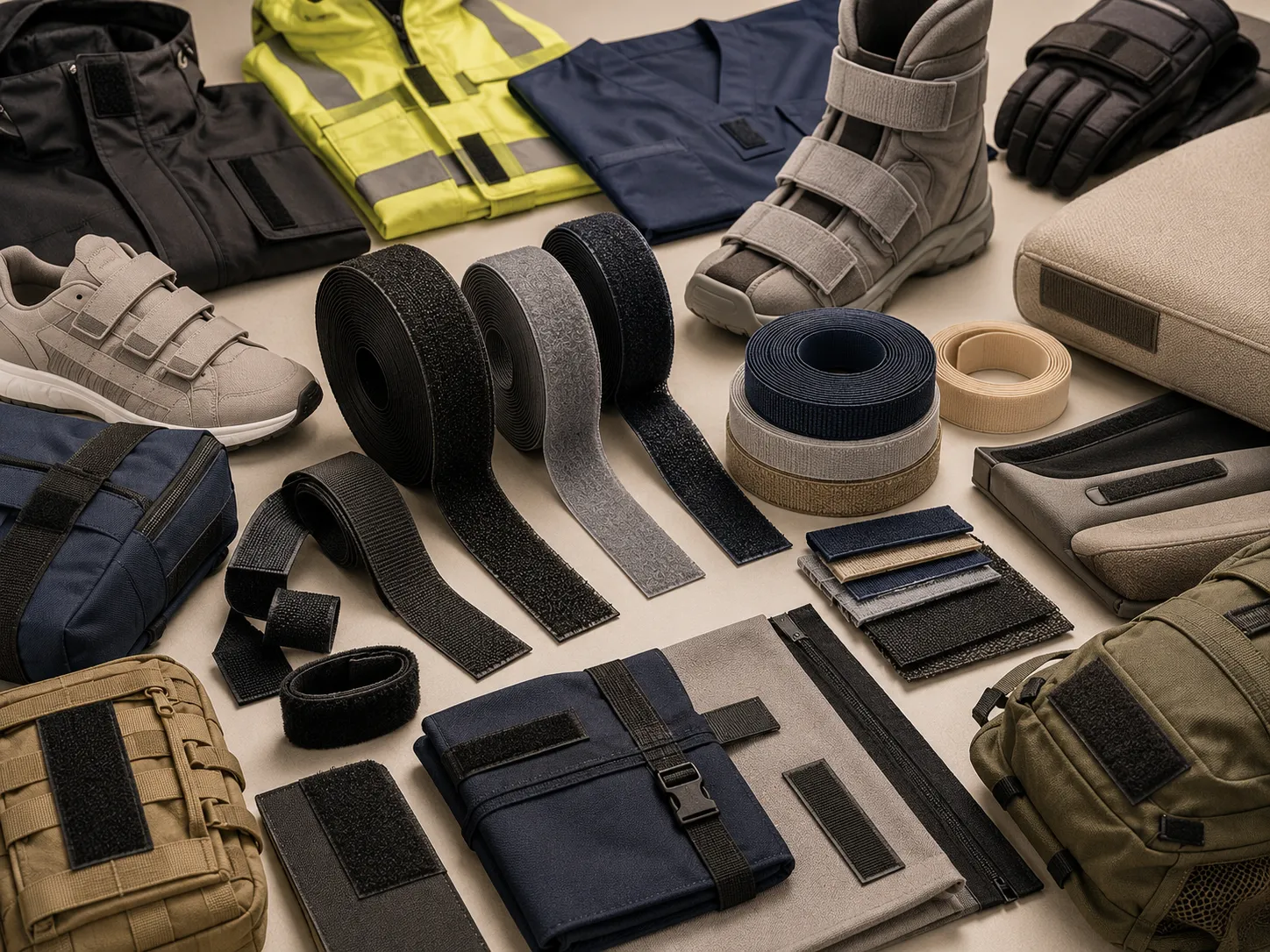
Corporate apparel and uniforms: Programs often use Suregrip on adjustable cuffs and Walogrip on internal pocket tabs. Color-matched loop on shell fabric with contrast hook on hidden flaps is a common construction to improve aesthetics while maintaining function.
Bag and soft-goods OEMs: Export orders specify 25 mm or 38 mm tape on flap closures, with Gripnex on daily-use business bags and Suregrip on promotional totes. MOQ planning ties slit width to fabric panel nesting to minimize trim waste.
Medical and positioning textiles: Higher-cycle Gripnex sections secure straps that clinicians reopen frequently. Documentation for export includes biocompatibility questions routed to restricted-substance policies even for sew-on trim, so procurement should share buyer compliance checklists early.
Procurement checklist for textile hook and loop approvals
Before final supplier approval, procurement should complete a structured checklist signed by sampling, quality and production planning. Confirm that width and color approvals reference the same lot numbers that bulk production will use, and that sewing trials occurred on the maximum fabric stack thickness—not only a single-ply mock. Record needle breaks, skipped stitches and operator fatigue when cycling narrow tabs; these line metrics often predict export rework better than laboratory engagement numbers alone.
Commercial terms should spell out allowable shade variation between hook and loop, replacement policy for short-shipped rolls and whether partial dye lots may ship when forecasts increase mid-season. Textile programs that import through multiple brokers need identical specifications on every purchase order line; otherwise one factory may receive Suregrip while a sister plant receives an unapproved substitute with similar appearance but different wash behavior.
For Walonium textile programs, align internal SKU naming with buyer-facing style numbers so traceability survives carton relabeling at overseas distribution centers. Link each SKU to a recommended grade—Walogrip, Suregrip or Gripnex—and to the Knowledge Center material guides your team uses during onboarding of new CMT partners.
Quality labs, wash protocols and engagement retention
Establish a wash protocol that mirrors the care label you will ship: temperature, detergent class, tumble dry or line dry, and whether industrial laundry chemistry applies to workwear. Measure engagement retention at defined cycle milestones such as 5, 25 and 50 washes for apparel, or fewer cycles for fashion outerwear. Photograph closure alignment before and after wash to catch shrinkage mismatches between shell and tape.
If engagement drops faster than buyer thresholds, evaluate whether loop pile is matting, hook tips are fouling with fiber debris or sewing tension is distorting the tape path. Switching from Walogrip to Suregrip or Gripnex on high-stress points only is often cheaper than upgrading every closure on the garment. Document those BOM decisions so costing and sourcing stay aligned during value engineering rounds.
Export buyers should store retained samples per lot for the warranty period required by private-label contracts. When disputes arise, lot-level retention proves whether the trim or the garment construction caused failure—reducing arbitrary chargebacks against suppliers.
Costing models: roll yield, waste and line changeover
Unit cost per meter is incomplete without roll yield math. Calculate how many finished closures each roll should produce given marker efficiency, end loss from slit width changes and whether the cutting room nests tape with fabric panels. Short rolls increase downtime when operators wait for new bins mid-shift; costing should include an allowance for changeovers tied to roll length variability.
Hybrid BOMs that mix Walogrip on low-stress points with Gripnex on hero closures can reduce total trim spend if engineering maps stress accurately. Procurement should model total landed cost including dye upcharges, air freight premiums for late trim approvals and inspection rework—not only FOB meter price.
When buyers request annual price reductions, tie concessions to forecast stability and longer dye campaigns. Unstable forecasts force suppliers into smaller lots with higher setup cost, which undermines year-over-year price targets without specification changes.
Key takeaways for textile procurement teams
Treat hook and loop as a specified component with width, color, blend, cycle and sew-on standards—not as an undifferentiated trim. Use Walogrip for cost-efficient volume, Suregrip for balanced performance and Gripnex for premium cycle and hand feel.
Plan export orders with dye-lot strategy, roll labeling, MOQ per color-width and lead time that covers sea freight. Validate on finished garments after wash, and keep internal links between your BOM and Knowledge Center material guides so hybrid adhesive and sew-on programs stay consistent across factories.
FAQ
What hook and loop specifications should textile OEMs send to suppliers?
Include material blend, hook or loop type, width and tolerance, color standard, sew-on stitch method, expected wash cycles, engagement level, roll length, labeling and export documentation requirements. A complete brief prevents substitution and shade mismatches across factories.
When should textile buyers choose Walogrip versus Gripnex?
Choose Walogrip for cost-efficient volume programs and moderate-cycle adjustment points. Choose Gripnex when buyers specify higher cycle life, premium hand feel or consistent engagement on hero closure points such as medical straps or tactical flaps.
How do widths affect MOQ for export textile orders?
Each slit width and color combination may require separate setup and dye lot planning. Narrow widths used on multiple styles can sometimes share a lot, but custom dyed Gripnex or Suregrip often carries higher MOQ per width-color pair than natural Walogrip.
Is sew-on hook and loop better than adhesive for garments?
Sew-on tape is usually preferred on fabrics and lined garments because it avoids adhesive residue, breathes better and survives wash processes more predictably. Adhesive formats may appear on hard trims or hybrid constructions but sew-on dominates wearable textiles.
What is Suregrip used for in B2B textile programs?
Suregrip is a 50% nylon / 50% polyester blend used when buyers need stronger engagement than Walogrip without full Gripnex cost. It suits uniforms, bags, workwear pockets and industrial textile panels with daily handling.
How should procurement plan color consistency for export?
Approve physical color standards under agreed lighting, define whether multiple PO lines must match one dye lot and document acceptable shade tolerance between hook and loop halves. Plan lead time for dyed tapes before container stuffing dates.
Should textile manufacturers test hook and loop after washing?
Yes. Engagement and dimensions can change after wash, dry and finishing processes. Validate on finished garments or mock assemblies that include lining, batting and pressing steps used in production.
What details improve hook and loop quotes for textile export orders?
Share annual forecast by width and color, Incoterms, required certificates, roll length preference, core size, pairing rules for hook and loop lots and target price band. Forecasts help suppliers propose realistic MOQ and lead times.